Broccoli sprouts have gained significant attention in recent years as a rich source of pure sulforaphane, a potent bioactive compound belonging to the isothiocyanate group, which is derived from glucoraphanin, a glucosinolate precursor. Sulforaphane is widely studied for its potential health benefits, including antioxidant, anti-inflammatory, anti-cancer, and neuroprotective effects.
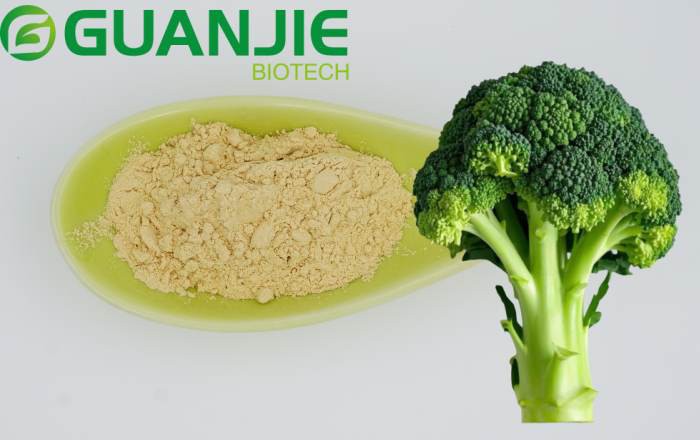
Understanding how much pure sulforaphane is present in broccoli sprouts is crucial for researchers, nutritionists, and consumers aiming to harness these benefits. This article provides a detailed exploration of sulforaphane content in broccoli sprouts, factors influencing its levels, and practical implications.
What Is Sulforaphane?
Pure Sulforaphane (chemical formula: C6H11NOS2) is a naturally occurring compound produced when the enzyme myrosinase interacts with glucoraphanin, a glucosinolate abundant in cruciferous vegetables such as broccoli, Brussels sprouts, kale, and cabbage. Broccoli sprouts contain particularly high levels of glucoraphanin and thus represent a concentrated source of sulforaphane.
Sulforaphane is not present in the intact vegetable; it is formed only when plant tissue is damaged (e.g., chewing, chopping) to activate myrosinase.
Sulforaphane Content in Broccoli Sprouts
Typical Sulforaphane Concentrations
Broccoli sprouts pure sulforaphane are often cited as containing anywhere from 20 to 50 times more glucoraphanin than mature broccoli heads. Because sulforaphane is derived from glucoraphanin, this implies much higher potential sulforaphane yield.
Quantitative studies have measured sulforaphane content in broccoli sprouts at various stages of growth, typically around 3 to 7 days post-germination, which is the common harvest period for commercial broccoli sprouts.

•Glucoraphanin Content:
Broccoli sprouts contain approximately 0.1% to 1.5% pure sulforaphane by dry weight, depending on the cultivar and growth conditions. This roughly equates to 1 to 15 mg of glucoraphanin per gram of dry weight.
•Sulforaphane Yield:
When myrosinase is active and conversion is efficient, sulforaphane yield can range from 0.1 to 0.4 mg per gram of fresh weight in broccoli sprouts.
Typical Values From Literature
|
Study / Source |
Sulforaphane Content (mg/g fresh weight) |
Notes |
|
Fahey et al. (1997) |
~0.3 – 0.5 |
Early foundational study |
|
Zhang et al. (2006) |
0.25 – 0.42 |
Standard broccoli sprouts |
|
Egner et al. (2011) |
~0.4 |
Broccoli sprout supplements |
|
Li et al. (2019) |
0.3 – 0.4 |
Effect of growth conditions |
These values can vary widely due to multiple factors discussed below.
Factors Influencing Sulforaphane Content in Broccoli Sprouts
Pure sulforaphane, a biologically potent isothiocyanate, is not present in broccoli sprouts in its active form but is produced through the enzymatic conversion of glucoraphanin by myrosinase when plant tissue is damaged. As such, sulforaphane content in broccoli sprouts can vary significantly depending on numerous intrinsic and extrinsic factors. Below is a detailed discussion of the various parameters that influence the concentration and bioavailability of pure sulforaphane in broccoli sprouts.
Genetic and Cultivar Variability
Different broccoli cultivars naturally contain varying amounts of glucoraphanin, the sulforaphane precursor. This genetic variation is one of the most fundamental factors influencing sulforaphane yield.
High-glucoraphanin cultivars such as Brassica oleracea var. italica have been selectively bred to contain significantly more glucoraphanin.
In some cases, super sprout cultivars may contain up to 100 mg of glucoraphanin per 100 g fresh weight, potentially yielding 30–50 mg of pure sulforaphane if conditions for conversion are optimal.
Studies have shown a 10-fold variation in glucoraphanin content across different cultivars, directly impacting sulforaphane yield.
Seed Quality and Storage
Seed viability and storage conditions also impact pure sulforaphane content in sprouts.
Seeds stored under high humidity or elevated temperatures may undergo degradation of glucosinolates, especially glucoraphanin.
Aged seeds tend to have lower germination rates and may result in broccoli sprout extract sulforaphane with reduced biosynthetic activity for glucoraphanin.
Germination Time and Sprout Age
Pure sulforaphane content varies significantly depending on the age of the sprouts.
•Day 1–2:
Low sulforaphane levels due to incomplete glucoraphanin synthesis.
•Day 3–5:
Peak sulforaphane production; myrosinase activity is high, and glucoraphanin levels are optimized.
•Day 6–7 and beyond:
Sulforaphane may decline as sprouts begin maturing and shifting metabolic focus.
Research suggests that 3-day-old sprouts typically yield the highest concentration of pure sulforaphane relative to weight. After 5 days, glucoraphanin levels may plateau or decline due to enzymatic degradation or cellular differentiation.
Light Exposure During Germination
Light is another critical factor in determining broccoli powder sulforaphane levels and, by extension, sulforaphane yield.
Dark conditions tend to suppress the formation of certain glucosinolates, including glucoraphanin.
Moderate light exposure (12–16 hours/day) enhances glucoraphanin biosynthesis and may improve chlorophyll development, indirectly affecting nutrient absorption and enzyme activity.
However, excessive light may stress sprouts or reduce biomass, leading to practical trade-offs.

Temperature and Humidity During Sprouting
Environmental parameters such as temperature and humidity directly affect the biosynthesis and enzymatic activities involved in sulforaphane powder bulk production.
•Optimal temperature range: 20–25°C (68–77°F). This promotes robust sprout growth and enzymatic efficiency.
•Higher temperatures (>30°C) may lead to faster growth but reduce glucoraphanin accumulation and stress the sprouts.
•Low temperatures (<15°C) may reduce germination rates and myrosinase activity.
Humidity must be high enough (90–95%) to promote sprouting but not so high as to encourage fungal contamination or premature degradation of glucoraphanin. Ideal sprouting conditions are around 22–25°C and 90–95% relative humidity.
Processing Methods (Commercial and Domestic)
Different processing techniques can significantly alter pure sulforaphane availability:
•Blanching or boiling:
Destroys myrosinase and reduces sulforaphane yield dramatically.
•Steaming (1–3 minutes):
Inactivates ESP while preserving myrosinase, increasing sulforaphane formation.
•Drying (freeze-drying, air-drying):
Can reduce water content and concentrate glucoraphanin, but may compromise enzymatic activity unless done under controlled conditions.
•Fermentation or enzymatic pre-treatment:
Some broccoli extract sulforaphane products are developed using microbial fermentation to enhance pure sulforaphane availability without relying on endogenous myrosinase.
Minimal processing or targeted enzyme control is key to retaining or enhancing sulforaphane levels.
Methods for Measuring Sulforaphane Content
Analytical Techniques
High-performance liquid chromatography (HPLC) with UV or MS detection is standard for glucoraphanin and sulforaphane quantification.
Gas chromatography-mass spectrometry (GC-MS) is used for volatile isothiocyanates.
Accurate pure sulforaphane measurement requires enzymatic hydrolysis under controlled conditions to mimic digestion.
Extraction Procedures
Pure sulforaphane is extracted from fresh or freeze-dried sprouts.
The enzymatic conversion step is critical for measuring bulk sulforaphane potential rather than glucoraphanin content alone.
Broccoli sprouts are an exceptionally rich source of sulforaphane due to their high glucoraphanin content and active myrosinase enzyme. The sulforaphane content varies significantly based on a complex interplay of genetic, environmental, and processing factors, typically ranging from 0.2 to 0.5 mg/g fresh weight.
We begin by carefully selecting seeds from 138 broccoli varieties to ensure the best raw material. Next, we apply advanced biological self-transformation technology to enhance pure sulforaphane yield. Our low-temperature extraction and purification process preserves the bioactive ingredients, resulting in a product with higher potency and improved stability. Each batch of broccoli sprouts supplement sulforaphane is rigorously tested and precisely packaged to maintain pure sulforaphane quality. If you're interested in learning more, feel free to contact us at info@gybiotech.com.