Lycopene powder is a common red pigment. It is one of the most powerful antioxidants among carotenoids, second only to astaxanthin. It is commonly found in red fruits and vegetables. The human body cannot synthesize bulk lycopene on its own and can only ingest it from food. Lycopene has superior physiological functions. However, its isoprene structure makes it highly susceptible to external physical and chemical factors. This leads to oxidative degradation and reduces its bioaccessibility. This limits the application of tomato extract powder to a certain extent. The results of several studies have shown that the cis-isomer of lycopene has stronger antioxidant activity compared to all-trans lycopene. Bioavailability and bioactivity are also higher. This suggests that the cis-isomer of lycopene may have better properties than the trans-isomer.
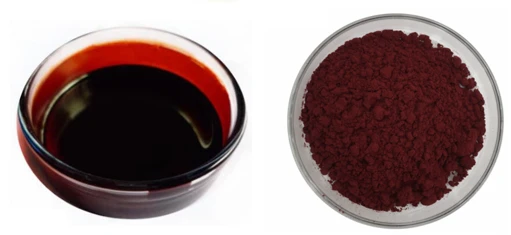
Effect of extraction method on isomerization of lycopene
Isomerization of lycopene powder requires considerable activation energy. During the conversion of all-trans lycopene to the mono-cis isomer, the 5-cis isomer has a higher rotational barrier. It is not easily formed during isomerization, but neither is it easily converted to other cis-isomers. It is relatively stable. And 13-cis lycopene has a low activation energy. It is the easiest isomer to produce. It is converted to all-trans lycopene or other isomers under the influence of light and heat during isomerization.
The main extraction methods for lycopene and its cis isomers include microwave-assisted extraction, ultrasound-assisted extraction, and supercritical CO2 extraction. Microwave treatment ruptures the cell membrane, which facilitates the release of lycopene. This method deforms and vibrates lycopene molecules at higher temperatures through thermal, electrical, and magnetic effects. This further increases the degree of isomerization and improves the extraction efficiency.
Ultrasonic-assisted extraction method due to cavitation effect (bursting of cavitation bubbles) and thermal effect (heat release). It is more likely to disrupt the matrix cell wall and promote the release of bioactive compounds. The highly reactive hydroxyl radicals generated by the cavitation effect and the higher amount of heat also provide activation energy for isomerization. The highest extraction of all-trans lycopene is achieved when these two effects are in equilibrium with temperature changes.
Supercritical CO2 fluid extraction is a novel extraction method. The CO2 fluid diffuses better into the extracted solute and reduces the likelihood of solute contact with oxygen. This facilitates the extraction of thermally unstable compounds. For example, in the extraction of lycopene, CO2 can better dissolve the cis-isomer. It can effectively increase the ratio of cis-isomers of lycopene, and thus improve the bioavailability of lycopene. It is safer than organic solvent extraction, and the extraction efficiency is greatly improved.
In addition, increasing the contact area between the lycopene powder sample and the extractant can also increase the yield of lycopene isomers.
Because of the excellent properties of the cis-isomers of lycopene, isomerization is considered an important goal in the storage and processing of lycopene and its products. Factors such as heat, light, catalysts (natural and metal ion catalysts), microwaves, electrolysis, etc. can affect the isomerization of lycopene, which results in the production of many types of cis-isomers. However, lycopene isomerization is accompanied by the degradation of lycopene, which diminishes its activity. Therefore, clarifying the factors affecting lycopene isomerization and avoiding the degradation of lycopene is an urgent problem to be solved.
Types of lycopene isomerization reactions
Based on the factors affecting lycopene powder isomerization, the isomerization reactions of lycopene are generally classified into thermal and photo-isomerization reactions.
Thermal isomerization promotes the conversion of lycopene oil from the all-trans to the cis isomer by direct heating, and this method is currently the most widely used in isomerization studies. Isomerization is the result of the chemical transformation of the relative positions of the groups. During processing, all trans isomers and cis isomers of lycopene are converted to each other. The proportion of cis-isomer increased with increasing temperature and processing time, heat treatment significantly reduced the concentration of all-trans lycopene and 13-cis-isomer and increased the concentration of 9-cis-isomer. The isomerization behavior of lycopene during heat treatment was closely related to its matrix. The isomerization behavior of lycopene in different organic solvents, edible oil matrices, and natural food matrices was different.
By evaluating the isomerization of lycopene liquid in different matrices under heat treatment conditions at 80 degrees Celsius, it was found that there was a more pronounced isomerization occurring in organic solvents. All-trans lycopene dissolved in CH2Cl2 heat-treated for a certain time, the relative content of the cis-isomer gradually increased with the heating time and finally reached 75.6%. While the isomerization reaction in some oil and water groups hardly occurs. It may be because lycopene is more soluble in organic solvents. In oil though it is also soluble. However, the heat transfer efficiency is low. This leads to the fact that its isomerization is not significant at relatively low temperatures. Lycopene is less soluble in aqueous base. Also, the reaction temperature is low which leads to its low level of isomerization.
Thermally promoted isomerization reactions such as lycopene powder are those in which the catalyst can influence the isomerization of lycopene. The reaction usually needs to be carried out at a certain heating temperature (lower than that of thermotropic isomerization). Promoting the isomerization reaction with a catalyst has the advantages of short reaction time and high catalytic efficiency. Metal salts, iodine-doped titanium dioxide, polysulfides and isothiocyanates, iodine, and carbon disulfide are effective catalysts for converting all-trans lycopene to cis-isomer.
Isomerization of lycopene with catalysts has high catalytic efficiency and significantly increases the 5-cis isomer content. Natural catalysts can promote lycopene isomerization in a greener and safer way. While some metal ion and non-metal ion catalysts have strong oxidizing properties. The residues are more difficult to remove from food, which affects the stability and quality of lycopene products. This is a key factor limiting the application of the method. How to solve the catalyst residue problem while improving its application efficiency is an urgent scientific problem and a key direction for future research.
Photo-isomerization reaction refers to the reaction of lycopene isomerization catalyzed by direct light conditions or photosensitizers. Under direct light conditions, different kinds of light sources and different light times will affect lycopene isomerization. The Institute of Physical and Chemical Technology of the Chinese Academy of Sciences has found that lycopene with up to 70% or more cis-isomers can be obtained with good stability using photochemical methods.
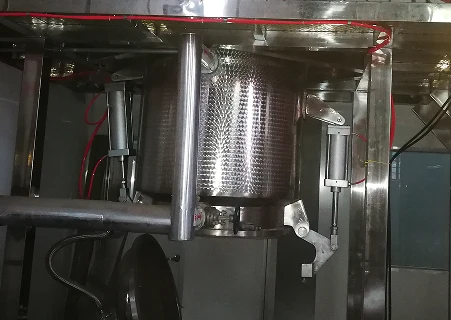
The photoisomerisation reaction can produce 5-cis lycopene efficiently. However, the photosensitizer added during the reaction process is difficult to remove from the product, and the food safety of the lycopene powder cannot be guaranteed. This will also have a high production cost and is not suitable for industrial production.
Heat, catalyst, light, and so on can promote the isomerization of lycopene. However, lycopene isomerization is low and unstable. This has certain limitations, and it is still necessary to find treatments that can increase the content of cis-isomers are easy to operate, and can minimize lycopene degradation in subsequent studies, to further improve the efficiency of lycopene isomerization and extend the application.
In recent years, many studies have shown that lycopene has a variety of physiological activities, and its application in the fields of functional food, medicine, and cosmetics is becoming more and more extensive. Guanjie Biotech is the China tomato extract powder factory for bulk lycopene production. If you are interested in our products, welcome to inquiry us: info@gybiotech.com.