Latest Products


Contact Us
-
6th Floor, 2nd Building, Xijing NO.3, XiJing Industrial Park, DianZi Western Street, Xi'an, Shaanxi, China
-
+86-2988253271


Bulk Nervonic Acid
Product Name: Nervonic Acid / CIS-15-TETRACOSENOIC ACID
CAS No.: 506-37-6
Botanical Source: Acer truncatum / Malania oleifera
Purity / Assay: 5%,90%, 98% (by GC / HPLC)
Appearance: Off-white to white crystalline powder
Molecular Formula / Weight: C24H46O2/ 366.62 g/mol
Shelf Life & Storage: 24 Months, dry & cool place away from light
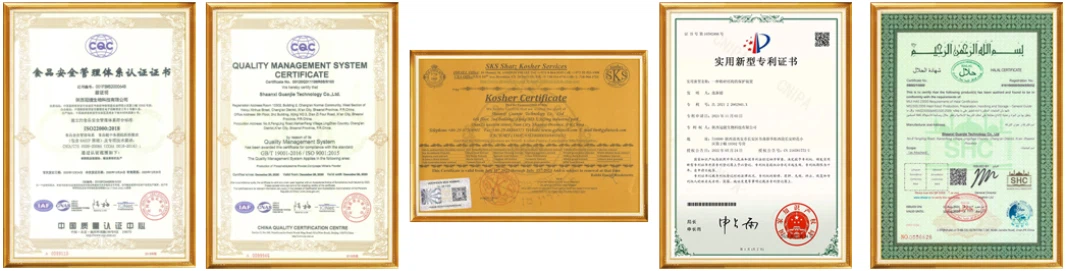
Certifications: Halal,ISO9001,PAHS Free,NON-GMO,KOSHER,SC
Overseas warehouse(NJ,USA)
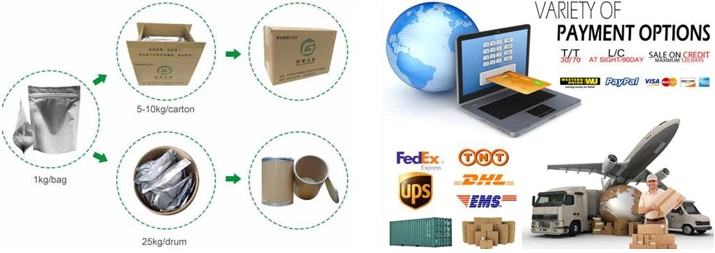
Delivery term: DHL, FEDEX, Air freight,Sea freight
Provide Free Sample
MOQ: 1KG
Not for Private Person Sale
Description
Nervonic Acid for Supplement Manufacturers: Sourcing and Formulation Guide
Guanjie Biotech is a high-quality bulk Nervonic Acid (CAS 506-37-6) manufacturer and supplier, providing plant-based 5%, 90%, and 98% pure powder for brain health supplement formulations. Using an advanced ethanol extraction method, our independent R&D center and GMP-certified factories guarantee high purity and stable quality. Naturally appearing as white to off-white flaky crystals soluble in alcohol, our ingredient specifically supports myelin sheath repair and cognitive function. Request free samples, COAs, or custom pricing today. Just send an email to info@gybiotech.com or submit your requirements via the form.

Why Choose Guanjie Biotech?
● 20 years of experience
● Free sample available for quality approval.
● Fast delivery
●Quality Assurance
● OEM provides customized packing service
● Professional and efficient after-sales service.
Why Choose Nervonic Acid for Next-Gen Cognitive & Brain Health?
Nervonic Acid's molecular formula is C24H46O2, which is a core structural long-chain monounsaturated fatty acid uniquely vital for the human central nervous system. Unlike generic brain nutrients, Nervonic Acid acts directly as a fundamental building block for the myelin sheath-the protective lipid layer insulating nerve fibers and enabling rapid signal transmission across brain cells.
●Targeted Myelin Repair:
It specifically feeds and repairs damaged white matter, white matter tracts, and nerve sheaths, making it essential for age-related cognitive support, brain injury recovery, and neuroprotection.
●Dual Action (Brain + Metabolic Balance):
Beyond cognitive enhancement, research shows Nervonic Acid helps regulate blood lipid profiles and supports cellular membrane fluidity.
●High Bioavailability & Stability:
As a monounsaturated fatty acid, it offers superior oxidation resistance compared to polyunsaturated omega-3s, resulting in better shelf-life and product stability in formulations.
COA:
|
Content |
≥90.0% |
90.08% |
GC |
|
Physical & Chemical |
|||
|
Appearance |
White or Off-white Flaky Crystal |
Complies |
Visual |
|
Odor & Taste |
Characteristic |
Complies |
Organoleptic |
|
Loss on Drying |
≤3.0% |
0.75% |
GB 5009.3-2016 |
|
Ash |
≤3.0% |
0.71% |
GB 5009.4-2016 |
|
Acid value |
≤100mgKOH/g |
98mgKOH/g |
CP2010Appendix VII H |
|
Melting Poin |
40-43℃ |
42.3℃ |
CP2010Appendix VI C |
|
Unsaponifiables |
≤7.0% |
2012% |
GB/T 5535.1-2008 |
|
Peroxide |
≤0.75% |
0.30% |
GB/T5538-2005 |
|
Extraction Solvent |
Ethanol |
Complies |
------ |
|
Heavy Metal |
|||
|
As |
≤2.0ppm |
Complies |
GB 5009.11-2014 |
|
Pb |
≤2.0ppm |
Complies |
GB 5009.12-2017 |
|
Cd |
≤1.0ppm |
Complies |
GB 5009.15-2014 |
|
Hg |
≤0.1ppm |
Complies |
GB 5009.17-2014 |
|
Microbiological Test |
|||
|
Total Plate Count |
≤1,000cfu/g |
Complies |
GB 4789.2-2016 |
|
Yeast & Mold |
≤100cfu/g |
Complies |
GB 4789.15-2016 |
|
E.Coli |
Negative |
Negative |
GB 4789.3-2016 |
|
Salmonella |
Negative |
Negative |
GB 4789.4-2016 |
|
Staphylococcus aureus |
Negative |
Negative |
GB 4789.10-2016 |
How Is Nervonic Acid Produced?
Raw Material Extraction → Crystallization → Purification → Drying → Packaging

What Is the History of Nervonic Acid Research and Development?
Nervonic acid is a specialty long-chain monounsaturated fatty acid that was identified as early as the 1820s. With advances in oleochemistry and lipid research, scientists discovered that certain plant fruit and seed oils contain naturally occurring nervonic acid. These findings have expanded research into natural nervonic acid, bulk nervonic acid, and sustainable development of nervonic acid ingredients for nutritional applications.
Overseas Research Results
David Taylor of Canada specializes in the application research of phytoneurotic acid. Only by making the plant neuronic acid into human brain neuronic acid, that is, compound neuronic acid, can it prevent human brain diseases. At present, the phytoneuroic acid is being used as a raw material for the pharmaceutical industry for research on the treatment of neurological diseases.
American scholars have screened out two herbaceous oils, Lunaria biennis and Lunaria annua, with high content of bulk nervonic acid from the seeds of satinflower plants, and the literature has highly evaluated the medicinal value of satinflower seed oil, calling this genus as a miraculous plant, and researching on its sowing period, yield and other aspects.
Generally, bulk nervonic acid can restore the brain nerves of patients. Neuronic acid is a natural component at the core of nerve fibers and nerve cells in the brain. If it is deficient, it can cause the aftermath of a stroke. Neuronic acid is difficult to be generated by human body, and can only be supplemented by taking it from outside the body. Neuronic acid powder can pass through the blood-brain barrier. It can act directly on nerve fibers to repair and unblock them, and regenerate the damaged protective sheaths. Therefore, if you want to restore the brain nerves, you can use Neuronic Acid.
The relationship between bulk nervonic acid and brain health goes hand in hand. Neuronic acid generally plays a very important role in the human brain. When the nerves are abnormal or dysfunctional, it can cause cerebral ischemia or cerebral atrophy, Alzheimer's disease, stroke, and all kinds of sequelae, so it is still necessary to keep the nerve aspect of the nutrients in general.
Nervonic acid Uses & Formulation Guidelines
Dietary Supplements and Brain Health
Infant Formula and Functional Nutrition
Cosmetics and Personal Care
Bulk Nervonic Acid is a long-chain monounsaturated fatty acid used as a specialized cosmetic ingredient in skin-care formulations. It can support skin barrier function, contribute to lipid membrane integrity, and help maintain skin condition against oxidative and environmental stress. Cosmetic-grade Nervonic Acid may be incorporated into anti-aging creams, facial serums, moisturizing products, and barrier-repair lotions. Depending on the formulation, the recommended use level is typically 0.1%–1.0%. For cosmetic manufacturers, Nervonic Acid Powder provides a convenient ingredient format for developing targeted skin-care products focused on barrier support, moisturization, and anti-aging formulations.
Comparative Analysis: Nervonic Acid vs. Other Brain Health Ingredients
| Ingredient Feature | Nervonic Acid | Phosphatidylserine PS | DHA (Omega-3) | Alpha-GPC |
| Primary Target | White Matter & Myelin Sheath | Cell Membrane & Cortisol Modulation | Gray Matter & Cell Fluidity | Acetylcholine Synthesis |
| Mechanism of Action | Rebuilds nerve fiber insulation layer | Regulates membrane fluidity & neurotransmitters | Provides structural lipid to neuron membranes | Supplies choline for neurotransmitter synthesis |
| Key Advantage | Unique ability to repair white matter & nerve fibers | Clinically proven for memory retention | Essential foundational brain nutrient | Rapid blood-brain barrier penetration |
| Oxidative Stability | High (Monounsaturated) | Medium | Low (Highly polyunsaturated) | High (Hygroscopic solid) |
| Synergistic Potential | Excellent when paired with PS/DHA | Excellent |
Excellent
|
Why Combine or Replace Traditional Nootropics with Nervonic Acid?
● Nervonic Acid vs. DHA
DHA primarily supports neuronal membrane structure and fluidity, while Nervonic Acid is a very-long-chain monounsaturated fatty acid associated with sphingolipids and myelin membranes. For formulators, Nervonic Acid vs DHA represents different nutritional positioning rather than direct replacement. DHA is an established omega-3 ingredient, whereas Nervonic Acid offers a distinct brain health and myelin-focused formulation concept. Both ingredients can therefore be considered complementary in advanced cognitive health products.
● Nervonic Acid vs. Phosphatidylserine
Phosphatidylserine (PS) is a phospholipid commonly used in cognitive health supplements and brain-focused formulations. Nervonic Acid has a different structural role and is associated with sphingolipid and myelin lipid metabolism. Therefore, Nervonic Acid vs Phosphatidylserine should not be viewed as a simple substitution. Combining Nervonic Acid and PS allows formulators to develop multi-ingredient products targeting different aspects of neuronal membrane and cognitive health.
● A Multi-Ingredient Cognitive Health Formula
For supplement manufacturers developing premium Nervonic Acid supplements, combining complementary ingredients may provide broader formulation positioning. A formula containing Nervonic Acid + PS + Alpha-GPC can combine different nutritional approaches related to myelin-associated lipids, phospholipid metabolism, and cholinergic function. Additional ingredients such as NMN may be considered when cellular energy is a formulation objective. This multi-target strategy can help brands differentiate Nervonic Acid brain supplements in the competitive cognitive health market.
FAQs:
Q1:How do you solve the water solubility and formulation challenges of Nervonic Acid powder?
A: As a long-chain monounsaturated fatty acid (C24H46O2), pure Nervonic Acid is lipophilic (fat-soluble) and practically insoluble in water. For liquid dietary supplements, RTD beverages, or functional powders requiring dispersion, Guanjie offers microencapsulated / water-dispersible Nervonic Acid powder upon request, as well as oil-phase solubility guidelines for softgel and liposomal encapsulation.
Q2: What analytical method is used to test the purity of Nervonic Acid?
A: We utilize Gas Chromatography with Flame Ionization Detection (GC-FID / GC-MS) following normalized fatty acid methyl ester (FAME) derivatization procedures. This allows precise quantification of cis-15-tetracosenoic acid (90% or 98%) and ensures total control over related long-chain fatty acid impurities.
Q3: Is Nervonic Acid approved as a novel food or dietary ingredient in key global markets?
A: Yes. In China, Acer truncatum seed oil and its extracted nervonic acid are approved as New Food Ingredients. For the US and EU markets, it is widely utilized as a dietary supplement/food supplement ingredient under GRAS self-affirmation or traditional botanical extract frameworks, compliant with standard US FDA cGMP and EU food safety standards.
Q4: Can Guanjie support OEM/ODM formulations combining Nervonic Acid with other brain-health ingredients?
A: Absolutely. Guanjie provides custom premix and private label blending services. We can formulate bulk powders or premixes combining Nervonic Acid with synergistic ingredients such as Phosphatidylserine (PS), NMN, Alpha-GPC, Ginkgo Biloba, and DHA for targeted cognitive health, myelin sheath repair, or anti-aging finished products.
Q5: Can you provide total polycyclic aromatic hydrocarbons (PAHs) and pesticide residue reports for European clearance?
A: Yes. To comply with strict EU Food Safety regulations (EC No 396/2005 and EU 2023/915), Guanjie regularly subjects bulk batches to GC-MS/MS testing. We verify that Benzo(a)pyrene is 2.0 ug/kg and Sum of PAH4 is ≤ 10.0 ug/kg,alongside screening for over 400 multi-pesticide residues. Complete European-standard lab reports are available for seamless customs clearance.
Q6: What is the melting point behavior of Nervonic Acid, and how does it affect softgel encapsulation?
A: Pure Nervonic Acid 98% has a sharp melting point around 42.0℃ to 45.0℃. During softgel manufacturing, it remains a crystalline solid at ambient temperature. To achieve smooth encapsulation, formulators typically warm and homogenize it into a carrier oil phase (such as MCT oil, sunflower lecithin, or algae oil) at around 50℃ before cooling to standard softgel filling temperatures 30℃ - 35℃.
Q7:Can Nervonic Acid replace Omega-3 DHA in brain health supplements?
A: Rather than replacing DHA, Nervonic Acid serves a complementary and specialized role. DHA supports gray matter and neuronal cell membrane fluidity, whereas Nervonic Acid specifically concentrates in white matter to build and repair the myelin sheath. For comprehensive neuro-protection, formulation scientists recommended combining both for synergistic gray and white matter coverage.
Q8: Why is Nervonic Acid considered a superior choice for high-end cognitive formulations?
A: Most traditional brain nutrients (like Choline, PS, or Ginkgo) focus strictly on neurotransmitter activity or blood circulation. Nervonic Acid is one of the few natural compounds capable of physical myelin sheath restoration. This unique structural mechanism allows brands to formulate novel, highly differentiated products targeting age-related memory loss, nerve rehabilitation, and long-term neuro-protection.
Factory&Team:

Certification
Package & Shipment
Hot Tags: bulk nervonic acid, China bulk nervonic acid manufacturers, suppliers, factory, L-carnitine Fumarate Powder, Alpha-GPC Powder, D-Chiro Inositol Powder
You Might Also Like