Latest Products

Contact Us
-
6th Floor, 2nd Building, Xijing NO.3, XiJing Industrial Park, DianZi Western Street, Xi'an, Shaanxi, China
-
+86-2988253271


L-Glutathione Powder
Appearance White crystals or crystalline powder
Assay (%) ≥99.0
CAS No.:70-18-8
Water solubility: soluble in water, transparent
Taste: sour, astringent, with a fresh taste similar to MSG
Two Factories & Three production lines
GMP standard workshop & two independent laboratories
FDA Cert.
Certifications: Halal,ISO9001,PAHS Free,NON-GMO,KOSHER,SC
Overseas warehouse(NJ,USA)
Delivery term: DHL, FEDEX, Air freight,Sea freight
Provide Free Sample
MOQ: 1KG
Not for Private Person Sale
Description
L-glutathione Powder Supplier:
Guanjie Biotech has been a bulk L-Glutathione powder manufacturer for 20 years. Glutathione is present in the form of a white crystalline powder that can be easily dissolved in water, but is nearly insoluble in ethanol (99.5). Upon decomposition, it has a melting point of approximately 185℃. And tastes sour, astringent, with a fresh taste similar to MSG. Guanjie's CGMP standard workshop of 2000 square meters, and a factory laboratory of 500 square meters, to ensure the high quality of products. Our Glutathione bulk powder products are of high quality and low price. Welcome to consult us.

Why Choose Guanjie?
● Independent factories and labs.
● Provide the third-party testing.
● Have been in this field for 20 years.
● Have strong Collaborators: Northwestern University and the Chinese Academy of Sciences research center.
What Is L-Glutathione powder?
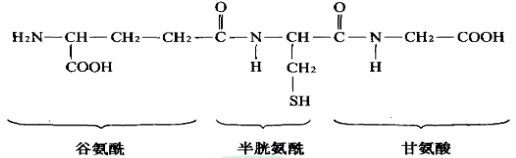
Reduced glutathione (GSH) is a tripeptide compound that is formed by the condensation of glutamate, cysteine, and glycine through a peptide bond. GSH is chemically named γ-L-glutamyl-L-cysteinyl-glycine, and its structural formula is shown in the figure provided. Unlike other peptides and proteins, L-Glutathione powder has a special peptide bond formed by the condensation of the γ-carboxyl group (-COOH) of glutamate with the α-amino group (-NH2) of cysteine.
Certificate of Analysis
|
Test Items |
Specification |
Result |
|
|
Description |
A white crystalline powder |
A white crystalline powder |
|
|
Assay (bas on dry) |
98.0%~ 101.0% |
99.0% |
|
|
Identification |
IR |
Similar with the Reference Spectrum |
Complies |
|
Optical Rotation |
- 15.5°~- 17.5° |
- 16.7° |
|
|
Inorganic impurities |
Chlorides |
Not more than 200ppm |
Complies |
|
Arsenic |
Not more than 2ppm |
Complies |
|
|
Chlorides |
Not more than 200ppm |
Complies |
|
|
Sulphates |
Not more than 300ppm |
Complies |
|
|
Heavy Metals |
Not more than 10ppm |
Complies |
|
|
Iron |
Not more than 10ppm |
Complies |
|
|
Cadmium |
Not more than 1ppm |
Complies |
|
|
Lead |
Not more than 3ppm |
Complies |
|
|
Mercury |
Not more than 1ppm |
Complies |
|
|
Residue on Ignition |
Not more than 0. 1% |
0.06% |
|
|
Organic impurities |
Total |
Not more than 2.0% |
1.3% |
|
GSSG |
Not more than 1.5% |
0.4% |
|
|
Clearity and color of solution |
Clear and Colorless |
Clear and Colorless |
|
|
Residual solvents |
Meet the requirement |
Complies |
|
|
Loss on Drying |
Not more than 0.5% |
0.2% |
|
|
Microbiology |
Total plate count |
≤1000cfu/g |
Complies |
|
Yeast and mold count |
≤100cfu/g |
Complies |
|
|
Total coliforms |
≤100cfu/g |
Complies |
|
|
E. coli |
Absent/10g |
Complies |
|
|
S. aureus |
Absent/10g |
Complies |
|
|
Salmonella |
Absent/10g |
Complies |
|
|
Conclusion |
Complies with the standard of USP 41 |
||
What is The Purity of L-Glutathione powder?
(1) Clarity and color of solution- Dissolve 1.0 g of L-Glutathione powder in 10 mL of water: the solution is clear and colorless.
(2) Heavy metals <1.07>- Proceed with 2.0 g of Glutathione according to Method 2, and perform the test. Prepare the control solution with 2.0 mL of Standard Lead Solution (not more than 10 ppm).
(3) Arsenic <1.11>- Prepare the test solution with 1.0 g of Glutathione according to Method 1, and perform the test (not more than 2 ppm).
What is the Testing Assay of L-Glutathione powder?
Weigh accurately about 0.5g L-Glutathione Powder of the substance to be examined, previously dried, dissolve in 50 mL of a solution of metaphosphoric acid (1 in 50), and titrate with 0.05mol/L iodine VS, add 1 mL of starch indicator when the endpoint approaches. Continue titration until the solution appears blue. Carry out a blank titration in the same manner, and make any necessary correction. 1 mL of 0.05mol/L iodine is equivalent to 30.733 mg of C10H17N3O6S.
Calculate the percentage of L-Glutathione powder (C10H17N3O6S) in the portion of glutathione taken:
Result = [(V-B) X N X F X 100] / W
V =titrant volume of the sample (ml)
B = titrant volume of the blank(ml)
N = titrant normality (mEq/ml)
F = equivalency factor, 307.33 mg/mEq
W =weight of the Sample(mg)
Acceptance criteria: not less than 98.0%
How is L-Glutathione powder Produced?

What Are The Product methods of L-Glutathione Powder?
There are two main methods to produce L-Glutathione Powder, but Guanjie has adopted a new method, the enzymatic method, the pros and cons of which are seen below.
● Chemical synthesis method
Chemical synthesis was one of the earliest approaches used for producing L-glutathione powder. In this process, raw materials are combined through multi-step chemical reactions under controlled laboratory conditions. Although technically feasible, this method has significant drawbacks. It generates serious environmental pollution due to the use of strong reagents and solvents. In addition, production costs are high, and purification is complex. As a result, chemical synthesis is now largely phased out in modern industrial production.
● Fermentation method
The fermentation method is currently the most widely used industrial process for L-Glutathione Powder production. It relies on engineered microorganisms such as yeast or bacteria to biosynthesize glutathione under optimized fermentation conditions. This method is more efficient than chemical synthesis and allows for large-scale production. However, it still has limitations, including relatively high operational costs, energy consumption, and wastewater generation. Therefore, although it is a mainstream method, it is gradually being improved for better sustainability.

● Enzyme method
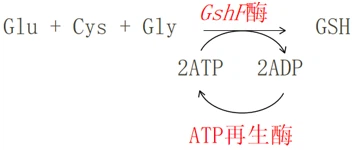
The enzymatic synthesis method represents a newer and more advanced approach for producing L-glutathione powder. This process uses specific enzymes to catalyze the formation of glutathione under mild reaction conditions. Unlike chemical synthesis, it does not require harsh reagents, making it cleaner and more environmentally friendly. Compared with fermentation, the enzyme method offers higher specificity and efficiency. The main challenge is the high cost of ATP, which is required as an energy source. However, modern ATP regeneration systems have significantly reduced production costs. As a result, enzymatic synthesis is becoming the preferred direction for future industrial development.
What Are The Process Advantages of L-Glutathione Powder?
L-Glutathione Powder produced via enzymatic synthesis offers several clear industrial advantages compared with traditional microbial fermentation methods. These advantages are mainly reflected in production efficiency, yield performance, purification simplicity, environmental impact, and overall manufacturing cost.
1. Fast reaction speed and short production cycle
The enzymatic process significantly improves production efficiency. The entire reaction can be completed within approximately one day, enabling rapid batch turnover. In contrast, fermentation-based production of L-Glutathione Powder typically requires at least five continuous days. During fermentation, the process cannot be interrupted, which reduces scheduling flexibility and increases operational constraints. The shorter enzymatic cycle allows manufacturers to respond faster to market demand and improves overall production planning efficiency.
2. High yield and easier purification
The enzymatic synthesis route achieves a higher production yield, generally reaching 30–50 g/L of reaction output. More importantly, the reaction system is relatively simple and well-defined, consisting of controlled substrates and enzymes. This makes downstream purification more straightforward and efficient. In comparison, fermentation methods usually yield around 10 g/L and produce a complex mixture of cellular metabolites, proteins, and by-products. Such complexity makes purification more difficult and often requires the use of harsh or even toxic chemicals during separation and refinement, increasing both risk and processing cost.
3. Environmentally friendly and aligned with green manufacturing standards
The enzymatic process is considered a cleaner production technology. It does not involve the addition of heavy metals, toxic gases, or hazardous organic solvents during synthesis. The only exception is the use of alcohol in the crystallization step, which is a standard and controlled industrial practice. This cleaner production route aligns with modern environmental regulations and supports sustainable manufacturing requirements.
4. Lower energy consumption and reduced production cost
Enzymatic synthesis also offers significant economic advantages. ATP used in the process is renewable within the reaction system, reducing the need for continuous external input. As a result, raw material consumption is optimized, and labor intensity is reduced due to simplified process control. Compared with fermentation, this leads to lower overall energy usage and a more cost-efficient production model.
Overall, enzymatic production of L-Glutathione Powder provides a faster, cleaner, higher-yield, and more economical alternative to traditional fermentation methods.
What Is L-Glutathione Powder Used For?
|
Grade |
Standard |
Note |
|
Food grade |
Food safety national standard, enterprise internal standard |
Limited ions, etc., limited colonies and special bacteria |
|
Cosmetic grade |
internal standard |
Limited ions, etc. |
|
Pharmaceutical grade |
Chinese Pharmacopoeia 2015, USP41, EP9.0, Japanese Pharmacopoeia |
The most stringent European Pharmacopoeia, limiting the content of special impurities |
|
Health product grade |
Company internal standard |
Colony |
FAQs:
1. What is the specification and purity of L-Glutathione Powder?
Guanjie Biotech's bulk L-Glutathione Powder has an assay of 98.0%–101.0% (dry basis), typically achieving ~99% purity. It complies with USP 41 standards, with strict control of impurities such as heavy metals, arsenic, and microbial limits.
2. What form does the L-Glutathione Powder come in and how does it perform in solubility?
L-Glutathione Powder appears as a white crystalline powder. It is easily soluble in water, forming a clear and colorless solution, but is nearly insoluble in ethanol (99.5%).
3. What production method do you use for L-Glutathione Powder?
We use an advanced enzymatic synthesis method with ATP regeneration technology, which is more efficient and environmentally friendly compared with fermentation and chemical synthesis.
4. What applications is L-Glutathione Powder suitable for?
L-Glutathione Powder is widely used in:
Food supplements (antioxidant formulations)
Cosmetic whitening and skin-care products
Pharmaceutical formulations
Health nutrition products
Different grades are available (food, cosmetic, pharmaceutical, and health product grades).
5. What packaging and storage conditions do you provide?
We provide secure industrial packaging designed to prevent moisture and contamination. Storage requirements:
Keep the container tightly closed
Store in a cool, dry, well-ventilated area
Avoid heat, humidity, and direct sunlight
Proper handling ensures L-Glutathione Powder stability and shelf life consistency.
Factory&Team:

Certification

Package & Shipment
● Handling:
Wash thoroughly after handling. Remove contaminated clothing and wash before reuse. Use with adequate ventilation. Minimize dust generation and accumulation. Avoid contact with eyes, skin, and clothing. Keep container tightly closed. Avoid ingestion and inhalation.

Hot Tags: l-glutathione powder, China l-glutathione powder manufacturers, suppliers, factory, D-Chiro Inositol Powder, L-carnitine Fumarate Powder, Alpha-GPC Powder
You Might Also Like