Latest Products

Contact Us
-
6th Floor, 2nd Building, Xijing NO.3, XiJing Industrial Park, DianZi Western Street, Xi'an, Shaanxi, China
-
+86-2988253271

L-Carnosine Powder
CAS No:305-84-0
EINECS No. 206-169-9
GMP standard workshop & two independent laboratories
Certifications: Halal,ISO9001,PAHS Free,NON-GMO,KOSHER,SC
Overseas warehouse(NJ,USA)
Delivery term: DHL, FEDEX, Air freight,Sea freight
Provide Free Sample
MOQ: 1KG
Not for Private Person Sale
Description
L-Carnosine Powder Supplier:
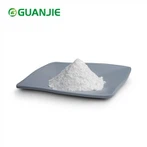
Guanjie Biotech has focused on bulk L-Carnosine Powder research and trading for 20 years. The product appears as a white powder with a specific rotation of 20.9° (c=1.5, H₂O), ensuring consistent quality and purity. We have independent factories and labs, and we maintain strict quality control standards. Each batch is backed by reliable third-party testing reports to guarantee purity and compliance. As a trusted L-Carnosine Powder supplier, we are committed to meeting diverse customer requirements. For bulk inquiries or detailed specifications, feel free to contact us for a quotation.
Why Choose Guanjie Biotech?
● Two Manufacturing Locations
With two production lines, Guanjie Biotech ensures consistent output capacity, supply stability, and efficient order fulfillment for global clients.
● Strict QA&&QC Control
A rigorous QA & QC system is implemented across all stages. Most testing is conducted in-house, including assay, loss on drying, heavy metals, solvent residues, pesticide residues, protein content, and microbiological analysis, ensuring reliable product quality.
● Reliable Certification & Third-Party Support
Products are supported by third-party reports such as SGS and comply with international standards, including ISO9001, ISO22000, IP (Non-GMO), QS, Kosher, and Halal certifications.
COA:
|
Item |
Specification |
Result |
|
Description |
White to off-white crystalline powder |
White crystalline powder |
|
Identification |
Infrared identification |
Qualified |
|
PH |
7.5~8.5 |
8.26 |
|
Optical rotation(°) |
+20.0~+22.0 |
21.3 |
|
Melting point(℃) |
250.0~265.0 |
252.7~255.2 |
|
Loss on drying(%) |
Not more than 1.0 |
0.29 |
|
Residue on ignition(%) |
Not more than 0.1 |
0.03 |
|
Heavy Metal(ppm) |
Not more than 10 |
Less than 10 |
|
Assay(%) |
99.0~101.0 |
99.4 |
|
Bulk density(g/ml) |
------- |
0.35 |
|
L-histidine |
Not more than 1.0 |
0.13 |
|
β-alanine |
Not more than 0.1 |
Not detected |
|
Total Plate Count(cfu/g) |
Not more than 1000 |
Less than 1000 |
|
Yeast & Mold(cfu/g) |
Not more than 100 |
Less than 100 |
|
E.Coli. |
Absence/g |
Conforms |
|
Conclusion |
Qualified |
|
Storage |
Store in cool & dry place. Do not freeze. Keep away from strong light and heat. |
|
Shelf life |
2 years when properly stored. |
What Is L-Carnosine Powder?
L-Carnosine Powder is an important vitamin-like nutrient. In the body, small amounts of carnitine are synthesized from lysine, methionine, and niacin. The ammonia in lysine and methionine is a product of protein degradation and an identifying marker of exercise fatigue. Even lower levels of ammonia can be more toxic. L-Carnosine Powder has been found to have a protective effect against ammonia toxicity, promoting the urea cycle and degrading ammonia to urea, thus relieving ammonia toxicity.

How Is L-Carnosine Powder Produced?

What Are Source of L-Carnosine Powder?
L-carnosine powder is a naturally occurring dipeptide composed of beta-alanine and histidine, and it is predominantly found in animal-derived foods. Its highest concentrations are located in skeletal muscle tissues, which is why meat products are the primary dietary sources. Below is a structured overview of key food sources rich in L-carnosine.
1. Beef
Beef is widely recognized as the richest dietary source of L-carnosine. As a red meat with dense muscle tissue, it provides high levels of this compound, particularly in lean cuts such as sirloin, rump, and fillet. The concentration is generally higher in grass-fed and well-developed muscle portions.
2. Chicken
Chicken is another important source, especially in muscle-rich parts like the breast and thighs. The L-carnosine content can vary depending on cooking methods, with roasted or grilled chicken-particularly the skin-tending to retain relatively higher levels.
3. Lamb
Lamb, also classified as red meat, contains a substantial amount of L-carnosine powder. Although its concentration is slightly lower than that of beef, it still contributes meaningfully to dietary intake, especially in traditional meat-based diets.
4. Pork
Pork provides moderate levels of L-carnosine. Lean cuts such as tenderloin and loin chops contain higher concentrations compared to fattier portions. While not as rich as beef or lamb, pork remains a relevant source in mixed diets.
5. Fish
Certain fish species contain L-carnosine, though typically at lower concentrations than terrestrial meats. Varieties such as skipjack tuna and salmon are among the better sources, while swordfish, yellowfin tuna, and mackerel also contribute smaller amounts.
6. Dairy Products and Eggs
Dairy products-including milk, yogurt, and cheese-as well as eggs contain trace amounts of L-carnosine powder. Among these, aged cheeses like Parmesan tend to have relatively higher levels, though still significantly less than meat sources.
From a supplementation perspective, L-carnosine powder is generally considered safe when consumed in moderate amounts. As it is a naturally occurring compound in the human body, low-dose supplementation is well tolerated. However, excessive intake may lead to mild gastrointestinal discomfort, such as diarrhea. These effects are usually temporary and subside once supplementation is reduced or discontinued.
Production Methods of L-carnosine powder:
L-carnosine powder is a widely used functional ingredient designed to increase the levels of L-carnosine in the human body. Naturally present in animal-derived tissues such as beef, pork, and chicken, L-carnosine is a dipeptide composed of beta-alanine and histidine. To meet commercial demand, it is produced through several industrial methods, each with distinct technical characteristics, cost structures, and scalability. The three primary production routes include chemical synthesis, enzymatic synthesis, and extraction from animal tissues.
● Chemical Synthesis
Chemical synthesis is the most commonly adopted method for large-scale production of L-carnosine powder. This process involves the condensation reaction between beta-alanine and histidine, typically facilitated by a coupling agent such as dicyclohexylcarbodiimide (DCC). Under controlled reaction conditions, these amino acids form the L-carnosine dipeptide.
Following synthesis, the crude product undergoes multiple purification steps, including filtration, chromatography, and crystallization, to ensure high purity and consistent quality. This method is favored in industrial settings due to its relatively high yield, reproducibility, and cost efficiency. Additionally, chemical synthesis allows for precise control over product specifications, making it suitable for pharmaceutical and nutraceutical applications.
● Enzymatic Synthesis
Enzymatic synthesis represents a more biologically oriented approach. In this method, beta-alanine and histidine are converted into L-carnosine through the catalytic action of the enzyme carnosine synthase. This process typically occurs under milder reaction conditions compared to chemical synthesis, which can be advantageous for maintaining product integrity.
However, enzymatic production has notable limitations. The high cost of enzyme preparation, combined with relatively slow reaction kinetics, can result in longer production cycles and higher overall manufacturing expenses. As a result, while enzymatic synthesis is attractive from a "green chemistry" perspective, it is less commonly used for bulk L-carnosine powder industrial production.
● Extraction from Animal Tissue
L-carnosine powder can also be extracted through direct extraction from animal tissues, particularly muscle-rich sources such as beef, pork, and chicken. The process begins with mincing the raw material, followed by soaking it in an aqueous acidic solution-commonly hydrochloric acid-to solubilize L-carnosine.
The extract is then subjected to a series of downstream purification steps, including filtration, centrifugation, and dialysis, to remove proteins, fats, and other impurities. After purification, the solution is concentrated, dried, and milled into a fine powder.
Although this method provides a natural source of L-carnosine, it is less favored in modern industry due to variability in raw materials, lower extraction efficiency, and more complex processing requirements. Nonetheless, it remains relevant in certain niche applications where naturally derived ingredients are preferred.
Factory&Team:

Certification

Package & Shipment

Hot Tags: L-Carnosine Powder, China L-Carnosine Powder manufacturers, suppliers, factory, D-Chiro Inositol Powder, Alpha-GPC Powder, L-carnitine Fumarate Powder
You Might Also Like