Bulk fisetin is also an antioxidant found in fruits and vegetables, including strawberries, apples and cucumbers. Fisetin is a flavonoid component.Flavonoids show "potential as anti-inflammatory, chemopreventive, chemotherapeutic, and aging agents," according to research in Frontiers in Chemistry.

1. Advances in Fisetin Biosynthesis, Bioactivity, Constitutive Relationships and Clinical Studies
Flavonoids are an important class of plant secondary metabolites. It contains more than 4000 compounds. There are a wide variety of species with complex and diverse structural types. Fisetin (3,3',4',7-tetrahydroxyflavone) is widely found in vegetables and fruits such as cucumber, onion, strawberry, apple, persimmon and so on. The content is in the range of 2-160 μg/g. This paper presents a systematic review of the synthetic methods, conformational relationships, pharmacokinetics and methods to improve bioavailability, the main biological activities and their potential mechanisms of action, and the progress of clinical trial studies of fexoflavones.

Figure 1. Chemical structure of Fisetin
2.Synthesis of fisetin and its derivatives
Large-scale extraction of flavonoids from natural products has outstanding problems such as low yield and high cost. The synthesis of fisetin and its derivatives by biological or chemical synthesis can effectively improve the yield and biological activity. Among the biosynthetic means, L-tyrosine is used as a precursor substance to accomplish the synthesis of fexofenone by Saccharomyces cerevisiae and Escherichia coli, in which Rodriguez's team reported the biosynthetic pathway of fexofenone synthesized ab initio using Saccharomyces cerevisiae as a microbial strain. In recent years studies have attempted to synthesize fissurone derivatives containing methyl substituents. It further enhances the biological activities. Especially antioxidant activity. Among them, 5´-methylfeatherone has the strongest free radical scavenging effect. This is because it maintains the inherent planar structure of fexofenone (Fig. 3). Considering that chemical synthesis involves the use of toxic chemicals and waste emissions. Whereas, biosynthesis of pure bulk fisetin is much simpler and environmentally friendly. Therefore biosynthesis is a more promising way to produce fenthionone.

Figure 2. Biosynthetic pathway for the production of fexofenone using brewer's yeast

Fig. 3. Chemical synthesis pathway of 5´-methylfeatherone
3. Conformational relationship of fexofenone
Bulk fisetin is a flavonoid based on two aromatic rings (A and B rings) linked by a heterocyclic pyran (C ring).The oxygen group, the double bond between the 2- and 3-carbon atoms (C2=C3 double bond) and the four hydroxyl groups (C-3, C-7, C-3´, C-4´) in the C ring determine the structural features of feserone. Constitutive relationships reveal key structural sites that mediate the biological activity of fexofenone. Examples include the C2=C3 double bond of the 4-oxo group and the hydroxyl group at the 3,7,3´,4´ sites. In terms of antioxidant activity, the C2=C3 double bond with a 4-oxo group on the C ring can effectively delocalize the ring B electronically and has higher antioxidant properties.The bond dissociation energies of the 3-OH and the 3´, 4´-OH groups are lower. Compared to 7-OH, they have a higher ability to provide H to free radicals and thus exert antioxidant effects. The order of their oxidation state sites is 3´= 4´> 3> 7. Besides antioxidant activity, the sites of fenthiones also influence other biological effects. The substitution of some hydroxyl groups in the derivatives of Fexofenone may also enhance or weaken the original activity.
4,Pharmacokinetics of fexofenone
Pharmacokinetic studies have shown that fexofenone is rapidly absorbed in Sprague-Dawley rats following tail vein administration (10 mg/kg). Mean serum level-time curves showed a rapid decline in the parent form of fexofenone. Simultaneously, levels of its glucosinolate and sulfate forms increased. In addition, fexofenone was absorbed and converted to sulfate to a greater extent than glucosinolates. Since the physicochemical properties of the metabolites of fexofenone are different from those of its parent. The biological effects of the metabolites compared to maternal fexofenone need to be further investigated.
In addition, female C57BL/6J mice were injected intraperitoneally with fexofenone (223 mg/kg bw) to explore its metabolism and distribution in vivo. The results showed that within 15 min after injection, fesperidone reached a maximum plasma level of 2.53 mg/mL and declined at a terminal half-life of 3.12 h. The results showed that fisetin bulk powder is a highly potent metabolizer in the kidney, which is the most important part of the body. Tissue distribution results showed that the highest levels were found in the kidney. This was followed by the intestine and liver, with lower levels in the lungs and spleen. Of interest, the study identified metabolites of the fethionone glucuronide splice and a new 3´-methoxylated fethionone metabolite (geraldol), which accumulated at higher levels in Lewis lung tumors than the parent compound. It was more cytotoxic than fexofenone in inhibiting endothelial cell migration and proliferation. Therefore, evaluation of the biological effects of fexofenone metabolites will help to explore better analogs in the future.
5. Anticancer activity of fexofenone
Fexedrine exerts its anticancer effects through a variety of mechanisms. These include inhibiting cancer cell proliferation, blocking cell cycle progression, and inducing apoptosis. In vitro and in vivo studies have validated the molecular targets of fexofenone in various cancer types. The potential mechanisms of action of fexofenone in six cancer types, including breast, lung, pancreatic, hepatocellular, oral squamous cell, and colorectal cancers, are specifically reviewed (Figure 4).
Figure 4. Potential therapeutic targets and potential molecular mechanisms of fexofenone on different types of tumors
6. antidiabetic activity of fexofenone
Diabetes mellitus is one of the fast growing diseases worldwide. It is expected to affect 693 million people by 2045. Diabetic complications, such as cardiovascular disease, diabetic neuropathy and diabetic nephropathy, can lead to organ dysfunction, long-term damage to human organs, reduced quality of life, and even death. The role of fexofenone in the prevention of diabetes-related complications (diabetic cardiomyopathy, diabetic nephropathy, diabetic encephalopathy) is outlined in the article.
7. Anti-inflammatory activity of fexofenone
The overproduction of pro-inflammatory cytokines (IL-6, IL-8, IL-18, IL-1β, TNF-α, PEG2) is recognized as an important pro-inflammatory factor commonly found in inflammatory diseases. Fespironolactone can effectively inhibit the production of pro-inflammatory factors. The potential molecular mechanisms are shown in Figure 5.
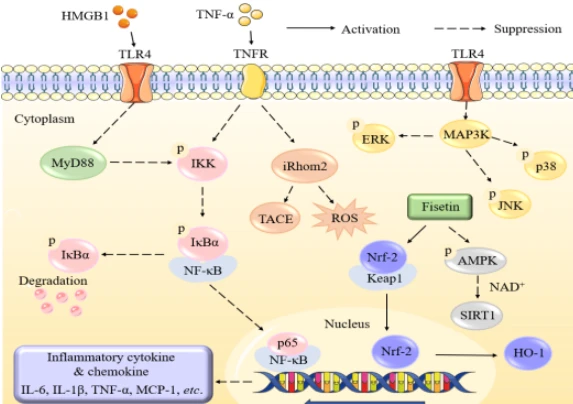
Figure 5. Molecular targets of fethersone-mediated anti-inflammatory effects
8. Delivery systems and formulation studies to improve the bioavailability of fexofenone
Despite the potential health benefits of fexofenone. However, bulk fisetin' s bioavailability is poor. It is only 44.1%. It is characterized by low water solubility (10.45 μg/mL) and high lipophilicity (log P = 3.2). Therefore, it is imperative to develop new dosage forms of fexofenone to improve bioavailability and promote its application. The main formulations of different carriers of fisetin powder bulk are shown in Figure 6.

Figure 6. Schematic diagram of the delivery system of fexofenone
9. Clinical research and application of fexofenone
Clinical trials of fexofenone have been applied to coronavirus (including COVID-19), osteoarthritis, and chronic kidney disease. The dose of fesperidone in different treatment trial cycles was 20 mg/kg. Of note, the first medical food (GlaucoCetin) containing fesperidone uniquely targeting vision has been introduced to the market. It is priced at $79.95. It is designed to protect the mitochondrial function of optic nerve cells in glaucoma patients. Fexofenone can be used as a pharmaceutical ingredient, an oral dietary supplement and a medical food with beneficial effects on human health.
10. Future Prospects
Bulk fisetin is a common dietary polyphenol in our daily diet. It is important to explore the bioactivity, nutritional and medicinal values of fexofenone. In this paper, we have systematically analyzed and summarized the synthesis, conformational relationship, bioactivity, clinical trials and drug delivery system of fexofenone. There are several points that need to be improved in further future studies, including:
(1) In order to obtain better biological activity, the parent molecule should be synthesized by chemical modification to obtain the fexofenone derivatives based on the available data on intermolecular interactions;
(2) In view of the proven effectiveness of fethersone combination therapy, the interaction of fethersone with existing chemotherapeutic agents should be explored in cancer treatment to avoid side effects;
(3) More studies are needed to assess the effectiveness, toxicity, and side effects of fexofenone;
(4) Further research is needed on the optimal delivery system of fexofenone for target populations with certain health conditions and to expand clinical trial studies of fexofenone.
In summary, fethersone is receiving increasing attention for its multiple effective health effects, which may promote its application in the pharmaceutical industry. Meanwhile, it has a great potential for development in the fields of cosmetics and food.
Welcome to request samples and information:info@gybiotech.com