How Much Beta Glucan Is in Yeast?
Differences in Content Based on Raw Materials and Processes
Beta-glucan yeast powder is mainly found in the inner shell of the cell wall of *Saccharomyces cerevisiae*. Its content varies significantly depending on the source of the raw material and the depth of extraction.
• Primary Yeast Cell Wall Products:
These beta-glucan yeast powder products undergo only simple autolysis and drying, with β-glucan and mannan oligosaccharides coexisting. Patent data shows that the β-glucan content in these yeast cell walls is typically 20%–70% by mass.
• Purified β-glucan Extracts:
After deep purification processes such as alkaline extraction and enzymatic hydrolysis to remove proteins, fats, and mannans, the product purity is significantly improved. Academic research data shows that the content of commercially available yeast β-glucan samples ranges from 74% to 86%.
• Industrial-Scale Production:
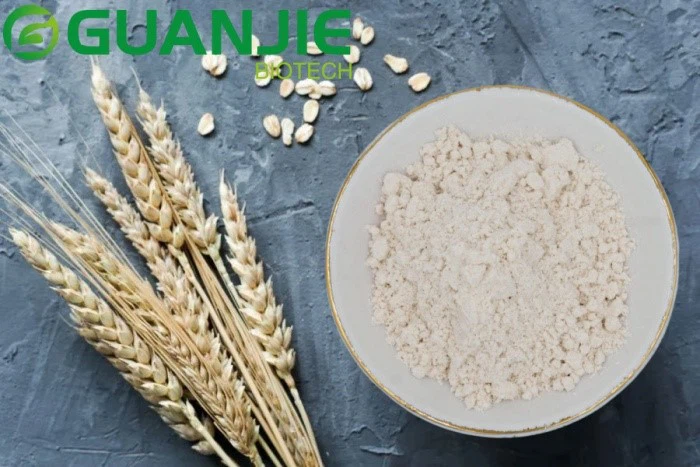
Meets the specifications for food and dietary supplements. These products require multi-step purification, including solvent defatting, isoelectric point precipitation to remove proteins, and refining processes such as alcohol precipitation or membrane separation. According to the newly promulgated testing method in GB 5009.303-2025, the β-glucan content of high-purity products can stably reach over 70%, and some high-quality raw materials can even achieve a purity of 75%-85%. Guanjie Biotech's bulk beta-glucan yeast powder meets these high standards and serves B-end customers in more than 100 countries worldwide.
Key Impurity Residual Analysis
B2B customers need to pay attention to the composition of impurities beyond content. In typical beta-glucan yeast powder products, residual impurities mainly include.
|
Component Types |
Range of Concentrations |
Technical Notes: |
|
Protein |
≤3.5% - 10% |
EU and Chinese standards have clear regulations regarding protein residues. |
|
Glycogen |
0% - 20% |
Storage polysaccharides with similar structures can interfere with test results. |
|
Ash |
≤3% - 5% |
This reflects the removal efficiency of residual inorganic salts during the alkaline extraction process. |
Through a targeted enzymatic hydrolysis process and multi-stage separation technology, Guanjie Biotech enhances the β-glucan content while effectively controlling protein and ash residues, ensuring the product meets international quality standards.
Method for Determining β-Glucan Content
• Promulgation of National Standard GB 5009.303-2025
On March 16, 2025, the National Health Commission and the State Administration for Market Regulation jointly issued the National Food Safety Standard – Determination of beta-glucan yeast powder in Food (GB 5009.303-2025), which will officially come into effect on September 16, 2025. This is the first national standard specifically established for the testing of yeast β-glucan.
The core technical approach of this standard is enzymatic hydrolysis. Compared with traditional methods, enzymatic hydrolysis uses specific β-glucanase enzymes to hydrolyze the target polysaccharides into glucose monomers and then converts the quantified glucose results into β-glucan content. The advantages of enzymatic hydrolysis include high specificity and accuracy, as it can effectively eliminate interference from proteins, fats, and soluble sugars in the food matrix during detection.
• Comparison of Enzymatic and Acid Hydrolysis Methods
Before the implementation of GB 5009.303-2025, acid hydrolysis-ion chromatography was commonly used in industry practice for determination. Literature reports indicate that high-pressure acid hydrolysis-ion exchange chromatography has a limit of quantification (LOQ) of 11.1 mg/100 g for beta-glucan yeast powder in milk powder, with recoveries ranging from 81.5% to 99.8% and relative standard deviations (RSDs) below 5%. This method demonstrates good linearity in glucose response (correlation coefficient r = 0.9998). However, acid hydrolysis lacks the substrate specificity of enzymatic methods and may be affected by interference from other glucose polymers.
From a quality control perspective, enzymatic hydrolysis has a direct impact on the acceptance criteria of the new standard. Beta-glucan yeast powder values obtained using enzymatic hydrolysis are generally lower than those obtained using acid hydrolysis because the enzymatic method identifies only specific β-glucan structures rather than all the glucose released during hydrolysis. For suppliers claiming ≥70% purity, it is necessary to ensure that their products comply with the standard even under the more stringent enzymatic hydrolysis detection method. This shift requires customers to pay close attention to suppliers' testing methods and the corresponding qualification standards during procurement.
• Correlation Between Structural Activity and Content Determination
The bioactivity of beta-glucan yeast powder is closely related to its molecular structure. Bioactive β-glucan typically exhibits a triple-helix conformation with a broad molecular weight distribution range, from tens to hundreds of kDa. Studies have shown that the content of water-soluble triple-helix β-glucan in acid hydrolysis products can reach 0.35%, while hydrolysis using β-1,3-glucanase can increase the content of this active structure to 0.94% while maintaining the average molecular weight of the product at approximately 79 kDa.
In contrast, the apparent content calculated solely from total glucose may not fully reflect the product's functional quality. Therefore, for B2B customers, while focusing on beta-glucan yeast powder content, it is also advisable to evaluate the beta-glucan yeast powder supplier's technical parameters related to molecular weight distribution and preservation of the active structure.
How To Choose High-quality Beta Glucan Yeast Powder?
Specifications and Testing Standards
When purchasing beta-glucan yeast powder raw materials, B2B customers should pay close attention to whether the yeast beta-glucan powder supplier's specification sheet includes the following key items
• β-glucan content (with the testing method specified; enzymatic hydrolysis conforming to GB 5009.303-2025 is preferred).
• Protein, fat, ash, and moisture content.
• Microbiological indicators (total bacterial count, coliforms, Salmonella, etc.)
• Heavy metals and pesticide residues (for food-grade products)
Furthermore, it is crucial to clarify whether the product is an "insoluble β-glucan" or a modified "soluble β-glucan," as their application scenarios and regulatory limits differ.

Compliance and Application Limitations
Chinese regulations stipulate that the daily intake of beta-glucan yeast powder should not exceed 250 mg, and its use is not permitted in infant formula. The EU regulatory system is more detailed, specifying usage limits for different food categories, such as beverages, cookies, breakfast cereals, and dairy products. Therefore, B2B customers planning to use beta-glucan yeast powder in exported food products need to adjust the amount added to their formulations according to the regulatory requirements of the target market.
Conclusion:
In summary, how much β-glucan is in yeast? For professional customers, the answer depends on the grade of the selected product. Primary cell wall products contain as little as 20%, while high-quality beta-glucan yeast powder raw materials that have undergone deep purification can consistently reach a purity of over 70%, even reaching 90%.
When selecting a yeast beta-glucan powder manufacturer, a comprehensive evaluation should be conducted based on four dimensions: strain origin, production process, impurity control, and testing standards.
As a professional yeast beta-glucan powder supplier focused on innovation and rigorous quality control, Guanjie Biotech is committed to providing high-quality beta-glucan yeast powder that meets international standards to B2B clients in over 100 countries worldwide. For detailed specifications or samples, please email info@gybiotech.com.
References:
[1] Tian Xiaoli, Yang Ping, Jiang Wenxia. Comparative analysis of quantitative determination methods for β-D-glucan in yeast cell walls [J]. Food Science, 2016.
[2] Yeast cell walls and their preparation, feed additives and their preparation, and feed [P]. Angel Yeast Co., Ltd., 2012.
[3] GB 5009.303-2025, National Food Safety Standard - Determination of yeast β-glucan in food [S]. National Health Commission, 2025.
[4] Boutros JA, et al. Comparison of structural differences between yeast β-glucan sourced from different strains of Saccharomyces cerevisiae [J]. Food Chem, 2022, 367:130708.
[5] Tian Xiaoli. Preparation of alkali-insoluble β-D-glucan from the cell wall of spent brewer's yeast [D]. Tianjin University of Science and Technology, 2015.
[6] Food Partner Network. Comparison of quality standards and usage regulations for β-glucan between China and the European Union [EB/OL]. 2011.