The growing demand for GHK-Cu (Copper Peptide) is driven by advances in skin biology, formulation science, and increasing consumer preference for high-performance skincare products. Rather than being a short-term trend, GHK-Cu Powder has become a scientifically supported cosmetic active ingredient due to its multiple skin-repair mechanisms and broad formulation compatibility. As a result, many cosmetic brands are sourcing bulk GHK-Cu from reliable GHK-Cu manufacturers and GHK-Cu suppliers to develop premium anti-aging and skin repair products.
What Does GHK-Cu Do in Cosmetics?
GHK-Cu, also known as Copper Tripeptide-1, is a naturally occurring copper peptide composed of glycine, histidine, and lysine. Found naturally in human plasma, saliva, and urine, GHK-Cu peptide exhibits an exceptionally high affinity for copper ions. As a premium skincare active ingredient, it regulates multiple biological pathways involved in skin regeneration, collagen production, antioxidant defense, and tissue repair, making it one of the most widely researched anti-aging peptides used in cosmetic formulations.
Cellular Signaling and Collagen Production
As a biological signaling molecule, GHK-Cu penetrates the stratum corneum and interacts with fibroblast receptors to activate genes responsible for skin regeneration. Research indicates that Copper Tripeptide-1 promotes the synthesis of type I and type III collagen, elastin, and glycosaminoglycans such as hyaluronic acid. Unlike conventional anti-aging ingredients, it not only stimulates new extracellular matrix production but also regulates matrix metalloproteinases (MMPs) and their tissue inhibitors (TIMPs), maintaining a healthy balance between collagen degradation and reconstruction. This mechanism supports improved skin elasticity, firmness, and wrinkle reduction.
Anti-Inflammatory and Antioxidant Protection
GHK-Cu peptide demonstrates strong antioxidant and anti-inflammatory properties, making it valuable for skin exposed to UV radiation and environmental stress. It helps reduce the production of inflammatory cytokines, including tumor necrosis factor-alpha (TNF-α) and interleukin-6 (IL-6), while enhancing the activity of endogenous antioxidant enzymes such as superoxide dismutase (SOD). These effects minimize oxidative stress, reduce lipid peroxidation, and protect skin cells from premature aging, supporting healthier and more resilient skin.
Angiogenesis and Skin Barrier Repair
One of the key advantages of GHK-Cu powder is its ability to stimulate angiogenesis and accelerate tissue repair. By promoting endothelial cell proliferation and improving microcirculation, it enhances nutrient delivery to damaged tissues and supports faster wound healing. Additionally, Copper Tripeptide-1 encourages epidermal cell proliferation and differentiation, strengthens the skin barrier, and improves moisture retention. These benefits make GHK-Cu raw material an excellent choice for formulations targeting sensitive skin, post-procedure recovery, and advanced anti-aging skincare. As a result, GHK-Cu for cosmetics has become a highly sought-after ingredient among global cosmetic brands and GHK-Cu manufacturers developing premium skin repair products.
Consumer Skincare Demands:
The growth of the GHK-Cu skincare market is driven by increasing consumer demand for advanced anti-aging solutions. Modern consumers are moving beyond basic hydration and seeking targeted skin repair, collagen support, and cellular renewal. As a powerful copper peptide GHK-Cu ingredient, it is widely used in cosmetic formulations as a premium anti-aging peptide ingredient for professional skincare brands.
1. Growing Demand for Efficacy-Based Skincare Solutions
Consumers are increasingly focused on active skincare ingredients, including retinol, peptides, and Pro-Xylane. As an advanced GHK-Cu peptide ingredient, GHK-Cu combines anti-aging, antioxidant, anti-inflammatory, and skin-repair properties, matching the market trend toward comprehensive anti-aging solutions. By incorporating copper peptide GHK-Cu into formulations, skincare brands can develop products targeting firming, wrinkle reduction, collagen support, and barrier repair.
2. Rising Demand for Sensitive Skin Repair and Recovery Products
Environmental stress, over-cleansing, and cosmetic procedures have increased demand for gentle skin repair solutions. Compared with highly irritating ingredients such as high-concentration acids and retinol, GHK-Cu skincare ingredients provide effective repair support with better tolerance. As a result, cosmetic-grade GHK-Cu is becoming a valuable ingredient for sensitive skin care, post-procedure recovery, and premium anti-aging formulations.
|
Demand Dimension |
Traditional anti-aging ingredients (such as certain retinoids) |
GHK-Cu |
|
Main Action |
Promotes epidermal renewal and stimulates collagen synthesis |
Multi-target effects: signal activation, anti-inflammatory, antioxidant, and angiogenesis inhibition |
|
Path Skin tolerance |
High irritancy; a tolerance period is required. |
High gentleness, ideal for sensitive skin and post-operative recovery. |
|
Formulation compatibility |
May react with certain acid–base systems; high system stability is required. |
Special attention should be paid to specific chelating agents and pH control, as there is significant room for formulation optimization. |
Technological Advances in GHK-Cu Formulation and Raw Material Stability
Early applications of GHK-Cu peptide (Copper Tripeptide-1) in cosmetics were restricted by challenges such as high production costs, instability in aqueous systems, and limited compatibility with other active ingredients. Recent advancements in peptide synthesis, purification, and stabilization technologies have significantly improved GHK-Cu powder quality and application performance. These innovations enable cosmetic manufacturers and GHK-Cu suppliers to provide more stable, effective, and scalable anti-aging skincare solutions.
High-Purity GHK-Cu Production and Cost Optimization
Advancements in peptide solid-phase synthesis technology and purification processes have improved the production efficiency of high-purity GHK-Cu raw material. These innovations have reduced manufacturing costs while increasing product consistency and quality. As a result, GHK-Cu peptide, also known as copper tripeptide-1, has expanded from premium skincare applications into broader anti-aging and skin repair product markets. Reliable GHK-Cu manufacturers can now provide stable GHK-Cu powder solutions for cosmetic brands and formulation companies.
Advanced Delivery Technologies for Improved Skin Absorption
One major challenge of peptide skincare ingredients is achieving effective penetration through the skin barrier. Modern formulation technologies, including liposome encapsulation, nanoemulsions, microsphere delivery systems, and penetration enhancers, have improved the bioavailability of GHK copper peptide in cosmetic formulations. These delivery methods help increase the effective concentration of GHK-Cu in the epidermis and dermis, supporting the performance of anti-aging serums, creams, and skin repair products.
Enhanced Stability and Formulation Compatibility
Improving the stability of GHK-Cu raw material is essential for maintaining product effectiveness throughout shelf life. By optimizing emulsification systems, selecting suitable chelating agents, and controlling formulation pH (typically 5.5–6.8), suppliers and skincare brands can reduce GHK-Cu degradation in water-based serums and creams. These improvements ensure better compatibility, safety, and long-term stability for GHK-Cu skincare formulations.
Strategic Choices for Brands to Build Differentiated GHK-Cu Efficacy Barriers
In the highly competitive skincare market, brands need to develop unique product advantages through scientifically supported active ingredients and reliable efficacy claims. GHK-Cu peptide, also known as copper tripeptide-1, has become a popular anti-aging ingredient due to its extensive research background and broad cosmetic applications.
Scientific Research Support and Clinical Validation
Copper peptide GHK-Cu has been studied for decades in dermatology and skin biology research, with extensive scientific literature supporting its role as a high-value cosmetic ingredient. By incorporating cosmetic-grade GHK-Cu into product formulations, brands can leverage existing research resources and strengthen product credibility.
To establish stronger market differentiation, companies can combine GHK-Cu skincare applications with professional testing methods, including human efficacy evaluations, skin elasticity assessments, hydration measurements, and collagen-related analysis. These scientific validation approaches help brands provide measurable product performance data and increase consumer confidence in peptide-based skincare solutions.
Expanding Product Categories and Application Opportunities
GHK-Cu offers significant potential for vertical product expansion. Initially used mainly in premium anti-aging serums, GHK-Cu for cosmetics is now widely applied in facial masks, eye creams, lotions, creams, and scalp care products.
With growing demand for innovative anti-aging peptide ingredients, brands can develop diversified product portfolios based on GHK-Cu powder or customized peptide formulations. Beyond traditional skincare, GHK-Cu is also gaining attention in scalp care products designed for hair follicle nourishment and improved scalp conditions.
By expanding across multiple product categories, brands can increase customer lifetime value, strengthen product ecosystems, and create long-term competitive advantages. Partnering with a reliable GHK-Cu supplier or GHK-Cu manufacturer ensures consistent raw material quality, stable supply, and formulation flexibility for global cosmetic brands.
Supported by Global Regulatory Environment and Safety Evaluation
With increasingly strict global cosmetic regulations, GHK-Cu peptide powder has gained attention as a reliable cosmetic peptide raw material due to its safety profile, compliance status, and traceability. For cosmetic brands, selecting a qualified GHK-Cu supplier is essential to ensure regulatory compliance and product quality.
International Recognition and Compliance Advantages
GHK-Cu (Copper Tripeptide-1) has been listed in China's Catalog of Used Cosmetic Ingredients (2021 Edition) and registered under the International Cosmetic Ingredient Nomenclature (INCI) system. This regulatory recognition supports brands in developing GHK-Cu for skincare products, including anti-aging serums, skin repair formulations, and professional cosmetic solutions.
High Safety and Biocompatibility Profile
As an endogenous copper peptide naturally found in the human body, GHK-Cu demonstrates excellent biocompatibility. Safety evaluations indicate that GHK-Cu is non-irritating, non-sensitizing, and suitable for cosmetic applications when used at recommended concentrations. Its favorable biological compatibility supports its growing use as an anti-aging peptide ingredient and skin repair peptide in modern skincare formulations.
FAQs:
Q1: What is the difference between GHK-Cu and ordinary peptides?
GHK-Cu is a copper peptide that combines signaling activity with copper ion delivery, while ordinary peptides mainly provide biological signals without copper-binding functions. This makes GHK-Cu unique for cosmetic formulations.
Q2: What is the stable pH range of GHK-Cu?
GHK-Cu peptide shows optimal stability in formulations with pH 5.0–7.0. It remains stable under mild conditions, while extremely acidic or alkaline environments may reduce peptide activity.
Q3: Can GHK-Cu be combined with hyaluronic acid and ceramides?
Yes, GHK-Cu is compatible with skincare ingredients including hyaluronic acid, ceramides, glycerin, and squalane. These combinations support moisturizing, skin barrier repair, and anti-aging formulation performance.
Q4: What is the recommended concentration of GHK-Cu in cosmetic formulations?
The recommended GHK-Cu concentration in finished skincare products is generally 0.05%–0.2%. Cosmetic manufacturers should add GHK-Cu powder below 40°C during final formulation stages to maintain stability.
Q5: Will GHK-Cu cause skin irritation or allergies?
GHK-Cu is generally considered a gentle cosmetic peptide with low irritation potential. However, sensitive skin users should perform a patch test before applying products containing copper peptide ingredients.
Q6: Will GHK-Cu cause skin staining?
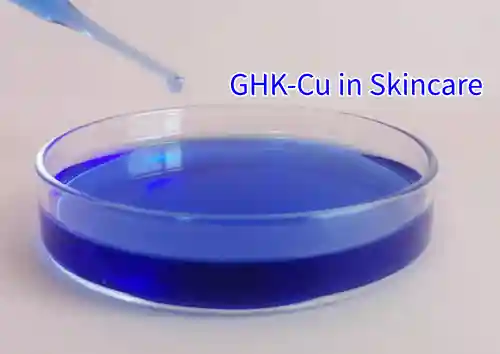
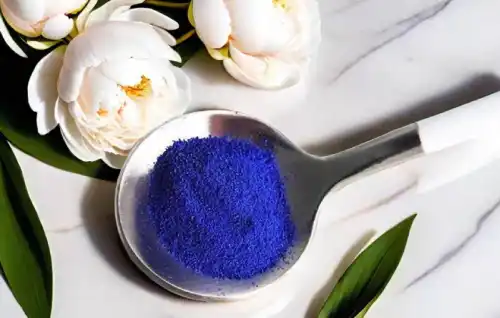
GHK-Cu has a natural blue appearance due to copper ions, but at normal cosmetic concentrations, it typically does not cause visible skin staining or blue discoloration.
Q7: How long does it take for GHK-Cu effects to appear?
The effects of GHK-Cu peptide are gradual and usually require consistent use for several months. It supports long-term skincare goals through gentle anti-aging and skin repair mechanisms.
Q8: Why is GHK-Cu expensive?
GHK-Cu has a higher cost because its synthesis requires advanced peptide technology, high purity standards, copper complex formation control, and strict quality testing during cosmetic raw material production.
Q9: Which skincare products commonly use GHK-Cu?
GHK-Cu is widely used in anti-aging serums, repair creams, eye products, facial masks, and scalp care formulations. It is especially popular in premium functional skincare product lines.
Conclusion:
The expanding application of Copper peptide GHK-Cu is driven by scientific research, consumer demand for effective skincare solutions, and advances in peptide delivery technology. As functional skincare continues to develop, GHK-Cu is expected to play a greater role in premium cosmetic formulations.
Guanjie Biotech is a professional GHK-Cu manufacturer and OEM ODM supplier, providing high-purity bulk GHK-Cu powder, customized peptide solutions, and reliable raw material support for global cosmetic brands. Welcome to enquire with us at info@gybiotech.com.