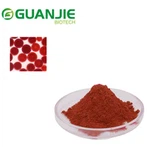
Spermidine powder specifications vary by source, concentration, and dosage form. Natural dietary spermidine intake typically ranges from 4.8 to 17.0 mg per day. Commercial wheat germ extract spermidine supplements generally contain 0.064%–2.4% spermidine, with daily doses of 1.2–15 mg in finished products. Spermidine trihydrochloride, produced through precision fermentation or high-purity chemical synthesis, can achieve purity levels above 86%. Clinical studies have investigated daily doses ranging from 6 to 40 mg. This guide examines spermidine powder sources, purity specifications, supplement dosage, manufacturing methods, and regulatory considerations for ingredient suppliers and supplement manufacturers.
Classification of Spermidine Supplement Sources and Variations in Content
The spermidine content in dietary supplements depends primarily on the raw material source and manufacturing process. Commercial spermidine powder and supplement ingredients generally fall into three categories: wheat germ extract spermidine, other plant-based extracts, and high-purity spermidine salts.
Wheat Germ Extract Powder
Wheat germ is a natural plant source of spermidine, with reported concentrations of approximately 200–300 μg/g. However, the spermidine content in wheat germ extract powder varies considerably depending on the extraction and concentration methods. Reported concentrations in commercial wheat germ-based supplements range from approximately 0.064% to 0.94%, while some products contain 0.8%–2.4%.
Recent research has investigated improved extraction techniques that increased spermidine concentrations in wheat extract spermidine powder to 7.6% ± 1.9%, reaching up to 9.6% in a 50 kg pilot-scale trial. These findings suggest potential for developing higher-concentration natural spermidine ingredients, although commercial scalability requires further evaluation.
High-Purity Spermidine Trihydrochloride Powder
Spermidine trihydrochloride powder is another option for supplement manufacturers. It can be produced through chemical synthesis or fermentation-based processes, depending on the manufacturing method. High-purity materials allow more precise ingredient standardization and dosage calculations, making them suitable for research applications and specialized supplement formulations.
When evaluating bulk spermidine powder, buyers should distinguish salt purity from spermidine free-base content. Spermidine trihydrochloride has a different molecular weight from the free base, so the equivalent active spermidine content must be calculated separately.
Other Plant-Based Spermidine Sources
Soybean extract is another potential natural spermidine source. However, publicly available data on its spermidine concentration remain limited, and reported levels may overlap with those of wheat germ extract. Some clinical studies have also used concentrated wheat germ ingredients providing 5 mg of spermidine per capsule.
Content Characteristics of Spermidine Supplements from Different Sources
|
Source Type |
Spermidine Content/Purity |
Nature of Data Source |
Notes |
|
Wheat germ extract (standard commercially available) |
0.064%–2.4% |
Literature compilation/Regulatory documents |
Concentration refers to the extract, not the raw wheat germ |
|
Wheat germ extract (pilot-scale, improved process) |
7.6%–9.6% |
Individual research report |
Not yet commercialized on a large scale |
|
High-purity spermidine trihydrochloride |
≥86% (calculated as salt) |
Raw data/material for clinical research |
Requires conversion to free-base equivalent |
|
Soybean extract |
Overlaps with the range found in wheat germ |
Limited literature |
Data is currently insufficient |
How Much Spermidine Is Used in Supplements?
The appropriate spermidine supplement dosage varies depending on the research objectives, target population, and raw material source. Clinical studies and commercially available products report different dosage levels, ranging from approximately 1.2 mg to 40 mg per day. For dietary supplement manufacturers and R&D professionals, understanding the differences between physiological supplementation and higher-dose clinical interventions is essential when evaluating high-purity spermidine powder for product development.
Low-Dosage Range: 6–15 mg/day
Clinical research has investigated several low-dose spermidine supplementation strategies. In a randomized, double-blind, placebo-controlled trial involving adults over 65 years of age, a daily oral dose of 6 mg of spermidine was administered for 13 weeks and was reported to be well tolerated.
Another registered clinical trial used wheat germ-derived capsules providing 10 mg of spermidine daily, divided into two 5 mg doses, over a one-month intervention period. Earlier clinical intervention studies involving plant extracts, algal extracts, and spermidine-enriched bread used doses ranging from approximately 1.2 to 15 mg per day.
These findings provide useful reference points for evaluating spermidine powder dosage in dietary supplement formulations. However, the actual spermidine content, ingredient composition, and bioavailability may vary depending on the raw material and processing method.
High-Dosage Range: 40 mg/day
A 2024 exploratory, double-blind, randomized controlled trial evaluated the safety of high-purity spermidine trihydrochloride in humans. The study included 37 healthy men aged 50–70 who received 40 mg of spermidine daily for either 7 or 28 days.
The researchers reported no significant differences in clinical indicators, lipid profiles, or hematological parameters compared with the placebo group. No adverse events attributed to the study product were reported. Serum and urinary polyamine concentrations also showed no substantial changes, suggesting that homeostatic regulation may influence the body's response to supplementation.
At 40 mg per day, the dosage exceeds the typical dietary intake reported in some research. Nevertheless, the findings represent short-term safety observations in a small, specific study population and should not be interpreted as establishing long-term safety or a recommended daily intake.
Spermidine Dose-Response Relationships
The biological effects of spermidine may not increase linearly with dosage. An animal study found that lower doses of spermidine were more effective for certain fatigue-related and antioxidant markers, while higher doses provided no additional benefits. These findings require further investigation before they can be applied to humans.
For manufacturers developing spermidine powder for supplement formulations, dosage selection should consider clinical evidence, ingredient purity, product specifications, intended use, and applicable regulatory requirements. Higher doses should not automatically be considered more effective. Human clinical evidence remains essential when assessing the safety and suitability of spermidine ingredients.
Representative data on daily spermidine dosages in clinical studies and products
|
Dose (mg/day) |
Ingredient Type |
Nature of Research/Product |
Duration |
Key Findings |
|
6 |
Unspecified (high purity) |
Randomized controlled pilot trial |
13 weeks |
Well-tolerated |
|
10 |
Wheat germ extract (100:1) |
Registered clinical trial |
1 month |
Study design in progress |
|
1.2–15 |
Plant/algae extract or fortified bread |
Compilation of historical intervention studies |
Varies |
Limited evidence |
|
40 |
High-purity spermidine trihydrochloride (≥86%) |
Randomized, double-blind, controlled safety trial |
7 or 28 days |
No significant adverse events |
|
4.8–17.0 |
Regular diet |
Epidemiological estimation |
- |
Baseline dietary intake by country |
Practical Considerations for Spermidine Powder Formulation and Content Labeling
When developing dietary supplements, manufacturers must distinguish between spermidine powder purity, raw material concentration, and the labeled spermidine dosage. These factors directly affect formulation design, serving size, and label accuracy.
For example, wheat germ extract containing 1% spermidine requires 1,000 mg of extract to provide 10 mg of spermidine. At 0.5% concentration, 2,000 mg is needed. In contrast, spermidine trihydrochloride powder can offer greater formulation flexibility. The required amount depends on its assay and the target dose expressed as the free base equivalent.
Another important consideration is the conversion between spermidine trihydrochloride and spermidine free base. Their molecular weights are approximately 254.6 g/mol and 145.25 g/mol, respectively. Therefore, 1 mg of the pure trihydrochloride salt corresponds to approximately 0.57 mg of spermidine free base.
Is Spermidine Powder Safe?
The regulatory status of spermidine powder varies by country and product category. Manufacturers, supplement formulators, and ingredient suppliers should verify local requirements before commercializing spermidine-based products.
European Union (EU)
Under European Commission Implementing Regulation (EU) 2017/2470, wheat germ extract rich in spermidine is authorized as a novel food ingredient under specified conditions. For food supplements intended for adults, excluding pregnant and breastfeeding women, the maximum permitted intake of spermidine from this ingredient is 6 mg/day. This limit applies to the authorized wheat germ extract, not necessarily to total spermidine intake from all sources. The regulatory status of synthetic spermidine powder may differ across EU member states, so manufacturers should confirm applicable novel food and medicinal product requirements.
Other Markets
In Japan, spermidine-containing products are marketed in different formulations, including products with labeled daily amounts of approximately 1–3 mg. However, product authorization and functional claims must comply with the applicable Japanese food regulations.
In the United States, spermidine products may fall under dietary supplement regulations. Manufacturers should assess ingredient eligibility, labeling accuracy, safety obligations, and current Good Manufacturing Practice (cGMP) requirements. The absence of a specific spermidine-only daily limit does not automatically establish that every formulation is permissible.
In China, manufacturers must verify the applicable requirements for health foods and conventional foods before using spermidine powder. The regulatory status may depend on the ingredient's source, composition, intended use, and product category. Compliance review is essential for bulk spermidine powder suppliers and supplement manufacturers serving international markets.
FAQs:
Q1. How much spermidine is typically used in dietary supplements?
The amount of spermidine in dietary supplements varies by product formulation, ingredient source, and intended market. Many products provide spermidine in the milligram range per daily serving, but the actual amount of spermidine itself may differ from the total amount of wheat germ extract or other spermidine-containing ingredients. Manufacturers should clearly distinguish active spermidine content from total ingredient weight.
Q2. What is a typical daily serving of spermidine supplements?
There is no universally established daily serving amount for spermidine supplements. Commercial formulations may contain different quantities depending on the raw material concentration and product design. Manufacturers should review available safety data, applicable regulations, and the intended consumer population before establishing a serving size. A commercial product's serving amount should not automatically be treated as a recommended or clinically validated dose.
Q3. How much spermidine powder is needed to formulate a supplement?
The required amount of spermidine powder depends on its assay, concentration, and target active content per serving. For example, a standardized extract containing a specified percentage of spermidine will require a different ingredient weight from a more concentrated preparation. Formulators should calculate the required input using verified assay results and account for manufacturing losses where supported by process data.
Q4. What is the difference between spermidine content and spermidine extract dosage?
Spermidine content refers to the actual amount of spermidine present, while extract dosage refers to the total weight of the ingredient used in a formulation. For example, 100 mg of an extract standardized to 1% spermidine contains 1 mg of spermidine, assuming the stated assay accurately reflects the ingredient composition. This distinction is essential for accurate supplement labeling, formulation calculations, and batch quality control.
Q5. How does spermidine concentration affect supplement formulation?
Spermidine concentration determines how much raw material is required to achieve the target active content. Higher-concentration ingredients may reduce the quantity of extract needed per serving, while lower-concentration materials may require larger inclusion rates. Formulators should compare assay results, carrier content, impurity profiles, and batch consistency when selecting bulk spermidine ingredients.
Q6. How much spermidine is present in wheat germ extract?
The spermidine concentration in wheat germ extract varies according to the raw material, extraction process, and standardization method. Therefore, the total weight of wheat germ extract cannot be used as a direct measure of spermidine content. Buyers should request a product specification and Certificate of Analysis (COA) that identifies the spermidine assay and the analytical method used.
Q7. Can the amount of spermidine in a supplement be increased during formulation?
The amount of spermidine can be adjusted during formulation, but changes should be supported by safety assessments, ingredient specifications, stability data, and applicable regulatory requirements. Increasing the active content may affect capsule size, powder flow, ingredient interactions, cost, and label declarations. Manufacturers should not assume that a higher amount provides greater benefits or is suitable for every intended user.
Summary:
There is no universally established dosage for spermidine in dietary supplements. Natural dietary intake varies depending on food sources and eating habits. For supplement formulations, spermidine powder dosage depends on the raw material, concentration, and processing method. Plant-based products, such as wheat germ extract spermidine, may provide different spermidine levels from high-purity synthetic materials. Product developers should verify specifications, review relevant safety data, and distinguish between spermidine salt weight and free-base equivalent when calculating dosages. Final formulations should follow applicable regulatory requirements and product-specific safety assessments.
Guanjie Biotech is a spermidine powder supplier offering synthetic and naturally extracted raw materials for B2B applications. Our 99% purity synthetic spermidine powder supports precise formulation and flexible dosage design, while our 1% wheat germ spermidine extract provides an option for plant-extract-based products. We also offer OEM and ODM services, including customized specifications, dosage forms, and finished-product development. These solutions help dietary supplement manufacturers and product developers source suitable bulk spermidine powder for their formulation and production needs. Welcome to enquire with us at info@gybiotech.com.
References:
[1] ClinicalTrials.gov. NCT07662330: Assessment of the Effects and Safety of Spermidine Supplementation on Blood Lipids and Body Weight.
[2] Legislation.gov.uk. Commission Implementing Regulation (EU) 2017/2470: Spermidine-rich wheat germ extract.
[3] ScienceDirect. Novel protocol significantly improving spermidine content in extracts from wheat germ. 2025.
[4] GitHub Aging Wiki. Spermidine compound summary (dose ranges across trials).
[5] Oxford Medical Sciences. Spermidine Mitigates Immune Cell Senescence and Boosts Vaccine Responses in Healthy Older Adults-A Pilot Study.
[6] ScienceDirect. Enhancing polyamine enrichment from wheat germs. Food Chemistry, 2024.
[7] Wiley. A comprehensive review of spermidine: Safety, health effects, absorption and metabolism. Comprehensive Reviews in Food Science and Food Safety, 2022.
[8] Mendeley / Food Science & Nutrition. Wheat germ as a source of anti-aging polyamines. 2023.