Sunflower Lecithin is a common plant-derived phospholipid. It is widely used in food, health products, cosmetics, and other fields. Bulk Phosphatidylserine is one of its important ingredients. Phosphatidylserine is a phospholipid that is essential for brain health and cell function. It plays an important role in the nervous system in particular. In sunflower lecithin, the content of phosphatidylserine from sunflower lecithin is usually low, but it can still be used as one of its active ingredients.
Basic Ingredients Of Sunflower Lecithin
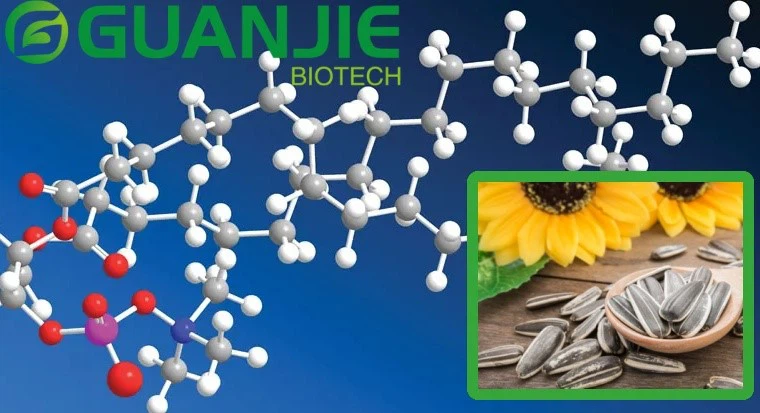
Sunflower lecithin is a complex composed of phospholipids, triglycerides, and other lipid components. Its main components are phospholipids. These include Phosphatidylcholine, Phosphatidylethanolamine, phosphatidylserine, etc. Phosphatidylcholine is the phospholipid with the highest content. Phosphatidylserine bulk powder is relatively less.
Functions And Effects Of Phosphatidylserine
Phosphatidylserine plays an important role in the formation of cell membranes, cell signal transduction, and the synthesis of neurotransmitters. It has a significant impact on the health of the brain and nervous system in particular. Studies have shown that bulk phosphatidylserine has a positive effect in promoting memory and cognitive function and slowing down the aging process.
Phosphatidylserine In Sunflower Lecithin
PS is a special type of phospholipid that contains the amino acid serine. It plays an important role in cell membranes. Especially in nerve cells. It is important for maintaining brain function and promoting nerve signal transmission.
(1) The role of phosphatidylserine
•Improving brain function:
The important role of PS in brain cell membranes helps to enhance memory, learning ability,y and reaction speed. Therefore, phosphatidylserine is often used to improve cognitive function in the elderly and delay the progression of Alzheimer's disease.
•Neuroprotection:
PS can have a neuroprotective effect by promoting the health of nerve cells, maintaining the structural stability of nerve cells, ls and promoting the transmission of nerve signals. It is widely used to fight various nervous system diseases. Such as Parkinson's disease, depression, etc.
•Maintaining cell membrane stability:
Phosphatidylserine powder bulk participates in the construction of lipid bilayers in cell membranes and plays an important role in the fluidity and stability of cell membranes. It helps cells maintain proper function under physiological conditions.
(2) Biosynthesis of phosphatidylserine
Phosphatidylserine (PS) is synthesized through a variety of pathways. The main synthesis pathways are as follows.
•Conversion through phosphatidylcholine (PC):
Phosphatidylcholine (PC) can combine with serine under the action of enzymes to produce phosphatidylserine. This process mainly occurs on the cell membrane.
•Conversion through phosphatidylethanolamine (PE):
Phosphatidylethanolamine (PE) can also react with serine to produce phosphatidylserine through the action of enzymes. This pathway is particularly important in certain cell types.
Phosphatidylserine Content In Sunflower Lecithin
The content of phosphatidylserine in sunflower lecithin is not fixed. Generally speaking, the content of phosphatidylserine in sunflower lecithin is lower, ranging from about 2% to 5%. Compared with lecithin from other sources (such as soybean lecithin), the content of phosphatidylserine in sunflower lecithin is usually lower.
(1) Extraction and concentration of phosphatidylserine
In some cases, phosphatidylserine can be extracted and concentrated from organic sunflower lecithin bulk through specific process methods. These methods include solvent extraction, supercritical fluid extraction, etc. After extraction and concentration, the purity of phosphatidylserine can be greatly improved. Its application in health products and medicines can be better utilized.
(2) Other phospholipid components in sunflower lecithin
In addition to phosphatidylserine, sunflower lecithin also contains other important phospholipid substances such as phosphatidylcholine and phosphatidylethanolamine. The application of these ingredients in food and health products can help improve the fluidity of cell membranes, enhance the immune system, and lower blood lipids.
Health Benefits
Sunflower lecithin is widely used to improve cognitive function and improve mental health because it is rich in phosphatidylserine. Although the content of bulk phosphatidylserine in sunflower lecithin is not high, it can still produce important biological benefits to the brain, nervous system, and other cells.

(1) Improving cognitive function
Phosphatidylserine plays an important role in the membranes of brain nerve cells. Supplementing sunflower lecithin phosphatidylserine content helps maintain the structural integrity of brain cells. It can improve the brain's memory, learning ability, and ability to concentrate. Studies have shown that long-term intake of phosphatidylserine can help slow down cognitive decline in the elderly.
(2) Improving nervous system health
The protective effect of phosphatidylserine on the nervous system cannot be ignored. It can help relieve some symptoms caused by decreased nerve conduction efficiency and help fight emotional disorders such as anxiety and depression.
(3) Improving athletic performance
Some studies have also found that phosphatidylserine helps reduce fatigue during exercise and promotes muscle recovery. It can improve athletic performance.
Applications
Phosphatidylserine in sunflower lecithin is used in many fields. Especially in improving brain function, memory,y, and cognitive ability. Many health products and supplements for brain health contain phosphatidylserine, and its source can be bulk soy lecithin or sunflower lecithin wholesale.
Clinical studies have shown that bulk phosphatidylserine has a good effect in improving cognitive function and slowing down memory decline. As the understanding of its neuroprotective effect gradually deepens, the application prospects of phosphatidylserine in the treatment of neurological diseases such as Alzheimer's disease and depression are widely optimistic.
Safety
(1) General safety
Phosphatidylserine is an important component of human cell membranes. Under normal physiological conditions, the human body can synthesize a certain amount of phosphatidylserine to maintain the normal function of cells. Many foods also naturally contain phosphatidylserine. Such as soybeans, milk, meat, etc. People will consume a certain amount of phosphatidylserine through their daily diet, which usually does not cause harm to the body. A large number of studies and practical applications have shown that supplementing phosphatidylserine within a reasonable dose range is generally safe, without obvious toxicity and serious adverse reactions.
(2) Clinical research verification
Many clinical studies have evaluated the safety of phosphatidylserine. For example, in some studies on improving cognitive function in the elderly, subjects were asked to take phosphatidylserine supplements for a long time. The results showed that most people tolerated it well and no serious safety issues occurred. In related studies on children and adolescents, appropriate supplementation phosphatidylserine sunflower lecithin was not found to have adverse effects on growth and development.
Organic sunflower lecithin powder bulk is a natural plant-derived phospholipid. Although its content of bulk phosphatidylserine is relatively low, it is still a valuable supplemental source. If you are a supplement manufacturer, if you buy phosphatidylserine powder or bulk sunflower lecithin, you can choose Guanjie Biotech. We are a bulk lecithin and phosphatidylserine supplier. Different specifications and forms of products are available for you to choose from. Welcome to consult: info@gybiotech.com.