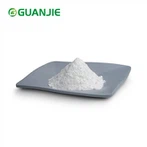
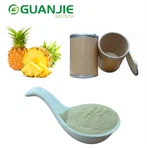
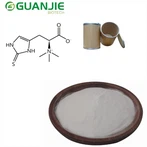
Pure ferulic acid powder is a potent antioxidant and phenolic compound widely used in the food, pharmaceutical, cosmetic, and nutraceutical industries. It has attracted great attention due to its beneficial properties, including anti-inflammatory, anti-aging, and UV-protective effects. Guanjie Biotech, a trusted supplier of ferulic acid, offers a high-purity (>99%) white powder form of ferulic acid that has been optimized for maximum production efficiency and environmental safety. But one common question often arises: Is ferulic acid natural or synthetic?

What Is Ferulic Acid?
Ferulic acid (4-hydroxy-3-methoxycinnamic acid) is a hydroxycinnamic acid derivative found abundantly in the plant kingdom. It acts as a building block in plant cell walls, linking lignin and polysaccharides, and serves to protect plants from oxidative damage and pathogens.
Chemically, pure ferulic acid powder is characterized by its phenolic structure, which contributes to its antioxidant properties. This enables it to neutralize free radicals, making it valuable in preventing oxidative stress in biological systems.
Natural Sources of Ferulic Acid
Ferulic acid is primarily a natural compound found abundantly in the plant kingdom. It is a key component of plant cell walls, especially in the seeds, leaves, and outer layers of many grains, fruits, and vegetables.
Cereal Grains:
Ferulic acid is notably present in cereal grains such as wheat, rice, oats, barley, and corn husks. In these grains, ferulic acid is mainly bound to structural components like hemicellulose and lignin, which contribute to the plant's rigidity and defense mechanisms.
Fruits and Vegetables:
Various fruits and vegetables also contain significant amounts of ferulic acid. Common examples include apples, oranges, pineapples, tomatoes, spinach, and carrots. These sources provide ferulic acid mostly in the free form or loosely bound, contributing to their antioxidant properties and health benefits.
Other Plant Materials:
Beyond grains and common produce, pure ferulic acid powder is found in other natural plant materials such as coffee beans, sugar beet pulp, and bamboo shoots. These materials offer additional sources of ferulic acid, often utilized in extraction processes for supplements and cosmetic ingredients.

In plants, ferulic acid is typically bound to polysaccharides or lignin through ester or ether bonds. Because of this strong binding, it usually requires extraction techniques such as hydrolysis or enzymatic treatment to release free ferulic acid for commercial use. This natural abundance, combined with effective extraction methods, makes pure ferulic acid powder a valuable ingredient in the nutraceutical, cosmetic, and food industries.
Extraction of Natural Ferulic Acid
Extracting pure ferulic acid powder from natural plant sources is a vital process for producing high-quality, bioactive compounds suitable for use in food, cosmetics, and pharmaceuticals. This process typically involves several key steps designed to release and purify ferulic acid from its bound form in plant cell walls.
Pretreatment:
The plant material-commonly wheat bran, rice bran, or corn husk-is first cleaned, dried, and finely ground to increase surface area. To break down the rigid plant cell wall structures, pretreatment methods such as acid, alkaline, or enzymatic treatments are employed. These treatments help disrupt the lignocellulosic matrix that holds ferulic acid in a bound form.
Hydrolysis:
Ferulic acid in plants is mostly esterified to hemicellulose or lignin. Hydrolysis, either chemical (typically using alkaline solutions) or enzymatic (using feruloyl esterases), is then used to cleave the ester bonds and release free ferulic acid. Enzymatic hydrolysis is often preferred in modern extraction due to its milder conditions and environmental safety.
Purification:
Once released, pure ferulic acid powder is separated from the plant extract through purification techniques such as solvent extraction, crystallization, or chromatographic separation. These steps concentrate the compound and remove impurities, resulting in a product with high purity and consistent quality.

Extracting ferulic acid bulk powder through natural means ensures that the compound retains its original bioactivity and minimizes chemical alterations, making it especially suitable for applications that demand natural labeling.
However, natural extraction presents several challenges. Yields are often low because most ferulic acid remains tightly bound within plant cell structures.
Synthetic Ferulic Acid Production Methods
While pure ferulic acid powder is naturally found in plant cell walls, industrial-scale demand often exceeds what natural extraction can economically provide. To address this, synthetic production methods have been developed to offer a more scalable and cost-effective alternative.
Synthetic ferulic acid replicates the exact chemical structure of its natural counterpart-C₁₀H₁₀O₄-but depending on the production route, there may be minor differences in impurity levels or stereochemistry. These differences do not usually affect its antioxidant function but can influence the choice of application, especially in high-purity requirements like cosmetics or pharmaceuticals. Several established chemical synthesis routes are commonly used:
Perkin Reaction
One of the classic methods involves the Perkin reaction, where vanillin (a natural aromatic aldehyde) is reacted with malonic acid in the presence of a base. This reaction forms a carbon–carbon double bond between the molecules, resulting in pure ferulic acid powder. It is straightforward and widely used due to its simplicity and availability of raw materials. Guanjie Biotech uses this method.

Wittig Reaction
Another effective method is the Wittig reaction, which uses a phosphorus ylide to react with an aldehyde intermediate derived from vanillin or related compounds. This approach offers more control over the synthesis and can lead to high yields under well-optimized conditions. However, it is more technically demanding than the Perkins method.
Biotransformation
Although not purely synthetic in the chemical sense, biotransformation uses engineered microorganisms or isolated enzymes to convert simple precursors into pure ferulic acid powder. This hybrid method blends the advantages of natural biosynthesis with the efficiency of industrial processing. It's increasingly favored for its environmental friendliness and potential for high purity.
Natural vs Synthetic Ferulic Acid
|
Aspect |
Natural Ferulic Acid |
Synthetic Ferulic Acid |
|
Source |
Plant extraction (grains, fruits, etc.) |
Chemical synthesis or biotransformation |
|
Purity |
Often lower, with natural impurities |
Can achieve >99% purity |
|
Cost |
Typically higher due to extraction complexity |
Lower in large-scale synthesis |
|
Environmental impact |
Depends on extraction method; can be high if harsh chemicals used |
Controlled industrial process with waste management |
|
Bioactivity |
Retains natural isomers and bioactives |
Chemically identical but possible stereoisomer differences |
|
Consistency |
Variable batch to batch |
High consistency and standardization |
|
Safety |
Generally recognized as safe (GRAS) |
Needs regulatory approval for synthetic origin |
Why Choose Guanjie Biotech's Ferulic Acid?
Guanjie Biotech is a high-quality ferulic acid powder supplier, offering a product that meets the highest industry standards. Our ferulic acid boasts a purity level exceeding 99%, ensuring maximum potency and minimal impurities for effective performance across various applications.
We utilize an optimized production process designed to achieve both exceptional efficiency and environmental responsibility. This method not only guarantees high yield but also minimizes the environmental footprint, reflecting our commitment to sustainable manufacturing.
Our pure ferulic acid powder is delivered as a fine white powder with uniform particle size, providing excellent solubility and ease of use in formulations. This consistency in physical properties supports reliable results whether in nutraceutical, cosmetic, or food applications.
Guanjie Biotech enforces rigorous quality control measures aligned with international standards, ensuring each batch meets strict specifications for purity, safety, and performance.
Choosing Guanjie Biotech means partnering with a supplier who prioritizes product excellence, environmental stewardship, and customer satisfaction, making our pure ferulic acid powder an ideal choice for businesses seeking reliable, high-purity ingredients.
Is Ferulic Acid Natural or Synthetic?
Pure ferulic acid powder can be both natural and synthetic, depending on its origin and production method. The compound naturally exists in plants, extracted through various methods, while synthetic production offers a scalable and cost-effective alternative. Both forms have their place in industry. Choosing ferulic acid from a reputable supplier like Guanjie Biotech guarantees you receive a high-purity product produced with care for both efficacy and the environment. Welcome to enquire at info@gybiotech.com.