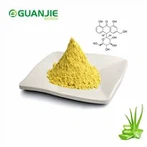
Bulk sulforaphane powder is a naturally occurring isothiocyanate primarily found in cruciferous vegetables, particularly in broccoli. It is formed through the enzymatic hydrolysis of glucoraphanin by myrosinase. Sulforaphane has gained significant attention in the scientific and nutraceutical communities due to its potent antioxidant, anti-inflammatory, anticancer, and neuroprotective properties. However, one of the critical aspects that determine its efficacy and application is its chemical stability. We will delve into the stability characteristics of bulk sulforaphane powder, exploring factors influencing it, stability in various environments, formulation strategies to enhance stability, and industrial implications.

Chemical Structure and Reactivity of Sulforaphane
Sulforaphane (C6H11NOS2) is a sulfur-rich compound with an isothiocyanate functional group. This group imparts both its biological activity and chemical reactivity. The isothiocyanate moiety (–N=C=S) is electrophilic and reacts readily with nucleophiles such as thiols and amines. This high reactivity contributes to sulforaphane's potent bioactivity but also poses a challenge to its chemical stability.

Key Stability Challenges:
•Susceptibility to hydrolysis
•Sensitivity to pH changes
•Thermal degradation
•Oxidative instability
Factors Affecting Sulforaphane Stability
Sulforaphane, a powerful isothiocyanate derived from glucoraphanin in cruciferous vegetables such as broccoli, is widely celebrated for its antioxidant, anti-inflammatory, and anticancer properties. However, its practical application in food, supplements, and pharmaceuticals is greatly influenced by its chemical stability. Various environmental and biochemical factors can significantly impact the stability of bulk sulforaphane powder, thereby affecting its potency and shelf life. The most critical factors include temperature, pH, light, oxygen exposure, and enzymatic activity.
Temperature
Temperature plays a crucial role in determining sulforaphane stability. Sulforaphane is highly heat-sensitive and prone to thermal degradation when exposed to high temperatures. During the cooking of cruciferous vegetables, methods such as boiling or microwaving can drastically reduce sulforaphane levels due to enzyme deactivation and compound breakdown. In contrast, steaming is considered the most effective cooking method for preserving both glucoraphanin and myrosinase, the enzyme necessary for sulforaphane synthesis. From a formulation perspective, products containing bulk sulforaphane powder should be processed and stored under low-temperature conditions to maintain bioactivity.
pH Conditions
The pH of the surrounding medium significantly affects sulforaphane's chemical integrity. It is most stable under slightly acidic to neutral pH conditions. In contrast, alkaline environments promote rapid degradation due to increased hydrolysis and other breakdown reactions. This instability becomes particularly pronounced in aqueous formulations, where a high pH can quickly render sulforaphane inactive. Therefore, maintaining a controlled pH environment is critical, especially in liquid products such as functional beverages or emulsions containing sulforaphane.
Light Exposure
Light exposure, particularly to ultraviolet (UV) radiation, is another destabilizing factor for bulk sulforaphane powder. UV light can initiate photodegradation, leading to structural changes and loss of biological activity. To counteract this, sulforaphane-containing products should be stored in opaque or UV-resistant packaging. During the manufacturing process, minimizing exposure to direct light sources also helps preserve the compound's stability.
Oxygen
Oxidative degradation is one of the most significant challenges in maintaining sulforaphane stability. In the presence of air-especially in liquid systems-sulforaphane can readily oxidize into less active or inactive derivatives. This susceptibility to oxidation necessitates the use of oxygen-reducing packaging methods, such as nitrogen flushing, and incorporation of antioxidants into formulations. Moisture and air-tight containers can also help protect the compound from oxidative stress.

Enzymatic Activity
The conversion of glucoraphanin to bulk sulforaphane powder is dependent on the enzyme myrosinase, which is naturally present in plant tissues. However, this enzyme is highly sensitive to processing conditions. Improper storage, heat exposure, or drying techniques can deactivate myrosinase, thus preventing sulforaphane formation. To enhance sulforaphane yield in products, it is crucial to preserve the enzymatic activity or to use supplemental myrosinase during processing.
Stability in Different Environments
Bulk sulforaphane powder exhibits varying degrees of stability depending on the surrounding environment.
Aqueous Solutions
Sulforaphane is notably unstable in aqueous media, particularly under neutral or alkaline conditions. Water can promote hydrolytic degradation, while the presence of oxygen accelerates oxidative breakdown. This instability is a critical challenge for liquid formulations such as beverages or aqueous-based supplements. To counteract degradation, pH must be carefully controlled, favoring slightly acidic conditions-and antioxidants such as ascorbic acid may be added to slow down oxidation. Specialized emulsions or micelles are also used to enhance sulforaphane's solubility and protect it in liquid environments.
Solid State
In its dry, powdered form, bulk sulforaphane powder is significantly more stable. Proper protection from environmental stressors-such as light, heat, and moisture-is essential to maintaining its integrity. Encapsulation technologies, including cyclodextrin complexes, liposomes, and freeze-dried matrices, offer effective solutions to extend shelf-life. These solid formulations are ideal for capsules, tablets, and functional food ingredients where long-term storage is required.
Food Matrix
Within food, sulforaphane's stability is closely linked to processing methods and the presence of the enzyme myrosinase, which catalyzes its formation from glucoraphanin. Cooking techniques like steaming preserve myrosinase activity better than boiling or microwaving, thus enhancing sulforaphane content in prepared foods.
Biological Fluids
Once ingested, bulk sulforaphane powder undergoes rapid metabolism via the mercapturic acid pathway, forming stable glutathione conjugates. These metabolites are bioactive and water-soluble, facilitating excretion through urine. While this metabolic conversion supports absorption and activity, it also limits the detectable levels of the parent sulforaphane compound in vivo.
Stabilization Techniques
Microencapsulation
Microencapsulation is a widely used technique where sulforaphane is enclosed within protective carriers such as liposomes, micelles, or cyclodextrins. This method creates a physical barrier that shields the compound from environmental stressor,s including heat, light, and oxygen. Encapsulation also improves dispersibility in formulations, making it ideal for dietary supplements, beverages, and functional foods. It ensures controlled release and better bioavailability, which enhances both stability and efficacy.
pH Buffering
Bulk sulforaphane powder is most stable in slightly acidic environments. In liquid formulations, pH buffering systems are incorporated to maintain a stable acidic pH, typically between 4 and 6. These systems help prevent degradation caused by alkalinity or fluctuating pH levels during storage. pH buffering is a simple yet effective method, especially in aqueous products like juices or oral solutions.
Use of Antioxidants
Antioxidants such as vitamin C (ascorbic acid) and vitamin E (tocopherol) are frequently added to sulforaphane-containing formulations to counteract oxidative stress. These compounds help neutralize free radicals and prevent the oxidation of broccoli sprout powder sulforaphane, thereby enhancing its shelf life. In many cases, antioxidants work synergistically, offering an extra layer of protection in both liquid and solid products.
Freeze-Drying (Lyophilization)
Freeze-drying is a dehydration process that removes moisture from sulforaphane under low temperature and vacuum conditions. This method significantly boosts the stability of sulforaphane in its powdered form. The resulting freeze-dried product is easy to store, has a longer shelf-life, and is well-suited for capsule or tablet formulations.
At Guanjie Biotech, we recognize the importance of bulk sulforaphane powder stability in ensuring efficacy and consumer satisfaction. Our R&D department has optimized extraction, drying, and packaging techniques to preserve the active compound through.
•Mild-temperature extraction to preserve myrosinase activity.
•Rapid drying to minimize hydrolytic degradation.
•Microencapsulation technologies tailored to customer formulation needs.
We offer bulk sulforaphane powder in different solubility grades, including water-dispersible and fat-soluble formats, allowing application across beverages, capsules, tablets, and cosmetic products.
Regulatory and Quality Control Considerations
•HPLC Testing:
High-performance liquid chromatography is used to ensure the accurate quantification of broccoli powder sulforaphane in finished products.
•Stability Testing:
Real-time and accelerated tests are conducted to evaluate the shelf life under various conditions.
•Compliance:
Adherence to GMP, ISO, and other regulatory guidelines ensures product safety and consistency.
At Guanjie Biotech, we provide COA, stability data, and technical documents to support customer formulation and regulatory compliance. Welcome to enquiry at info@gybiotech.com.
Bulk sulforaphane powder is a potent bioactive compound with immense health benefits. However, its chemical instability poses challenges in formulation, storage, and delivery. Through advanced stabilization techniques such as encapsulation, antioxidant co-formulation, and proper packaging, sulforaphane's shelf-life and efficacy can be significantly enhanced. Guanjie Biotech's natural sulforaphane products are from broccoli, available in various grades that cater to different solubility profiles and formulation needs of broccoli sprout powder sulforaphane.