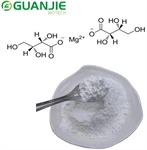
Dihydronicotinamide mononucleotide NMNH, also known as reduced NMN, is attracting growing interest as a next-generation NAD+ precursor and supplement ingredient. Compared with conventional NMN, NMNH powder has distinct physicochemical and biological properties that are being investigated for their effects on intracellular NAD+ levels. For manufacturers, developing high-purity NMNH powder bulk into capsules, tablets, or powdered supplements requires careful control of raw material quality, molecular stability, formulation design, and processing conditions. A reliable NMNH powder supplier should provide consistent specifications, quality testing, and appropriate documentation for commercial applications. Proper packaging and storage are also important for maintaining the stability of NMNH bulk powder. These factors are essential when selecting NMNH raw material for supplement manufacturing and formulation development.
Chemical Properties and Formulation Compatibility of NMNH
Physicochemical properties form the foundation of formulation design and manufacturing processes. Compared to conventional NMN (the oxidized form of reduced nicotinamide mononucleotide), the dihydronicotinamide ring in the NMNH structure imparts stronger reducing properties while altering the molecule's electron cloud distribution and chemical stability.
• Molecular Structure and Reactivity
NMNH (C11H17N2O8P) has a molecular mass of approximately 336.23 g/mol. Because the pyridine ring is reduced to a dihydropyridine structure, the molecule is more sensitive to oxygen, light, and strongly acidic or alkaline environments.
• Oxidation Sensitivity:
In the presence of molecular oxygen or free radicals, the dihydronicotinamide ring is readily oxidized via dehydrogenation to form NMN.
• Acid-Catalyzed Degradation:
In low-pH environments (such as gastric acid, pH < 2.0), the glycosidic bond of NMNH is prone to cleavage, yielding nicotinamide (NAM) and ribose-5-phosphate, resulting in the loss of the active ingredient.
• Hygroscopicity:
The molecular structure of NMNH contains free phosphate groups and multiple hydroxyl groups, making it highly prone to absorbing environmental moisture. Moisture adsorption further accelerates hydrolysis and solid-state oxidation reactions.
NMNH vs. NMN
To precisely determine the process parameters for NMNH during formulation development, the table below compares the key physicochemical and production control characteristics of NMNH with those of conventional NMN.
|
Parameter |
NMN (Oxidized form) |
NMNH (reduced form) |
Impact on Formulation and Production |
|
Pyridine ring state |
Oxidized form |
Dihydro-reduced form |
NMNH is highly reducing; the antioxidative environment requires strict control. |
|
Thermal stability |
Good (relatively stable at room temperature) |
Poor (high heat sensitivity) |
NMNH processing temperatures must be controlled, and drying conditions are restricted. |
|
Photostability |
Moderate |
Highly sensitive |
NMNH requires light-shielded packaging and a light-protected production environment. |
|
Hygroscopicity |
Very hygroscopic |
Extremely strong (inherent to the dihydropyridine ring) |
NMNH demands stricter control of workshop humidity. |
|
Water solubility |
Slightly |
Highly soluble (≥100 mg/mL, disodium salt) |
NMNH is suitable for liquid formulations, but hydrolysis must be controlled. |
|
Gastric acid stability |
Moderate (partial hydrolysis) |
Extremely low (prone to deglycosylation and oxidation) |
The use of enteric or protective coatings for NMNH is strongly recommended. |
|
Raw material crystal form |
Polymorphism exists |
Crystalline forms A/B/C are superior to the amorphous form |
Crystalline raw material is preferred for NMNH to ensure stability. |
Key Elements of NMNH Powder Formulation Design
Dosage Strategy and Dosage Form Selection
Human clinical data can provide a reference for NMNH dosage and formulation development. In a randomized, double-blind, placebo-controlled trial involving 80 healthy adults aged 40–65, NMNH-Ca was well tolerated at daily doses of 125, 250, and 500 mg for 90 consecutive days. No serious adverse events or treatment-related withdrawals were reported. At day 90, the mean changes in whole-blood NAD⁺ levels from baseline were 2.33 μM for placebo, 8.22 μM for 125 mg, 15.85 μM for 250 mg, and 39.90 μM for 500 mg, indicating a dose-dependent response. Another clinical study reported 500 mg/day as the No-Observed-Adverse-Effect Level (NOAEL), although mild nausea, diarrhea, and flushing were reported in some participants.
For NMNH powder formulation, dosage form selection should consider the ingredient's stability. Capsules and tablets are common formats for NMNH supplements. Direct powder filling and dry granulation can help reduce exposure to moisture and heat compared with wet granulation. If wet granulation is used, the drying temperature should be carefully controlled, and formulation developers should evaluate whether antioxidants are appropriate. Softgels and liquid formulations require additional assessment because NMNH stability may be affected by aqueous environments. Anhydrous matrices or non-aqueous systems may provide alternative formulation approaches.
Excipient Compatibility and Functional Excipients
Because NMNH is a reducing compound, NMNH stability can be affected by oxidizing excipients. Formulators should evaluate excipients containing peroxides, high levels of reactive metal ions, or residual aldehydes. Microcrystalline cellulose, calcium hydrogen phosphate under controlled-moisture conditions, and croscarmellose sodium may be considered based on compatibility testing.
Functional combinations are also being explored in NMNH formulations. Some products combine NMNH with trimethylglycine (TMG), resveratrol, or quercetin. TMG is a methyl donor and may be considered when developing combination formulas involving NAD⁺ metabolism. Resveratrol and quercetin are polyphenolic compounds associated with pathways related to cellular metabolism. However, each combination requires systematic compatibility, stability, and shelf-life evaluation. For manufacturers sourcing NMNH bulk powder or NMNH raw material, testing should include moisture, oxidation, purity, and storage stability before commercial production.
|
Excipient |
Recommended choices: |
Factors to Avoid |
|
Fillers |
Microcrystalline cellulose, dicalcium phosphate (low-moisture grade) |
Highly hygroscopic inorganic salts |
|
Disintegrants |
Croscarmellose sodium, sodium starch glycolate |
Strongly alkaline disintegrants |
|
Lubricants |
Plant-derived magnesium stearate, silicon dioxide |
Excessive metal soaps |
|
Functional Blends |
TMG, resveratrol, quercetin (compatibility verification required) |
Oxidizing excipients, transition metal ions |
Manufacturing Process and Quality Control of NMNH Powder
Raw Material Handling and Process Conditions
The receipt, handling, and storage of NMNH powder require carefully controlled environmental conditions because NMNH is sensitive to oxidation, light, moisture, and temperature. NMNH raw materials should be stored in tightly sealed containers, protected from light, and maintained under appropriately low-temperature conditions according to validated stability data. For high-purity NMNH powder, storage at approximately -20°C may be used for long-term raw material preservation, while NMNH solutions may require lower temperatures and shorter storage periods. Actual storage conditions and shelf life should always be confirmed through product-specific stability studies.
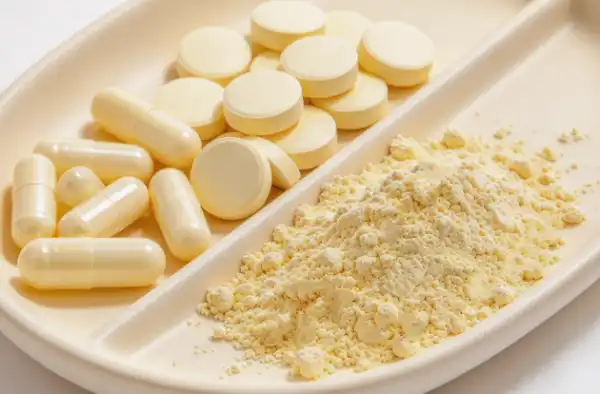
During NMNH manufacturing, the production environment should minimize exposure to oxygen, moisture, and ultraviolet radiation. A controlled workshop with low relative humidity, preferably below 45% RH where appropriate, can help reduce moisture-related degradation. Amber or yellow lighting may also be used to limit unnecessary UV exposure during processing.
Important process parameters include mixing temperature, mechanical stress, tablet compression force, capsule fill weight, and granulation conditions. During mixing, material temperature should be monitored to prevent excessive heat exposure, with a target limit established through process validation. For tableting, manufacturers should evaluate whether high compression pressure affects the physical or crystalline properties of NMNH. Accurate fill-weight control is also essential for capsules and other dosage forms.
For formulations requiring granulation, dry granulation or roller compaction is generally preferable when compatible with the formulation because these processes minimize water exposure. If wet granulation is required, low-water-activity processing conditions should be considered, and residual solvent levels must be verified after drying. These controls are particularly important for an NMNH powder manufacturer supplying bulk raw materials for dietary supplements and other formulated products.
Stability Monitoring and Shelf Life
A comprehensive NMNH stability program should include both accelerated and long-term studies. Key analytical indicators include NMNH assay, related substances, appearance and color, dissolution or disintegration performance, moisture content, and changes in degradation products. HPLC-UV, LC-MS/MS, or other validated analytical methods can be selected according to the formulation and testing requirements.
Monitoring NMN is particularly relevant because NMN may be formed during NMNH oxidation. An increase in NMN or other related substances can therefore provide useful information about degradation and oxidation during storage. Stability testing should establish the actual degradation profile rather than relying solely on theoretical shelf-life assumptions.
Packaging is another critical element of NMNH powder quality control. Packaging should provide an effective barrier against oxygen, moisture, and light. HDPE bottles with induction seals and suitable desiccants may be considered for some formulations. For blister packaging, high-barrier aluminum structures can provide additional protection. Nitrogen flushing or oxygen-scavenging systems may also be evaluated when supported by stability data.
The final NMNH powder shelf life should be established from validated real-time and accelerated stability studies. A commercial storage statement such as "store in a cool, dry place" should correspond to the demonstrated stability and packaging performance.
Regulatory Compliance Considerations
For companies marketing NMNH bulk powder or finished NMNH products internationally, regulatory requirements should be evaluated separately for each target market. In the United States, manufacturers should assess whether an NMNH product requires an FDA New Dietary Ingredient (NDI) notification or other regulatory documentation. The regulatory status of NAD⁺ precursors can evolve, so current requirements should be confirmed before commercial production or market entry.
Manufacturers should also maintain supporting documentation, including specifications, certificates of analysis, identity testing, impurity profiles, stability data, manufacturing records, and safety information. The regulatory acceptability of NMNH may differ between countries and product categories, making market-specific compliance review essential.
FAQs:
Q1: What is NMNH in dietary supplements?
NMNH, or reduced nicotinamide mononucleotide, is a reduced form of NMN and a NAD+ precursor. NMNH powder is being studied for use as a dietary supplement raw material, particularly in formulations designed around NAD+ metabolism.
Q2: What is NMNH powder used for?
NMNH powder can be considered a specialized raw material for dietary supplement development. Formulators may evaluate it for capsules, tablets, powders, and other delivery formats, depending on applicable regulations, product specifications, and stability requirements.
Q3: Is NMNH suitable for dietary supplement formulations?
NMNH may be evaluated for dietary supplement applications, but suitability depends on the target market, regulatory requirements, dosage form, purity, stability, and intended use. Manufacturers should complete appropriate regulatory and safety assessments before commercialization.
Q4: What are the key formulation considerations for NMNH?
Important NMNH formulation considerations include oxidation sensitivity, moisture exposure, pH, temperature, oxygen, light, excipients, and packaging. Formulators should evaluate these factors during compatibility and stability testing.
Q5: Is NMNH stable in powder form?
The stability of NMNH powder can be affected by oxygen, moisture, temperature, light, and formulation conditions. Therefore, manufacturers should establish appropriate storage conditions and conduct stability testing using validated analytical methods.
Q6: What dosage forms can use NMNH?
Depending on regulatory approval and formulation requirements, NMNH may be evaluated for capsules, tablets, powder blends, sachets, and other dietary supplement formats. The selected dosage form should consider NMNH stability, excipient compatibility, moisture control, and manufacturing conditions.
Q7: How can manufacturers improve NMNH stability during production?
Manufacturers can evaluate oxygen and moisture exposure throughout dispensing, blending, filling, and packaging. Process controls, suitable excipients, low-moisture manufacturing environments, protective packaging, and appropriate storage conditions should be assessed through formulation and stability studies.
Conclusion
As a next-generation NAD+ precursor, NMNH powder shows strong potential as a dietary supplement ingredient. However, its sensitivity to oxidation, moisture, and acidic conditions requires careful formulation, processing, and storage. Product developers should select a reliable NMNH supplier with stable quality control and production capacity. Guanjie Biotech provides high-purity NMNH raw material powder for global customers, supported by professional quality management and one-stop OEM and ODM services for customized NMNH supplement products. Welcome to enquire with us at info@gybiotech.com.
References:
[1] Li, J., Wang, Y., Liang, Y., He, Y., Jing, E., Shen, Q., Yu, J., Chen, M., Liang, C., & Kaszynski, R. H. (2026). Safety and Exploratory Efficacy of Reduced β-Nicotinamide Mononucleotide Calcium Salt (NMNH-Ca) in Healthy Middle-Aged and Older Adults: A Randomized, Double-Blind, Placebo-Controlled Trial. medRxiv.
[2] Liu, G., Qiao, Y., Chen, B., Wang, X., Zhang, Y., & Zhong, Y. (2021). Reduced Nicotinamide Mononucleotide (NMNH) Potently Enhances NAD+ and Suppresses Glycolysis, the TCA Cycle, and Cell Growth. Journal of Proteome Research.
[3] EffePharm LTD. (2025). A Prospective, Multi-center, Double-blind, Placebo-controlled, Randomized, Multiple-arm, Parallel Study to Evaluate the Safety, Tolerability, and Pharmacokinetics of UthPeak NMNH (Reduced Nicotinamide Mononucleotide) in Healthy Adult Participants (ClinicalTrials.gov Identifier: NCT06889740).
[4] Amorphous form of reduced β-nicotinamide mononucleotide calcium salt, and preparation method and use thereof. Chinese invention patent, CN119978042A.
[5] Polymorphs of reduced β-nicotinamide mononucleotide calcium salt, and preparation methods and uses thereof. Chinese invention patent, CN119320416B.