Reduced nicotinamide mononucleotide NMNH is the reduced form of NMN and a promising NAD+ precursor. Its 1,4-dihydropyridine structure provides strong reducing activity and may support NAD+ elevation. Studies indicate that pure NMNH powder can increase NAD+ levels in vitro and in vivo. However, its high reactivity makes NMNH sensitive to oxygen, light, humidity, and temperature. For bulk NMNH powder suppliers and formulation developers, solubility and stability are key considerations, affecting bioavailability, dosage-form design, storage conditions, and product shelf life. Proper packaging and controlled processing are essential for stable NMNH powder.
Properties and Solubility of NMNH
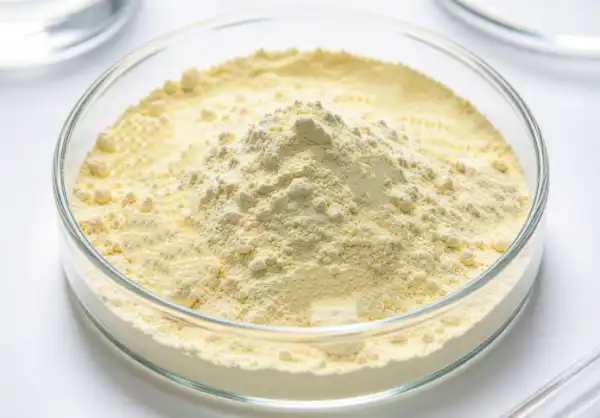
NMNH (reduced nicotinamide mononucleotide) is available mainly in two forms: the free acid and the disodium salt. NMNH disodium salt is widely used as an NMNH raw material for product development. It has the CAS number 108347-85-9, a molecular formula of C₁₁H₁₅N₂Na₂O₈P, and a molecular weight of approximately 380.20 g/mol. The free acid has the molecular formula C₁₁H₁₇N₂O₈P and a molecular weight of approximately 335.06 g/mol. Commercial NMNH powder generally appears as a pale yellow to yellow crystalline or amorphous powder, with typical purity specifications ranging from 95% to 99.5%.
NMNH Solubility Characteristics
NMNH disodium salt has relatively high water solubility. In vitro data indicate water solubility of ≥100 mg/mL, making it a readily soluble form. This property is associated with its ionic structure. The phosphate group in the disodium salt increases polarity and improves compatibility with aqueous systems. By comparison, the NMNH free acid generally shows lower solubility at neutral pH.
Information on bulk NMNH solubility in organic solvents remains limited. Based on its nucleotide-like molecular structure, NMNH may show some solubility in polar solvents such as methanol and dimethyl sulfoxide (DMSO), while its solubility in non-polar solvents is expected to be low. Actual solubility should be confirmed using product-specific analytical data.
Effect of Salt and Crystal Forms on Solubility
The crystal form of NMNH disodium salt can influence its dissolution behavior and physical properties. Patent literature describes several crystal forms, including Forms A, B, and C, with different XRPD diffraction patterns. Crystal Form A is reported as a hydrate with approximately 4%–13% water content and may provide favorable overall processing properties. Crystal Form C shows an endothermic peak at approximately 50°C–80°C and TGA weight loss of about 8%–16%, indicating hydrated characteristics.
NMNH Primary forms of solubility and fundamental physicochemical parameters
|
Parameters |
NMNH (free acid) |
NMNH disodium salt |
|
CAS Number |
108347-85-9 (free acid corresponding to the salt form) |
108347-85-9 |
|
Molecular Formula |
C₁₁H₁₇N₂O₈P |
C₁₁H₁₅N₂Na₂O₈P |
|
Molecular Weight |
335.06 |
380.20 |
|
Appearance |
Pale yellow powder |
Pale yellow to yellow powder |
|
Solubility in Water |
Limited |
≥100 mg/mL |
|
Stability Characteristics |
Air-sensitive |
Sensitive to humidity and oxygen |
What Factors Influence NMNH Stability?
The degradation of NMNH bulk powder is primarily driven by oxidation reactions. The 5,6-double bond within its 1,4-dihydropyridine ring possesses high electron density, making it highly reactive with oxygen and leading to the formation of oxidation products (specifically, the conversion of NMNH to NMN) and other degradation byproducts. This chemical nature dictates that strategies for maintaining natural NMNH stability must center on excluding oxygen and moisture.
Moisture and Residual Water Content
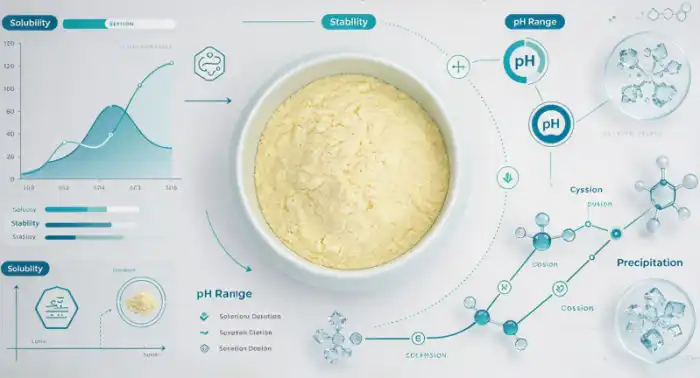
Residual moisture is a key factor affecting NMNH powder stability. Patent data indicate that degradation of amorphous, freeze-dried NMNH disodium salt increases significantly when residual moisture exceeds 10%. In contrast, optimized Crystal Form A showed less than a 1% purity decline after three months in sealed storage at 25–35°C and 65–85% RH. Under open exposure at 25°C and 65% RH, amorphous NMNH solid absorbed moisture and became oily within one day, while purity decreased from 99.30% to 99.02%. Crystal Form A remained powdery for five days, with purity changing from 99.33% to 99.01%. These results indicate that moisture can promote hydrolytic degradation and accelerate oxidation-related mass transfer by changing the physical state of NMNH powder.
Crystal Form and Physical Morphology
Crystal form has a significant influence on NMNH powder stability. Under open exposure at 25°C and 65% RH, Crystal Form A maintained relatively stable purity, ranging from 99.17% to 99.33% over 18 days. In contrast, the amorphous solid showed greater physical changes and signs of darkening by day 18.
Amorphous materials generally have greater molecular mobility than crystalline materials, which can increase their susceptibility to moisture uptake and oxidation. Patent data also indicate that the amorphous calcium salt of NMNH may provide better resistance to oxidation and moisture absorption than the disodium salt during storage. For an NMNH powder supplier, crystal form, salt form, particle properties, and residual moisture should therefore be considered when developing a stable raw material.
Temperature and Light Exposure
Appropriate NMNH storage conditions are essential for maintaining product quality. NMNH powder is generally recommended to be stored at 2–8°C in a dry, dark environment, while temperatures below −20°C may be considered for longer-term storage. Elevated temperatures can accelerate oxidation and other chemical degradation pathways.
Light exposure is another consideration because ultraviolet (UV) radiation may promote photo-oxidation. In solution, NMNH stability is also influenced by pH. Under acidic conditions, the 5,6-double bond may undergo hydration and isomerization reactions, while NMNH is reported to be relatively more stable under alkaline conditions around pH 9–11.
Special Considerations for NMNH Solutions
NMNH in aqueous solution is more vulnerable to oxidation because of dissolved oxygen. Therefore, freshly prepared solutions should generally be used promptly or protected under an inert atmosphere when appropriate. Studies in cell culture media indicate that NMNH can degrade faster than NMN, highlighting the importance of careful preparation and handling.
Stability of NMNH under different storage conditions
Requirements for packaging materials and environmental control parameters of NMNH products.
|
Factors |
Control Standards |
Design Objectives |
|
Container materials |
Alu-Alu composite blister packs; double-layer, thick-walled HDPE bottles |
Provide a robust barrier against water vapor (WVTR) and oxygen (OTR) permeation |
|
Light protection requirements |
Amber glass bottles; sealed in aluminum foil bags |
Block light in the 200–450 nm wavelength range to prevent photodegradation |
|
Headspace gas packaging |
Nitrogen headspace purging (nitrogen purity >99.9%) |
Remove residual oxygen to prevent auto-oxidation of NMN |
|
Desiccant configuration |
Combination of silica gel desiccant and 3A/4A molecular sieves |
Continuously absorb trace amounts of moisture permeating into the package |
|
Storage temperature |
Long-term storage: −20°C or refrigerated at 2–8°C; finished product: <25°C (ambient temperature) |
Reduce the rate of thermal degradation and extend shelf life |
Formulation Strategies for NMNH Solubility and Stability
The high water solubility of NMNH powder provides flexibility in dosage-form development, but its chemical instability in solution requires careful control during formulation, processing, packaging, and storage.
Solid Dosage Form Strategies
For oral solid dosage forms, including NMNH capsules and tablets, selecting a thermodynamically stable polymorph, such as Polymorph A, is an important consideration. The hydrate form of Polymorph A has moderate water activity, helping reduce the high hygroscopicity associated with amorphous NMNH while avoiding lattice stress caused by excessive dehydration. During manufacturing, temperature, humidity, and exposure time should be carefully controlled during granulation, drying, and other processing steps. Protective coating can provide an additional barrier against moisture and oxygen, although the compatibility of coating solvents with NMNH should be evaluated. For applications requiring improved stability, NMNH calcium salt may be considered as an alternative to the disodium salt because of its reported resistance to oxidation and moisture absorption.
Liquid Dosage Form Strategies
Developing NMNH liquid formulations presents a major challenge because high solubility can be accompanied by rapid oxidative degradation. Several formulation strategies may help improve stability. These include replacing headspace oxygen with inert gases such as nitrogen or argon, adjusting the formulation to an alkaline pH range of approximately 9–11, and using antioxidants such as sodium ascorbate or sulfites when compatibility has been demonstrated. Dual-chamber packaging, containing NMNH supplement ingredient powder and solvent separately, can allow reconstitution immediately before use. For liquid products requiring extended shelf life, lyophilization may provide a more practical approach.
Packaging, Storage, and Transportation
High-barrier packaging is recommended for NMNH raw materials and finished NMNH products. Aluminum-plastic blister packaging can provide stronger protection than conventional plastic bottles, while multilayer co-extruded film bags combined with nitrogen flushing may help reduce exposure to oxygen and moisture. Recommended storage and transportation conditions include 2–8°C, with long-term storage at −20°C or below, depending on validated stability data. Protection from light is also important. Manufacturers should establish final storage conditions and shelf life through appropriate stability testing.
Key Decision Points in NMNH Powder Product Development
NMNH powder development requires balancing biological activity with physicochemical stability. For NMNH raw material, disodium NMNH (Polymorph A) provides a practical balance of solubility and stability, while calcium NMNH requires further bioavailability evaluation. Enzymatic synthesis can deliver high-purity NMNH powder (≥99.5%) with a simplified impurity profile, supporting more predictable stability. During NMNH formulation development, forced degradation studies should evaluate temperature, humidity, oxidation, and light exposure. Accelerated stability testing at 25°C/60% RH and 40°C/75% RH can help establish shelf life. Because NMNH is moisture-sensitive, water activity testing should also be included in routine quality control.
FAQs:
Q1:Is NMNH soluble in water?
NMNH can be formulated in aqueous systems, but its practical solubility depends on factors such as pH, temperature, concentration, and the chemical form of the ingredient. Solubility should therefore be confirmed under the intended formulation conditions.
Q2:What factors affect NMNH solubility?
Key factors include pH, temperature, concentration, ionic strength, moisture, and excipients. Processing conditions can also affect NMNH behavior in solution. Formulators should evaluate these variables during product development rather than relying only on theoretical solubility.
Q3:What is NMNH stability?
NMNH stability describes its ability to maintain its chemical identity, purity, and specification during processing and storage. Because NMNH is a reduced form of an NAD+ precursor, controlling oxygen, moisture, light, temperature, and processing conditions is important for stability management.
Q4:Is NMNH stable in water?
NMNH stability in aqueous solutions depends on formulation conditions and storage time. Exposure to oxygen, unsuitable pH, elevated temperature, and light may affect product stability. Formulation-specific stability testing is recommended before commercial production.
Q5:How should NMNH powder be stored?
NMNH powder should generally be protected from moisture, oxygen, heat, and excessive light. Packaging with appropriate moisture and oxygen barriers can help maintain quality. The exact storage conditions should follow the supplier's specification and stability data.
Q6:Does temperature affect NMNH stability?
Yes. Temperature can influence the stability of NMNH during processing and storage. Higher temperatures may accelerate chemical degradation or oxidation. Manufacturers should evaluate temperature sensitivity during accelerated and long-term stability studies.
Q7:Does pH affect NMNH stability and solubility?
Yes. pH can affect both NMNH solubility and chemical stability in aqueous formulations. Different pH conditions may produce different stability profiles, so pH screening is an important step when developing NMNH beverages, liquids, or other water-based products.
Q8:What NMNH formulation factors should manufacturers consider?
Manufacturers should evaluate NMNH purity, solubility, pH, concentration, excipient compatibility, oxygen exposure, moisture, processing temperature, packaging, and shelf life. Compatibility testing and stability studies can help determine suitable formulation and manufacturing conditions.
Q9: Where can I buy NMNH powder for product development?
When sourcing NMNH powder, buyers should evaluate purity, analytical specifications, batch consistency, stability data, COA, testing methods, packaging, and regulatory documentation. A qualified NMNH supplier should also provide samples for formulation and stability evaluation before bulk production. Guanjie Biotech is a NMNH powder supplier, our bulk NMNH powder is high-quality with satisfied service.
Conclusion:
NMNH raw material powder is a promising NAD+ precursor for nutraceutical and supplement applications, but its high reactivity requires careful control of solubility and stability. NMNH disodium salt offers high water solubility (≥100 mg/mL), while moisture, oxygen, light, temperature, and crystal form affect degradation. Crystal Form A generally provides better stability than amorphous NMNH. Effective strategies include high-barrier packaging, nitrogen flushing, desiccants, and storage at 2–8°C or −20°C. For liquid formulations, alkaline pH, inert conditions, and lyophilization can improve NMNH powder stability.
Guanjie Biotech is a professional NMNH powder supplier and manufacturer specializing in reduced nicotinamide mononucleotide (NMNH) powder. Using advanced synthetic biology, crystallization, and purification technologies, the company provides high-purity NMNH powder, stable quality, and consistent batch performance. Its NMNH raw material is developed for applications requiring controlled solubility and stability. Guanjie Biotech also offers NMNH OEM and ODM services, supporting customized formulations, specifications, and packaging solutions for global nutraceutical and supplement manufacturers.
References:
[1] Liu Y, Luo C, Li T, et al. Reduced Nicotinamide Mononucleotide (NMNH) Potently Enhances NAD⁺, Suppresses Glycolysis, TCA Cycle and Cell Growth[J/OL]. bioRxiv, 2020. DOI:10.1101/2020.11.03.366427.
[2] Effepharm (Shanghai) Co., Ltd. (2025). Polymorphic form of reduced β-nicotinamide mononucleotide disodium salt, and preparation method therefor and use thereof (U.S. Patent Application No. US20250163092A1). U.S. Patent and Trademark Office.
[3] Liu, Y., Luo, C., Li, T., Zhang, W., Zong, Z., Liu, X., & Deng, H. (2021). Reduced Nicotinamide Mononucleotide (NMNH) Potently Enhances NAD+ and Suppresses Glycolysis, the TCA Cycle, and Cell Growth. Journal of Proteome Research, *20*(5), 2596–2606. https://doi.org/10.1021/acs.jproteome.0c01037