

Latest Products

Contact Us
-
6th Floor, 2nd Building, Xijing NO.3, XiJing Industrial Park, DianZi Western Street, Xi'an, Shaanxi, China
-
+86-2988253271


Natural Rosemary Extract
Other name: Casesavi/ Cinnamyl Glycoside/ Rhodanolic Acid
Specifications: 5%,10%,15%,25%
Test method: HPLC
Appearance: Brown fine powder
Extraction method: Ethanol
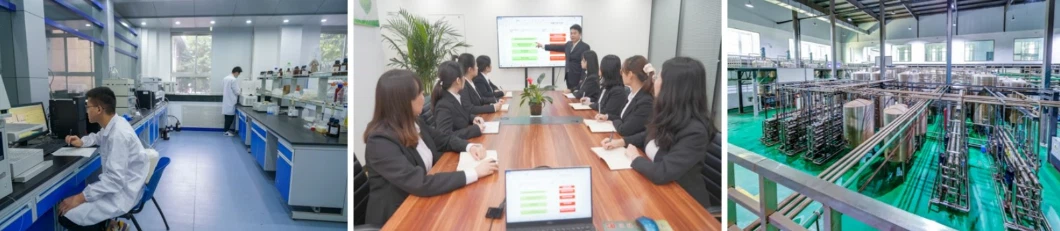
Two Factories & Three production lines
GMP standard workshop & two independent laboratories
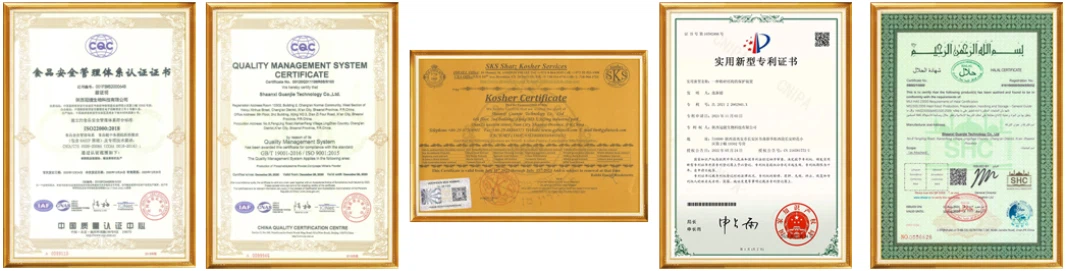
FDA Cert.
Certifications: Halal,ISO9001,PAHS Free,NON-GMO,KOSHER,SC
Overseas warehouse(NJ,USA)
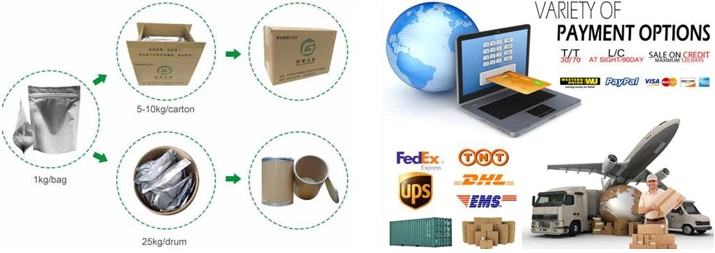
Delivery term: DHL, FEDEX, Air freight,Sea freight
Provide Free Sample
MOQ: 1KG
Not for Private Person Sale
Description
Natural Rosemary Extract Supplier:
Guanjie Biotech is a reliable Natural Rosemary bulk Extract manufacturer and supplier. It has various forms. The extract is available in various specifications such as 5%, 10%, 15%, and 25%. The extraction method used is ethanol, and the test method is HPLC. The extract is best stored at normal temperature for optimum efficacy. With Guanjie's commitment to quality and purity, you can be assured of high-quality Rosemary Extract that meets your requirements.

Why Choose Guanjie Biotech?
● Professional shipping agents ensure that the goods can be exported safely and quickly.
● Strict quality control and the best after-sales service.
● Our company has an independent research and development center; there are 10 experts in our research team.
● Our factory makes sure the product quality steps:
● We focus on integrating R&D, production and sales.
● We always adheres to the Enterprise faith of "quality first, customer first", and sincerely cooperate with you.
Certificate of analysis
| Item | Specification | Result | Method |
| Basic Product Information | |||
| Genus and Species | Rosmarinus officinalis | Conform | / |
| Part of the Plant | Leaf | Conform | / |
| Country of Origin | China | Conform | / |
| Marker Compounds | |||
| Assay(ROSMARINIC ACID) | >25% | 25.21% | HPLC |
| Organoleptic Data | |||
| Appearance | Fine powder | Conform | GJ-QCS-1008 |
| Color | Light Brown powder | Conform | GB/T 5492-2008 |
| Odor | Characteristic | Conform | GB/T 5492-2008 |
| Taste | Characteristic | Conform | GB/T 5492-2008 |
| Process Data | |||
| Method of Processing | Extraction | Conform | / |
| Solvent(s) Used | Grain alcohol/water | Conform | / |
| Drying Method | Vaccum drying | Conform | / |
| Excipient | None | Conform | / |
| Physical Characteristics | |||
| Particle Size (80 mesh) | 100.0%pass 80mesh | Conform | GB/T 5507-2008 |
| Loss on Drying | <5.0% | 3.12% | GB/T 14769-1993 |
| Ash Content | <4.0% | 2.16% | AOAC 942.05, 18th |
| Solvent Residue | Eur. Pharm | Conform | GJ-QCS-1007 |
| Heavy Metals | |||
| Total Heavy Metals | <10ppm | Conform | USP <231>, method II |
| As | <1.0ppm | Conform | AOAC 986.15, 18th |
| Pb | <3.0ppm | Conform | AOAC 986.15, 18th |
| Cd | <1.0ppm | Conform | AOAC 986.15, 18th |
| Hg | <0.1ppm | Conform | AOAC 971.21, 18th |
| Pesticide Residue | |||
| 666 | <0.2ppm | Conform | GB/T5009.19-1996 |
| DDT | <0.2ppm | Conform | GB/T5009.19-1996 |
| Microbiology | |||
| Total Plate Count | <1,000cfu/g | Conform | AOAC 990.12, 18th |
| Yeast & Mold | < 100cfu/g | Conforms | FDA (BAM) Chapter 18, 8th Ed. |
| E. Coli | Negative | Negative | AOAC 997.11, 18th |
| Salmonella | Negative | Negative | FDA (BAM) Chapter 5, 8th Ed. |
Testing Method:
● Principle:
The effective substances in rosemary will be dissolved out using ethanol as the extraction solvent. Ethanol is chosen for its safety, effectiveness, and economy. For rosemary extraction, it is recommended to use ethanol as the organic solvent, with a liquid to material ratio of 10:1, and within a 2-hour extraction time. The concentration of ethanol should be controlled to avoid dissolving non-polar substances in rosemary, such as chlorophyll. To increase yield, the method can be combined with microwave shaking or other techniques.
● Influencing factors:
Ethanol concentration, extraction temperature, material-to-liquid ratio, extraction time, and number of extractions, among others.
● Advantages:
The solvent method is effective, efficient, and cost-effective. It is suitable for industrial application and yields high and stable extraction rates. For example, the extraction rate for syringic acid from herbs is high, and the extraction rate of ursolic acid from rosemary is 92.38%, with high purity. Additionally, various antioxidant components in rosemary can be extracted simultaneously. The method is user-friendly, eco-friendly, and safe.
Active Substance
● Phenolic Acids
Natural Rosemary Extract contains several phenolic acid compounds, including rosmarinic acid, rosmanol, carnosic acid, carnosol, caffeic acid, and ursolic acid. These compounds feature multiple phenolic hydroxyl substitutions, making them sensitive to environmental factors and prone to chemical changes. They are often added to drugs with anti-inflammatory and antibacterial effects to enhance their biological activity.
● Flavonoids
Flavonoids were the first plant extract components to be studied, and more than 40 kinds have been extracted from rosemary so far. Rosemary is rich in flavonoids, with small amounts of flavonols and flavanones. Examples include rutin, quercetin, thistaxanthin, naringin, luteolin, genkwain, hesperetin, celery and its glycoside derivatives.
● Volatile Essential Oil Components
Rosemary essential oil typically contains complex and volatile monoterpenes and sesquiterpenes. Its composition varies depending on the source. Rosemary's natural essential oil components play a critical role in the spice crop's physiological functions, such as antioxidant and antibacterial activities. Common ones include 1,8-cineole, α-pinene, camphor, camphene, β-pinene, among others. These compounds offer functions like relieving cough, reducing phlegm, reducing inflammation and diuresis. They also have protective effects on the cardiovascular and cerebrovascular.
● Terpenes
Terpenes are the most abundant and complex components of rosemary, comprising monoterpenes, sesquiterpenes, diterpenes and triterpenes. Monoterpenes include 1,8-cineole, camphor, α-pinene, camphene, β-pinene, myrcene, etc. Diterpenoids are the main polyphenols in rosemary. Examples include carnosic acid, carnosol, rosmanol and their derivatives. Triterpenoids consist of triterpene acid compounds, mostly including squalene, ursolic acid, oleanolic acid, betulin, betulinic acid, etc.
Market:
Currently, natural rosemary extract has gained popularity among natural and environmentally conscious consumers due to its superior antioxidant properties, pure natural composition, and lack of harmful effects on the human body. Rosemary's antioxidant properties remain effective even at high temperatures up to 240℃ and does not affect the appearance of the final product's color, which provides many advantages over traditional synthetic antioxidants. As consumer health awareness continues to rise, natural antioxidant products will inevitably become more prevalent in the market.
Factory&Team:
Certification
Package & Shipment
Hot Tags: natural rosemary extract, China natural rosemary extract manufacturers, suppliers, factory, pure bulk fisetin, flaxseed protein powder, Hydroxytyrosol Powder, Rice Bran Extract, Sodium Copper Chlorophyllin Powder, Naringin Powder
You Might Also Like


