Latest Products

Contact Us
-
Building 2, QinChuang Chang'an Industrial Park,Chang'an District, Xi'an City, Shaanxi Province
-
+86-2988253271

Phosphatidylserine Granular
Appearance: Light yellow granular
Specification:20%~80%
Source: Soybean
Testing Method:HPLC-ELSD
Two Factories & Three production lines
GMP standard workshop & two independent laboratories
FDA Cert.
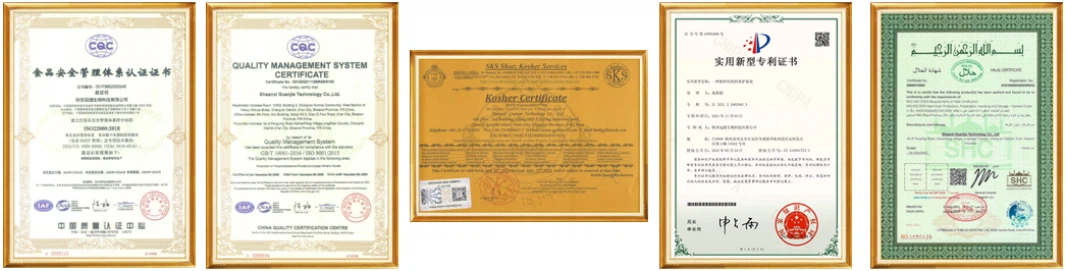
Certifications: Halal,ISO9001,PAHS Free,NON-GMO,KOSHER,SC
Overseas warehouse(NJ,USA)
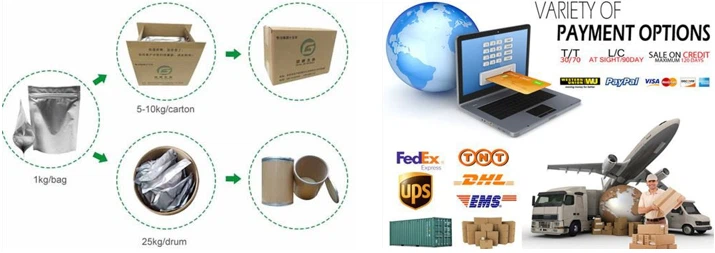
Delivery term: DHL, FEDEX, Air freight,Sea freight
Provide Free Sample
MOQ: 1KG
Not for Private Person Sale
Description
Phosphatidylserine Granules Manufacturer for OEM & ODM Formulations
Guanjie Biotech is a phosphatidylserine granules manufacturer and supplier, providing phosphatidylserine raw materials for dietary supplement and functional food manufacturers. Produced through biofermentation, our phosphatidylserine granules are suitable for B2B ingredient sourcing and product development. Phosphatidylserine is a phospholipid naturally found in animal and plant cell membranes and is commonly used in supplement formulations. With our own manufacturing facility and laboratory, we focus on production control and quality testing. Guanjie Biotech also supports phosphatidylserine OEM and ODM projects, helping business partners identify suitable ingredient specifications and develop products according to their formulation, packaging, and supply requirements. High quality, welcome to contact us: info@gybiotech.com.

Why Choose Guanjie Biotech's Phosphatidylserine Granular?
1. High fluidity:
Traditional phosphatidylserine powder often faces the problem of poor fluidity when filling hard capsules. This leads to a poor filling process and affects the production efficiency. Guanjie Biotech's PS particles have high fluidity, which is favorable for capsule filling.
2. The best choice for hard capsule filling:
Using this Phosphatidylserine Granular, customers can significantly increase productivity, reduce problems during production, and improve product quality and consistency.
COA:
|
Item |
Specification |
Result |
Method |
|
Basic Product Information |
|||
|
Genus and Species |
Glycine max (Linn.) Merr. |
||
|
Country of Origin |
China |
Conform |
/ |
|
Marker Compounds |
|||
|
L-α-Phosphatidyl-L-serine |
>20.0% |
21.10% |
HPLC-ELSD |
|
L-α-Phosphatidylcholine |
<15.0% |
12.31% |
HPLC-ELSD |
|
Organoleptic Data |
|||
|
Appearance |
Fine Granular |
Conform |
Visual |
|
Color |
Light Yellow |
Conform |
GB/T 5492-2008 |
|
Odor |
Characteristic |
Conform |
GB/T 5492-2008 |
|
Taste |
Characteristic |
Conform |
GB/T 5492-2008 |
|
Physical Characteristics |
|||
|
Peroxide value |
<5.0 meq/kg |
Conform |
CP2020 |
|
Tap density |
0.4g/ml-0.7g/ml |
0.44g/ml |
CP2020 |
|
Loose density |
0.3g/ml-0.6g/ml |
0.36g/ml |
CP2020 |
|
Particle Size |
>98.0% pass 40 mesh |
Conform |
GB/T 5507-2008 |
|
Loss on drying |
<2.0% |
1.04% |
GB 5009.3 |
|
Acetone insolubility substance |
>95.0% |
Conform |
SN/T 0802.2 |
|
Solvent Residue(Ethanol) |
<5000ppm |
Conform |
Q/GJSW 0002S-2016 |
|
Heavy Metals |
|||
|
Total Heavy Metals |
<10.0 ppm |
Conform |
USP<231>, method II |
|
As |
<1.0 ppm |
Conform |
GB 5009.11 |
|
Pb |
<3.0 ppm |
Conform |
GB 5009.12 |
|
Cd |
<1.0ppm |
Conform |
GB 5009.15 |
|
Hg |
<0.1 ppm |
Conform |
GB 5009.17 |
|
Microbiology |
|||
|
Total Plate Count |
<10,000cfu/g |
Conform |
GB 4789.2 |
|
Mold |
<1,000cfu/g |
Conform |
GB 4789.15 |
|
E. Coli |
Negative |
Negative |
GB 4789.3 |
|
Salmonella |
Negative |
Negative |
GB 4789.4 |
|
Non-GMO |
|||
|
Non-GMO |
/ |
Conform |
SN/T 1195-2003 |
what Is Phosphatidylserine Production Process?
Guanjie Biotech uses biofermentation to produce high-quality phosphatidylserine granular. The microbial fermentation technique is used in the production of phosphatidylserine granules that are obtained by fermentation.
1. Raw material preparation
Phosphatidylserine granules are mostly made from carbon, nitrogen, sulfur, phosphorus, trace elements, and vitamins as basic ingredients. Carbon sources that are frequently employed are lactose, glucose, and so on. Sources of nitrogen include peptone, yeast extract, and other foods. Strict quality control is required to guarantee that these raw materials are devoid of pollutants and contaminants.
2. Seed culture
Seed culture refers to the cultivation of microbial strains required for fermentation. The process is divided into two stages: laboratory culture and fermenter culture.
- Laboratory culture:
Under aseptic conditions, the selected strain is inoculated into test tubes or conical flasks containing suitable medium. He is placed in a constant temperature oscillator and incubated until the strain grows well.
- Fermenter culture:
Inoculate the laboratory-cultured strains into a small fermenter for expanded culture to obtain a large amount of high-quality seed liquid.
3. Fermentation process
Inoculate the seed liquor into large-scale fermenter for fermentation culture. The key parameters of the fermentation process include temperature, pH, dissolved oxygen, stirring speed, etc., which need to be optimized according to the characteristics of the strains.
- Temperature control:
It is generally between 30-37℃, regulated according to the optimal growth temperature of the strain.
- pH control:
Maintain the pH of fermentation broth between 6.0-7.5 by adding acid-base regulator.
- Dissolved oxygen control:
Ensure the dissolved oxygen level in the fermentation broth is appropriate to meet the microbial growth requirements by adjusting the stirring speed and aeration.

4. Extraction and separation
At the end of fermentation, extraction and separation of phosphatidylserine granular was carried out. The following steps are generally used:
- Cell crushing:
Mechanical crushing, ultrasonic crushing and other methods are used to break the microbial cells in the fermentation broth to release phosphatidylserine.
- Centrifugal separation:
The fermentation broth is centrifuged to remove cellular debris and other solid impurities.
- Solvent extraction:
Organic solvents (e.g., ethanol, acetone, etc.) are used to extract phosphatidylserine granular, and the selection of organic solvents and the amount of solvents used need to be optimized to improve the extraction efficiency.
5. Purification and concentration
The extracted phosphatidylserine solution needs to be purified and concentrated to obtain a high purity phosphatidylserine product.
- Column chromatography:
Silica gel column, ion exchange column and other methods are used to further purify Phosphatidylserine and remove impurities and other phospholipids.
- Evaporation and Concentration:
Concentrate the purified Phosphatidylserine solution by rotary evaporator or reduced pressure evaporator to get high concentration of Phosphatidylserine.
6. Drying and granulation
The concentrated phosphatidylserine solution is dried and granulated to obtain phosphatidylserine particles.
- Spray drying:
The phosphatidylserine solution is dried by spray drying equipment to obtain a uniform granular product.
- Granulation:
Granulate the dried phosphatidylserine by granulator to get granular products in accordance with specifications.
7. Packaging and storage
Pack the prepared phosphatidylserine granules. The packaging material should have good moisture-proof and light-proof performance to ensure the stability and shelf life of the product. Phosphatidylserine granular should be placed in a cool and dry place for storage, avoiding high temperature and humid environment.
How To Test Phosphatidylserine?
In order to ensure the quality and safety of Phosphatidylserine Granules, we carried out a few tests. The testing methods include sensory testing, physical and chemical index testing, microbiological testing and so on.
1. Sensory testing
Sensory detection mainly includes appearance, color, smell and other aspects of the test.
- Appearance:
Observe whether the morphology of phosphatidylserine particles is uniform, without obvious lumps and impurities.
- Color:
Observe whether the color of the particles meets the standard requirements. phosphatidylserine granular is generally light yellow or light yellow.
- Odor:
Smell the odor of the particles to determine whether there is any peculiar odor or bad odor.
2. Stability Study
|
Impurities (By HPLC) |
||||||||
|
Test Frequency |
Appearance |
Identity by UV |
Loss on Drying |
Assay (by HPLC) |
L-α-Phosphatidylcholine |
L-α-Phosphatidylethanolamine |
L-α-Phosphatidylinositol |
L-α-Phoshatidic acid |
|
Specs |
To Pass |
complies |
<1.0% |
≥70.0% |
<10.0% |
<10.0% |
<5.0% |
<15.0% |
|
Initial |
complies |
0.50 |
73.1 |
2.01 |
2.85 |
1.21 |
10.31 |
|
|
1M |
complies |
0.51 |
72.5 |
1.51 |
3.15 |
1.10 |
10.01 |
|
|
2M |
complies |
0.49 |
72.0 |
2.01 |
2.65 |
1.01 |
9.50 |
|
|
3M |
complies |
0.48 |
71.4 |
1.50 |
2.12 |
0.95 |
9.12 |
|
|
6M |
complies |
0.50 |
71.1 |
2.02 |
2.85 |
0.89 |
8.65 |
|
3. Physical and chemical index test
Physical and chemical index test mainly includes moisture content, Phosphatidylserine Granular content, acid value, peroxide value and so on.
- Moisture content:
The moisture content of the sample is assessed using either the dry weight loss or Karl Fischer technique. In general, moisture content must be less than 5% to maintain product stability and storability.
Phosphatidylserine content is determined using the high performance liquid chromatography (HPLC) technique. The precise procedure is as follows: after pre-treatment, an adequate amount of sample is injected into the HPLC equipment for determination and quantified using a known concentration of phosphatidylserine standard.
- Acid price:
Titration determines the sample's acid price, which reflects the degree of lipid hydrolysis. The particular procedure is as follows: take a suitable amount of sample, dissolve in an ethanol-ether mixed solution, use phenolphthalein as an indicator, titrate with a sodium hydroxide standard solution until pink, and compute the acid price.
- Peroxide value:
The iodometric technique determines the peroxide value of a sample, which indicates the degree of lipid oxidation. The specific process is as follows: dissolve a sufficient quantity of sample in a mixed solution of glacial acetic acid and chloroform, then add saturated potassium iodide solution, let to stand, titrate with sodium thiosulfate standard solution, and calculate peroxide value.
4. Microbial detection
Microbiological testing mainly includes the testing of total bacterial count, coliforms, molds and yeast.
- Total bacterial count:
To ascertain the total number of bacteria in the phosphatidylserine granular sample, use the plate counting method. A suitable amount of material is taken, diluted, and then spread out onto a nutrient agar plate. It is then incubated for 48 hours, during which time the number of colonies on the plate is counted. We have less than 10,000 colony forming units/g of bacteria overall.
- Coliforms:
The MPN (most probable number) technique and selective media were used to identify the coliforms present in the samples. This is accomplished by dilution-testing a suitable volume of material, inoculating it in lactose fermentation tubes, and then monitoring the development of air bubbles and computing the coliform count using the MPN table over the 24- to 48-hour incubation period.
- Yeasts and molds:
The presence of yeasts and molds in the samples was determined using a selective medium. This particular procedure is taking a suitable sample, diluting it, spreading it out on a selective medium plate, and then counting the number of yeast and mold colonies on the plate after it has been incubated for five to seven days.
5. Safety test
We also test for dangerous compounds, pesticide residues, and heavy metals to guarantee the safety of phosphatidylserine granular. For specific testing data, you can consult us:info@gybiotech.com.
Factory Equipment & Laboratory Detection

Our Testing Center:

Contract with Third-Party Lab:

Certification
Package&Warehouse:
Hot Tags: phosphatidylserine granular, China phosphatidylserine granular manufacturers, suppliers, factory, Raw Material Indole 3 Carbinol, Sunflower Lecithin Powder, Indole-3-carbinol Powder, Pure Phosphatidylserine Powder, Pure bulk Indole-3-Carbinol Powder, bulk Resveratrol Powder
You Might Also Like