Latest Products

Contact Us
-
6th Floor, 2nd Building, Xijing NO.3, XiJing Industrial Park, DianZi Western Street, Xi'an, Shaanxi, China
-
+86-2988253271

Soy Phosphatidylserine Powder
Appearance: Light yellow powder
Secification:20%~80%
Source: Soybean
Testing Method:HPLC-ELSD
Two Factories & Three production lines
GMP standard workshop & two independent laboratories
FDA Cert.
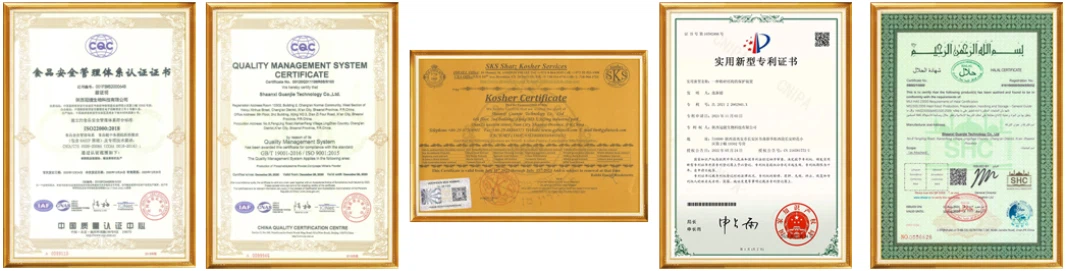
Certifications: Halal,ISO9001,PAHS Free,NON-GMO,KOSHER,SC
Overseas warehouse(NJ,USA)
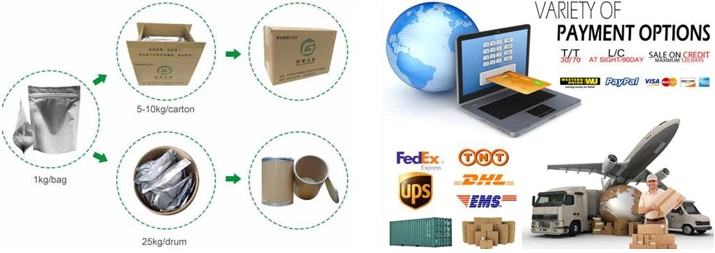
Delivery term: DHL, FEDEX, Air freight,Sea freight
Provide Free Sample
MOQ: 1KG
Not for Private Person Sale
Description
soy phosphatidylserine powder supplier:
Guanjie Biotech has focused on soy phosphatidylserine powder for more than 20 years. We use natural sources. Different specifications that you can choose. Our assay is from 20%-80%. If you are interested in our products, we can provide you with related product information. It includes COA, flowchart, testing report, and others. Welcome to enquiry: info@gybiotech.com.

COA:
|
Item |
Specification |
Result |
Method |
|
Basic Product Information |
|||
|
Country of Origin |
China |
Conform |
/ |
|
Marker Compounds |
|||
|
L-α-Phosphatidyl-L-serine |
>50.0% |
52.57% |
HPLC-ELSD |
|
L-α-Phosphatidylcholine |
<5.0% |
3.88% |
HPLC-ELSD |
|
Organoleptic Data |
|||
|
Appearance |
Fine Powder |
Conform |
/ |
|
Color |
Light Yellow |
Conform |
/ |
|
Odor |
Characteristic |
Conform |
/ |
|
Taste |
Characteristic |
Conform |
/ |
|
Physical Characteristics |
|||
|
Peroxide value |
<5.0 meq/kg |
Conform |
GB 5009.227 |
|
Particle Size |
>98.0% pass 40 mesh |
Conform |
GB/T 5507 |
|
Loss on drying |
<2.0% |
Conform |
GB 5009.3 |
|
Acetone insolubility substance |
>95.0% |
Conform |
SN/T 0802.2 |
|
Solvent Residue |
Ethanol <1000ppm |
200 |
GB 5009.262 |
|
Acetone <10ppm |
1.5 |
||
|
N-Hexane <10ppm |
<0.5 |
||
|
Heavy Metals |
|||
|
Total Heavy Metals |
<10.0 ppm |
Conform |
GB 5009.74 |
|
As |
<2.0 ppm |
Conform |
GB 5009.11 |
|
Pb |
<2.0 ppm |
Conform |
GB 5009.12 |
|
Cd |
<0.5 ppm |
Conform |
GB 5009.15 |
|
Hg |
<0.5 ppm |
Conform |
GB 5009.17 |
|
Microbiology |
|||
|
Total Plate Count |
<10,000cfu/g |
Conform |
GB 4789.2 |
|
Mold |
<1,000cfu/g |
Conform |
GB 4789.15 |
|
E. Coli |
<10cfu/g |
Negative |
GB 4789.3 |
|
Salmonella |
Negative |
Negative |
GB 4789.4 |
|
Non-GMO |
|||
|
Non-GMO |
Conform |
Conform |
SN/T 1195-2003 |
Conclusion: Complies with specification
Physical properties:
Phosphatidylserine is a phospholipid analog consisting of triglycerides, two fatty acid chains, a phosphate group, and a serine molecule. It has a chemical formula of C13H24NO10P and a molecular weight of about 385.31 g/mol.
• Appearance:
Soy phosphatidylserine powder is a white or light yellow powder, solid at room temperature.
• Solubility:
Phosphatidylserine bulk powder is not easily soluble in water. However, it has certain solubility in organic solvents. Such as ethanol, chloroform and methanol. Its solubility depends on the temperature and polarity of the solvent. High temperature can improve its solubility in organic solvents.
• Stability:
Soy Phosphatidylserine Powder is stable at neutral pH. However, it is susceptible to hydrolysis in acidic or alkaline environments. The hydrolysis reaction produces the corresponding phosphoric acid, serine and fatty acid, destroying its structure and function.
Phosphatidylserine no soy is also sensitive to heat, and high temperatures accelerate its degradation. It is therefore necessary to avoid high-temperature environments during production and storage.
• Biochemical reactions:
In living organisms, phosphatidylserine is produced and metabolized by enzymatic reactions. For example, phospholipase C hydrolyses phosphatidylserine to produce diacylglycerol and serine phosphate.
Phosphatidylserine plays an important role in cell signalling. For example, during apoptosis, it flips from the inside of the cell to the outside of the cell membrane and is recognised as an apoptotic signalling molecule.
• Antioxidant properties:
Soy phosphatidylserine powder has a certain antioxidant capacity that scavenges free radicals and protects cell membranes from damage caused by oxidative stress. Its antioxidant properties help maintain the integrity and function of cell membranes. It is particularly found in nerve cells.
• Lipophilicity and hydrophilicity:
Phosphatidylserine has both lipophilic and hydrophilic properties. The fatty acid chain part is lipophilic. It can be incorporated into the lipid bilayer of the cell membrane.
The phosphate group and the serine part are hydrophilic. They can interact with water molecules and other polar molecules. This amphiphilic nature enables phosphatidylserine to play important structural and functional roles in cell membranes.
• Chemical Reactivity:
Phosphatidylserine can bind to metal ions (e.g., Ca^2+, Mg^2+), a property that simplifies cell signalling processes. Its phosphate bond is hydrolyzed by specific enzymes to form phosphate and glycerides.
• Stability:
Phosphatidylserine soy powder is relatively stable at room temperature. But in acidic or alkaline environments, the phosphate bond is easily hydrolysed. Soy phosphatidylserine powder is also more sensitive to oxidation. Especially in the presence of polyunsaturated economic development, it is prone to oxidative degradation.
Structure
• The glycerol backbone:
Phosphatidylserine is a phospholipid derived from glycerol. Ester bonds bind the glycerol molecule to both the fatty acid chain and the phosphate group.
• Two fatty acid chains:
Carbon atoms #1 and #2 on the glycerol backbone join two fatty acid chains, respectively. Common fatty acids include saturated and unsaturated fats.
• Phosphate Group:
The third carbon atom of the glycerol backbone joins a phosphate group. This phosphate group is further linked to serine.
• Serine:
Serine is an amino acid. The unusual structure of soy phosphatidylserine powder is formed by the attachment of a phosphate group to the glycerol backbone.
Industry Status
In recent years, phosphatidylserine powder has been widely used in the nutraceutical, food, and pharmaceutical industries.
• Nutraceutical industry:
Bulk phosphatidylserine is widely used in various cognitive function supplements. Especially in the European and American markets, demand is growing steadily. With the aging population, the need for nutraceuticals that support memory and cognitive function has increased, driving growth in the phosphatidylserine market.
• Food industry:
Phosphatidylserine has been used as a functional food additive in several products, including energy drinks, dairy products, and nutrition bars. Currently, its application in food remains limited. However, due to increasing consumer health awareness, the market outlook for soy-derived phosphatidylserine powder remains positive.
• Pharmaceutical industry:
Soy Phosphatidylserine Powder shows great potential in the treatment of neurological conditions such as Alzheimer's disease, Parkinson's disease, depression, and anxiety. While relevant drugs and treatment plans are still under research and development, some clinical studies have shown significant therapeutic effects.
Flow chart:

Production Process and Extraction Method
The production methods of soy phosphatidylserine powder mainly include chemical synthesis method and natural extraction method.
• Chemical synthesis method:
Chemical synthesis involves a series of organic chemical processes. Phospholipidserine bulk soy powder is made from glycerol, fatty acids, phosphoric acid, serine, and other chemical components. One of the benefits of this technology is the capacity to accurately control the purity and quality of the product, but it is more expensive and may contaminate the environment during manufacture. Typically, the stated processes include raw material preparation, reaction control, and end product purification. The choice of reaction parameters, such as temperature, pH, and catalyst, has a substantial influence on both synthesis efficiency and product quality.
• Natural extraction method:
The natural extraction method is mainly used to extract soy phosphatidylserine powder from biological resources such as soybean, egg yolk, brain tissue, etc. Guanjie Biotech uses natural extraction method. We use high quality soybeans.
We often utilize organic solvent extraction, membrane separation, and column chromatography, using soybeans as an example. Phosphatidylserine of the highest purity is the end product.
This method's benefit is that the extraction procedure is not too harmful to the environment. The drawback is that purity and yield might be unstable. Typically, ethanol, acetone, and other organic solvents are employed in the extraction procedure. It is necessary to further purify and concentrate the extracted substance. For each batch of items we create, we will conduct microbiological and purity tests to make sure they are appropriate.
Applications
It is widely used in nutraceuticals, food, and pharmaceuticals.
• Nutraceuticals:
As a supplement for cognitive function, phosphatidylserine helps with memory, focus, and learning. It's especially appropriate for senior citizens and student organizations. Soy phosphatidylserine supplements in liquid form, pills, capsules, and powders are typical nutraceutical formulations.
• Food additives:
Phosphatidylserine is added to functional foods to enhance their nutritional value and health benefits.
Phosphatidylserine is added to nutrition bars and energy drinks to increase their anti-fatigue and anti-stress properties.
When using it as a food additive, stability and compatibility with other components must be taken into account to guarantee the end product's quality and efficacy.
• Pharmaceuticals:
The therapy of neurological illnesses appears to be much improved by phosphatidylserine.
According to current research, Soy Phosphatidylserine Powder may be able to treat depression, anxiety, Parkinson's disease, and Alzheimer's disease. Among other things, its pharmacological method of action involves enhancing nerve cell activity, controlling neurotransmitter levels, and acting as an antioxidant.
Future Prospects
With the deepening of research and the development of technology, the application prospects of phosphatidylserine will be broader. The following are several important trends in the future:
• Growth of market demand:
The need for soy phosphatidylserine powder as a functional element will only increase as people pay more attention to health care. The aging population will encourage more people to use phosphatidylserine to enhance cognitive performance.
• New application development:
Phosphatidylserine is being investigated for its uses in novel domains, including cardiovascular protection and anti-cancer. The uses of phosphatidylserine in medicine will only grow as its physiological action mechanism is thoroughly investigated.
Factory Equipment & Laboratory Detection

Our Testing Center:

Contract with Third-Party Lab:
Our products adhere to the strict quality standard. All the products can be tested. And soy phosphatidylserine powder products requested by customers will be sent to the third-party testing center for testing.

Certification
Package&Warehouse:
Hot Tags: soy phosphatidylserine powder, China soy phosphatidylserine powder manufacturers, suppliers, factory, bulk Resveratrol Powder, Sunflower Lecithin Powder, Water Soluble bulk Resveratrol Powder, Raw Material Indole 3 Carbinol, Indole-3-carbinol Powder, Pure bulk Indole-3-Carbinol Powder
You Might Also Like