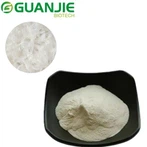
Yes, fisetin can reverse aging. Therefore, bulk fisetin powder has attracted attention from the industry due to its ability to selectively clear senescent cells. Cellular senescence is a core biological mechanism driving functional decline and age-related diseases. In recent years, fisetin bulk powder has received widespread attention for its dual function of clearing senescent cells and regulating senescence-related secretory phenotypes.

Can Fisetin Reverse Aging?
What Is Fisetin?
Fisetin (molecular formula C₁₅H₁₀O₆, molecular weight 286.24 g/mol) is a flavonol compound. It is naturally found in fruits and vegetables such as strawberries, apples, persimmons, onions, and cucumbers. Strawberries contain the highest level of fisetin, approximately 16.0 mg/100 g fresh weight. Apples contain about 2.69 mg/100 g. The average daily dietary intake of fisetin is estimated to be around 0.4 mg/day. This level is much lower than the effective doses reported in experimental studies.
The molecular structure of fisetin is characterized by 3',4'-dihydroxy substitution on the B ring and 3-hydroxy and 7-hydroxy substitutions on the C ring. Theoretical studies show that the pKa values of the four dissociation sites (C3, C7, C3', and C4') are 7.55, 8.67, 10.49, and 12.60, respectively. These results indicate that fisetin mainly exists in a mixed protonated state under physiological pH conditions.
From an industrial application perspective, fisetin bulk powder faces several challenges. First, pure bulk fisetin has extremely low water solubility. This limits its dissolution rate in oral formulations. Second, fisetin undergoes significant first-pass metabolism. This results in low oral bioavailability. Third, its photothermal stability still needs improvement. These limitations require advanced formulation technologies in the development of functional foods, dietary supplements, and pharmaceutical products.
Selective Induction of Apoptosis in Senescent Cells
Fisetin acts as a senolytic agent. It selectively eliminates senescent cells rather than normally proliferating cells. This selectivity is mainly related to the altered apoptotic sensitivity of senescent cells.
In normal cells, a dynamic balance exists between anti-apoptotic proteins and pro-apoptotic proteins. Anti-apoptotic proteins mainly include members of the Bcl-2 family, such as Bcl-2, Bcl-xL, and Bcl-W. Pro-apoptotic proteins include Bax and Bak. To avoid programmed cell death, senescent cells increase the expression of Bcl-2 family anti-apoptotic proteins. This makes them more resistant to apoptotic signals. However, this adaptive change also creates a vulnerability that senolytic drugs can target.
Pure bulk fisetin directly binds to and inhibits anti-apoptotic proteins, including Bcl-2, Bcl-xL, and Bcl-W. This lowers the permeability threshold of the mitochondrial outer membrane. It also promotes the release of cytochrome c into the cytoplasm. As a result, the caspase cascade is activated, leading to apoptosis in senescent cells.
Studies have shown that bulk fisetin powder binds to Bcl-2 family proteins through a clear structural mechanism. Molecular dynamics simulations further confirmed that fisetin can effectively occupy the hydrophobic binding pockets of these proteins.
Inhibition of the PI3K/AKT Signaling Pathway
The PI3K/AKT signaling pathway plays an important role in the survival of senescent cells. Continuous activation of this pathway increases the metabolic activity of senescent cells. It also supports the production of SASP factors and suppresses apoptosis by phosphorylating the downstream substrate BAD and activating NF-κB.
In a telomerase-deficient premature aging mouse model, researchers found that the phosphorylation level of AKT and the expression level of the anti-apoptotic protein Bcl-2 were significantly higher in the kidney tissues of G3 Tert-/- mice than in wild-type mice. After fisetin treatment, both pAKT and Bcl-2 levels decreased significantly.
Further RNA sequencing analysis showed that bulk fisetin powder regulates the AKT signaling pathway by inhibiting the expression of the Stc1 (stanniocalcin 1) gene. Stc1 has been reported to produce anti-apoptotic effects by activating the PI3K/AKT pathway. In G3 Tert-/- mice, Stc1 mRNA levels were significantly elevated. However, fisetin treatment reduced its expression.
Antioxidant and Anti-inflammatory Effects

Fisetin contains polyphenolic hydroxyl groups. These groups give it strong antioxidant activity. Studies show fisetin scavenges ·OOH, O₂·⁻, and ·OH free radicals more effectively than Trolox and ascorbic acid. It also helps repair oxidatively damaged proteins and amino acids.
Bulk fisetin powder may help regulate inflammation. It suppresses the NF-κB pathway, which controls inflammatory factors such as IL-6, TNF-α, and IL-8. In senescent cells, DNA damage activates NF-κB signaling. Fisetin interferes with this process and reduces SASP production. This may help limit the harmful effects of senescent cells on nearby tissues.
What Research Has Been Done On Fisetin In Aging?
• Fisetin and Vascular Aging
University of Colorado Boulder is running a Phase II clinical trial (NCT06133634). The study is randomized, double-blind, and placebo-controlled. Researchers are testing fisetin in adults aged 65 and older. Participants take 20 mg/kg/day for two 3-day cycles with a 2-week gap. The main goal is to measure changes in blood vessel function. Researchers will also study aortic stiffness, p16-positive T cells, and SASP factors. Primary data collection is expected to finish in March 2026.
• Fisetin for Recovery After Chemotherapy
The PROFFi study (NCT06113016) is a multicenter Phase II trial. It studies fisetin combined with exercise in breast cancer survivors. The trial enrolled 200 postmenopausal women with stage I–III breast cancer. Participants take bulk fisetin powder at 20 mg/kg/day for 3 days every 14 days over 16 weeks. The main endpoint is improvement in 6-minute walk distance (6MWD). Enrollment started in July 2024 and is still ongoing.
• Low-Dose Long-Term Fisetin Study
A Danish trial called Fisetin LOW (NCT07195318) is studying long-term low-dose fisetin use. The study is triple-blind, randomized, and placebo-controlled. Adults aged 50 and older take 100 mg/day for 7 weeks. Researchers are testing the safety and anti-inflammatory effects. The main biomarker is suPAR, which is linked to chronic inflammation and aging. Other markers include SASP factors, p16INK4a, p21CIP1/WAF1, α-klotho, GDF-15, FGF-21, and frailty scores. Primary endpoint collection is expected in October 2026. Follow-up will continue until 2035.
• Safety and Tolerability
Current Phase I and II studies suggest that fisetin is generally well-tolerated. However, most studies are still small. Dosage methods also differ between trials. Long-term safety data remain limited. Pure fisetin powder also has low oral bioavailability, which may reduce effectiveness. Different formulations may affect active ingredient levels and absorption.
What Is Fisetin Powder Used For?
Based on current evidence, the scientific foundation for fisetin bulk powder as a senotherapeutic agent has been preliminarily established. It shows anti-aging potential through multiple mechanisms. These include inducing apoptosis in senescent cells, inhibiting SASP production, and scavenging free radicals. Animal studies suggest that fisetin may improve tissue function and extend healthy lifespan.
For B2B clients, fisetin can be applied in several ways.
• First, it can be used as a raw material for dietary supplements.
Bulk fisetin powder serves as an active ingredient in anti-aging formulations. It can also be combined with vitamins, minerals, or other plant extracts, such as quercetin and resveratrol. Advanced formulation technologies, including nano-encapsulation and phospholipid complexes, may help improve its bioavailability.
• Second, fisetin can be used in functional foods.
It is suitable for anti-aging functional foods, meal replacement products, and nutritional support products designed for healthy aging in middle-aged and elderly consumers.
• Third, fisetin can be used as a cosmetic ingredient.
Studies suggest that bulk fisetin powder may help reduce UVB-induced photoaging damage to the skin. Therefore, it has potential applications in anti-aging skincare products.
• Fourth, fisetin can be used as a pharmaceutical intermediate.
As a lead compound, its structure may be optimized to develop derivatives with higher senolytic activity and better selectivity.
However, the large-scale development of the bulk fisetin market still faces several challenges. More high-quality randomized controlled trials are needed to strengthen the clinical evidence. Regulatory pathways for senolytic dietary supplements also need to be clarified across different countries and regions. In addition, formulation technologies still require further standardization.
Conclusion:
Based on existing evidence, bulk fisetin exerts its anti-aging effects through a dual mechanism of antioxidant repair and senescent cell clearance. It indeed demonstrates significant potential for improving age-related biomarkers and physiological functions through this cutting-edge mechanism of targeted senescent cell clearance, supported by preliminary human clinical data.
From an industrialization perspective, a stable supply of high-purity fisetin raw materials and formulation technologies that improve bioavailability are core links in the value chain. With in-depth research into the biological mechanisms of aging and the accumulation of clinical trial data, the commercial value of fisetin as a functional raw material for aging intervention will gradually be realized. For B2B customers, selecting raw material suppliers with a sound quality control system and large-scale production capabilities is a crucial decision for entering this emerging market.
Guanjie Biotech focuses on the research, development, and production of fisetin powder and is committed to providing innovative, high-quality raw material products to global clients. Our client network covers more than 100 countries, providing end-to-end services from raw material supply to formulation support. For inquiries, please contact: info@gybiotech.com.
References:
[1] Clinical Trial: NCT06133634. Fisetin to Improve Vascular Function in Older Adults. University of Colorado Boulder. (Primary completion date: March 2026)
[2] Clinical Trial: NCT06113016 (PROFFi). Multicenter Phase II Randomized, Placebo-Controlled Study Evaluating Fisetin Combined with Exercise Intervention on Functional Recovery After Chemotherapy in Early-Stage Breast Cancer Survivors.
[3] Clinical Trial: NCT07195318 (Fisetin LOW). Triple-Blind, Randomized, Placebo-Controlled Trial Investigating Low-Dose Fisetin Supplementation in Middle-Aged and Older Adults. Denmark.
[4] Zhu, Y., et al. The Achilles' heel of senescent cells: from transcriptome to senolytic drugs. Aging Cell.
[5] Yousefzadeh, M. J., et al. Fisetin is a senotherapeutic that extends health and lifespan. EBioMedicine. 2018;36:18-28.
[6] Yousefzadeh M. J., Zhu Y., McGowan S. J., et al. Fisetin is a senotherapeutic that extends health and lifespan. EBioMedicine. 2018, 36: 18-28.
[7] Zhu Y., Doornebal E. J., Pirtskhalava T., et al. New agents that target senescent cells: the flavone, fisetin, and the BCL-XL inhibitors, A1331852 and A1155463. Aging (Albany, NY). 2017, 9(3): 955-963.
[8] Yang H. H., Yang C., Chen H. L., et al. Fisetin Alleviates Diabetic Aortic Aging by Inhibiting the Pi3k-Akt-Bcl-2/Bcl-xl Pathway and Clearing Senescent Cells. Phytotherapy Research. 2025.