


In the field of eye nutrition, Haematococcus pluvialis extract astaxanthin and marigold extract lutein are two ingredients receiving strong market attention. The eye health market continues to grow rapidly. Consumers are seeking products that help reduce eye fatigue, block blue light, and support retinal health. As a result, related products are becoming more specialized and multifunctional. Astaxanthin and lutein are not competing ingredients. They work together because they target different parts of the eye. Marigold extract lutein mainly supports the macula and retina. Astaxanthin mainly helps reduce oxidative stress and eye fatigue. Their combined use provides broader support for visual health and daily eye protection.
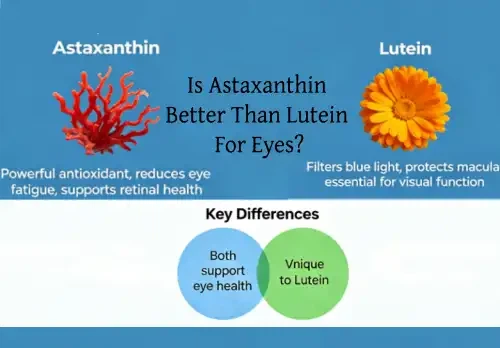
Is Lutein Good for the Eyes?
Lutein is an oxygen-containing carotenoid mainly derived from plants such as marigold flowers, spinach, and kale. The human body cannot produce lutein on its own. It must be obtained through food or dietary supplements. One important feature of marigold extract lutein is its selective accumulation in the macula of the retina. The macula is responsible for central vision, color recognition, and detailed visual tasks. This area is exposed to high-energy blue light for long periods. As a result, it faces a high risk of oxidative stress. The accumulation of lutein in the macula forms the basis of macular pigment.
• Blue Light Filtration
Lutein can absorb part of the high-energy blue light spectrum. This helps reduce the stimulation of retinal photoreceptor cells. Therefore, lutein has strong market potential for people who spend long hours using computers, smartphones, and other digital display devices.
• Maintenance of Macular Pigment Density
Macular pigment density is closely associated with visual performance. With aging, the density of macular pigment may gradually decline. Marigold extract lutein supplements are widely used in vision nutrition products designed for middle-aged and elderly consumers.
• Antioxidant Properties
Lutein can help neutralize free radicals and reduce oxidative damage to eye tissues. Because of this function, lutein is commonly used in eye health supplements. Today, marigold extract lutein has become one of the core ingredients in eye care products worldwide. It is widely used in vision nutrition products for teenagers, blue light protection formulas, eye health products for older adults, multivitamin products, functional gummies, and solid beverages.
From a market perspective, bulk lutein has strong consumer recognition and a well-established regulatory foundation. This has resulted in broad acceptance in the global market.
Is Astaxanthin Good For Eyes?
Astaxanthin is a ketocarotenoid. It is mainly derived from Haematococcus pluvialis, yeast fermentation, and marine extracts. Natural astaxanthin from Haematococcus pluvialis is currently the mainstream source on the market. Compared with lutein, Haematococcus pluvialis extract astaxanthin offers greater advantages in eye health applications. These advantages mainly include its antioxidant activity and its ability to relieve eye fatigue.
• Strong Antioxidant Capacity
Astaxanthin has strong free radical scavenging activity. Long-term exposure to light can easily cause oxidative stress in eye tissues. Astaxanthin may help reduce oxidative damage to the retina, lens, and ocular microcirculation.
In the functional food industry, Haematococcus pluvialis extract astaxanthin is widely used in visual fatigue products. It is also used in supplements for people who use their eyes for long hours. Common applications include e-sports nutrition products, premium eye care capsules, and anti-aging formulas.
• Helps Relieve Eye Fatigue
In recent years, the use of electronic devices has increased rapidly. Visual fatigue has become a major concern among young consumers. Studies suggest that astaxanthin from Haematococcus pluvialis extract may help improve the accommodation function of the ciliary muscle. This may help reduce eye fatigue from prolonged close-range visual work.
Because of this, natural astaxanthin has gained strong attention from office workers, students, and frequent digital device users.
• Supports Eye Microcirculation
Some studies suggest that Haematococcus pluvialis extract astaxanthin may help support capillary circulation in the eyes. This property has increased its application in premium eye nutrition products and functional supplements.
What Are The Differences Between Astaxanthin And Lutein?
From a product development perspective, Haematococcus pluvialis extract astaxanthin and lutein are both carotenoids used in eye health products. However, they have clear differences in product positioning, target consumers, and formulation strategies. They are not direct substitutes. In many formulations, they are used together to support different eye health needs.
• Functional Differences
Marigold extract lutein mainly supports macular nutrition and blue light protection. It can accumulate in the macula of the retina and form macular pigment. This pigment helps absorb high-energy blue light and protects retinal photoreceptor cells. Therefore, lutein is commonly used in products designed for blue light exposure and macular health support.
Haematococcus pluvialis extract astaxanthin mainly focuses on visual fatigue relief and antioxidant support. Its molecular structure allows it to act on the ciliary muscle and retinal ganglion cells. It may help improve ocular blood circulation and support the focusing ability of the eyes. Therefore, astaxanthin is more suitable for products targeting eye strain, accommodative fatigue, and inflammation-related eye discomfort.
• Differences in Target Consumer Groups
Marigold extract lutein products mainly target teenagers exposed to electronic devices, middle-aged and elderly people with declining macular density, and office workers who spend long hours in front of screens.
Astaxanthin products are more suitable for office workers with serious eye fatigue, e-sports users, people engaged in high-intensity visual tasks, and consumers seeking advanced anti-aging and eye health support.
• Differences in Formulation Positioning
In commercial applications, marigold extract lutein is widely used in mass-market eye care products because of its strong research background and relatively stable cost. Haematococcus pluvialis extract astaxanthin has a higher raw material cost and stronger antioxidant positioning. Therefore, it is more commonly used in mid-to-high-end eye health products. It is especially popular in cross-border e-commerce and sports nutrition markets, where it is often used as a premium functional ingredient.
Can Astaxanthin Replace Lutein?
Based on current scientific research and industry applications, astaxanthin cannot fully replace lutein. The main reasons are listed below. Their functions and distribution in the human eye are different.
• Antioxidant Capacity:
Marigold extract lutein can specifically accumulate in the macular area of the retina. Marigold flower extract lutein forms macular pigment and helps filter high-energy blue light. Pure natural astaxanthin also has strong antioxidant activity. However, Haematococcus pluvialis extract astaxanthin does not show the same targeted accumulation in the macula. Therefore, it cannot replace lutein's blue light filtering function.
• Different Market Recognition and Clinical Support:
Marigold extract lutein has a long history in the eye health market. Lutein from marigold extract also has strong clinical research support, especially in age-related macular degeneration. Astaxanthin is more commonly linked with reducing eye fatigue and improving ocular blood circulation.
• Better Synergistic Effects in Formulas:
Current market trends show that combining lutein, zeaxanthin, and astaxanthin provides broader eye health support. Lutein mainly supports blue light filtering and macular protection. Haematococcus pluvialis extract astaxanthin mainly supports anti-inflammatory activity and eye fatigue relief. Combined formulas can meet wider visual health needs and improve product competitiveness.
How to Choose Astaxanthin or Lutein Raw Materials?
Customers should evaluate several factors before choosing astaxanthin or lutein raw materials. These factors include product positioning, regulatory requirements, and formulation processes.
• Consider the source of the raw materials.
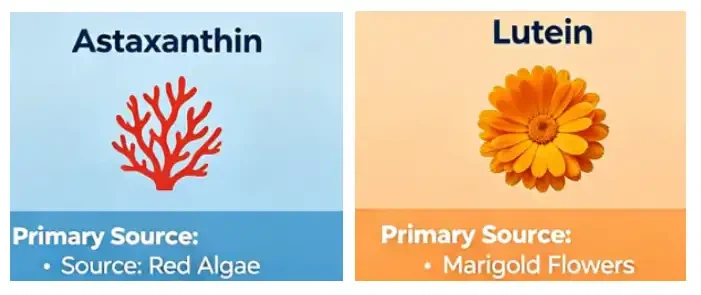
Natural sources are more suitable for the clean-label market trend. Lutein is commonly extracted from marigold flowers. Haematococcus pluvialis extract astaxanthin is mainly obtained from Haematococcus pluvialis.
• Check the content specifications.
Different dosage forms require different active ingredient concentrations. Common lutein specifications include 5%, 10%, and 20%. Common Haematococcus pluvialis extract astaxanthin specifications include 1%, 2%, and 5%. Manufacturers should select the proper specification based on the final application.
• Evaluate stability.
Carotenoids are sensitive to light, oxygen, and heat. They can easily oxidize and degrade during processing and storage. Reliable lutein and pure astaxanthin powder suppliers usually apply stabilization technologies. These technologies include microencapsulation and antioxidant blending. Such methods help maintain ingredient activity throughout the product's shelf life.
• Review application suitability.
Different dosage forms, such as softgels, tablets, and solid beverages, require different raw material properties. Important factors include water solubility, flowability, dispersibility, and odor control. B2B buyers should request technical documents and formulation support from suppliers. This helps verify whether the raw materials are compatible with specific production processes.
Guanjie Biotech focuses on the large-scale supply of high-purity astaxanthin and lutein raw materials. The company emphasizes quality control and regulatory compliance instead of ingredient efficacy marketing. Its products are developed based on scientific data and international market requirements. The company supplies products such as microencapsulated lutein crystals and stable Haematococcus pluvialis astaxanthin oil. Its quality management system supports OEM manufacturers that require highly active and low-impurity raw materials.
Conclusion
No, they can complement each other as complementary ingredients targeting different consumer scenarios.
• If you need to protect the macula, defend against high-energy blue light, and utilize AREDS2 evidence-based medicine, lutein is the core choice.
• If you need to relieve fatigue, improve periocular circulation, and utilize high-intensity anti-inflammatory properties, Haematococcus pluvialis extract astaxanthin is a more targeted functional factor.
Guanjie Biotech recommends that industry clients adopt a "lutein base, astaxanthin synergistic" combination strategy to cover the complete health pathway from macular light protection to overall eye fatigue relief. If you are interested in our lutein and astaxanthin, welcome to enquire with us at info@gybiotech.com.
References:
[1] Różanowska, M. B., et al. ((2021). Comparison of Antioxidant Properties of Dehydrolutein with Lutein and Zeaxanthin. Journal Pre-proof.
[2] The effects of lutein, zeaxanthin, and anthocyanins supplementation on visual function. (2026). J. Clin. Biochem. Nutr.
[3] Taiwan Cancer Foundation. (2025). A Beautiful New Vision - Eye-Protecting Nutrients.
[4] Clinical management of eye diseases: carotenoids and their nanoformulations. (2024). Springer.
Zhao Xue, Wu Xiyang. (2025). Protective effect of lutein ester-astaxanthin complex on blue light damage to the retina. Tianjin Food Research and Development.
[6] Effect of Dietary Supplementation with Lutein, Zeaxanthin, and Elderberries on Dry Eye Disease. (2024). Nutrients.
[7] Cristaldi, M., et al. (2022). Comparative Efficiency of Lutein and Astaxanthin in Protection of Corneal Epithelial Cells. Applied Sciences.
[8] Santocono, M., et al. (2006). Influence of astaxanthin, zeaxanthin, and lutein on DNA damage and repair. J Photochem Photobiol B.
[9] NIH Table. (2025). Antioxidant and Anti-inflammatory effects of Carotenoids. PMC.
[10] Oral Antioxidant and Lutein/Zeaxanthin Supplements Slow Geographic Atrophy Progression. (2024). Ophthalmology.


