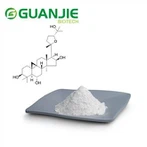
Bulk Citicoline and Choline powder are widely used in the production and formulation of dietary supplements, functional health products, and brain health-specific products worldwide. Based on nutritional science, neurometabolism, and clinical data on the compliant use of dietary ingredients, this study objectively compares Citicoline and Choline in terms of their core properties, blood-brain barrier penetration, brain metabolic pathways, neuromodulation effects, and suitable application scenarios. Which Is Better For Your Brain?
What Are The Properties of Citicoline And Choline?
Citicoline And Choline
• Choline
Choline, or free choline, is an essential water-soluble nutrient for the human body. Choline powder is classified as an essential dietary nutrient in many countries. Commercial choline raw materials mainly include choline tartrate and choline chloride. Both are single choline compounds.
After intake, choline is digested and absorbed in the gastrointestinal tract. It then enters the bloodstream. Only a small amount of free choline can cross the blood-brain barrier. It enters brain tissue and serves as a substrate for acetylcholine synthesis. Its main role is basic neurotransmitter production. It does not have additional brain metabolic functions beyond this.
The human body cannot produce enough choline. It must be obtained from diet or supplements. Its core functions include phospholipid synthesis, liver lipid metabolism, and basic nerve signaling. Any brain-related benefit is secondary.

• Citicoline
Citicoline is also known as cytidine diphosphate choline (CDP-choline). Citicoline powder is a choline-containing compound. It is not a simple choline derivative. It is an endogenous compound found in human brain tissue. Commercial CDP-choline is produced through controlled bio-fermentation.
After oral intake, CDP-choline is broken down in the gut into two active components: choline and cytidine. Both can cross the blood-brain barrier. In the brain, they are converted back into CDP-choline.
This process supports two metabolic pathways. First, choline powder is used to produce acetylcholine. Second, cytidine is converted into uridine. This supports neuronal membrane phospholipid repair and mitochondrial energy metabolism.
From a metabolic view, choline is a single-function nutrient. CDP-choline powder is a dual-pathway functional compound. Their metabolic roles are fundamentally different.
What Do Citicoline and Choline For Brain?
Blood-Brain Barrier Penetration Efficiency and Brain Tissue Accumulation
The blood-brain barrier is a key limiting factor for brain nutrition. It is also the main reason for efficacy differences between these two raw materials.
Commercial choline powder has low oral bioavailability. The peripheral absorption rate of free choline is about 62%. Only 11%–15% can cross the blood-brain barrier. Most choline stays in the blood and is metabolized by the liver or used in peripheral tissues. The concentration in brain tissue is low. Higher doses are needed to support basic brain nutrition. High doses may also increase peripheral metabolic side effects.
Citicoline powder has a unique structure. It contains choline and cytidine. This dual-component system can cross the blood-brain barrier more efficiently. It does not rely heavily on carrier transport. Its penetration efficiency is about 47%–52%. At the same oral dose, brain tissue accumulation is about 3.2 times higher than regular choline. Citicoline also does not accumulate significantly in peripheral circulation. It is mainly directed into brain metabolism. This makes it more suitable for targeted brain nutrition formulations.

Differences in Brain Neuron Functions
• First, neurotransmitter regulation ability.
Both can support the synthesis of acetylcholine, which is important for memory, attention, and thinking. Regular choline mainly maintains basic acetylcholine levels. It helps slow normal age-related decline but does not significantly improve neurotransmitter efficiency. Citicoline can increase both acetylcholine and dopamine levels in the brain. It supports memory, mood balance, and focus. It is often used in formulas for students, office workers, and older adults.
• Second, neuronal structure repair ability.
Regular choline has no direct neuron repair function. It mainly provides basic materials for cell membrane synthesis. It cannot repair damage caused by oxidative stress, aging, or poor brain metabolism. Citicoline powder supports the synthesis of phosphatidylcholine through its metabolic pathway. This helps repair damaged neuronal cell membranes and supports new cell membrane formation. It also reduces oxidative stress in the brain. This gives it a clearer neuroprotective effect compared to regular choline.
• Third, brain energy metabolism support.
Many middle-aged and older individuals experience reduced brain mitochondrial efficiency. Regular choline powder does not directly affect mitochondrial function. Studies show that citicoline supplementation may improve mitochondrial ATP production in the brain. It can help reduce mental fatigue and improve cognitive energy. It is commonly used in anti-fatigue brain health formulations.
Experimental Results in Different Populations
• Ages 18–35 with high mental workload:
At the same daily dose, choline mainly supports basic cognitive function. It does not significantly improve attention or mental fatigue. Citicoline powder can improve reaction time and sustained attention. It is more suitable for students and high-pressure office workers.
• Age 45 and above with cognitive decline:
Long-term choline powder supplementation mainly addresses basic dietary needs. It shows limited effect on mild cognitive decline. Long-term citicoline powder use may help slow age-related memory decline. It may also support brain metabolic health. It is more suitable for cognitive support in middle-aged and older populations.
Raw Material Cost and Formulation Cost Comparison
From a bulk powder procurement view, choline (choline chloride, choline tartrate) has mature mass production technology. Its raw material cost is lower. The formulation barrier is also low. It is suitable for low-cost basic nutritional supplements for the general market. It mainly supports daily choline powder intake. It focuses on basic liver support and nutrition. Brain support is only a secondary benefit.
Citicoline powder has higher requirements for bio-fermentation technology. Its raw material cost is higher than standard choline. However, it requires a lower effective dosage in formulations. It offers stronger targeted effects. The overall finished product cost remains controllable. It is mainly used in mid-to-high-end brain health supplements and cognitive support products.
Food Safety and Dosage Tolerance
Both raw materials are food-grade and safe within regulated dosage limits. They comply with dietary supplement standards in many countries.

Regular choline powder has lower dosage tolerance. High intake may cause gastrointestinal discomfort. It may also increase TMAO levels in the blood. This limits its use in cardiovascular-sensitive populations.
Citicoline powder acts more directly on the brain. It produces fewer peripheral metabolites. At comparable effective doses, it shows a lower side-effect profile than regular choline. It is suitable for broader age groups. It is also more suitable for sensitive users. Formulation adjustment is easier.
Selection and Application Recommendations
Option 1:
For affordable multivitamins and daily nutritional supplements, use choline powder. It is a basic nutrient ingredient. It supports basic brain metabolism and liver lipid maintenance. It helps control product cost and fits mass-market positioning.
Option 2:
For focus support, mental fatigue relief, cognitive maintenance in middle-aged and elderly users, and high-end brain health products, use citicoline powder. It supports neuron function, cell membrane repair, and neurotransmitter regulation. It is suitable for premium positioning and scientific marketing support.
FAQs:
1. What is the core difference between citicoline and choline?
Choline is a basic essential nutrient used primarily for acetylcholine synthesis and general cellular functions. Citicoline is a more complex compound (CDP-choline) that provides both choline and cytidine, supporting neurotransmitter production and brain phospholipid metabolism.
2. Is citicoline just a stronger form of choline?
Not exactly. Citicoline is not simply "stronger choline." It follows a different metabolic pathway. In the brain, it supports both acetylcholine production and membrane phospholipid repair, making its functional profile broader than standard choline.
3. Which is better for memory and focus?
Citicoline powder is generally more effective in formulations targeting memory, attention, and mental clarity due to its dual-pathway action on neurotransmitters and brain cell structure. Choline powder mainly supports baseline neurotransmitter needs.
4. Are there safety differences between them?
Both are considered food-grade and safe within regulated dosages. Choline may cause gastrointestinal discomfort at higher intake levels in some individuals. Citicoline powder generally shows better tolerance due to more targeted brain metabolism and fewer peripheral effects.
5. Which is more cost-effective for supplement formulation?
Choline is significantly lower in raw material cost and is ideal for basic nutrition products. Citicoline powder has higher production cost due to fermentation processes but requires lower effective dosage and supports premium cognitive product positioning.
6. Can citicoline and choline be used together?
Yes. Some formulations combine both to balance cost efficiency (choline) with functional cognitive enhancement (citicoline). This depends on product positioning and target market strategy.
7. How should manufacturers choose between them?
Choose citicoline powder for: entry-level nutrition, cost-sensitive formulations
Choose citicoline powder for: cognitive enhancement, neuro-support, premium brain health products
Bulk Raw Material Supply
Guanjie Biotech is a global food-grade and supplement-grade citicoline and choline powder supplier. We focus on R&D, standardized production, and full-process quality control. It serves supplement manufacturers, brand owners, and OEM companies worldwide.
We use a dedicated R&D laboratory. It improves bio-fermentation and purification processes. It strictly controls key indicators, including purity, heavy metals, microbial limits, and solvent residues. Products comply with standards such as China GB, US FDA-related requirements, HALAL, and KOSHER certifications. They are suitable for global regulatory requirements.
Guanjie Biotech maintains strong warehousing capacity and stable supply capability. It provides high-purity citicoline and multiple types of choline powders. It supports customization of particle size, purity, and water solubility. It is suitable for tablets, capsules, functional beverages, and powder formulations.
We currently serve clients in more than 100 countries and regions. It provides testing reports, compliance documents, and formulation support. It offers one-stop supply chain services, including raw material selection, ratio optimization, and regulatory support. It helps customers develop both low-cost nutrition products and high-end brain health products.
Conclusion
Citicoline shows stronger performance than choline in brain health applications. It supports cognition, neural repair, and targeted brain function. Choline mainly serves as a basic essential nutrient. Its brain-related effects are limited and indirect.
Companies should choose raw materials based on product positioning. Use choline powder for basic, cost-effective nutrition products. Use citicoline powder for functional brain health products. Both materials can be supplied through Guanjie Biotech's global supply chain, ensuring stable quality and regulatory compliance while reducing procurement risk and cost. Welcome to enquire with us at info@gybiotech.com.
References:
[1] Synoradzki, K., & Grieb, P. (2019). Citicoline: A superior form of choline? Nutrients, 11(7), 1569.
[2] Sagaro, G. G., & Amenta, F. (2025). Comparison of the effects of choline alphoscerate and citicoline in patients with dementia disorders: a systematic review and meta-analysis-Frontiers in Neurology, 16, 1649661.
[3] Que, D. L. S., & Jamora, R. D. G. (2021). Citicoline: A review of its role in Parkinson's disease and other neurological disorders. In Clinical Therapeutics (Vol. 43, Issue 3, pp. e65–e74).
[4] Sagaro, G. G., & Amenta, F. (2023). Choline-Containing Phospholipids in Stroke Treatment: A Systematic Review and Meta-Analysis. Journal of Clinical Medicine, 12(8), 2875.