Ferulic acid (4-hydroxy-3-methoxycinnamic acid, CAS: 537-98-4) is a widely used natural phenolic acid ingredient in the cosmetics, food additives, pharmaceutical intermediates, and dietary supplement industries. As a functional antioxidant raw material, natural ferulic acid powder is commonly used in anti-aging skincare formulations, nutritional products, and functional food applications. For manufacturers and raw material buyers, understanding ferulic acid powder shelf life, storage conditions, and stability characteristics is essential for maintaining product quality, reducing production risks, and ensuring regulatory compliance.

How Long Does Ferulic Acid Powder Last?
Commercially available ferulic acid bulk is mainly supplied as trans-ferulic acid crystalline powder, with common specifications including 98% and 99% purity cosmetic grade and food grade ferulic acid.
Under standard storage conditions, unopened ferulic acid powder typically has a shelf life of 24 months (2 years).
The recommended storage conditions include:
• Temperature: ≤25°C
• Relative humidity: ≤65% RH
• Protection from direct sunlight
• Sealed packaging
• Dry and well-ventilated storage environment
The 24-month shelf life is determined through long-term stability studies and accelerated stability testing. During quality evaluation, manufacturers normally monitor several key indicators, including:
• Ferulic acid assay (active ingredient content)
• Related substances
• Appearance and color
• Moisture content
• Microbiological indicators
For bulk ferulic acid purchasers, maintaining proper warehouse conditions is critical because environmental factors directly affect the stability of ferulic acid raw materials.
Guanjie Biotech, as a bulk ferulic acid powder manufacturer and bulk ferulic acid supplier, follows strict quality management procedures to ensure that supplied materials meet customer requirements for cosmetics, food, and health product applications.
Ferulic Acid Shelf Life Under Different Storage Conditions
The actual stability period of pure ferulic acid powder depends significantly on storage temperature, humidity, packaging conditions, and exposure to oxygen and light.
Refrigerated Storage (2°C–8°C)
When natural ferulic acid powder is stored in sealed packaging under refrigerated conditions, its chemical stability can be further improved. The product can maintain stable quality characteristics throughout the labeled 24-month shelf life.
Refrigerated storage is commonly recommended for customers who require long-term inventory management or operate in regions with high temperature and humidity.
Room Temperature Storage
Under normal warehouse conditions (below 25°C, low humidity, and protected from light), ferulic acid powder remains stable for approximately 24 months.
However, if the material is exposed to:
• High temperature
• Strong light
• Excess humidity
• the effective stability period may decrease to approximately 12–18 months.
Low-Temperature Laboratory Storage (-20°C)
For laboratory reference standards or analytical samples, storage at -20°C in sealed and light-resistant packaging can extend stability to approximately 36 months.
However, this storage method is generally not practical for large-scale commercial raw material storage due to cost and operational limitations.
Storage Period After Opening Ferulic Acid Packaging
For industrial users, opening management is an important factor affecting raw material quality.
Once ferulic acid powder packaging is opened, the product is exposed to environmental oxygen, moisture, and light. These factors gradually accelerate oxidation and degradation.
Guanjie Biotech recommends the following handling practices for bulk customers:
• Reseal the packaging immediately after sampling
• Store in a dry and dark environment
• Minimize repeated opening and closing
• Avoid long-term exposure to air
Under proper storage management, opened ferulic acid powder is recommended to be used within 6 months.
If the product is frequently exposed to air or stored under uncontrolled conditions, the effective usage period may decrease to 2–3 months.
For high-end cosmetic formulations, functional beverages, and dietary supplements, manufacturers should avoid using materials that have experienced poor storage conditions.
Why Does Ferulic Acid Have a Limited Shelf Life?
The ferulic acid stability is closely related to its chemical structure. Ferulic acid contains:
• Phenolic hydroxyl groups
• Methoxy groups
• Carbon-carbon double bonds
• Carboxylic acid groups
This conjugated molecular structure provides strong antioxidant properties but also makes the compound sensitive to environmental stress.
Light-Induced Degradation
Light exposure is one of the most important factors affecting bulk ferulic acid stability.
Ultraviolet and visible light can cause:
• Trans-ferulic acid converting into cis-ferulic acid through photoisomerization.
• Oxidative reactions producing degradation compounds such as vanillin and other phenolic impurities.
• During degradation, the ferulic acid powder color may gradually change from white to light yellow or yellow-brown, while related substance levels increase.
Therefore, light protection is a key requirement for ferulic acid powder storage.
Oxidation Reaction
When ferulic acid powder contacts oxygen, phenolic hydroxyl groups can participate in free radical reactions.
This oxidation process gradually reduces active ingredient content and may increase impurity levels.
Higher oxygen exposure and higher temperatures accelerate oxidation rates, making proper packaging and warehouse management essential.
Humidity Effects
Although ferulic acid has relatively low hygroscopicity, high-humidity environments can negatively affect product quality.
When relative humidity exceeds 70%:
• Powder may absorb moisture
• Flowability may decrease
• Powder agglomeration may occur
• Oxidation reactions may accelerate
Excess moisture can also increase microbiological risks during long-term storage.
Temperature Impact
Temperature strongly influences chemical reaction rates. According to Arrhenius principles, increasing temperature accelerates oxidation and degradation reactions.
Long-term storage above 30°C may significantly reduce bulk ferulic acid stability, even when packaging remains sealed.
Although ferulic acid has a melting point of approximately 168–174°C, degradation reactions can occur at much lower temperatures during prolonged exposure.
What Effect Does Ferulic Acid Shelf Life Have?
The standard shelf life of ferulic acid powder is generally 24 months under recommended storage conditions. However, actual shelf life may vary depending on storage environments, packaging systems, raw material quality, and manufacturing processes. For B2B buyers sourcing ferulic acid bulk powder, understanding these influencing factors is essential for maintaining product stability and ensuring consistent quality throughout the supply chain.
Based on large-scale production experience and long-term retention sample testing, Guanjie Biotech, a professional ferulic acid powder supplier, identifies four major factors affecting shelf life: raw material purity, packaging protection, warehouse conditions, and production technology.
Raw Material Purity and Impurity Control
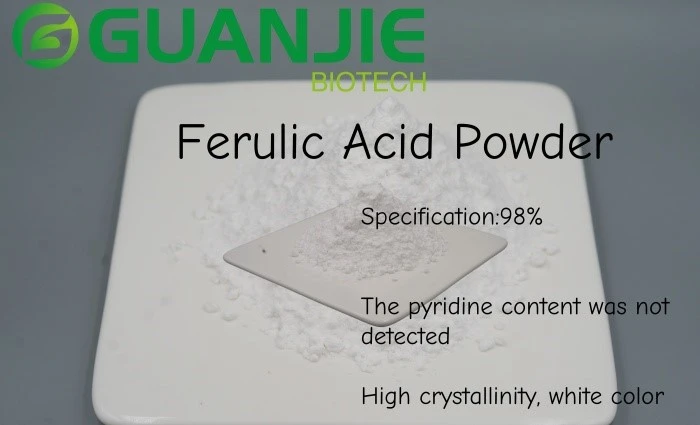
The purity level of industrial grade ferulic acid directly impacts its long-term stability. Residual impurities, including heavy metals, proteins, sugars, residual solvents, and other by-products, may accelerate oxidation and reduce shelf life.
For high-purity ferulic acid 99%, lower impurity levels provide better resistance to degradation compared with lower-grade materials. Guanjie Biotech applies multi-stage purification and recrystallization technologies to control key quality indicators, including sulfated ash, heavy metals, and residual solvents. This strict quality management helps ensure that natural ferulic acid powder maintains stable performance throughout its recommended shelf life.
Packaging System and Protection Performance
Packaging plays a critical role in protecting ferulic acid quality control from oxygen, Ferulic acid moisture control, and light exposure. Poor packaging materials can accelerate powder discoloration and active ingredient degradation.
For industrial customers, Guanjie Biotech provides customized packaging solutions, including aluminum foil vacuum bags for samples and food-grade PE liners combined with oxygen-barrier aluminum film and 25kg fiber drums for bulk orders. Nitrogen-flushed vacuum packaging is also available for customers requiring enhanced oxidation protection.
Transparent plastic bags and standard woven bags are not recommended for long-term storage because they provide insufficient protection against ferulic acid light sensitivity and environmental moisture.
Warehouse Storage Conditions
Proper storage management is essential for preserving ferulic acid powder stability. The main environmental factors include temperature, humidity, and light exposure.
Ferulic acid should be stored in a cool, dry, and dark warehouse. The recommended storage temperature is below 25°C, with relative humidity maintained below 65%. Direct sunlight exposure and high-temperature environments should be avoided. In addition, ferulic acid should be stored separately from strong oxidizing agents and incompatible chemicals to prevent quality deterioration.
Production Process and Crystal Structure
Manufacturing technology also influences ferulic acid shelf life. Ferulic acid can be produced through natural extraction from rice bran or wheat bran, or through chemical synthesis. At the same purity level, highly crystalline powder usually demonstrates better stability than amorphous powder because it has a lower surface area exposed to oxygen.
Guanjie Biotech optimizes crystallization and drying processes to improve powder stability. During production, moisture content is strictly controlled below 0.5% to minimize oxidation risks and extend the storage stability of ferulic acid bulk ingredients.
How to Extend the Ferulic Acid Shelf Life?
As a professional ferulic acid powder supplier, Guanjie Biotech provides standardized storage, packaging, and quality management solutions for global B2B customers in the cosmetic ingredient supplier, dietary supplement, functional food, and antioxidant ingredient industries. Based on practical production requirements, proper inventory management and storage conditions are essential to maintaining the stability, purity, and effectiveness of ferulic acid throughout its shelf life.
Under recommended conditions, commercial bulk ferulic acid powder generally has a shelf life of 24 months. However, factors such as oxygen exposure, light, temperature fluctuations, and humidity can influence ferulic acid stability and may accelerate oxidation or degradation.
Optimize Raw Material Ferulic Acid Warehousing Management
When receiving ferulic acid raw materials, companies should prioritize storage in clean, dry, and light-controlled warehouses. The First-In, First-Out (FIFO) inventory management system should be implemented to ensure older batches are used before newer shipments.
For industrial users purchasing bulk ferulic acid powder, inventory levels should be carefully planned according to production schedules. Although ferulic acid has a relatively stable shelf life, excessive long-term storage increases the possibility of quality fluctuations. It is generally recommended that companies avoid purchasing more than 12 months of production demand at one time unless suitable storage conditions and quality monitoring systems are available.
Guanjie Biotech helps customers establish practical procurement plans based on production volume, application requirements, and supply chain conditions.
Improve Management of Opened Ferulic Acid Materials
After opening the original package, exposure to air and environmental moisture should be minimized. During sampling or production preparation, the inner packaging should be resealed immediately after use. Additional sealing protection, such as sealing tape or secondary packaging, can further reduce oxygen and moisture contact.
For customers requiring frequent production operations, Guanjie Biotech can provide customized packaging solutions, including dividing standard 25kg bulk packages into smaller units. This approach reduces repeated opening cycles and helps maintain the stability of natural ferulic acid extract powder during storage. Opened materials should be stored separately, clearly labeled with opening dates, and prioritized for production use.

Control Transportation Conditions and Seasonal Risks
Transportation conditions play an important role in maintaining ferulic acid quality during international B2B supply chains. During long-distance summer transportation, temperature-controlled logistics is recommended to prevent prolonged exposure to high temperatures.
Light protection should also be considered throughout transportation. Using light-blocking pallet wrapping and appropriate packaging materials can reduce the risk of degradation caused by direct sunlight.
In regions with high humidity, especially during rainy seasons, warehouse humidity control is necessary. Excess moisture may cause ferulic acid powder to absorb water, resulting in clumping and potential changes in physical properties.
Establish Regular Quality Testing Procedures
For stored ferulic acid batches approaching 12 months after production, companies should consider periodic quality verification. Key indicators such as purity, appearance, moisture content, and active ingredient levels should be monitored according to internal quality standards.
As an experienced ferulic acid manufacturer, Guanjie Biotech supports customers with third-party testing services and quality documentation to verify raw material stability. These quality control procedures help reduce risks in finished product manufacturing and ensure compliance with industry requirements.
Application-Based Shelf Life Requirements for Ferulic Acid
Different industries have different requirements for raw material ferulic acid storage conditions and usage timelines. Companies should establish appropriate internal standards based on their final product applications.
Cosmetics and Skincare Industry
The cosmetics industry has strict requirements for ingredient purity and stability. Natural ferulic acid bulk powder is widely used as an antioxidant ingredient in skincare formulations, including serums, creams, and sunscreen products.
For high-value cosmetic formulations, manufacturers typically recommend using raw materials with at least six months of remaining shelf life. Near-expiration materials should be avoided in premium products where stability and performance are critical.
Dietary Supplements and Functional Foods
For nutraceutical manufacturers using ferulic acid as a functional ingredient, raw materials must comply with applicable food safety regulations. Companies should establish internal receiving standards and ensure materials remain within their validity period before processing.
A minimum remaining shelf life of three months is commonly used as an internal control requirement to maintain production efficiency and product quality.
Food Antioxidant and Feed Applications
In general, food antioxidant applications and feed additives, tolerance levels may be relatively higher. However, expired ferulic acid powder is still not recommended. Degraded materials may affect antioxidant performance, product stability, and overall quality.
FAQs:
1. What is ferulic acid powder used for?
Ferulic acid powder is a natural antioxidant ingredient widely used in cosmetics, dietary supplements, functional foods, and nutraceutical products. As a professional ferulic acid supplier, Guanjie Biotech provides high-quality raw materials for global manufacturers.
2. How to store ferulic acid powder?
Ferulic acid powder should be stored in sealed packaging, protected from light, oxygen, heat, and moisture. Proper ferulic acid storage conditions include a cool, dry environment with controlled humidity to maintain product stability.
3. How long does ferulic acid last?
The typical ferulic acid shelf life is 24 months when unopened and stored under recommended conditions. The actual lifespan depends on packaging quality, purity, transportation conditions, and warehouse management.
4. What affects ferulic acid stability?
Ferulic acid stability is influenced by oxygen exposure, ultraviolet light, temperature, humidity, and packaging performance. Professional ferulic acid manufacturers use proper packaging and quality control systems to maintain ingredient stability.
5. Where to buy bulk ferulic acid powder?
Bulk ferulic acid powder can be purchased from reliable suppliers and manufacturers such as Guanjie Biotech. As an experienced ferulic acid powder manufacturer, we provide stable supply, customized packaging, and B2B ingredient solutions.
6. Is ferulic acid suitable for cosmetics?
Yes, ferulic acid for cosmetics is widely used in serums, creams, and sunscreen formulations. Its antioxidant properties make it a popular ingredient for cosmetic brands seeking high-quality raw materials from a trusted cosmetic ingredient supplier.
7. What is the shelf life of ferulic acid?
The standard ferulic acid shelf life is approximately 24 months under suitable storage conditions. Sealed packaging, temperature control, and moisture protection help preserve the purity and performance of ferulic acid powder.
8. How is ferulic acid manufactured?
Ferulic acid is manufactured through natural extraction or biotechnological processes using plant-derived sources. The production process includes extraction, purification, concentration, drying, and quality testing to produce high-purity natural ferulic acid extract.
9. What are the storage conditions for ferulic acid?
Recommended ferulic acid storage conditions include temperatures below 25°C, humidity below 65%, and protection from direct sunlight. Proper storage helps maintain the quality of bulk ferulic acid powder during long-term supply.
10. How does ferulic acid work as an antioxidant?
Ferulic acid works as an antioxidant by scavenging free radicals and reducing oxidative reactions. As an effective antioxidant ingredient supplier, Guanjie Biotech supplies ferulic acid raw materials for food, cosmetic, and nutraceutical applications.
Conclusion:
When stored in sealed packaging, protected from light, maintained below 25°C, and kept at humidity levels below 65%, unopened ferulic acid powder can typically maintain a 24-month shelf life.
However, actual product stability depends on multiple factors, including raw material purity, packaging barrier performance, transportation conditions, and warehouse management practices.
As a reliable B2B ferulic acid supply partner, Guanjie Biotech provides high-quality ferulic acid powder, professional packaging solutions, and technical support for customers worldwide. Through strict quality control, optimized storage recommendations, and customized supply solutions, Guanjie Biotech helps manufacturers reduce raw material degradation risks and maintain consistent production quality across cosmetics, supplements, and functional food applications. Welcome to enquire with us at info@gybiotech.com.
References:
[1] Kosalec, I., & Pepeljnjak, S. (2021). Validated Stability-Indicating GC-MS Method for Characterization of Forced Degradation Products of Trans-Caffeic Acid and Trans-Ferulic Acid. Molecules, 26(9), 2475. https://doi.org/10.3390/molecules26092475
[2] Ferulic acid stability in cosmetic formulations. (2011). Journal of Cosmetic Science, 62(5), 489-490. Society of Cosmetic Chemists.
[3] Ou, S., & Kwok, K. C. (2004). Ferulic acid: pharmaceutical functions, preparation and applications in foods. Journal of the Science of Food and Agriculture, 84(11), 1261-1269.
[4] Hong Qing, Yuan Xi, Wang Youfang, & Chen Qingwei. (2013). Prediction of the shelf life of Tianning Dropping Pills using a multiple linear regression model and the classical isothermal method. Chinese Journal of Modern Applied Pharmacy, 30(4), 416-419.
[5] Physiological functions of ferulic acid and its application in animal production. (2024). Chinese Journal of Animal Science, 60(12), 48-52.
[6] Zhang Chenxi, Ma Yan, Ma Xiangjie, et al. (2025). Research progress on the preparation of ferulic acid and its complexes. Food Research and Development, 46(6).