NMN bulk powder has surged to the forefront of nutritional science and the longevity industry as a pivotal precursor to Nicotinamide Adenine Dinucleotide (NAD+), an essential coenzyme for cellular energy production, DNA repair, and overall metabolic health. As our NAD+ levels naturally decline with age, supplementing with NMN bulk powder offers a promising strategy to bolster these levels and potentially mitigate age-related decline. However, the efficacy, safety, and bioavailability of an NMN supplement are intrinsically linked to its method of production. So, how is NMN made?
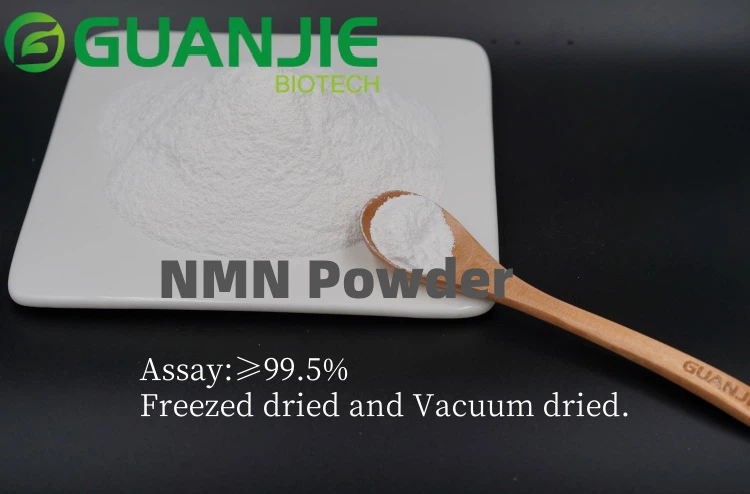
How NMN is Made?
There are three main pathways to produce NMN bulk powder on a commercial scale: chemical synthesis, enzymatic synthesis, and fermentation. Each method has distinct advantages and drawbacks concerning yield, purity, cost, and environmental impact.
Chemical synthesis
Chemical synthesis represents one of the foundational methods for producing Nicotinamide Mononucleotide bulk powder in a lab. This multi-step process facilitates a reaction between a nicotinamide derivative and a ribose-based molecule. To control the reaction and prevent unwanted side products, protective groups are often used to shield specific parts of the molecules during synthesis.
• Production:
The procedure typically employs harsh solvents, high temperatures, and metal catalysts to form the crucial glycosidic bond that connects the nicotinamide group to the ribose and phosphate components. Once the reaction is complete, extensive purification is mandatory to remove residual catalysts, solvents, and other impurities to make the final product safe for consumption.
• Advantages
A key advantage of this method is its cost-effectiveness for small-scale, initial research projects. It also allows scientists to create novel structural analogs of NMN bulk powder for specialized studies.
• Disadvantages
However, its disadvantages are significant. The complex process often results in lower purity, with a risk of contamination from residual solvents and heavy metals. It also generates substantial chemical waste, raising environmental concerns. Furthermore, chemical synthesis produces a mix of two stereoisomers (alpha and beta forms). Only the beta-form (β-NMN) is biologically active in humans. Isolating the pure, active β-NMN requires additional, intricate purification steps.
Consequently, while pioneering researchers like Imai relied on chemically synthesized NMN bulk powder for early pivotal animal studies, the method is now largely superseded for producing high-grade nutraceuticals. The industry has shifted towards cleaner, more precise methods to ensure superior purity and safety for human consumption.
Enzymatic Synthesis (Biocatalysis)
This is now considered the gold standard for producing high-purity, bioidentical NMN bulk powder for supplements. It mimics the natural biosynthetic pathways found in cells, using isolated enzymes as catalysts under mild conditions.
• Process:
The most common enzymatic pathway utilizes the enzyme nicotinamide phosphoribosyltransferase (NAMPT), which naturally catalyzes the reaction between nicotinamide and phosphoribosyl pyrophosphate (PRPP) to form NMN bulk powder. Manufacturers create a bioreactor containing these purified enzymes and substrates, allowing them to produce pure NMN powder with high efficiency and specificity.
•Advantages:
High Purity: Results in exceptionally high purity (often >99%) with minimal impurities.
Stereospecificity: Enzymes are naturally specific, producing only the biologically active β-form of NMN bulk powder.
Green Chemistry: Occurs in aqueous solutions at moderate temperatures and pH, making it an environmentally friendly process with minimal waste.

The availability of such high-purity, enzymatically synthesized NMN has been fundamental for credible clinical research, allowing scientists to confidently attribute health outcomes to NMN bulk powder itself rather than to impurities.
Guanjie Biotech is a high-quality NMN supplier that uses this advanced enzymatic synthesis method. By employing a precise enzymatic system, they ensure their product is of high purity, free from harmful solvents and metal catalysts, and is the correct stereoisomer for optimal human absorption and efficacy.
Fermentation (Microbial Biosynthesis)
This method leverages the natural power of genetically engineered microorganisms, such as yeast or bacteria, to act as tiny "factories" that produce and excrete NMN bulk powder.
These enhanced microbes are then cultivated in large-scale fermentation tanks containing a nutrient-rich growth medium. As the microorganisms consume the nutrients and metabolize, they efficiently convert them into NMN bulk powder, which is subsequently secreted into the surrounding broth.
• Advantage
A significant advantage of fermentation is its exceptional scalability; it is uniquely suited for cost-effective mass production to meet global demand. Furthermore, as it is based on a biological process, the resulting NMN bulk powder is often marketed as "natural" or bio-fermented, a highly valued characteristic for consumers seeking clean-label products.
• Disadvantage:
However, the method has notable drawbacks. The primary challenge is complex downstream processing. The initial fermentation broth is a complex mixture containing microbial cells, various metabolic byproducts, and other organic compounds, making the extraction and purification of pure NMN bulk powder a technically difficult and expensive endeavor. Additionally, fermentation can suffer from a lower yield compared to other methods like enzymatic synthesis, as a portion of the energy and nutrients are diverted to support the microbes' own growth and maintenance, rather than being converted solely into the target product.
Guanjie Biotech utilize this fermentation method. This capability allows them to leverage its scalability for large orders. By mastering both enzymatic and fermentation techniques, Guanjie Biotech can select the optimal production method to produce NMN bulk powder based on specific client needs, demonstrating a commitment to versatile and high-quality manufacturing.
Key Research on NMN Production Method
The groundbreaking research that propelled NMN into the spotlight relied on pure, well-characterized NMN, underscoring the importance of its production method.
• David Sinclair's Harvard Studies (2013):
A seminal study published in Cell showed that supplementing aged mice with NMN restored mitochondrial function, improved insulin sensitivity, and enhanced energy metabolism to levels resembling those of young mice. The purity of the NMN used was critical to ensure these effects were not due to toxins or impurities.
• Human Clinical Trials:
More recent human trials have begun to validate these findings. A 2020 study published in Endocrine Journal found that a single oral dose of NMN (100, 250, and 500 mg) was safe and effectively metabolized in healthy Japanese men without any deleterious effects. The study noted the importance of using a highly pure supplement-grade NMN. Another 2021 study in Scientific Reports demonstrated that 250 mg of NMN daily for 12 weeks improved muscle insulin sensitivity in prediabetic women. The consistency of the supplement used in such trials is paramount, which is achieved through controlled production methods like enzymatic synthesis.
• Bioavailability Studies:
Research has also focused on how NMN is absorbed. A study in Nature suggested that NMN might be absorbed via a specific transporter in the small intestine (Slc12a8). The reliability of these absorption studies depends on using a pure, uncontaminated form of NMN to accurately trace its pathway in the body.
Conclusion
The method of production is not merely a manufacturing detail but a fundamental determinant of the quality, safety, and biological activity of an NMN supplement. While chemical synthesis paved the way for early research, the industry has largely moved towards cleaner, more specific biological methods. Enzymatic synthesis stands out for its ability to produce ultra-pure, bioidentical β-NMN, making it the preferred choice for high-end nutraceuticals and rigorous scientific research. Fermentation offers a scalable and "natural" alternative, though with its own technical challenges.
If you need NMN bulk powder, welcome to choose Guanjie Biotech. We use both enzymatic synthesis and fermentation methods, which represent the modern approach to NMN production. Our use of these advanced techniques ensures a final product that is effective, safe, and suitable for the growing demand from both consumers and researchers who rely on consistent, high-quality NMN to support health and longevity. Please feel free to contact us, we can provide a suitable solution. Welcome to enquire with us at info@gybiotech.com.
References
[1] Imai, S., & Guarente, L. (2014). NAD+ and sirtuins in aging and disease. Trends in Cell Biology, 24(8), 464–471.
[2] Mills, K. F., Yoshida, S., Stein, L. R., Grozio, A., Kubota, S., Sasaki, Y., Redpath, P., Migaud, M. E., Apte, R. S., Uchida, K., Yoshino, J., & Imai, S. I. (2016). Long-Term Administration of Nicotinamide Mononucleotide Mitigates Age-Associated Physiological Decline in Mice. Cell Metabolism, 24(6), 795–806.
[3] Irie, J., Inagaki, E., Fujita, M., Nakaya, H., Mitsuishi, M., Yamaguchi, S., Yamashita, K., Shigaki, S., Ono, T., Yukioka, H., Okano, H., Nabeshima, Y. I., Imai, T., & Suyama, K. (2020). Effect of oral administration of nicotinamide mononucleotide on clinical parameters and nicotinamide metabolite levels in healthy Japanese men. Endocrine Journal, 67(2), 153–160.
[4] Yoshino, M., Yoshino, J., Kayser, B. D., Patti, G. J., Franczyk, M. P., Mills, K. F., Sindelar, M., Pietka, T., Patterson, B. W., Imai, S., & Klein, S. (2021). Nicotinamide mononucleotide increases muscle insulin sensitivity in prediabetic women. Scientific Reports, 11, 13011.
[5] Grozio, A., Mills, K. F., Yoshino, J., Bruzzone, S., Sociali, G., Tokizane, K., Lei, H. C., Cunningham, R., Sasaki, Y., Migaud, M. E., & Imai, S. I. (2019). Slc12a8 is a nicotinamide mononucleotide transporter. Nature Metabolism, 1, 47–57.