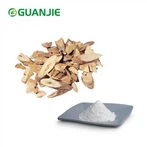
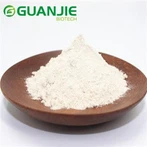
Garlic (Allium sativum) is one of the most commonly studied botanical foods worldwide due to its diverse bioactive compounds and long history of use in traditional medicine. Among these compounds, allicin is widely recognized as a primary bioactive responsible for many of garlic's pharmacological effects. Is allicin in natural garlic extract?

What Is Allicin?
Allicin is a sulfur-containing bioactive compound in natural garlic extract, chemically classified as a diallyl thiosulfinate. Unlike many plant constituents, allicin does not naturally exist in measurable amounts in intact garlic cloves. Instead, it is produced only after garlic tissue is physically disrupted, such as by crushing, chopping, or chewing.
Inside undamaged garlic cells, a stable sulfur-containing amino acid called alliin (S-allyl-L-cysteine sulfoxide) is stored separately from the enzyme alliinase. When the garlic structure is broken, alliin and alliinase come into contact in the presence of moisture, triggering a rapid enzymatic reaction that converts alliin into allicin. Without tissue damage and sufficient moisture, this conversion does not occur, which explains why whole garlic bulbs contain virtually no allicin.
Once formed, allicin powder extract is highly reactive and chemically unstable. It quickly transforms other organosulfur compounds, including ajoene, vinyldithiins, polysulfides, and S-allylcysteine, through a series of chemical rearrangements. This instability makes allicin extremely sensitive to heat, oxygen, and processing conditions. For this reason, freshly crushed natural garlic extract is often left to stand briefly before cooking, allowing maximum allicin formation before the compound is degraded by heat or further processing.
Is Allicin In Garlic Extract?
Yes, natural garlic extract has very low quantities.
Formation of Allicin in Fresh Garlic
Allicin, the compound responsible for garlic's characteristic aroma and many of its health benefits, is not present in whole, unprocessed garlic bulbs. Instead, it is formed through a natural enzymatic reaction that occurs only when the garlic tissue is damaged.
Natural garlic extract contains a stable sulfur-containing amino acid called alliin, which by itself is biologically inactive. When garlic is chopped, crushed, or chewed, the enzyme alliinase comes into contact with alliin, converting it into allicin. This reaction requires both cellular damage and moisture, making allicin a reaction product rather than a naturally pre-existing component in garlic. In other words, intact garlic bulbs contain no measurable allicin until they are physically processed.
This unique formation process explains why the bioactivity of garlic is linked to preparation methods. For example, letting crushed natural garlic extract sit for a few minutes before cooking allows maximum allicin production, while immediate heating can destroy much of the newly formed compound.
Instability of Allicin

A major limitation of allicin is its high chemical instability. Once formed, allicin is extremely reactive and quickly breaks down into other sulfur-containing compounds, including ajoene, vinyldithiins, and S-allylcysteine (SAC). Under normal room-temperature conditions, allicin has a very short half-life of only a few hours and is easily degraded by heat, light, oxygen, and common processing methods.
Because of this rapid degradation, maintaining meaningful levels of allicin in natural garlic extract or powdered products is challenging. Even in freshly prepared garlic extracts, allicin concentration declines soon after formation, leading to inconsistent potency and reduced bioactivity over time. This instability poses difficulties for commercial formulations that aim to deliver standardized health benefits. As a result, products that depend on allicin must be consumed immediately after preparation or require advanced stabilization technologies, which are often complex and costly to implement.
Allicin in Fresh Garlic Extract
Fresh garlic extract may contain temporary (transient) allicin, but its concentration is highly variable and influenced by several key factors.
• Garlic variety:
Different garlic cultivars have different levels of alliin, the precursor of allicin, which determines how much allicin can be formed.
•Processing methods:
The way garlic is chopped, crushed, or extracted affects enzyme activity. Proper tissue disruption allows alliinase to convert alliin into allicin, while improper handling can reduce formation.
•Storage and timing:
Allicin is unstable and degrades quickly after extraction. Its concentration drops rapidly during storage, making fresh consumption essential for maintaining potential activity.
As a result, fresh natural garlic extract provides inconsistent and short-lived allicin levels, limiting long-term stability and reproducibility.
While freshly prepared natural garlic extract may provide some allicin if consumed immediately, its levels are unstable. Over time, the compound degrades, limiting the long-term reproducibility and shelf stability of the extract. This is why many commercial garlic supplements focus on aged garlic extract (AGE) or stabilized compounds such as S-allylcysteine, which retain bioactivity without relying on allicin itself.
Scientific Evidence
Several studies confirm the chemical instability of allicin and the presence of stable metabolites in AGE:
• Loss of Allicin During the Aging Process
Scientific studies clearly demonstrate that allicin is chemically unstable and does not persist during garlic aging. A 2018 investigation showed that after the aging process, allicin natural garlic extract, was no longer detectable in garlic extract. Instead, the extract contained high and stable levels of S-allylcysteine (SAC), confirming that allicin is converted into more stable sulfur compounds during long-term aging. This transformation explains why natural garlic extract products are not standardized for allicin content.
• Clinical Evidence from Human Trials
Multiple clinical trials involving natural garlic extract have reported improvements in cardiovascular markers, such as blood pressure and lipid profiles, as well as enhanced immune function. These effects are attributed primarily to SAC and related stable organosulfur compounds, rather than to direct allicin intake, supporting the clinical relevance of allicin-derived metabolites.
• Preservation of Bioactivity Through Metabolites
Research further indicates that although allicin itself degrades, its antimicrobial and antioxidant activities are retained through its metabolites in aged garlic preparations. These stable compounds provide sustained biological activity, making natural garlic extract a reliable and effective alternative to allicin-rich fresh garlic.
These studies support the idea that natural garlic extract is a more reliable source of garlic's health benefits than allicin-rich fresh garlic extracts.
Conclusion:
• Fresh garlic extract:
Allicin may form temporarily if garlic is crushed or chopped, but levels decline quickly.
• Aged garlic extract:
Allicin is largely absent due to chemical degradation during aging. The extract contains stable, bioavailable sulfur compounds like SAC and SAMC.
In summary, allicin powder extract itself is rarely present in significant amounts in commercial natural garlic extract, especially aged forms. However, Guanjie Biotech's bulk garlic extract powder offers a reliable, safe, and clinically supported alternative, delivering the bioactivity of pure garlic without the instability of allicin. Please feel free to contact us at info@gybiotech.com.
References
[1] Block, E. (2010). Garlic and Other Alliums: The Lore and the Science. Royal Society of Chemistry.
[2] Lawson, L. D., & Wang, Z. J. (2005). Allicin and allicin-derived garlic compounds increase breath acetone through allyl methyl sulfide: Use in measuring allicin bioavailability. Journal of Nutrition, 135(7), 1774–1778.
[3] Borlinghaus, J., Albrecht, F., Gruhlke, M. C. H., Nwachukwu, I. D., & Slusarenko, A. J. (2014). Allicin: Chemistry and biological properties. Molecules, 19(8), 12591–12618.
[4] Amagase, H., Petesch, B. L., Matsuura, H., Kasuga, S., & Itakura, Y. (2001). Intake of garlic and its bioactive components. Journal of Nutrition, 131(3), 955S–962S.
[5] Ried, K., Frank, O. R., Stocks, N. P., Fakler, P., & Sullivan, T. (2013). Effect of garlic on blood pressure: A systematic review and meta-analysis. BMC Cardiovascular Disorders, 13, 1–15.
[6] Kodera, Y., Ushijima, M., Amano, H., Suzuki, J., & Matsutomo, T. (2018). Chemical stability and transformation of allicin in aged garlic extract. Journal of Agricultural and Food Chemistry, 66(33), 8702–8710.
[7] Bayan, L., Koulivand, P. H., & Gorji, A. (2014). Garlic: A review of potential therapeutic effects. Avicenna Journal of Phytomedicine, 4(1), 1–14.
[8] Rahman, K. (2007). Effects of garlic on platelet biochemistry and physiology. Molecular Nutrition & Food Research, 51(11), 1335–1344.