Natural sulforaphane, is naturally occurring isothiocyanate found primarily in cruciferous vegetables such as broccoli, Brussels sprouts, and kale, has attracted significant scientific and commercial interest due to its numerous health benefits. Known for its potent antioxidant, anti-inflammatory, and chemoprotective properties, sulforaphane has become a key ingredient in nutraceuticals, functional foods, and cosmetic formulations. But Is Sulforaphane Fat Soluble?
What Is Sulforaphane?
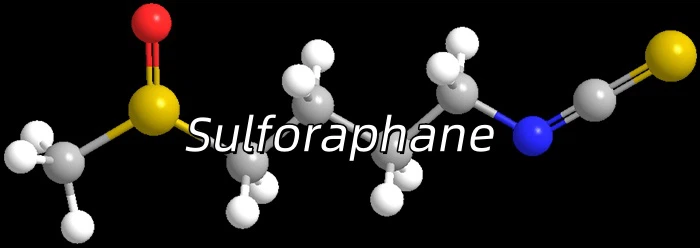
Sulforaphane (C₆H₁₁NOS₂) is a sulfur-rich organic compound classified as an isothiocyanate. It is not present in its active form in raw vegetables but is derived from glucoraphanin, a type of glucosinolate, through enzymatic hydrolysis by myrosinase. This reaction typically occurs when broccoli or other cruciferous vegetables are chopped, chewed, or otherwise physically damaged.
Chemically, sulforaphane consists of:
A lipophilic isothiocyanate group (-N=C=S),
An alkyl side chain,
Two sulfur atoms contribute to its reactive electrophilic properties.
This molecular structure makes natural sulforaphane moderately lipophilic, meaning it tends to dissolve better in fats or oils than in water. However, its solubility characteristics are complex and highly dependent on its surrounding environment.
Is Sulforaphane Fat-Soluble?
The answer to whether natural sulforaphane is fat soluble is "Yes, sulforaphane is partially fat-soluble." It exhibits moderate lipophilicity, which means it can dissolve in lipid environments but is not purely hydrophobic.
Lipophilicity and Partition Coefficient (Log P)
A key indicator of sulforaphane's solubility profile is its partition coefficient, often expressed as Log P. Sulforaphane has a Log P value ranging from 0.9 to 1.5, indicating a moderate preference for lipid environments over aqueous ones. This range suggests that sulforaphane can efficiently partition into lipid bilayers, which form the structural basis of most biological membranes. This moderate lipophilicity allows natural sulforaphane to pass through cell membranes via passive diffusion, facilitating its absorption into tissues and cells where it can exert its biological effects.
Water Solubility
Despite its moderate fat solubility, sulforaphane is not exclusively lipophilic. It also exhibits limited water solubility, typically around 300–400 mg/L at room temperature. This solubility in water enables sulforaphane to remain partially bioavailable in aqueous biological fluids, although to a lesser extent than in lipid-based systems. Its amphipathic nature thus enables it to perform effectively in various physiological environments.
Oil Solubility and Delivery Systems
Natural sulforaphane demonstrates greater solubility in oils and lipid-based solvents such as vegetable oil, medium-chain triglyceride (MCT) oil, ethanol, and DMSO. This enhanced solubility in fats makes sulforaphane highly suitable for incorporation into lipid-based formulations, including softgel capsules, emulsions, and other oil-based delivery systems. These forms are commonly used in nutraceutical and pharmaceutical products to enhance bioavailability and protect the compound from degradation.
While sulforaphane is not purely fat-soluble, it possesses enough lipophilic characteristics to be effectively absorbed through fat-based delivery systems. Its moderate Log P value, partial water solubility, and strong oil solubility together highlight its amphipathic nature, giving formulators multiple options for optimizing its delivery and efficacy.
Why Sulforaphane's Fat Solubility Matters?
The sulforaphane's fat solubility is a critical factor in its absorption, formulation, and stability. Although natural sulforaphane is not highly lipophilic, it does exhibit moderate fat solubility, which can significantly enhance its bioavailability when delivered properly.

Enhanced Absorption
Fat-soluble compounds are generally absorbed in the small intestine with the help of bile salts. Sulforaphane, when consumed alongside healthy dietary fats, shows improved absorption rates. Research indicates that the co-ingestion of sulforaphane with fat-containing meals or lipid-based supplements can increase its uptake and systemic availability, ensuring more effective delivery to tissues.
Impact on Formulation
For manufacturers and product developers, sulforaphane's solubility profile is key to designing effective delivery systems. Lipid-based carriers such as MCT oil are commonly used to protect and transport natural sulforaphane, enhancing its stability and absorption. Advanced delivery formats like liposomes, nanoemulsions, and oil-based suspensions are especially effective in preserving sulforaphane's structure and improving its physiological activity.
Stability Considerations
Natural sulforaphane is sensitive to hydrolysis and degradation, especially in aqueous solutions. It maintains better stability when suspended in oil-based matrices, making fat-based formulations more suitable for storage and long-term effectiveness.
Sulforaphane Forms and Their Solubility
At Guanjie Biotech, we are a bulk sulforaphane supplier. Our natural sulforaphane products are from broccoli, available in various grades that cater to different solubility profiles and formulation needs. Our products include:
0.1% ~ 10% Light Yellow Powder
This form of natural sulforaphane powder is presented as a fine, light yellow powder, offering flexible application in a wide range of solid formulations. Although it has limited natural fat solubility, it can still be processed with lipid-based carriers or incorporated into blends during manufacturing to improve delivery. The sulforaphane powder bulk is ideal for applications such as capsules, tablets, and powdered drink mixes, where ease of handling and formulation precision are important. Bulk sulforaphane powder is particularly suitable for dietary supplement manufacturers seeking to create shelf-stable, dry formulations.

•Form: Fine powder
•Solubility: Moderate solubility in aqueous solutions; limited natural fat solubility
•Applications: Functional foods, dry dietary supplements, capsule and tablet production
50% Brown Oily Sulforaphane
This mid-range concentration of sulforaphane is delivered in a brown semi-fluid oily form, offering excellent fat solubility. This form is perfect for integration into softgel capsules, lipid-based emulsions, or other oil-rich delivery systems that support enhanced absorption and bioavailability. The oil-based matrix ensures better incorporation into systems that require lipophilic compatibility and can help in improving sulforaphane's stability in complex formulations.
•Form: Semi-fluid brown oily extract
•Solubility: Highly fat-soluble, making it ideal for oil-based formulations
•Applications: High-bioavailability dietary supplements, softgels, emulsions, oil-based nutraceutical products
98% Yellowish Oil Sulforaphane
Our highest purity sulforaphane is provided in a yellowish oil form, containing 98% active compound. This form delivers maximum fat solubility and is designed for products demanding ultra-high purity and performance. It is most suitable for advanced clinical research, premium supplements, and therapeutic formulations that aim for optimal absorption and biological effectiveness. The yellowish oil format ensures rapid integration into lipid-based systems and demonstrates strong stability under proper storage conditions.
•Form: Highly purified yellowish oil
•Solubility: Fully fat-soluble; best absorption profile among all forms
•Applications: Premium nutraceuticals, clinical studies, advanced therapeutic formulations
Scientific Research Supporting Fat-Soluble Behavior
Numerous scientific studies confirm sulforaphane's moderate lipophilicity and the positive effect of lipid-rich environments on its absorption:
•Clarke et al. (2011):
Demonstrated enhanced sulforaphane absorption when consumed with dietary fat.
•Baillie et al. (2000):
Explored the role of plasma proteins and lipoproteins in transporting sulforaphane.
•Egner et al. (2008):
Reported increased sulforaphane levels in human blood and urine when taken with oil-based carriers.
These findings highlight the importance of fat-soluble delivery for maximizing sulforaphane's therapeutic effects.
Market Trends and Guanjie Biotech's Role
The global demand for natural sulforaphane is growing rapidly due to increased awareness of chronic disease prevention and longevity. Lipid-based sulforaphane products dominate the market due to their superior efficacy.
Guanjie Biotech is proud to be at the forefront of this development. As a leading sulforaphane manufacturer, we provide:
Broccoli extract sulforaphane
Customizable specifications (0.1%–98%)
Stable, high-purity powders and oils
Our research-driven production ensures consistent quality, traceability, and competitive pricing for global B2B customers. If your company seeks a reliable source of bulk sulforaphane, reach out to info@gybiotech.com to discuss your project needs.
Natural sulforaphane's moderate fat solubility is a defining characteristic that influences its formulation, absorption, and application across industries. Its ability to dissolve in oils makes it ideal for lipid-based delivery systems, enhancing pure sulforaphane's stability and efficacy in health-related products.
Natural sulforaphane is partially fat-soluble, with greater solubility in oils than in water.
Fat-soluble formulations improve bioavailability and product performance.
Guanjie Biotech offers high-quality sulforaphane powders and oils in customizable specifications.