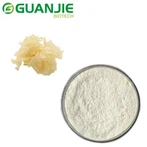
Pure bromelain powder and pure papain powder are proteolytic enzymes-substances that break down proteins into smaller peptides and amino acids. Derived from pineapple and papaya respectively, these enzymes have been utilized for centuries in traditional medicine and have found applications in various modern industries, including healthcare, food processing, and cosmetics.

Origins and Sources
Bromelain
Pure bromelain powder is a collective name for a group of proteolytic enzymes extracted primarily from the stems and fruit of the pineapple plant (Ananas comosus), a tropical plant native to South America. Bromelain enzymes were first isolated in the late 19th century and have since been extensively studied.
There are two main types of bromelain:
Stem bromelain:
Extracted from the pineapple stem, this form is commercially more common and has higher proteolytic activity.
Fruit bromelain:
Derived from the pineapple fruit itself, it has different enzyme composition and activity profile.
Papain
Papain is a cysteine protease enzyme derived from the latex of the papaya fruit (Carica papaya), native to Central America and widely cultivated in tropical regions. Papain is present in the unripe fruit and the latex sap extracted from the fruit or stem.
Pure papain powder was discovered in the 19th century and has been widely used for its proteolytic properties.
Enzyme Type
Pure bromelain powder and Pure papain powder are two well-known enzymes that belong to the broader class of proteolytic enzymes, which are enzymes capable of breaking down proteins by cleaving peptide bonds. Despite sharing this common function, they differ in their specific enzymatic classifications and catalytic mechanisms.
Pure bromelain powder is categorized as a proteolytic thiol endopeptidase. This classification indicates that bromelain functions by targeting internal peptide bonds within protein chains (endopeptidase) and relies on a thiol (–SH) group, typically from a cysteine residue in its active site, to perform its proteolytic activity. Bromelain is extracted primarily from the stem and fruit of the pineapple (Ananas comosus), and is a mixture of several thiol proteases, with stem bromelain being the most active and commonly used form. Its enzymatic activity is most effective in slightly acidic and neutral environments and widely utilized in medical, nutritional, and industrial applications.

Pure papain powder, on the other hand, is classified as a proteolytic cysteine protease, which is a type of thiol protease specifically dependent on the amino acid cysteine in its active site. This cysteine works in conjunction with a histidine residue to form a catalytic dyad that breaks down peptide bonds. Papain is derived from the latex of the unripe papaya fruit (Carica papaya) and is known for its broad substrate specificity and potent ability to hydrolyze a wide range of proteins.
Biochemical Characteristics
Structure and Classification
Pure bromelain powder and papain are both proteolytic enzymes, specifically classified as cysteine proteases, but they differ in composition and structural complexity.
Bromelain is not a single enzyme but a complex mixture of thiol proteases, predominantly composed of cysteine proteases. Among these, stem bromelain-extracted from the stem of the pineapple plant-is the most commonly studied and utilized form. This enzyme mixture has a molecular weight of approximately 23,800 Daltons and includes various active components with strong protein-degrading capabilities.
Pure papain powder, on the other hand, is a single purified enzyme derived from the latex of unripe papaya fruit. Like bromelain, it is a cysteine protease, but it belongs to a specific group known as papain-like proteases. It is characterized by a catalytic dyad, typically consisting of a cysteine and a histidine residue in the active site. Papain's molecular weight is slightly lower, at about 23,400 Daltons.
Mechanism of Action
Both Pure bromelain powder and papain catalyze the hydrolysis of peptide bonds through a similar biochemical mechanism. The cysteine residue in the active site acts as a nucleophile, attacking the peptide bond within target proteins. This reaction breaks the protein into smaller peptides or amino acids, effectively aiding in protein digestion and degradation.
Substrate Specificity
These enzymes exhibit a preference for cleaving peptide bonds next to basic amino acids like arginine and lysine, as well as residues with hydrophobic side chains. This selective activity allows them to effectively target a wide range of dietary and cellular proteins.
Optimal Conditions
Pure bromelain powder and Pure papain powder operate best in slightly acidic to neutral pH environments. Bromelain shows optimal activity in the range of pH 5.5 to 8.0, while papain performs best between pH 6.0 and 7.0.
Thermal Sensitivity
Both enzymes are thermolabile, meaning they are sensitive to high temperatures. Their activity significantly declines above 60°C, making careful temperature control essential during formulation, processing, and storage to preserve their enzymatic function.
Industrial and Commercial Applications
Food Industry
Meat tenderization:
Both pure bromelain powder and papain are widely used as natural meat tenderizers due to their protein-degrading properties.
Protein hydrolysis:
They help produce protein hydrolysates used in food flavoring, infant formulas, and supplements.
Clarification:
Bromelain is used in brewing and juice industries to clarify beverages by breaking down proteins that cause haze.
Pharmaceutical and Cosmetic Industry
Topical formulations:
Both enzymes are included in creams and ointments to promote wound healing and reduce inflammation.
Cosmetics:
Pure papain powder is used in exfoliating facial masks to remove dead skin cells, promoting skin renewal.
Textile and Leather Industry
Used in processing animal hides and fibers by degrading protein components for better texture and finish.
Dosage and Forms
Supplement forms:
Pure bromelain powder and Pure papain powder are available as capsules, tablets, powders, and topical gels.
Dosage:
Common oral doses for bromelain range from 200 to 2000 mg/day, depending onthe indication. Papain doses vary widely from 20 to 500 mg/day.
Standardization:
Supplements are often standardized based on enzymatic activity units such as gelatin digestion units (GDU) for bromelain.
Comparative Overview
|
Feature |
Bromelain |
Papain |
|
Source |
Pineapple stem and fruit |
Papaya latex and fruit |
|
Enzyme Type |
Proteolytic (thiol endopeptidase) |
Proteolytic (cysteine protease) |
|
Industrial Applications |
Meat tenderizer, brewing, baking |
Meat tenderizer, brewing, cosmetics |
|
Dosage and Forms |
capsules, tablets, powders, and topical gels |
|
Pure bromelain powder and papain are two natural proteolytic enzymes with remarkable biochemical properties and a broad spectrum of applications. From aiding digestion and reducing inflammation to industrial uses in food and cosmetics, these enzymes have earned their place in traditional and modern therapeutics.
Pure papain powder and bromelain powder are both very important biological enzymes. They have a wide range of applications in several fields. Guanjie Biotech is a pure papain powder and bromelain powder supplier. We specialise in bulk papain and pure bromelain powder. Welcome to enquiry at info@gybiotech.com.