Yes, broccoli sprouts contain sulforaphane - in fact, broccoli sprout powder sulforaphane products are the richest natural source of it. Below is a explanation covering everything about sulforaphane in broccoli sprouts, including their chemical basis, biosynthesis, health benefits, processing, comparison with mature broccoli, storage conditions, extraction methods, and scientific studies.
Do Broccoli Sprouts Contain Sulforaphane?
What Is Sulforaphane?
Broccoli sprout powder sulforaphane is a naturally occurring sulfur-rich compound classified as an isothiocyanate, well-regarded for its powerful antioxidant, anti-inflammatory, and chemopreventive properties. What sets sulforaphane apart from many other plant-based compounds is its potential to activate the body's internal defense systems, especially through the Nrf2 pathway, a critical cellular mechanism that regulates the body's response to oxidative stress and detoxification.
However, sulforaphane does not exist in its active form within plants. Instead, it is formed only when the plant's tissue is damaged, which causes a biochemical reaction between glucoraphanin-its precursor-and myrosinase, a specific enzyme. This reaction is a brilliant natural defense mechanism used by the plant against pests and is now considered highly beneficial to human health.
Interest in broccoli sprout powder sulforaphane began to grow rapidly in the 1990s when a research team at Johns Hopkins University published groundbreaking findings about its ability to reduce the risk of certain cancers. Subsequent studies have confirmed sulforaphane's broad range of potential health benefits, including detoxification support, cognitive protection, cardiovascular benefits, and even antimicrobial effects.
Among the various dietary sources of sulforaphane, broccoli sprouts stand out as the richest and most efficient.
What Are Broccoli Sprouts?
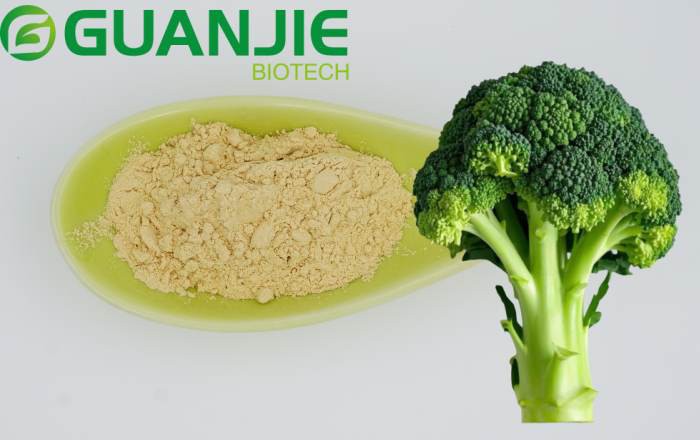
Broccoli sprouts are the young germinated seeds of the broccoli plant (Brassica oleracea var. italica), typically harvested 3 to 5 days after germination. They resemble alfalfa sprouts in appearance, but their nutritional profile is remarkably more potent, particularly in terms of their bioactive compounds.
These tiny seedlings have received significant attention in recent years due to their high content of glucoraphanin. Compared to mature broccoli heads, broccoli sprouts contain 10 to 100 times more glucoraphanin, making them an extremely rich dietary source for those looking to benefit from sulforaphane.
The sprouting process not only activates enzymatic activity but also maintains the freshness and cellular integrity of the plant tissue-two key factors that allow for efficient conversion to sulforaphane when the sprouts are consumed raw. For this reason, broccoli sprouts are frequently incorporated into health-conscious diets, green juices, smoothies, and even pharmaceutical formulations.

How Is Sulforaphane Produced in Plants?
Broccoli sprout powder sulforaphane biosynthesis is a two-part biochemical process that occurs only when plant cells are broken-such as during chewing, chopping, or blending. This mechanism is essential to understand why broccoli sprouts contain such high levels of sulforaphane when consumed in their raw or lightly processed form.
Here's how it works:
•Glucoraphanin, a stable and water-soluble glucosinolate, is stored in the plant's vacuoles.
•Myrosinase, the enzyme responsible for catalyzing glucoraphanin into sulforaphane, is stored separately in specialized cellular compartments.
When the plant tissue is damaged (by chewing or crushing), these two components come into contact.
The enzyme myrosinase converts glucoraphanin into sulforaphane, along with byproducts like glucose and sulfate.
Chemical Reaction:
Glucoraphanin + Myrosinase → Sulforaphane + Glucose + Sulfate
This reaction is influenced by several external and internal factors:
•Temperature:
High heat can deactivate myrosinase. Cooking broccoli often reduces sulforaphane yield unless steps are taken to preserve or supplement enzyme activity.
•pH levels:
Myrosinase functions optimally in neutral to slightly acidic environments.
•Water availability:
The reaction occurs more effectively in moist conditions.
•Presence of specifier proteins:
These can sometimes alter the pathway and reduce sulforaphane output.
Due to their young age and minimal processing, broccoli sprouts retain optimal myrosinase activity, allowing for a more complete and rapid conversion to sulforaphane upon consumption.
Why Broccoli Sprouts Contain More Sulforaphane?
High Glucoraphanin Content
Broccoli sprouts are considered a superior source of sulforaphane due to their unique composition and biological activity compared to mature broccoli. One of the key reasons is their exceptionally high glucoraphanin content, the natural precursor to broccoli sprout powder sulforaphane. On average, broccoli sprouts pure sulforaphane contain up to 100 mg of glucoraphanin per 100 grams, which is nearly ten times higher than the amount found in mature broccoli.
High Activity Of The Enzyme Myrosinase
Another major factor is the high activity of the enzyme myrosinase in young sprouts. Myrosinase plays a crucial role in converting glucoraphanin into sulforaphane when the plant tissue is chewed or crushed. In mature broccoli, this enzyme activity tends to decline due to age or cooking, which can significantly reduce the formation of sulforaphane.
High Glucoraphanin Content
Finally, the high glucoraphanin content of broccoli sprouts greatly enhance the efficiency of this conversion process. Because the sprouts are young and minimally processed, their cells are intact, allowing glucoraphanin and myrosinase to interact more effectively upon consumption. This leads to a more complete and efficient transformation into bioactive sulforaphane.

Ideal for Raw Consumption:
Because sprouts are commonly consumed raw, they avoid the heat degradation of myrosinase that occurs with cooking. In contrast, mature broccoli is typically cooked, which greatly reduces the broccoli sprout powder sulforaphane yield unless it's steamed briefly or combined with external sources of myrosinase (e.g., mustard seeds).
Factors Affecting Sulforaphane Yield in Sprouts
Seed Quality
High-glucoraphanin broccoli seed varieties, such as 'BroccoMax' or 'SGS' (Sulforaphane Glucosinolate Source), yield the best results.
Germination Conditions
•Light:
Moderate light exposure enhances glucoraphanin content.
•Temperature:
Optimal at 20–25°C for myrosinase activity.
•Duration:
3–5 days is ideal; extended growth may reduce concentration.
Consumption Method
•Raw:
Best method for preserving enzymatic activity.
•Light Steaming:
Retains some glucoraphanin and may reduce harmful bacteria.
•Powder Form:
Often includes myrosinase or requires co-consumption with mustard powder.
Sulforaphane Stability and Extraction
Broccoli sprout powder sulforaphane is relatively unstable, especially under heat, light, and alkaline conditions. Extraction processes aim to preserve it in its bioactive form.
Common Extraction Methods:
•Ethanol or Methanol Extraction:
For lab analysis.
•Supercritical CO₂ Extraction:
Preserves bioactivity and avoids solvents.
•Hydrolysis Followed by Solvent Extraction:
Mimics enzymatic conversion first, then isolates broccoli powder sulforaphane.
Supplements vs. Whole Sprouts
Many supplements contain stabilized broccoli sprout powder sulforaphane or glucoraphanin + myrosinase combinations. However, the whole food form (fresh broccoli sprouts) offers fiber, synergistic nutrients, and potentially more health benefits.
|
Form |
Advantages |
Limitations |
|
Whole Sprouts |
Natural, fiber-rich |
Perishable, variable potency |
|
Capsules |
Convenient, consistent |
Expensive, may lack myrosinase |
|
Powders |
Easy to mix |
May be degraded if poorly processed |
Scientific Studies and Evidence
Clinical Trials:
•Autism:
A 2014 study (Singh et al.) showed improved social interaction and behavior in young men with autism after 18 weeks of broccoli sprout powder sulforaphane supplementation.
•Type 2 Diabetes:
A 2017 study in Science Translational Medicine showed that sulforaphane powder bulk lowered fasting blood glucose in patients.
•Detoxification:
A 2014 study in China showed that broccoli sprout beverage enhanced the excretion of air pollutants.
Animal Studies:
Rodent studies show protection against UV radiation, chemical carcinogens, and age-related cognitive decline.
Broccoli sprouts are a powerful and natural source of sulforaphane, a bioactive compound with remarkable health-promoting effects. Thanks to their high glucoraphanin content and active myrosinase enzyme, sprouts offer a superior broccoli powder sulforaphane yield compared to mature broccoli.
From cancer prevention to cognitive protection, sulforaphane derived from broccoli sprouts is one of the most studied and promising plant compounds in modern nutrition science.
Guanjie Biotech is a broccoli sprouts sulforaphane manufacturer, each batch of broccoli sprout powder sulforaphane is rigorously tested and precisely packaged to maintain pure sulforaphane quality. If you're interested in learning more, feel free to contact us at info@gybiotech.com.