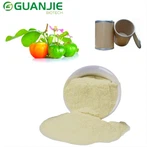
Nicotinamide Mononucleotide NMN powder has become more and more popular in these years. It is a naturally occurring compound that plays a vital role in the biosynthesis of Nicotinamide Adenine Dinucleotide (NAD+), a coenzyme essential for energy metabolism, DNA repair, and cellular longevity. As NMN supplements gain popularity for their potential anti-aging and metabolic benefits, many users wonder what NMN powder tastes like and why it has that specific flavor.

What does NMN powder taste like?
When it comes to tasting Nicotinamide Mononucleotide NMN powder, user experience and supplier notes give us a fairly consistent picture, albeit with some variation. Here are the commonly reported flavour notes:
• Mild bitterness:
Many users describe the taste of high-purity NMN powder as somewhat bitter. For example, one supplier site says that genuine NMN "has a distinctly bitter taste resembling vitamin B3 (niacin)".
Slight sour or acidic aftertaste: Some reports indicate a mild sourness or tang following the initial taste, especially when the pure NNM powder is taken dissolved in water or held under the tongue (sublingually).
• Light sweet note (sometimes):
A handful of sources suggest there may be a subtle sweetish note at the front, especially in formulations claiming "pure powder" with minimal additives. One site states: "The taste of NMN powder is generally described as mildly sweet with a slightly bitter after-taste."
• Neutral to very mild flavour in capsule form:
When Nicotinamide Mononucleotide NMN powder is encapsulated (i.e., the bulk NMN powder is inside a pill), many users report little to no noticeable taste, because the powder bypasses direct contact with the taste buds. One product FAQ says: "NMN has a largely neutral flavour and mixes well in other beverages."
If you taste raw NMN powder, expect something modestly bitter, perhaps with a slight acidic-sour note, and maybe a faint sweet front-end depending on the batch and purity. It's not flavourless, but it's not intensely horrible either. For most people, it is tolerable (or covered up) if dosed appropriately.
Why does NMN have this taste?
To understand the flavour profile of Nicotinamide Mononucleotide NMN powder, we need to consider its chemical nature, how it interacts with taste receptors, and how manufacturing/purity affects taste.
1. Chemical structure and relation to vitamin B3
The taste of NMN bulk powder is rooted in its molecular composition. NMN consists of a nicotinamide group, a ribose sugar, and a phosphate group. Each of these structural components contributes to its overall taste:

• Nicotinamide group:
This is the same component found in niacin (vitamin B3). It provides a slightly bitter and chemical flavor often associated with vitamin supplements.
• Ribose sugar:
Ribose is a natural sugar with a mild sweetness, but in Nicotinamide Mononucleotide NMN powder, it is bound to phosphate, which neutralizes most of the sweetness and imparts a sour edge.
• Phosphate group:
Phosphate compounds generally introduce a tangy or mineral-like taste. They tend to stimulate sour receptors, explaining NMN's mild acidity.
The interaction of these three components-bitter nicotinamide, tangy phosphate, and neutral ribose-creates NMN's characteristic bittersweet-sour flavor.
|
Compound |
Taste Profile |
Comments |
|
NMN (β-Nicotinamide Mononucleotide) |
Slightly bitter, mildly sour, neutral aftertaste |
Clean taste if high purity |
|
NR (Nicotinamide Riboside) |
Bitter-sweet with a stronger chemical taste |
Slightly more intense bitterness |
|
Niacin (Vitamin B3) |
Very bitter and acidic |
Causes a burning taste and flush effect |
|
Nicotinamide |
Bitter with a strong aftertaste |
Less sour than NMN |
2. Interactions with taste receptors
Bitterness is often mediated by receptor groups on the tongue (T2R family) that evolved to detect potentially harmful compounds. Many nucleotide derivatives and phosphorus-containing molecules-especially in high concentration-can activate bitter taste receptors. Because Nicotinamide Mononucleotide NMN powder is present as a fairly pure compound when provided as a powder supplement, the taste receptors will pick up that bitterness. The mild sourness might come from the phosphate group, or from trace acidic impurities or conformational hydration/solvation effects in solution.
3. Purity, manufacturing by-products, and additives
The taste of NMN powder is strongly influenced by its purity and the absence/presence of additives or fillers. Several sources argue that high-purity Nicotinamide Mononucleotide NMN powder tends to have the "cleaner" but perhaps more noticeable bitterness, whereas lower-quality or heavily-filled products may have a more unpleasant "harsh" taste or even metallic/chemical after-taste. For example:
"The purity of Nicotinamide Mononucleotide NMN powder plays a significant role in its taste. Higher-purity NMN products tend to have a cleaner, more bitter taste, while lower-quality supplements may have added fillers or impurities that contribute to a harsher or even metallic flavour."
If you are sourcing natural NMN powder bulk (for research, formulation, or wholesale supply), it's worth noting that companies such as Guanjie Biotech act as bulk NMN powder suppliers. We use two methods and the purity is>99.5%. High-quality and competitive price Nicotinamide Mononucleotide NMN powder. Some supplement companies use our NMN bulk powder. Welcome to enquire with us at info@gybiotech.com.
4. Formulation and dissolution environment
If you take Nicotinamide Mononucleotide NMN powder directly in the mouth or dissolved in water/juice (especially under the tongue), the taste will be more immediate, intense and unmasked. In contrast, if it's encapsulated, the powder isn't in contact with taste buds, so the flavour is negligible. One supplier notes the difference:
"The taste of NMN can vary widely, often described as slightly bitter to mildly sour, influenced by factors such as purity, form (powder, capsule, tablet), and individual taste perception."
MASI Longevity Science
Also, the medium (water vs juice vs plain powder) affects how quickly the taste receptors are exposed to the compound and how diluted the flavour is.

5. Stability and degradation
Although less directly about taste, the storage and stability of Nicotinamide Mononucleotide NMN powder can influence flavour. Some degradation (e.g., hydrolysis, oxidation) could generate by-products that are more strongly bitter or metallic-tasting. For instance, one study found NMN remains mostly stable in water for a week, but over longer periods or with improper storage, breakdown may occur.
Poor storage conditions (moisture, heat, light) may exacerbate unwanted taste changes.
Why NMN Has No Sweetness?
Unlike glucose or sucrose, NMN's ribose component is chemically bonded within the nucleotide structure, making it unavailable to activate sweetness receptors (T1R2/T1R3) on the tongue. Moreover, the presence of phosphate and nitrogen-containing groups counteracts any residual sweetness by stimulating bitter (T2R) and sour (PKD2L1) receptors.
Thus, NMN's biochemical purpose is metabolic rather than gustatory-it is a bioactive compound designed to increase NAD+ levels, not a flavoring agent. The lack of sweetness underscores its functional, pharmaceutical nature rather than being a food additive.
When purchasing raw Nicotinamide Mononucleotide NMN powder for further formulation or distribution, taste remains a relevant parameter: suppliers should provide high-purity NMN (>99%), with minimal residual solvents or impurities that might exacerbate taste issues. Ensuring good manufacturing practices (GMP), proper storage and shipping (to avoid degradation) will help ensure the product arrives with the intended flavour profile and minimal off-taste.'
Summary
Nicotinamide Mononucleotide NMN powder has a mildly bitter and slightly sour taste resulting from its chemical structure, particularly the nicotinamide and phosphate groups. The flavor intensity depends on purity, production method, and storage conditions. High-quality NMN, like that supplied by Guanjie Biotech, has a cleaner, less intense flavor due to advanced purification and controlled crystallization. While NMN's taste is not inherently pleasant, it is tolerable and easily masked with flavored drinks or encapsulated forms. Its flavor reflects its biochemical purpose-supporting cellular energy and longevity through NAD+ synthesis. Welcome to enquire about Guanjie Biotech's Nicotinamide Mononucleotide NMN powder at info@gybiotech.com.
References
[1] Mills, K. F., Yoshida, S., & Imai, S. (2017). Nicotinamide mononucleotide (NMN): Biosynthesis, bioavailability, and therapeutic potential. Current Opinion in Clinical Nutrition & Metabolic Care, 20(3), 230–236.
[2]Trammell, S. A. J., & Brenner, C. (2013). Nicotinamide riboside and nicotinamide mononucleotide: Mechanisms of action and metabolism. Cell Metabolism, 17(5), 682–694.
[3]Yoon, M. J., Yoshida, S., & Imai, S. (2020). NAD+ intermediates and their impact on cellular metabolism and aging. Nutrients, 12(8), 2288.
[4]Rajman, L., Chwalek, K., & Sinclair, D. A. (2018). Therapeutic potential of NAD-boosting molecules: The in vivo evidence. Cell Metabolism, 27(3), 529–547.