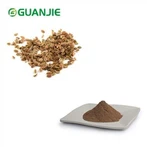
Pure luteolin powder is from various fruits, vegetables, and medicinal herbs, including celery, parsley, green peppers, chamomile, and thyme. Known for its potent anti-inflammatory, antioxidant, and neuroprotective properties, luteolin has attracted increasing scientific attention for its potential roles in brain health. This article explores how luteolin affects brain function, supports cognitive performance, protects against neurological disorders, and influences brain aging.

Chemical Nature and Bioavailability
Structure and Source
Luteolin (3′,4′,5,7-tetrahydroxyflavone) belongs to the flavone subclass of flavonoids. Its hydroxyl groups contribute to its potent antioxidant capacity, enabling it to neutralize free radicals and reactive oxygen species (ROS).
Absorption and Metabolism
Upon ingestion, luteolin is absorbed in the small intestine, where it undergoes conjugation (methylation, sulfation, and glucuronidation). While its bioavailability is moderate, it crosses the blood–brain barrier (BBB), a critical property for neuroprotective agents.
Oxidative Stress and Brain Health
Oxidative Stress in the Brain
The brain is particularly vulnerable to oxidative stress due to its high oxygen consumption, abundant lipid content, and relatively low antioxidant defenses. Excessive reactive oxygen species (ROS) can damage neuronal membranes, proteins, and DNA, contributing to neurodegeneration and cognitive decline.
Antioxidant Role of Luteolin
Pure luteolin powder is a powerful antioxidant that neutralizes ROS through:
Direct free radical scavenging via its hydroxyl groups.
Upregulation of endogenous antioxidant enzymes such as superoxide dismutase (SOD), catalase, and glutathione peroxidase.
Inhibition of oxidative enzymes like NADPH oxidase.
By reducing oxidative damage, luteolin protects neurons from degeneration and supports healthy brain function.
Antioxidant Effects in the Brain
Protection Against Oxidative Stress
The brain is highly susceptible to oxidative damage due to its high oxygen demand, abundant lipid content, and relatively low antioxidant defenses. Pure luteolin powder effectively scavenges ROS and upregulates endogenous antioxidant enzymes like superoxide dismutase (SOD), catalase, and glutathione peroxidase.
Mitochondrial Protection
Oxidative stress is often linked with mitochondrial dysfunction. Luteolin has been shown to preserve mitochondrial integrity by preventing lipid peroxidation and maintaining membrane potential, which contributes to better neuronal energy metabolism and reduced apoptosis.
Anti-Inflammatory Effects in the CNS
Neuroinflammation and Microglial Activation
Neuroinflammation is a hallmark of many neurodegenerative diseases, including Alzheimer's and Parkinson's. A key driver of this inflammation is the overactivation of microglia-the brain's primary immune cells. When chronically activated, microglia release pro-inflammatory cytokines such as interleukin-1β (IL-1β), tumor necrosis factor-alpha (TNF-α), and interleukin-6 (IL-6), which contribute to neuronal damage, synaptic dysfunction, and disease progression. Luteolin has been shown to effectively inhibit microglial activation, reducing the secretion of these harmful inflammatory mediators. This action helps protect neuronal structures and maintain a balanced immune response within the CNS. By regulating microglial behavior, pure luteolin powder may play a crucial role in preventing or slowing the progression of inflammation-related neurodegeneration.

Modulation of NF-κB and MAPK Pathways
Luteolin exerts its anti-inflammatory effects at the molecular level by targeting key intracellular signaling pathways involved in immune regulation. One primary target is the nuclear factor-kappa B (NF-κB) pathway, a transcription factor that regulates the expression of numerous genes involved in inflammation. By suppressing NF-κB activation, luteolin reduces the transcription of pro-inflammatory cytokines and enzymes. Additionally, pure luteolin powder influences the mitogen-activated protein kinase (MAPK) pathways, including ERK, JNK, and p38 MAPK, which are involved in the cellular response to inflammatory stimuli. Through modulation of both NF-κB and MAPK pathways, luteolin helps to reduce inflammation-induced damage and supports neuronal health.
Cognitive Enhancement and Memory Support
Improved Synaptic Plasticity
Animal studies have shown that luteolin enhances long-term potentiation (LTP), a fundamental mechanism of learning and memory. This is likely due to its influence on neurotransmission and synaptic receptor regulation.
Increased Brain-Derived Neurotrophic Factor (BDNF)
BDNF supports neuron growth, differentiation, and survival. Luteolin upregulates BDNF expression in the hippocampus, a brain region vital for memory formation. Elevated BDNF contributes to improved cognitive performance and mental resilience.
Behavioral and Cognitive Improvements
In rodent models, dietary pure luteolin powder supplementation has led to enhanced spatial learning, better memory retention, and reduced anxiety-like behavior. These benefits are often attributed to its dual anti-inflammatory and antioxidant actions.
Protection Against Neurodegenerative Diseases
Pure luteolin powder has demonstrated significant neuroprotective effects in various models of neurodegenerative diseases, offering promising therapeutic potential.
Alzheimer's Disease (AD):
One of the primary features of AD is the accumulation of amyloid beta (Aβ) plaques and tau protein tangles in the brain. Luteolin has been shown to interfere with the aggregation of Aβ peptides, reducing their neurotoxicity. Additionally, it inhibits the hyperphosphorylation of tau proteins, a critical process that leads to the formation of neurofibrillary tangles. Beyond these core pathological markers, luteolin also suppresses neuroinflammation by downregulating pro-inflammatory cytokines and inhibiting microglial activation-two key contributors to the progression of AD. Animal studies further demonstrate that luteolin treatment improves learning and memory, indicating its potential to preserve cognitive function and slow disease development.

Parkinson's Disease (PD):
In PD, oxidative stress and chronic inflammation contribute to the death of dopaminergic neurons in the substantia nigra. Luteolin exhibits strong antioxidant and anti-inflammatory activities, protecting these neurons from damage. It may also reduce α-synuclein aggregation-a protein closely associated with PD-and help maintain mitochondrial function, thereby addressing multiple pathological processes involved in PD.
Multiple Sclerosis (MS):
MS is an autoimmune condition characterized by demyelination and inflammation in the central nervous system. Luteolin has shown effectiveness in reducing demyelination and modulating immune responses in experimental MS models. Pure luteolin powder can suppress the activity of pro-inflammatory T-cells and glial cells, helping to limit autoimmune attacks on myelin sheaths.
Neurodevelopmental and Psychiatric Disorders
Luteolin has drawn attention for its potential role in supporting brain health in individuals with neurodevelopmental and psychiatric disorders.
Autism Spectrum Disorder (ASD)
Several emerging studies suggest that pure luteolin powder may help alleviate behavioral symptoms associated with ASD. A clinical trial using a luteolin-based supplement in children with autism reported improvements in irritability, hyperactivity, and social communication. These benefits are thought to result from luteolin's ability to reduce neuroinflammation and stabilize mast cell activity-both of which are implicated in the pathophysiology of autism.
Attention Deficit Hyperactivity Disorder (ADHD)
Although clinical data specific to ADHD are still limited, luteolin's known antioxidant and anti-inflammatory actions, along with its ability to enhance cognitive function, suggest it may offer supportive benefits. By reducing oxidative stress and inflammation, luteolin may help modulate attention and behavioral regulation when used alongside conventional treatments.
Depression and Anxiety
Pure luteolin powder has shown promise in preclinical models for its mood-regulating effects. It may exert antidepressant and anxiolytic actions by influencing key neurotransmitters like serotonin and dopamine, promoting brain-derived neurotrophic factor (BDNF) expression, and reducing inflammation triggered by chronic stress. Animal studies have demonstrated that luteolin reduces depressive-like behaviors, such as decreased immobility in forced swim tests, and improves resilience to stress, indicating potential use in managing mood disorders.
Protection Against Brain Aging
Combating Age-Related Cognitive Decline
As the brain ages, many individuals experience a gradual decline in memory, learning ability, and overall cognitive function. This decline is strongly associated with increased oxidative stress and chronic inflammation, which damage neurons and disrupt brain signaling. Luteolin, a natural flavonoid, effectively counteracts these harmful processes by neutralizing free radicals and reducing inflammatory responses in the brain. Studies in aged animal models have demonstrated that pure luteolin powder helps maintain the integrity of neuronal structures and supports normal brain function, thereby preserving cognitive performance even in later life.

Reduction of Cellular Aging Markers
Another significant aspect of brain aging involves cellular senescence, a state in which cells lose their ability to divide and function properly, often accompanied by the expression of specific biomarkers, such as senescence-associated β-galactosidase. Research has shown that luteolin treatment can lower the levels of these senescence markers in brain tissues, indicating its potential to slow down or reverse aspects of cellular aging. By mitigating cellular senescence, luteolin contributes to healthier brain tissue and may delay the onset of age-related neurodegenerative conditions.
Epigenetic Effects Supporting Neuroprotection
Recent scientific findings suggest that pure luteolin powder may also exert its anti-aging effects through epigenetic mechanisms. Epigenetics involves modifications to DNA and histone proteins that regulate gene expression without altering the underlying genetic code. Luteolin appears to influence key epigenetic processes such as DNA methylation and histone acetylation in brain cells. These changes can enhance the expression of genes involved in neuroprotection and cognitive maintenance, providing a novel pathway by which luteolin supports brain health and combats aging at the molecular level.
Pure luteolin powder is a promising natural compound with multifaceted neuroprotective actions. Its antioxidant, anti-inflammatory, anti-apoptotic, and neurogenic properties make it an attractive candidate for supporting brain health and treating neurological disorders. If you are a supplement manufacturer, welcome to consider Guanjie Biotech's bulk luteolin powder.
References
[1] Theoharides TC, et al. Luteolin as a Therapeutic Option for Neurodevelopmental and Neurodegenerative Disorders. CNS & Neurological Disorders - Drug Targets, 2009.
[2] Nabavi SF, et al. Luteolin as an Anti-Inflammatory and Neuroprotective Agent: A Review of the Literature. Food and Chemical Toxicology, 2015.
[3] Rezai-Zadeh K, et al. Luteolin and Alzheimer's Disease: Inhibition of Cytokine Expression and Aβ Aggregation. Journal of Neuroinflammation, 2008.
[4] Jang S, et al. Luteolin Reduces Microglial-Induced Neuronal Cell Death via Inhibiting Inflammatory Cytokines. International Journal of Molecular Sciences, 2019.
[5] Chen YC, et al. Neuroprotective Effects of Luteolin on Aging and Cognitive Decline. Frontiers in Aging Neuroscience, 2020.
[6] Wang J, et al. Luteolin Modulates BDNF and Synaptic Function in Aging Brain. Neurobiology of Aging, 2021.