Natural olive leaf extract has surged in popularity within the wellness and nutraceutical industries, transitioning from a traditional Mediterranean remedy to a globally recognized dietary supplement. While the health benefits of olive oil, particularly extra virgin olive oil, are widely celebrated for their cardiovascular perks, the leaf of the Olea europaea tree is now recognized as a potent reservoir of bioactive compounds in its own right. A common question among consumers is, "What vitamins are in olive leaf extract?", expecting a list akin to that of a multivitamin. However, the true power of OLE lies not in its classical vitamin content, which is minimal, but in its rich profile of powerful polyphenolic compounds. This paper will first clarify the specific vitamin composition of natural olive leaf extract.

What Vitamins Are In Olive Leaf Extract?
It has negligible vitamins. To address the primary query with utmost clarity: olive leaf extract is not a significant source of vitamins. If you are considering OLE as a means to meet your daily Recommended Dietary Allowance (RDA) of essential vitamins like A, C, or E, you will be disappointed. The extraction process is deliberately designed to concentrate the specific bioactive compounds that give the olive leaf its therapeutic properties, rather than its micronutrient and vitamin content.
The manufacturing of most commercial natural olive leaf extract supplements involves using solvents, such as water or ethanol, to extract and concentrate targeted polyphenols. This process effectively leaves behind the fat-soluble vitamins (A, D, E, K) and does not concentrate most water-soluble vitamins. Any vitamins that might appear in the final product are merely trace remnants from the original leaf material, present in amounts far too small to have any nutritional significance.
Vitamin E (Tocopherols):
Fresh olive leaves do contain small amounts of Vitamin E, a potent fat-soluble antioxidant known for protecting cell membranes from oxidative damage. However, Vitamin E is not soluble in water and alcohol-based solutions typically used for extraction. Consequently, it is not efficiently pulled from the leaf, and its concentration in the final standardized natural olive leaf extract is minuscule and inconsistent. You would need to consume the leaves themselves, not the extract, to obtain any meaningful amount of Vitamin E.

Vitamin C (Ascorbic Acid):
Similarly, the fresh leaf contains Vitamin C, a crucial water-soluble antioxidant and immune system supporter. While water-soluble, Vitamin C is a delicate molecule that can be easily degraded by heat, light, and oxygen during the natural olive leaf extract extraction and drying processes. Furthermore, the goal of extraction is to isolate specific polyphenols like oleuropein, not to preserve Vitamin C. Therefore, any contribution of Vitamin C from a dose of OLE is negligible compared to that from a single orange or a handful of strawberries.

B Vitamins:
Trace amounts of various B vitamins, which play critical roles in energy metabolism and neurological function, can be detected in the olive leaf. Yet again, these are incidental components. They are not the target of the extraction process, and their levels in the final product are so low that they are considered irrelevant to the supplement's intended purpose and health benefits.
Seeking natural olive leaf extract for its vitamin content is a misapplication of the supplement. Its immense value is derived from a unique class of compounds, most notably a secoiridoid called oleuropein, which is responsible for up to 6-15% of the dry weight of the leaf and is the marker for standardization in high-quality extracts. Other critical bioactive compounds include hydroxytyrosol, verbascoside, and flavonoids like luteolin and apigenin.
It is these compounds, not vitamins, that confer the antioxidant, anti-inflammatory, antimicrobial, and cardioprotective effects that are the subject of extensive scientific research.
Key Bioactive Compounds in Olive Leaf Extract
Understanding the research requires familiarity with the primary actors in OLE.
•Oleuropein:
The most abundant and famous compound in natural olive leaf extract. It is a bitter-tasting secoiridoid glycoside that, upon hydrolysis (by enzymes, stomach acid, or during processing), breaks down into its powerful active constituent, hydroxytyrosol, and elenolic acid. Oleuropein is the primary compound used to standardize extracts (e.g., 15% or 20% oleuropein).
•Hydroxytyrosol:
Arguably one of the most potent natural antioxidants known, even more powerful than vitamin E and CoQ10 on ORAC (Oxygen Radical Absorbance Capacity) scales. It is bioavailable and is a key mediator of many of OLE's health effects.
•Other Phenolic Compounds:
This includes verbascoside (another strong antioxidant), tyrosol, and various flavonoids (e.g., luteolin, apigenin, rutin) which contribute to the overall antioxidant and anti-inflammatory synergy, often described as the "entourage effect."
Research on Vitamin Content in Olive Leaf Extract
It is a well-established fact within phytochemical and nutritional science that natural olive leaf extract (OLE) is not valued for its vitamin content but for its rich and potent profile of polyphenolic compounds. The research into OLE consistently focuses on these bioactive phenolics, such as oleuropein and hydroxytyrosol, while mentions of its vitamin content are typically incidental or used for comparative purposes in antioxidant studies.
The process of creating a standardized extract involves using solvents (like water, ethanol, or methanol) to isolate and concentrate these specific, targeted polyphenols. This process does not concentrate vitamins; in fact, it often leaves them behind. Therefore, the body of research directly analyzing vitamins in the finished natural olive leaf extract is very limited.

Focus on Phenolic Compounds, Not Vitamins:
The overwhelming majority of analytical studies on OLE focus exclusively on quantifying its phenolic compounds. A seminal review by Omar (2010) in Scientia Pharmaceutica meticulously details the pharmacological effects of oleuropein but does not list any vitamins as significant components of the extract. This reflects the scientific consensus that the value of OLE is defined by its polyphenols, not its micronutrient vitamin profile.
Vitamin E as a Comparative Antioxidant:
Research often highlights the antioxidant power of OLE's main compounds by comparing them to well-known vitamin antioxidants. For example, a study by Lee & Lee (2010) in Bioresource Technology analyzed the antioxidant activities of individual phenolics from olive leaves. While their research did not measure the vitamin E content in the extract, they frequently discuss hydroxytyrosol's activity in relation to vitamin E, noting its superior free radical scavenging ability in certain assays. This type of study reinforces that the antioxidant mechanism of natural olive leaf extract is independent of its minimal vitamin E content.

Analysis of the Raw Leaf Material:
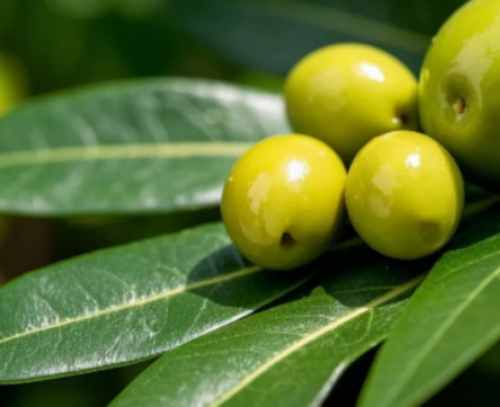
Some studies have analyzed the composition of the raw olive leaf itself. While not the natural olive leaf extract, this provides the basis for what might be present in trace amounts. A study by Guillaume et al. (2021) aimed to characterize the Moroccan Olea europaea L. leaf. Their chemical profiling, while again focused on phenolics, flavonoids, and triterpenes, did not identify significant levels of vitamins as major components. The emphasis remains squarely on the bioactive compounds that will be concentrated during extraction.
Vitamins Degraded During Processing:
The processing methods (drying, extraction, and concentration) are destructive to many vitamin compounds. Aytul (2018) and other food scientists note that vitamins like Vitamin C (ascorbic acid) are highly sensitive to heat, light, and oxygen. The standard industrial processes for creating stable, standardized natural olive leaf extract involve steps that would degrade any initial Vitamin C present in the fresh leaf, ensuring its absence in the final nature-made olive leaf extract product.

Conclusion of Research Findings:
The scientific literature does not contain studies highlighting natural olive leaf extract as a meaningful source of vitamins.The extraction process is designed to concentrate polyphenols, not vitamins.
So olive leaf extract's value is found not in its vitamin content, but in its sophisticated array of polyphenolic compounds, led by oleuropein and hydroxytyrosol. Guanjie Biotech provides high-quality olive leaf extract. We have two forms. One is olive leaf extract powder, the other is olive leaf extract oil. And different specifications that you can choose you want. Our natural olive leaf extract products pass HALAL, HACCP, KOSHER, ISO90001, and others. Our pure olive leaf extract products can meet food, beverage, and nutraceutical fields. Welcome to enquire with us at info@gybiotech.com.
References
[1] Aytul, K. (2018). Stability of Vitamins During Food Processing and Storage. In book: Food Engineering. IntechOpen. DOI: 10.5772/intechopen.79465
[2] Guillaume, D., Charnot, A., Ez zoubi, Y., Mouhajir, A., & El Jaouhari, N. (2021). Phytochemical Analysis, Antioxidant and Antibacterial Activities of Olea europaea L. Leaves from Morocco. Journal of Food Quality, 2021, 6620694.
[3] Lee, O.-H., & Lee, B.-Y. (2010). Antioxidant and antimicrobial activities of individual and combined phenolics in Olea europaea leaf extract. Bioresource Technology, 101(10), 3751–3754.
[4] Omar, S. H. (2010). Oleuropein in Olive and its Pharmacological Effects. Scientia Pharmaceutica, 78(2), 133–154.
[5] Pereira, A. P., Ferreira, I. C. F. R., Marcelino, F., Valentão, P., Andrade, P. B., Seabra, R., Estevinho, L., Bento, A., & Pereira, J. A. (2007). Phenolic compounds and antimicrobial activity of olive (Olea europaea L. Cv. Cobrançosa) leaves. Molecules, 12(5), 1153–1162.