Latest Products

Contact Us
-
6th Floor, 2nd Building, Xijing NO.3, XiJing Industrial Park, DianZi Western Street, Xi'an, Shaanxi, China
-
+86-2988253271

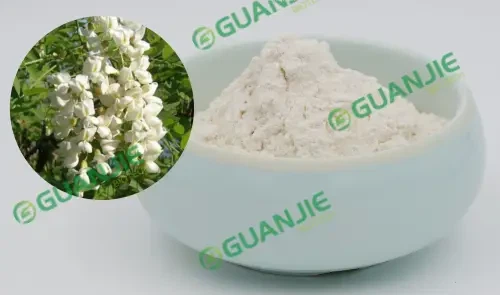
Sophora Japonica Extract Genistein Powder
Source:Sophora japonica L.
Assay: >98.0%
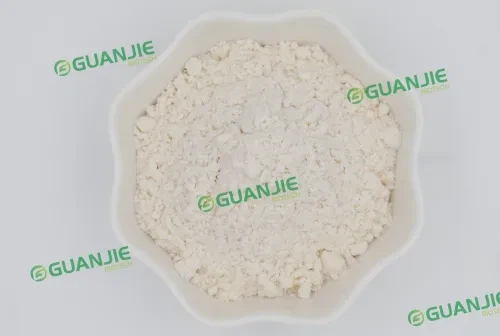
Color: Whitish powder
Particle Size (80 mesh) : >95.0%
Two Factories & Three production lines
GMP standard workshop & two independent laboratories
FDA Cert.
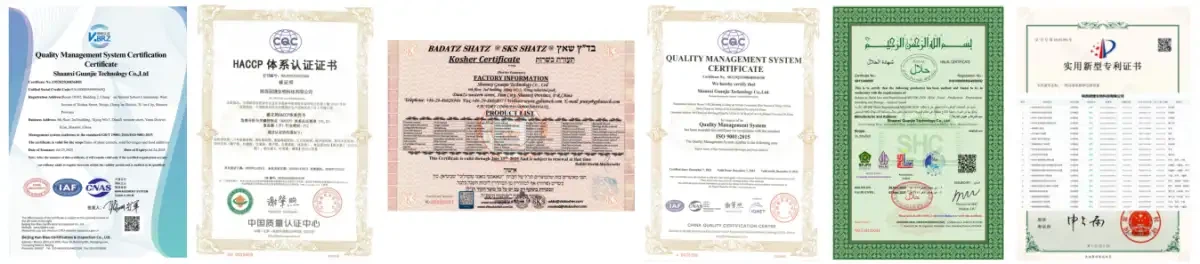
Certifications: Halal,ISO9001,PAHS Free,NON-GMO,KOSHER,SC
Delivery term: DHL, FEDEX, Air freight,Sea freight
Provide Free Sample
MOQ: 1KG
Not for Private Person Sale
Description
Sophora Japonica Extract Genistein Powder Supplier
Guanjie Biotech is a sophora japonica extract genistein powder supplier. Our sophora japonica genistein is manufactured under strict quality control and advanced extraction technology to ensure high purity and stability. It is widely used in nutraceutical, pharmaceutical, and functional food applications. Genistein powder is a natural isoflavone compound with antioxidant properties and research interest in health supplementation markets. We provide consistent quality, bulk sophora japonica genistein supply, and customized specifications to meet global customer requirements. Guanjie Biotech supports long-term cooperation and stable supply chain solutions for international partners. Contact us for detailed specifications, testing reports, and competitive wholesale pricing options available today.
COA:
|
Item |
Specification |
Result |
Method |
|
Basic Product Information |
|||
|
Genus and Species |
Sophora japonica L. |
Conform |
/ |
|
Part of the Plant |
Fruit |
Conform |
/ |
|
Country of Origin |
China |
Conform |
/ |
|
Marker Compounds |
|||
|
Assay |
>98.0% |
98.38% |
HPLC |
|
Organoleptic Data |
|||
|
Appearance |
Powder |
Conform |
GJ-QCS-1008 |
|
Color |
Whitish powder |
Conform |
GB/T 5492-2008 |
|
Odor |
Characteristic |
Conform |
GB/T 5492-2008 |
|
Taste |
Characteristic |
Conform |
GB/T 5492-2008 |
|
Physical Characteristics |
|||
|
Particle Size (80 mesh) |
>95.0% |
Conform |
GB/T 5507-2008 |
|
Loss on drying |
<2.0% |
0.04% |
GB/T 14769-1993 |
|
PH |
/ |
6.0 |
/ |
|
Heavy Metals |
|||
|
Heavy Metal |
<10.0ppm |
Conform |
USP <231>, method II |
|
Pb |
<2.0ppm |
Conform |
AOAC 986.15, 18th |
|
As |
<2.0ppm |
Conform |
AOAC 986.15, 18th |
|
Hg |
<0.5ppm |
Conform |
AOAC 971.21, 18th |
|
Cd |
<0.5ppm |
Conform |
/ |
|
Pesticide Residue |
|||
|
666 |
<0.2ppm |
Conform |
GB/T5009.19-1996 |
|
DDT |
<0.2ppm |
Conform |
GB/T5009.19-1996 |
|
Microbiology |
|||
|
Total Plate Count |
<1,000cfu/g |
Conform |
AOAC 990.12, 18th |
|
Total Yeast & Mold |
<100cfu/g |
Conform |
FDA (BAM) Chapter 18, 8th Ed. |
|
E. Coli |
Negative |
Negative |
AOAC 997.11, 18th |
|
Salmonella |
Negative |
Negative |
FDA (BAM) Chapter 5, 8th Ed. |
What Are The Properties of Genistein?
Chemical Properties
• Chemical Composition and Structure
Genistein is an isoflavone compound. Its chemical name is 5,7-dihydroxy-3-(4-hydroxyphenyl)-4H-1-benzopyran-4-one. Its molecular formula is C₁₅H₁₀O₅, and its molecular weight is 270.24.
Structurally, it has a typical isoflavone skeleton. This includes a benzopyran ring system with a p-hydroxyphenyl group at the 3-position. It contains three hydroxyl groups at the 4′, 5, and 7 positions. Therefore, it is also called "4′,5,7-trihydroxyisoflavone".
• Acid-Base Properties
Genistein contains phenolic hydroxyl groups. These groups give it weak acidic properties. The pKa value is 6.51 ± 0.20 (predicted value).
It is soluble in dilute alkaline solutions and turns yellow in such conditions. This reaction can be used for basic identification.
• Color Reaction
Genistein shows a characteristic color reaction in chemical tests. It reacts with concentrated sulfuric acid to produce a yellow color. This can be used for rapid identification.
It does not give a positive reaction in the hydrochloric acid–magnesium powder test. This helps distinguish it from some other flavonoids.
Physical Properties
• Appearance and Crystallization Morphology
High-purity genistein is a pale yellow crystalline powder. Its crystal shape depends on crystallization conditions.
Crystallization from 60% ethanol produces rectangular or hexagonal rod-shaped crystals. Crystallization from ether produces dendritic crystals.
• Melting Point Characteristics
Genistein has a high melting point, usually between 297°C and 298°C. Near the melting point, slight decomposition may occur. This indicates limited thermal stability.
• Solubility Characteristics
Genistein has very low water solubility. It is almost insoluble in water, with a solubility of about 8.7 μg/mL.
It is soluble in organic solvents such as ethanol and dimethyl sulfoxide (DMSO). It is also soluble in dilute alkaline solutions due to its weak acidity.
• Other Physicochemical Parameters
Its boiling point is about 555.5°C (at 760 mmHg). Its density is 1.548 g/cm³. Its refractive index is 1.732.
How Is Sophora Japonica Extract Genistein Powder Produced?
Guanjie Biotech has focused on the research, development, and production of high-purity isoflavone products for more than 20 years. We have rich experience in producing genistein from sophora japonica. We also have our own GMP-compliant factory and advanced testing center. Our genistein powder is mainly produced from natural plant materials by using a modern process that combines physical extraction and bio-fermentation. The detailed process of sophora japonica extract genistein powder is as follows.
Selection and Crushing
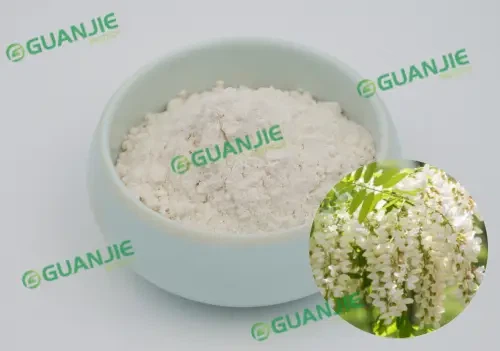
Production starts with raw material selection. Genistein is mainly found in legumes. Guanjie Biotech mainly uses Sophora japonica fruit as key raw materials. After entering the factory, all materials go through strict quality inspection. The qualified materials are then crushed. Mechanical crushing increases the surface area and helps release active ingredients during later sophora japonica extract genistein powder processing.
Extraction and Concentration
The crushed materials enter the extraction stage. Genistein mainly exists in plants as glycosides. Guanjie Biotech uses ethanol extraction to efficiently release these compounds. Ethanol is used as the solvent. Reflux extraction is carried out at a controlled temperature. This allows the target compounds to dissolve fully. After extraction, ethanol is recovered through vacuum concentration. A concentrated solution rich in genistein glycosides is obtained. This process also supports solvent recycling.
Bio-Fermentation (Core Technology)
This is an important step and differs from traditional acid hydrolysis methods. Natural genistein in plants mainly exists in bound glycoside form. It must be converted into active genistein aglycone.
Guanjie Biotech uses bio-fermentation and enzymatic hydrolysis technology. During this sophora japonica extract genistein powder process, pH is controlled at 4.5–5.5 and temperature at 45–55°C. Specific enzymes, such as cellulase and β-glucosidase, are added. Mild enzymatic reactions help convert glycosides into free aglycones. This method creates fewer by-products and maintains product activity. Guanjie focuses on using gentle physical and biological technologies to protect the natural properties of the genistein 98 powder.
Purification and Refining
After fermentation, plant residues are removed by filtration. The liquid is concentrated again. Purification is important to achieve a purity level above 98%.
• Column chromatography separation:
Macroporous adsorption resin or special chromatography technology is used to selectively absorb target compounds. Different concentrations of eluent are used to separate genistein from other isoflavones, such as daidzein.
• Recrystallization:
This step helps improve purity. The purified sophora japonica extract genistein powder product is dissolved in ethanol or another suitable solvent. Crystallization conditions, such as temperature and pH, are carefully controlled. Genistein crystals form again during this process. Because genistein dissolves in alkaline conditions and precipitates in acidic conditions, pH adjustment helps remove impurities. This process of genistein 98 powder may be repeated several times to achieve higher purity.
Drying and Final Product Processing
The crystals are separated through filtration or centrifugation. This creates a wet filter cake. The material then enters the drying process. Vacuum drying or microwave vacuum drying is commonly used. These methods help protect heat-sensitive bioflavonoids. After drying, the material is crushed and sieved into a uniform powder. The genistein bulk powder product is then packaged.
Quality Control
Guanjie Biotech applies strict quality control throughout the entire sophora japonica extract genistein powder production process. The finished genistein powder bulk product is tested by high-performance liquid chromatography (HPLC). This ensures that purity can typically reach 98%. Third-party testing reports are also available.
Guanjie Biotech's production process starts with Sophora japonica fruit. The process includes crushing, solvent extraction, bio-enzymatic conversion, multi-stage purification, drying, and powder processing. The key technology is the use of bio-fermentation instead of strong acids and alkalis for aglycone conversion. Combined with recrystallization and chromatography technology, this process helps ensure high-purity
sophora japonica extract genistein powder bulk and maintain natural activity. Our facilities have obtained ISO, Kosher, and Halal certifications.
How To Store Genistein?
Sophora japonica extract genistein powder is sealed in isolation storage at a ventilated, dry, light-shielding constant temperature (2-8℃). Contact with toxic and harmful items is strictly prohibited.
Sealed and Isolated Storage
Sophora japonica extract genistein powder must be stored in sealed packaging. This is important because it contains phenolic hydroxyl groups and can absorb moisture from the air. Long-term exposure to air may cause clumping, discoloration, or microbial growth. Sealed packaging also helps reduce oxidation and slow down degradation.
Sophora japonica genistein powder should be stored separately from toxic chemicals, strong-smelling substances, and food materials to prevent cross-contamination.
Ventilated, Dry, and Light-Proof Environment
The storage area should be well ventilated and kept dry. Relative humidity should be controlled below 60%. High humidity can increase moisture absorption and affect the bulk sophora japonica extract genistein powder.
Light protection is also necessary. Long exposure to UV light may cause color changes and structural degradation. Light-proof packaging, such as aluminum foil bags, should be used. Storage rooms should also avoid direct light exposure.
Constant Temperature Storage at 2–8°C
The recommended storage temperature is 2–8°C. Sophora japonica extract genistein powder is relatively stable at room temperature for short periods. However, long-term storage at low temperature helps reduce microbial growth and slows down degradation reactions.
Temperature changes should be minimized. Frequent fluctuations may cause condensation inside the packaging and increase local moisture.
No Contact with Toxic or Hazardous Substances
Sophora japonica extract genistein powder used in supplements or pharmaceutical applications must be kept free from contamination. Contact with heavy metals, pesticide residues, or organic solvents will damage the quality of sophora japonica bulk genistein powder.
A dedicated storage area is required. Strict warehouse entry and exit control should be implemented to ensure safety and traceability.
Shelf Life and Handling Precautions
When stored under proper conditions, unopened sophora japonica extract genistein powder has a shelf life of up to 24 months. The "first in, first out" principle should be followed. Packaging integrity should be checked regularly. If discoloration, clumping, or unusual odor is observed, the material should not be used.
Factory&Team:

Certification
Package & Shipment

Hot Tags: sophora japonica extract genistein powder, China sophora japonica extract genistein powder manufacturers, suppliers, factory, buy flaxseed powder, flaxseed protein powder, Garcinia Extract Powder, L Arginine Base Powder, Plant Extract, Sodium Copper Chlorophyllin Powder
You Might Also Like