Latest Products

Contact Us
-
6th Floor, 2nd Building, Xijing NO.3, XiJing Industrial Park, DianZi Western Street, Xi'an, Shaanxi, China
-
+86-2988253271


Soy Isoflavones Powder
Product source: Natural non-GMO soybean germ
Test Method: HPLC
Specifications: 10%, 20%, 40%, 80%
CAS No.:574-12-9
Two Factories & Three production lines
GMP standard workshop & two independent laboratories
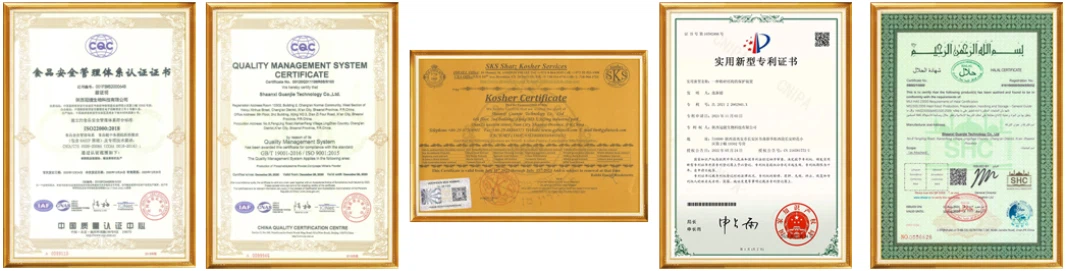
Certifications: Halal,ISO9001,NON-GMO,KOSHER,SC
Delivery term: DHL, FEDEX, Air freight,Sea freight
Provide Free Sample
MOQ: 1KG
Not for Private Person Sale
Description
Natural Soy Isoflavones Powder: B2B OEM & Wholesale Supply for Functional Foods & Nutraceuticals
Guanjie Biotech is a Soy Isoflavones Powder supplier. Soy Isoflavone Powder is a premium plant-based phytoestrogen extracted from non-GMO soybeans, yielding a light yellow powder ideal for women's health formulations. Sourced directly from Guanjie Biotech's sustainable planting bases in the Qinling Mountains, we ensure complete supply chain traceability from harvest to extraction. We offer standardized HPLC assays (10%, 20%, 40%, 60%, and 80%) with flexible B2B bulk wholesale and custom OEM/ODM Soy Isoflavones solutions tailored for global brands. Guanjie Biotech has its own lab, testing center, factory, and sales team. Our high-quality soybean Isoflavone bulk powder and low-price products are welcome to contact us: at info@gybiotech.com.

What Is Soy Isoflavone?
Soy isoflavone is a natural plant extract and flavonoid compound found in soybeans. As a type of phytoestrogen, soy isoflavones have a similar molecular structure to estrogen and can interact with estrogen receptors in the body. They are mainly concentrated in soybean seed coats, embryonic axes, and cotyledons. Key active compounds include Daidzin, Daidzein, Genistin, Genistein, Glycitin, and Glycitein. High-purity soy isoflavone powder is widely used in dietary supplements, functional foods, and nutraceutical products. As a professional soy isoflavone supplier, Guanjie Biotech provides standardized soy extract with consistent quality and reliable specifications.
Why Choose Guanjie Biotech?
● Innovative technology:
Focused on the development of patented natural products with 20 patented technologies.
● International Certification System:
Passed ISO9001, ISO22000, QS, Kosher, Halal etc.
● Strictly quality control system:
Almost all the testing items of bulk Soy Isoflavones Powder products are tested in-house.the assay, water, Odor, Heavy Metals, solvent residue, pesticide residue, Protein, Microbiological, and so on.
● Professional shipping:
Professional shipping agents have cooperated with us for more than 20 years, ensuring that the Soy Isoflavones Powder can be exported safely and quickly.
COA:
|
Botanical source: |
Soy (Glycine max.) |
Plant part used: |
Soybean Germs |
|
GMO: |
Free |
Extraction solvent: |
Ethanol / Water |
|
Extraction ratio: |
60:1 |
Identification: |
TLC |
|
Irradiation: |
Free |
Country of origin: |
CHINA |
|
Items |
Method |
Specifications |
Results |
|
Appearance |
Visual |
Shallow Yellow powder |
Shallow Yellow powder |
|
Odor & Taste |
Visual & taste |
Characteristic |
Characteristic |
|
Particle size |
USP<786> |
100%Through 80 mesh |
100%Through 80 mesh |
|
Bulk density |
USP<616> |
45-62g/100ml |
50g/100ml |
|
Loss on drying |
GB/T 5009.3 |
≤5.0% |
3.45% |
|
Sulphated ash |
GB/T 5009.4 |
≤5.0% |
3.89% |
|
Total Isoflavones |
HPLC |
≥40.0% |
41.36% |
|
Daidzin |
HPLC |
28.61% |
|
|
Glycitin |
HPLC |
10.63% |
|
|
Genistin |
HPLC |
7.50% |
|
|
Daidzein |
HPLC |
0.72% |
|
|
Glycitein |
HPLC |
0.34% |
|
|
Genistein |
HPLC |
0.36% |
|
|
Heavy metals |
GB/T 5009.74 |
≤10PPM |
<10PPM |
|
Arsenic (As) |
GB/T 5009.11 |
≤1PPM |
<1PPM |
|
Lead (Pb) |
GB/T 5009.12 |
≤2PPM |
<2PPM |
|
Cadmium (Cd) |
GB/T 5009.15 |
≤0.5PPM |
<0.5PPM |
|
Mercury (Hg) |
GB/T 5009.17 |
≤0.1PPM |
<0.1PPM |
|
Total plate count |
GB/T 4789.2 |
<1000cfu/g |
Complies |
|
Mould&Yeast |
GB/T 4789.15 |
<100cfu/g |
Complies |
|
E.Coli |
GB/T 4789.3 |
Negative |
Negative |
|
Salmonella |
GB/T 4789.4 |
Negative |
Negative |
|
Staphylococcus |
GB/T 4789.10 |
Negative |
Negative |
|
Storage |
Keep container unopened in cool, dry place. |
||
|
Conclusion |
Comply with required standards. |
||
How is Soy Isoflavones Produced?

What Are The Nutrition Sheet of Soy Isoflavones?

MOA:
Reagents and solution
Methanol (analytical grade)
Acetonitrile (HPLC-grade)
Redistilled water
Glacial acetic acid (analytical grade)
Apparatus
HPLC
Electronic balance
Chromatogram Condition
C18 stainless steel column 150 X 4.6mm 5µm
Mobile phase: acetonitrile, water
Grads conditions:
|
Time |
%A |
%B |
|
0 |
83 |
17 |
|
5 |
83 |
17 |
|
26 |
70 |
30 |
|
30 |
65 |
35 |
|
35 |
65 |
35 |
Column temperature: 30 centigrade
Velocity of flow: 1.0ml/min
Detect wavelength: 254nm
Sensitivity: 0.005AUFS
Theoretical plate number calculated as Genistin is not less than 30000, calculated as Daidzin is not less than 6000.
Standard Solution Preparation
Take Soy Isoflavones Powder exactly Standard samples of Daidzin, Glycitin, Genistin, Daidzein, Glycitein and Genistein that were dried by P2O5 to continuously weight. Add methanol to make 0.10mg/ml, 0.05mg/ml, 0.15mg/ml, 0.05mg/ml, 0.05mg/ml, as standard sample solution.
Testing sample Preparation:
Accurately weight 25mg sample, and then put it into a 100 mL volumetric flask. Add 80% methanol about 70ml, heat to 60ºC, and ultrasonically dissolve it for 15-30minutes. Put it aside till room temperature. Then add 80% methanol to fix the volume. Shake it equally. Then filter through 0.45um PTFE filter film. Then get the testing sample.
Procedure
Under the above conditions of chromatography, after the HPLC system and baseline were stable, samples were measured. The content was calculated using the external standard method.
Calculate % of the Isoflavones in the sample by the following Formula
P1 X V1 X C1
--------------------- X 100%
P2 X W2
P1 = Peak Area of Sample
V1 = Volume of Sample
C1 = Concentration of Standard sample
P2 = Peak Area of Standard sample
W2 = Weight of Sample
How Many Types of Soy Isoflavones Have?
| Parameter / Feature | 40% Soy Isoflavones powder | 60% Soy Isoflavones powder |
80% Soy Isoflavones powder |
| Assay (HPLC) | ≥40.0% Total Isoflavones | ≥60.0% Total Isoflavones |
≥80.0% Total Isoflavones |
| Appearance | Fine yellow-brown to light yellow powder | Light yellow fine powder |
Off-white to pale yellow fine powder |
| Active Compounds | Genistein, Daidzein, Glycitein | Genistein, Daidzein, Glycitein |
Genistein, Daidzein, Glycitein |
| Inert Matrix / Organic Matter | ~60% natural soy matrix & fiber | ~40% natural soy matrix |
~20% residual natural soy matrix |
| Dose Volume Required | High (requires more powder per capsule) | Moderate |
Low (ideal for small capsule sizes) |
| Solubility / Dispersibility | Moderate | Good |
High (easier for refined formulations) |
| Primary Target Application | Standard tablets, daily multi-vitamin blends, functional foods | High-potency health supplements, women's health capsules |
Premium pharmaceutical-grade supplements, micro-capsules |
What Are The Main Components of Soy Isoflavones Powder?
Soy isoflavone powder is a natural plant extract mainly derived from soybeans. The primary active compounds in soy isoflavone extract are divided into two categories: isoflavone glycosides and free isoflavones (aglycones).
The glycoside forms include daidzin, genistin, and glycitin, which are the dominant forms naturally present in soybeans. In contrast, the free forms, including daidzein, genistein, and glycitein, are found in relatively lower concentrations. Among these compounds, daidzein and genistein are considered key bioactive components of soy isoflavone powder and are often used as quality indicators for standardized soy extracts.
In natural soybeans, approximately 85% or more of total soy isoflavones exist in glycoside forms, while free isoflavones generally account for less than 15% of the total content. Through advanced extraction and conversion technologies, manufacturers can increase the concentration of aglycone forms to meet specific formulation requirements.
High-quality soy isoflavone extract powder typically contains standardized levels of genistein, daidzein, and total isoflavones, making it suitable for applications in dietary supplements, functional foods, women's health products, and nutraceutical formulations.

Soy isoflavones Buyer Guide
Soy isoflavones are natural plant extracts mainly derived from soybeans and are widely used in dietary supplements, functional foods, nutraceutical products, and women's health formulations. When purchasing soy isoflavone powder, buyers should evaluate raw material sources, purity, color, composition, and quality indicators to ensure product consistency and authenticity.
1. Raw Material Source: Soybean Meal and Soy Germ
The source of soybeans significantly affects the composition of natural soy isoflavones. Soybean meal is one of the most common raw materials for soy isoflavone extraction. It contains six major isoflavones, including glycosides such as genistin, daidzin, and glycitin, as well as aglycones such as genistein, daidzein, and glycitein. Among these compounds, genistin and daidzin usually represent a large proportion of total isoflavone content, while genistein and daidzein are considered important active components. Soy germ is another premium source of soy isoflavone extract. It generally contains higher levels of glycitin and glycitein, which can account for a significant percentage of total isoflavones.
2. Color and Appearance of Soy Isoflavone Powder
The natural color of soy isoflavone powder typically ranges from yellow to light yellow, depending on the extraction process and purity level. A natural soybean aroma and slightly bitter taste are common characteristics.
However, color alone should not determine quality. Extremely white powder with very high purity claims should be evaluated carefully, especially for products claiming 80% or higher soy isoflavone purity, as excessive processing or synthetic additives may affect the appearance.
3. Purity and Residual Sugar Content
Low-purity soy isoflavone extracts may contain residual sugars from soybean materials, which can result in darker color and a sticky texture during storage. High-quality soy isoflavone suppliers usually apply purification processes to reduce unwanted sugar content, improving stability and appearance.
4. G/D Ratio (Genistein/Daidzein Ratio)
The genistein to daidzein ratio (G/D ratio) is an important quality parameter for evaluating soy isoflavone composition. In natural soy extracts, the G/D ratio generally falls within a normal range of approximately 1.0–2.5. A significantly higher ratio may require additional verification to confirm the product's natural origin.
5. Saponin Content and Overall Quality
Soy saponins naturally coexist with soy isoflavones. Their presence does not necessarily indicate poor quality and may contribute additional functional value. However, higher saponin levels can make the powder appear darker.
When selecting bulk soy isoflavone powder for supplements, buyers should consider total isoflavone content, saponin levels, extraction technology, and testing reports rather than judging quality only by color.
A reliable soy isoflavone manufacturer should provide detailed specifications, COA reports, purity analysis, and traceable raw material information to support consistent product development.
What Do Soy Isoflavones Do?
● Relieve menopausal discomfort:
Soy isoflavones can regulate estrogen levels due to their estrogen-like effects, thereby relieving many symptoms of menopause.
● Prevention of osteoporosis:
The decrease of estrogen secretion level can easily lead to bone loss. Timely supplementation of soy isoflavones can effectively prevent the occurrence of osteoporosis.
● Prevention of breast cancer:
It can combine with estrogen receptors, thereby reducing the activity of estrogen and reducing the risk of breast cancer in women due to high estrogen levels.
● Prevention of senile dementia:
Supplementing with Marianna soy isoflavones powder can reduce blood concentration and prevent the deposition of specific types of proteins in the brain, thus preventing senile dementia.
● Improve menstrual discomfort: uneven secretion of estrogen leads to menstrual discomfort, and the bidirectional regulation of soybean isoflavones can normalize estrogen levels and improve menstrual discomfort.
● Prevention of cardiovascular disease:
Soy isoflavones can prevent the formation of atherosclerosis and prevent the occurrence of cardiovascular disease.
● Improve skin quality:
Taking Marianna soybean isoflavone powder can make women's skin smooth, delicate, smooth and elastic.
● Anti-aging:
Long-term supplementation of soy isoflavones can prevent premature ovarian function decline in women, thereby delaying the arrival of menopause and delaying aging.
● Improve the quality of sexual life:
The estrogen-like effect of soybean isoflavones can nourish yin and beauty, increase the secretion of gonads, thicken the vaginal epithelium, and enhance the elasticity of female vaginal muscles, thereby improving the quality of sexual life.
FAQs:
1. What is soy isoflavone powder used for?
Soy isoflavone powder is used for dietary supplements, functional foods, and women's health products as a natural plant-based ingredient.
2. Where does soy isoflavone powder come from?
Soy isoflavone powder comes from non-GMO soybeans, mainly extracted from soybean germs or soybean meal through purification processes.
3. What are the main components of soy isoflavones?
The main components are daidzin, genistin, glycitin, daidzein, genistein, and glycitein, measured by HPLC analysis.
4. What specifications of soy isoflavone powder does Guanjie Biotech supply?
Guanjie Biotech supplies standardized soy isoflavone powder with 10%, 20%, 40%, 60%, and 80% purity options for OEM/ODM applications.
5. How is soy isoflavone powder manufactured?
Soy isoflavone powder is manufactured by ethanol-water extraction, concentration, purification, drying, and HPLC quality testing.
6. What quality tests are performed on soy isoflavone powder?
Soy isoflavone powder is tested for assay, heavy metals, pesticide residues, microbiological limits, moisture, solvent residues, and HPLC profile.
Our Team:
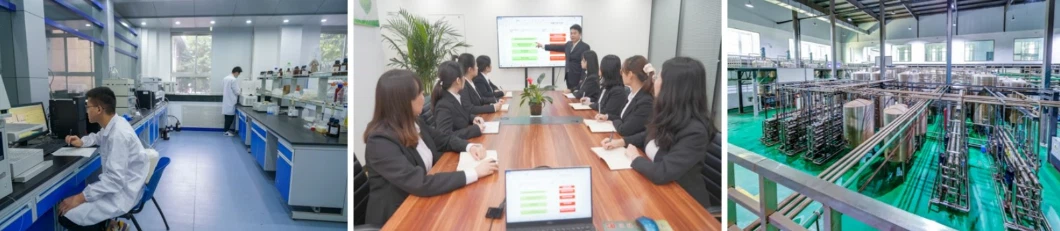
Guanjie Biotech operates a 7000㎡ production facility, including a 2000㎡ GMP-certified workshop and a 500㎡ advanced quality control laboratory. Our Soy Isoflavone Powder manufacturing complies with international standards, including ISO9001, ISO22000, Non-GMO, Kosher, Halal, and QS certifications. We cooperate with qualified third-party laboratories to ensure product safety, purity, and consistency. Each batch of natural soy isoflavone extract is tested for isoflavone assay, moisture content, heavy metals, solvent residues, pesticide residues, protein content, odor, and microbiological safety, providing reliable B2B bulk supply and OEM solutions for nutraceutical manufacturers.
Certification
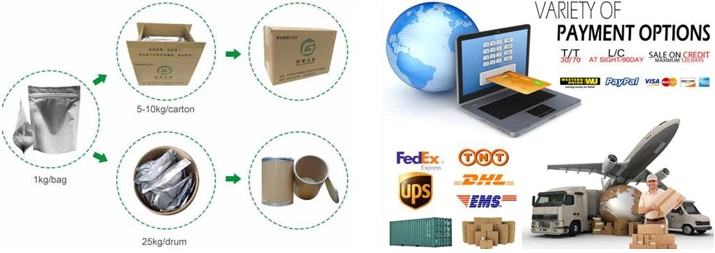
Package & Shipment
Hot Tags: soy isoflavones powder, China soy isoflavones powder manufacturers, suppliers, factory, Natural Beta Carotene Powder, Chicory Inulin Powder, Rice Bran Extract, Garlic Extract Powder, L Arginine Base Powder, Hydroxytyrosol Powder
You Might Also Like