Latest Products

Contact Us
-
6th Floor, 2nd Building, Xijing NO.3, XiJing Industrial Park, DianZi Western Street, Xi'an, Shaanxi, China
-
+86-2988253271


Bulk Betaine Anhydrous
Assay: Min 98% d.s.
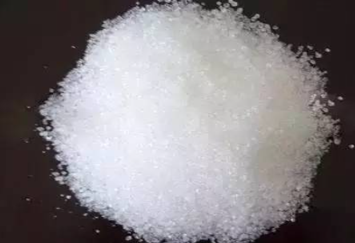
Appearance: White granule
Odor: Odorless or faint characteristic odor
Bulk density: 0.6-0.8g/mL
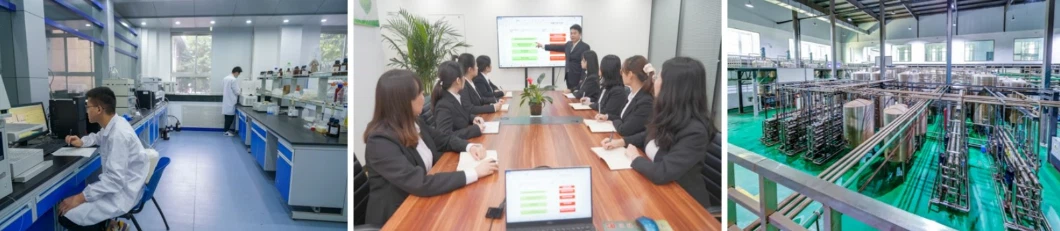
Two Factories & Three production lines
GMP standard workshop & two independent laboratories
FDA Cert.
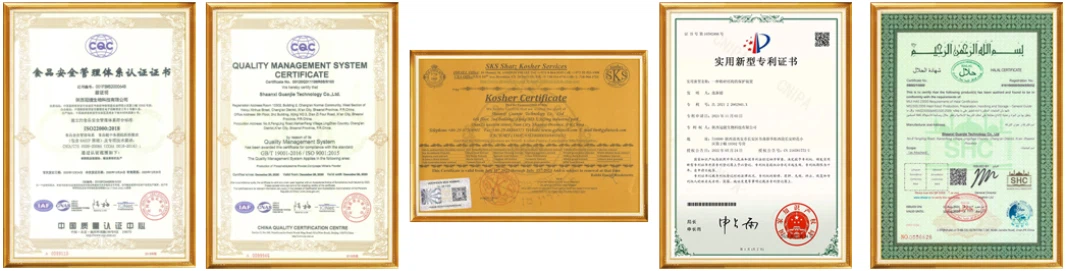
Certifications: Halal,ISO9001,PAHS Free,NON-GMO,KOSHER,SC
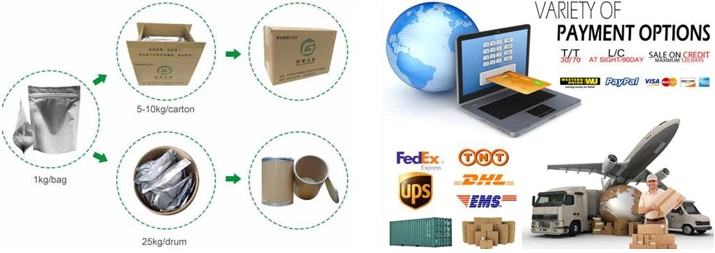
Delivery term: DHL, FEDEX, Air freight,Sea freight
Provide Free Sample
MOQ: 1KG
Not for Private Person Sale
Description
Bulk Betaine Anhydrous Supplier:
Bulk betaine anhydrous powder is an alkaloid, which is a white granule. The chemical name is Trimethylglycine. The chemical structure is similar to that of amino acids. Guanjie Biotech has focused on betaine anhydrous powder production, testing, and trading for 20 years. Our manufacturing process maintains integrity and does not involve excessive processing or the addition of unnecessary additives.
Why Choose Guanjie Biotech?
● Two independent factories and three production lines.
● Professional research team and have own labs
● Provide third-party testing.
● Have strong Collaborators: Northwestern University and Chinese Academy of Sciences research center
COA:
|
Chemical Name: |
Trimethylglycine, glycine betaine |
|
|
Chemical Formula & M.W.: |
C5H11NO2 117.15 |
|
|
CAS: |
107-43-7 |
|
|
Description: |
Free-flowing white granule |
|
|
Solubility: |
160 g/100 ml, 25℃ water |
|
|
Typical Mesh Size: |
100%Through 20 mesh |
|
|
Typical Bulk Density: |
0.6~0.8g/mL |
|
|
Melting point: |
293℃ |
|
|
REFERENCE SPECIFICATION: In-house standard |
||
|
ANALYTICAL PROCEDURE |
SPECIFICATION |
METHOD |
|
Appearance |
White granule |
Visual |
|
*Infrared Spectrum |
Passes Test |
FT-IR |
|
Assay (on a dry basis) |
NLT 98.0 % |
Titration |
|
Water |
NMT 2.0 % |
Drying(105℃,3h) |
|
pH (10% solution) |
5.0-7.0 |
pH meter |
|
Color |
NMT 20. |
FCC |
|
Sulfate |
NMT 0.01% |
Colorimetric method |
|
Residue on ignition |
NMT 0.2% |
Electric furnace(550℃) |
|
Heavy Metals |
NMT 10 ppm |
Colorimetric method |
|
Lead |
NMT 1 ppm |
ICP |
|
*Arsenic |
NMT 1 ppm |
ICP |
|
Cadmium |
NMT 0.2 ppm |
ICP |
|
Mercury |
NMT 0.1 ppm |
ICP |
|
Total Plate Count |
NMT 1000 cfu/g |
Viable plate count |
|
Yeast and Mold |
NMT 100 cfu/g |
Viable plate count |
|
E.coli |
Negative/10g |
USP<62> |
|
*Salmonella |
Negative/25g |
USP<62> |
|
Staphylococcus |
Negative/10g |
USP<62> |
|
Storage: |
Store in the original sealed container in a cool, dry place. |
|
|
Packaging: |
25kg fiber drums with two polyethylene inner bag. |
|
|
Shelf Life: |
2 years if stored properly. |
|
|
Composition: |
100% no coating agent, no carrier |
|
|
Country of Origin: |
China |
|
|
Certifications: |
Kosher, HALAL, ISO 9001, ISO 22000, FSSC 22000 certified. |
|
|
Statement: |
None Allergen/Non-GMO/Non-Irradiated/Non-ETO treated |
|
|
Source: |
Condensation of chloroacetic acid and trimethylamine |
|
Product Introduction:
Bulk betaine anhydrous is commonly found in plants and animals. It is an intermediate product of animal metabolism, which plays a very important role in the metabolism of nutrients. It is also a secondary product of metabolism and a very important osmoregulatory substance. For plants to enhance resistance. For example, salinity and drought resistance are very important.
Product specification
Assay: min 98% d.s.
pH(10% solution in 0.2M KCL): 5.0-7.0
Water: max 2.0%
Residue on ignition: max 0.2%
Solubility
Betaine solubility at 25°C in:
Water 160g/100g
Methanol 55g/100g
Ethanol 8.7g/100g
Metabolic utilization
The main absorption site of bulk betaine anhydrous in animals is the small intestine. Its content in the animal's blood reaches its highest level 1~2 hours after the animal feeds. Betaine that enters the kidneys through body metabolism also undergoes reabsorption and most of it re-enters the body's blood.
There are 2 main direct effects of betaine in animals:
① As an osmotic pressure regulator. It is mainly stored in the cells of the brain, kidneys, liver, intestines and other organs. It protects the cells from damage under high osmotic pressure conditions, thus reducing animal stress;
② As a methyl donor (-CH3), it participates in methionine metabolism and provides methyl for animals.
The process of providing methyl to participate in methionine metabolism is also the main process by which betaine is metabolized and broken down in animals. It is mainly carried out in the mitochondria of the liver cells of animals, and the process is shown in the following figure↓.

Betaine has 3 active methyl groups .
1 of these methyl groups is directly available to homocysteine. It is used to produce methionine (methionine). And methionine can be activated to S-adenosylmethionine, which provides the methyl group for the body's vital activities. Therefore betaine is used to act as a partial substitute for methionine.
The other 2 methyl groups are oxidized. It enters the one-carbon metabolic pool, and through a series of reactions, the effect of providing methyl can eventually be realized indirectly.
After betaine anhydrous bulk has shed 3 methyl groups, it is converted to glycine. It enters into the amino acid pool and participates in the life activities of the body.
Product Features:
Most of the cosmetic grade betaine anhydrous betaine is extracted from molasses of beet by chromatographic separation technology, which is a new type of natural amino acid moisturizer with fast absorption and high activity. Betaine is highly biocompatible. It is extremely soluble in water (at 20℃, 100g of water can dissolve 160g of betaine). At the same time, it has been experimentally proven that betaine is compatible with almost all surfactants, forming a stable and transparent aqueous solution regardless of the concentration used.
The solubilizing properties of betaine bulk anhydrous are also noteworthy. For example, a 50% betaine solution at room temperature dissolves 2% allantoin, four times the solubility of allantoin in pure water. The maximum solubility of salicylic acid in water at room temperature is 0.2%, while a 50% aqueous betaine solution can increase the solubility of salicylic acid to 5%. This is a 25-fold increase. The solubilizing properties of betaine can help some difficult to dissolve in water and not easily precipitate the efficacy of the ingredients dissolved in water.
Betaine can also increase the low-temperature stability of products. For example, in water-in-oil systems, sodium chloride and magnesium sulfate are usually added to improve the cold stability of the product. Experiments have proved that the freezing point of 15% betaine aqueous solution is -22℃, and the freezing point of 50% betaine aqueous solution is -32℃. It can greatly improve the low-temperature stability of the product.
Safety
The following describes the safety of bulk Betaine Anhydrous from multiple perspectives:
1. Toxicological safety
From the perspective of toxicological data, anhydrous betaine is relatively low in toxicity. The oral LD50 of male rats is 11.2g/kg, and the oral LD50 of female rats is 11.15g/kg. Under normal use and intake, it is generally difficult to reach a toxic dose. However, large-scale intake may still cause adverse physiological reactions.
2. Safety in different fields
- Food field:
Food-grade anhydrous betaine is a safe food additive that can be used in a variety of foods such as candy, chewing gum, beverages, and baked goods. Food and drug administration agencies in various countries have studied and reviewed it and determined the safe dosage.
- Medical field:
Anhydrous betaine is a nutrient that has the effects of protecting the kidneys and resisting fatty liver. It is harmless to most people when used normally, but special groups such as pregnant women, lactating women, and those with impaired liver and kidney function,
- Cosmetic field:
Cosmetic-grade anhydrous betaine has the effects of moisturizing, anti-oxidation, and calming the skin. It is highly safe. For most people, there is no problem with using cosmetics containing anhydrous betaine. However, a small number of people who are allergic to it may experience allergic symptoms such as itching and redness after using it.
- Feed field:
Adding anhydrous betaine to feed has the function of protecting the vitamins in the feed. It can make the feed resistant to high temperatures and extend the storage period. This can improve the utilization rate of feed and reduce costs. It is beneficial to the growth and health of animals and will not cause obvious harm to the breeding environment.
3. Storage
Bulk Betaine Anhydrous is easy to absorb moisture and should be stored in a cool, dry and dark environment. High-temperature baking is prohibited to avoid danger.
Usage
As a food supplement, Betaine is usually taken in doses of 500-1,500 mg daily with food. The rapeutic dosages recommended by doctors are usually around 1.5 - 6.0 grams daily in two or three divided doses. For specific conditions usually the following doses are advised under the supervision of a doctor:
For the treatment of alcohol-induced fatty liver, the recommended amount for Betaine citrate is 1 to 2 grams three times daily. For cardiovascular disease, take 1500 - 3000 mg Betaine per day.
For treatment of homocystinuria, the dose should be 6 grams Betaine per day.
As humectant of food :0.3-0.5%,or 50% solution sprayed on the surface.
Applications
Betaine is an important human nutrient, distributed widely in animals, plants, and microorganisms. It is rapidly absorbed and utilized as an osmolyte and source of methyl groups and thereby helps to maintain liver, heart, and kidney health. The growing body of evidence shows that betaine is an important nutrient for the prevention of chronic disease.
Betaine is used in many applications like: beverages, chocolate spreads, cereals, nutritional bars, sports bars, snack products and vitamin tablets, capsule filling, etc.
Regulatory information
● USA:
DSHEA for nutritional supplements FEMA GRAS as a flavor enhancer in all foods (up to 0.5%) and labeled as betaine or natural flavor. GRAS substance under 21 CFR 170.30 for use as a humectant and flavor enhancer/modifier in selected foods and is labeled as betaine.
●Japan:
Approved as a food additive.
●Korea:
Approved as a natural food.
Factory&Team:
Certification
Shelf life
Two year from date of manufacture when stored in original packaging.
Storage conditions
Bulk betaine anhydrous stores in the original sealed container in a cool and dry place away from direct sunlight. It stores below 40℃(104℉).
Packaging
25 kg fiber drums with two polyethylene inner bag or as per your request.
Hot Tags: bulk betaine anhydrous, China bulk betaine anhydrous manufacturers, suppliers, factory, D-Chiro Inositol Powder, Alpha-GPC Powder, L-carnitine Fumarate Powder
You Might Also Like