

Latest Products

Contact Us
-
6th Floor, 2nd Building, Xijing NO.3, XiJing Industrial Park, DianZi Western Street, Xi'an, Shaanxi, China
-
+86-2988253271

NADH Powder
Other Name:Nicotinamide Adenine Dinucleotide
Appearance: White to yellowish powder
Solubility: Soluble in water
Purity: ≥95.0%
Test Method:HPLC
Assay:≥95.0%
Certifications: Hala,ISO9001,PAHS Free, NON-GMO,KOSHER,SC
Payment term:L/C,D/A,D/P,T/TDelivery term: DHL,Sea freight,FEDEX
MOQ:25KGS
Package:25kg/Carton;5kg/Bag inside
Shelf time: Two years
Description
NADH Powder Supplier:
Guanjie Biotech is a NADH powder supplier. We focus on providing a high-purity coenzyme ingredient used in nutrition, energy-support supplements, and cellular-health formulations. A professional NADH bulk powder supplier typically offers NADH bulk powder as a white to yellowish powder with a purity of not less than 95.0 percent, verified by HPLC. The material is soluble in water, allowing convenient formulation into capsules, tablets, beverages, or functional products. We support bulk NADH orders, customized packaging, and regulatory compliance. Welcome to enquire with us at info@gybiotech.com.

COA:
|
Test Items |
Specifications |
Test Method |
Results |
|
Appearance |
White to yellowish powder |
Visual inspection |
Yellowish powder |
|
Solubility |
Soluble in water |
Visual inspection |
Soluble in water |
|
Purity |
≥95.0% |
HPLC |
98.81% |
|
Assay (dry basis) |
≥90.0% |
HPLC |
98.10% |
|
Water content |
≤5.0% |
Karl Fischer |
0.70% |
|
Pb |
≤0.5 ppm |
GB 5009.12 |
Conform |
|
As |
≤0.5 ppm |
GB 5009.11 |
Conform |
|
Hg |
≤0.5 ppm |
GB 5009.17 |
Conform |
|
Cd |
≤0.5 ppm |
GB 5009.15 |
Conform |
|
Total microbial count |
<300 CFU/g |
GB 4789.2 |
Conform |
|
E.coli |
Not Detected |
GB 4789.38 |
N.D. |
|
Yeast and mold |
<10 CFU/g |
GB 4789.15 |
Conform |
|
Salmonella |
Not Detected |
GB 4789.4 |
N.D. |
|
Staphylococcus aureus |
Not Detected |
GB 4789.10 |
N.D. |
|
Conclusion |
Compliant with all the requested specifications |
||
|
Storage Conditions: |
Keep sealed and dry, for long-term storage at -15°C. |
||
|
Transport Conditions: |
Keep sealed, dry, and away from light for transportation under room temperature. |
||
How Is NADH Produced?
Pure NADH powder is typically produced through an enzymatic manufacturing process. The objective is to convert β-NAD (oxidized form) into β-NADH in a controlled, scalable, and cost-efficient way while maintaining high purity for commercial use. Guanjie Biotech is a β-NADH powder supplier that follows standardized quality requirements for bulk materials.
1. Raw material preparation
NADH powder Production begins by preparing a reaction mixture with the following inputs:
– Water as the reaction medium.
– Enzymes that catalyze the reduction of β-NAD. These enzymes are often dehydrogenases capable of transferring hydrogen.
– β-Nicotinamide Adenine Dinucleotide (β-NAD), the substrate that will be reduced.
– Ammonium formate, which donates hydrogen and enables the reduction reaction.
These ingredients are added under controlled temperature and pH. pH is usually maintained with sodium hydroxide.
2. Enzyme-catalyzed conversion
This stage is the core biochemical event. The enzyme mediates electron and proton transfer from the hydrogen donor (often ammonium formate) to β-NAD. When reduced, β-NAD becomes β-NADH. In simple terms, enzymatic catalysis accelerates a redox transformation that would otherwise occur too slowly under normal conditions.
Process engineers monitor reaction rate, color change, pH, and potential formation of impurities. NADH has a characteristic optical absorption profile. Real-time monitoring allows the operator to determine when conversion is complete without excessive exposure that could oxidize the product. Enzymatic biotechnology is preferred because it does not introduce harsh chemicals, supports greener chemistry, and yields products with high bioactivity.

3. Enzyme removal
After conversion, enzymes must be removed to avoid contamination. Sodium hydroxide and filtration aids such as kieselguhr (diatomaceous earth) help immobilize and remove protein residues. Filtration produces a clarified solution containing β-NADH.
4. Concentration
The liquid still contains water, salts, and processing by-products. The filtrate is concentrated under reduced pressure or mild heat. Lowering water volume increases β-NADH concentration and prepares for purification.
5. Salt removal
Residual ammonium ions, buffer salts, and chemical by-products must be removed. High salt content reduces crystallization performance and introduces storage instability. Salt removal may be achieved through ion-exchange resins, selective precipitation, or membrane-separation technology. Desalting also enhances final color and reduces oxidation risk. Chemically, β-NADH powder improves the crystallization thermodynamics, enabling larger and cleaner crystal lattices in the later step.
6. Secondary concentration
After desalting, the remaining solution is concentrated again. The target is to reach supersaturation, where the solution contains more dissolved β-NADH than it can hold in equilibrium. Supersaturation is essential for successful crystallization. Technicians monitor pH because oxidation converts β-NADH back to β-NAD. Nitrogen blanketing or low-oxygen environments are employed in many factories.
7. Crystallization using ethanol
Crystallization is a critical purification step. Ethanol is introduced into the concentrated solution because NADH powder has reduced solubility in hydro-alcoholic mixtures. When ethanol content rises, β-NADH begins to nucleate and form crystals. Controlled cooling enhances this effect and produces uniform particle morphology.
Crystal quality affects flowability, color stability, and downstream drying behavior. Therefore, crystallization involves controlled temperature reduction, controlled ethanol dosing, and controlled agitation to prevent amorphous precipitation.
8. Centrifugation
Once crystallization reaches maturity, a centrifuge is used to separate the solid β-NADH crystals from the mother liquor. Centrifugation provides high throughput, short processing time, and minimal oxidation exposure compared to gravity filtration. The mother liquor often contains residual β-NADH and can be recycled upstream, improving production yield and economic efficiency.
9. Drying
The wet crystals are dried to remove bound moisture. Because β-NADH powder is sensitive to oxidation and UV light, protective drying methods are used. These include vacuum drying, circulation under nitrogen, or low-temperature drying technology. Excessive heat would damage the redox functionality. Moisture reduction ensures chemical stability and prolongs storage life.
Drying endpoints are determined by moisture testing, because remaining water can accelerate hydrolysis and color degradation.
10. Packaging
Finally, NADH powder is packaged in light-protected, oxygen-restricted containers. Aluminum foil bags or nitrogen-flushed bottles are common. Proper packaging prevents conversion back to β-NAD and extends storage life.
The enzymatic route is favored because it avoids harsh chemicals, maintains bioactivity, and supports high-purity output required for research reagents, coenzyme supplements, pharmaceutical ingredients, and biochemical kits. The market requires strong quality control for purity, moisture, microbial load, and physical stability.
Guanjie Biotech is a NADH powder supplier offering bulk-grade material with a focus on purity, consistency, and competitive pricing for commercial buyers.
What Is the NADH Chemical Structure?

• Core Molecular Framework
NADH powder is the reduced form of nicotinamide adenine dinucleotide, and its chemical structure is built as a dinucleotide. It contains two nucleotides joined through their phosphate groups. One nucleotide carries an adenine base, while the other carries a nicotinamide base. Each nucleotide includes a ribose sugar, and a pyrophosphate bridge connects the two ribose units. This multi-component framework makes NADH a large, highly organized coenzyme rather than a simple small molecule.

• Nicotinamide Ring and Redox Function
The nicotinamide portion is a substituted pyridine ring that performs the key redox role. In its oxidized form (NAD⁺), the ring is electron-deficient. When it accepts a hydride ion (H⁻), it becomes NADH. This reaction adds two electrons and one proton to the ring, altering its electronic structure and enabling it to donate these electrons in subsequent metabolic reactions. The reduced nicotinamide ring is what gives NADH powder its ability to participate in energy metabolism, particularly in pathways such as glycolysis, the TCA cycle, and mitochondrial electron transport.

• Adenine Nucleotide and Structural Stability
The adenine side of NADH consists of a purine base linked to a ribose sugar and a phosphate group. Although adenine does not handle redox reactions, it provides a structural anchor that helps enzymes recognize and bind NADH. Enzymes involved in dehydrogenation reactions typically have binding pockets that interact with the adenine ribose and the pyrophosphate bridge. This region of the molecule ensures proper orientation of the nicotinamide ring for efficient electron transfer.

• Three-Dimensional Conformation
NADH powder has a flexible three-dimensional conformation, allowing it to adjust its shape when binding different enzymes. The molecule can bend around the pyrophosphate linkage, enabling the nicotinamide ring to reach catalytic sites while the adenine portion remains docked in the binding region. This structural adaptability supports NADH's function as a mobile electron carrier. By shuttling electrons across metabolic pathways, NADH helps generate ATP and maintain cellular energy balance.
How to NADH powder supplier?
A company that supplies NADH powder needs to manage three key competencies: sourcing, quality control, and customer-side technical support. NADH powder is a reduced and stabilized form of NMN, designed to deliver higher biological activity and better NAD+-boosting efficiency than standard NMN. Because of this, the supplier must treat it as a high-value, high-sensitivity nutraceutical ingredient.
Secure Reliable Production
First, a reduced nicotinamide mononucleotide supplier must secure reliable production. NADH can be manufactured through chemical synthesis or biological reduction processes. Both approaches require controlled raw materials, validated reaction conditions, and purification systems that remove residual solvents and impurities. The supplier normally conducts production in a GMP-aligned facility to maintain hygiene, traceability, and documentation. Stabilization technology is important because NADH is more oxygen-sensitive than NMN. NADH powder suppliers often use low-oxygen packaging, nitrogen flushing, and cold-chain warehousing to preserve the reduced state of the molecule.
Analytical Quality
Second, a NADH bulk powder supplier must demonstrate analytical quality. Reputable Nicotinamide Adenine Dinucleotide powder is verified through HPLC or UPLC to confirm purity, typically targeting 98 percent or higher. Additional tests may include heavy metals, microbial load, residual solvents, and identity verification using MS or NMR. Certificates of Analysis must be issued for every batch, and compliance with HALAL, KOSHER, and ISO systems improves the credibility of the supplier for global buyers.
Support Formulation Customers
Third, a bulk NADH powder supplier must support downstream formulation customers. Nutraceutical brands, capsule manufacturers, and functional beverage companies expect solubility guidance, stability data, recommended dosage ranges, regulatory notes, and packaging advice. Because NADH is sensitive to oxidation, the supplier must advise customers on excipient compatibility, pH exposure, and storage temperatures.
Supply Reliability
Finally, supply reliability is essential. A competitive NADH powder supplier maintains inventory, offers kilogram-level bulk shipments, supports export documentation, and provides competitive pricing. The NADH bulk supplier's business value is not only delivering powder but ensuring performance from production through end-use applications.
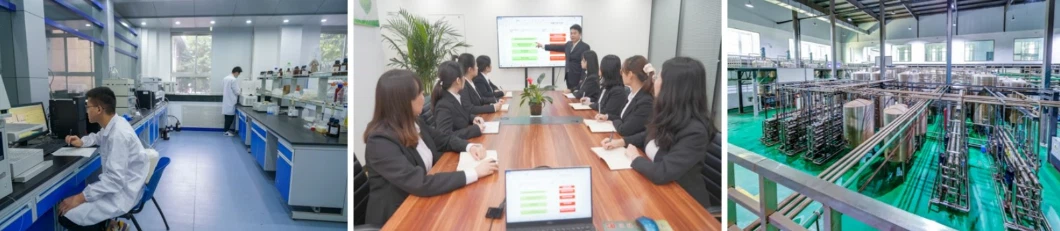
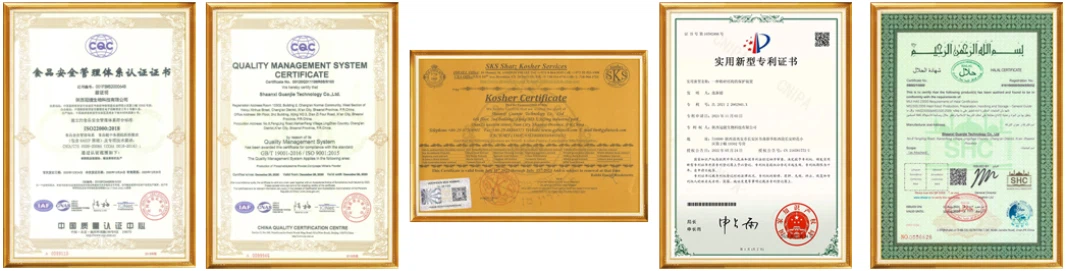
Company Advantages:
Certification
Package & Shipment

Hot Tags: nadh powder, China nadh powder manufacturers, suppliers, factory, Pure Phosphatidylserine Powder, Pure bulk Indole-3-Carbinol Powder, Water Soluble bulk Resveratrol Powder, bulk Resveratrol Powder, Sunflower Lecithin Powder, Raw Material Indole 3 Carbinol
You Might Also Like


