


Bulk berberine HCL powder and turmeric bulk powder aren't the same. They are the most popular natural compounds used in traditional and modern medicine for their powerful health-promoting properties. Berberine is an alkaloid compound extracted from plants like barberry, primarily known for regulating blood sugar and metabolism. Turmeric bulk powder is a spice whose active component, curcumin, is a potent anti-inflammatory and antioxidant. While both are powerful supplements. Let's look at the details of the differences.
Are Berberine and Turmeric the Same?
What Are The Sources of Berberine and Turmeric?

Berberine
Bulk berberine HCL powder is a bioactive alkaloid extracted mainly from plants of the Berberis genus, such as Berberis aristata (Indian barberry), Berberis vulgaris (barberry), Coptis chinensis (goldthread), and Hydrastis canadensis (goldenseal). It has been used in Traditional Chinese Medicine (TCM) and Ayurveda for thousands of years to treat infections, gastrointestinal issues, and metabolic disorders.
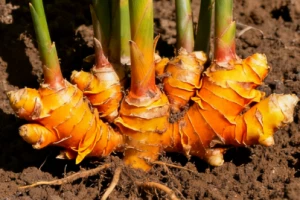
Turmeric
Turmeric is a spice derived from the rhizomes of Curcuma longa, a plant in the ginger family (Zingiberaceae). The bright yellow-orange pigment of turmeric comes mainly from its principal active compound-curcumin, a polyphenolic compound. Turmeric bulk powder has been a staple of Ayurvedic medicine and culinary traditions for centuries, especially in India and Southeast Asia.
Thus, while both berberine and turmeric come from plants, their botanical sources and natural roles differ significantly.
Chemical Structure and Composition
The chemical difference between berberine and turmeric is profound.
Bulk berberine HCL powder is an isoquinoline alkaloid with the molecular formula C₂₀H₁₈NO₄⁺. It has a bright yellow color and is often found in salt forms such as berberine hydrochloride or berberine sulfate. Its chemical structure contributes to its ability to interact with enzymes and cellular signaling molecules in metabolic pathways.
Turmeric bulk powder contains curcuminoids, with curcumin (C₂₁H₂₀O₆) being the most studied. Curcumin's structure features aromatic rings with hydroxyl and methoxy groups connected by conjugated double bonds, allowing it to neutralize free radicals and modulate inflammatory pathways.
This structural difference leads to distinct pharmacological profiles. Berberine functions mainly by influencing gene expression, enzyme activity, and gut microbiota, whereas curcumin acts as an antioxidant and anti-inflammatory compound through modulating signaling molecules like NF-κB and cytokines.
What Are The Health Benefits of Berberine and Turmeric?
|
Health Aspect |
Berberine |
Turmeric (Curcumin) |
|
Blood Sugar Regulation |
Enhances insulin sensitivity, reduces hepatic glucose production |
Reduces insulin resistance, protects pancreatic β-cells |
|
Cholesterol Management |
Lowers LDL and triglycerides, raises HDL |
Reduces oxidative modification of LDL |
|
Anti-inflammatory Effects |
Suppresses cytokine production via AMPK/NF-κB |
Inhibits COX-2, TNF-α, and prostaglandins |
|
Gut Health |
Balances microbiota, reduces intestinal infections |
Soothes gut inflammation, protects mucosa |
|
Antioxidant Activity |
Mild antioxidant effect via AMPK activation |
Strong direct antioxidant scavenging |
|
Weight Management |
Improves lipid metabolism and mitochondrial function |
Aids fat oxidation, reduces adipocyte differentiation |
|
Anti-cancer Potential |
Induces apoptosis, inhibits tumor cell proliferation |
Modulates multiple cancer-related pathways |
Both substances offer overlapping therapeutic benefits, but through distinct pathways and bioactive mechanisms. Combining them may enhance overall efficacy for metabolic and inflammatory disorders.
What Are The Applications of Berberine and Turmeric?
The transition of berberine and turmeric from traditional remedies to modern industrial ingredients highlights their validated efficacy. Their applications span multiple sectors, driven by growing consumer demand for evidence-based natural products.

• Nutraceuticals and Dietary Supplements
This is the primary market for both extracts. Bulk berberine HCL powder is predominantly formulated into capsules and tablets targeting metabolic health, including blood sugar balance, weight management, and cholesterol support. Turmeric (curcumin) is a leading ingredient in supplements designed for joint comfort, systemic inflammation reduction, and antioxidant protection. Advanced, high-bioavailability forms of both are key differentiators in this competitive space.
• Functional Foods and Beverages
Both ingredients are increasingly incorporated into everyday consumables. Turmeric bulk powder is a staple in golden milk lattes, health shots, teas, and even fortified snack foods, leveraging its anti-inflammatory appeal and vibrant color. Berberine, despite its bitter taste, is being carefully formulated into specialized functional beverages and powders aimed at metabolic support, requiring advanced masking technologies for palatability.


• Cosmetic and Skincare Formulations
The anti-inflammatory and antioxidant properties of both botanicals are highly valued in cosmetics. Turmeric extracts are widely used for their skin-brightening, anti-aging, and soothing effects in serums, masks, and creams. Bulk berberine HCL powder is gaining attention in topical applications for its antimicrobial properties, showing promise in formulations for acne control and promoting a clear complexion.
• Pharmaceutical and Clinical Research
Beyond supplements, both substances are subjects of serious pharmaceutical investigation. Berberine is studied as a complementary therapy for Type 2 Diabetes and PCOS, while Turmeric bulk powder is researched for its potential in managing arthritis and other chronic inflammatory conditions. Their role in supporting conventional medicine continues to expand with clinical evidence.

What Is The Absorption of Berberine and Turmeric?
One major challenge for both bulk berberine HCL powder and curcumin is low oral bioavailability.
Berberine suffers from poor intestinal absorption and rapid metabolism in the liver. To enhance its bioavailability, techniques such as microencapsulation, nanoparticle formulation, and co-administration with bioenhancers (e.g., piperine) have been developed.
Turmeric bulk powder is also poorly absorbed due to low water solubility and rapid metabolism. However, bioavailability can be significantly improved by combining it with piperine, liposomal delivery, or phospholipid complexes.
Guanjie Biotech is a bulk berberine HCL powder and turmeric supplier, provides raw materials suitable for advanced formulations, ensuring stable potency and improved absorption when used in nutraceutical products.
What Are The Safety of Berberine and Turmeric?
Both compounds are generally considered safe when taken at recommended doses.
Bulk berberine HCL powder may cause mild gastrointestinal side effects, including constipation or stomach cramps. It can also interact with medications such as metformin or cyclosporine by influencing drug metabolism pathways. Pregnant and breastfeeding women should consult healthcare professionals before use.
Turmeric bulk powder is safe in dietary amounts but may cause nausea or diarrhea at high doses. It may also interfere with anticoagulant medications or gallbladder disorders.
Overall, both ingredients are well-tolerated and safe for long-term use under professional guidance.
Why They Are Not the Same?
Despite some overlapping benefits, such as anti-inflammatory and antioxidant properties, bulk berberine HCL powder and Turmeric bulk powder (specifically its primary active compound, curcumin) are fundamentally distinct substances. The following table consolidates their core differences in origin, chemistry, mechanism, application, and safety.
|
Feature |
Berberine |
Turmeric (Curcumin) |
|
Plant Source |
Berberis species |
Curcuma longa |
|
Chemical Type |
Berberine is an alkaloid |
A polyphenol (diarylheptanoid). Curcumin is a polyphenol |
|
Molecular Targets |
Berberine acts on AMPK and gut microbiota |
Curcumin modulates NF-κB and oxidative stress. |
|
Primary Applications |
Berberine is mainly used for metabolic diseases |
Turmeric is widely used for inflammation and antioxidant support. |
|
Physical Appearance |
A bright yellow, crystalline powder. |
A deep orange-yellow powder in its whole spice form. Curcumin extract is a yellow to orange-red powder. |
|
Solubility |
Poorly soluble in water; often formulated as a hydrochloride salt for better absorption. |
Fat-soluble; very poorly soluble in water. |
|
Bioavailability & Absorption |
Low oral bioavailability due to poor intestinal absorption, efflux by P-glycoprotein, and rapid liver metabolism. |
Very low bioavailability due to poor absorption, rapid metabolism, and systemic elimination. |
|
Safety & Side Effects |
Safe at recommended doses. |
Safe at recommended doses |
Conclusion
Berberine and Turmeric bulk powder are not the same, though they share complementary health-promoting roles. Berberine acts primarily through AMPK activation and gut microbiota modulation, offering potent metabolic and anti-diabetic effects. Turmeric, led by its active component curcumin, exerts strong anti-inflammatory and antioxidant properties, protecting against chronic diseases and aging-related damage.
When combined, these two natural compounds can offer synergistic protection for metabolic health, inflammation control, and oxidative stress reduction. From a commercial viewpoint, Guanjie Biotech is a bulk China berberine HCL powder manufacturer and turmeric bulk powder supplier. We provide high-quality raw materials that meet international standards for purity and potency, enabling product developers to formulate advanced nutraceuticals and functional foods for global markets. Welcome to enquire with us at info@gybiotech.com.
References
[1] Kong, W. J., Wei, J., Abidi, P., Lin, M., Inaba, S., Li, Z., ... & Jiang, J. D. (2004). Berberine is a novel cholesterol-lowering drug working through a unique mechanism distinct from statins. Nature Medicine, 10(12), 1344–1351.
[2] Zhou, L., Yang, Y., Wang, X., Liu, S., & Shang, W. (2020). The beneficial effects of berberine on metabolic diseases: a review. Phytotherapy Research, 34(2), 367–385.
[3] Hewlings, S. J., & Kalman, D. S. (2017). Curcumin: A review of its effects on human health. Foods, 6(10), 92.
Gupta, S. C., Patchva, S., Koh, W., & Aggarwal, B. B. (2012). Discovery of curcumin, a component of golden spice, and its miraculous biological activities. Clinical and Experimental Pharmacology and Physiology, 39(3), 283–299.
[4] Panahi, Y., Hosseini, M. S., Khalili, N., Naimi, E., Simental-Mendía, L. E., & Sahebkar, A. (2016). Effects of curcumin on serum cytokine concentrations in subjects with metabolic syndrome: A post hoc analysis of a randomized controlled trial. Biomedicine & Pharmacotherapy, 82, 578–582.
[5] Tilg, H., & Moschen, A. R. (2014). Microbiota and diabetes: an evolving relationship. Gut, 63(9), 1513–1521.
[6] Aggarwal, B. B., & Harikumar, K. B. (2009). Potential therapeutic effects of curcumin, the anti-inflammatory agent, against neurodegenerative, cardiovascular, pulmonary, metabolic, autoimmune, and neoplastic diseases. International Journal of Biochemistry & Cell Biology, 41(1), 40–59.
[7] Cicero, A. F., & Baggioni, A. (2016). Berberine and its role in chronic disease. Advances in Experimental Medicine and Biology, 928, 27–45.


