Copper peptide (GHK-Cu) is a water-soluble ingredient suitable for various water-based cosmetic systems. It is virtually insoluble in non-polar solvents such as mineral oil and vegetable oils, exhibits extremely poor solubility in high-concentration ethanol systems, and cannot be added directly to oil-based formulations. So what is the GHK-Cu solubility for cosmetic formulations?
Basic Physicochemical Properties and Molecular Structure of GHK-Cu
Copper Tripeptide-1 (GHK-Cu) is a copper-peptide complex formed by the coordination of Cu²⁺ with the tripeptide GHK, which consists of glycine, histidine, and lysine. Its molecular formula is C₁₄H₂₄N₆O₄Cu, with a relative molecular mass of approximately 403.93 g/mol. These GHK-Cu properties and its defined GHK-Cu molecular structure make it a widely studied peptide ingredient for cosmetic formulations and research applications.
Complexation Structure and Electronic Configuration
In the GHK-Cu peptide complex, Cu²⁺ coordinates with donor atoms on the tripeptide chain, including nitrogen atoms from the amino and imidazole groups and oxygen-containing sites. This coordination contributes to the stability of the complex under suitable formulation conditions. The chelation behavior of GHK-Cu is an important consideration when evaluating GHK-Cu raw material for cosmetic formulation development.
Physical Form and Optical Properties
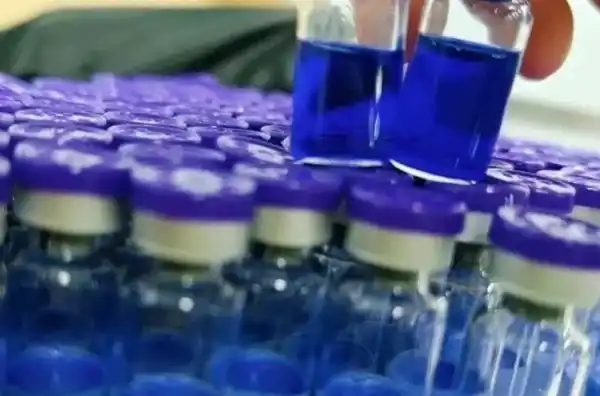
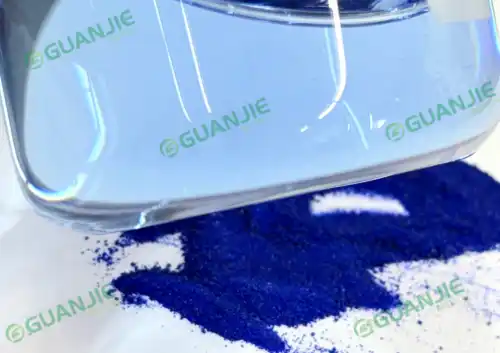
High-purity GHK-Cu powder typically appears blue to blue-green and is hygroscopic. Its aqueous solutions exhibit a characteristic blue color. GHK-Cu also has measurable UV-Vis absorption characteristics, which can support analytical identification and quality-control testing. For manufacturers sourcing cosmetic-grade GHK-Cu, parameters such as appearance, purity, moisture content, and analytical specifications should be evaluated alongside application requirements.
Polarity, Water Solubility, and Dissolution Behavior of GHK-Cu Copper Peptide
Chemical Basis of GHK-Cu Polarity and Water Solubility
GHK-Cu copper peptide is a highly polar compound with good water solubility due to its molecular structure. Its ionizable functional groups contribute to its interaction with water. The ε-amino group of lysine can become protonated in aqueous solution, while the peptide backbone contains multiple amide bonds and a terminal carboxyl group. These groups support hydrogen bonding and dipole interactions with water molecules, contributing to the GHK-Cu water solubility observed in aqueous formulations. GHK-Cu is also compatible with polar polyol solvents but has very limited solubility in non-polar solvents and oils.
GHK-Cu Dissolution in Polymer-Based Colloid Systems
In cosmetic formulations containing water-soluble polymers such as xanthan gum, sodium hyaluronate, carbomer, or sodium polyacryloyldimethyl taurate, the dissolution and dispersion of GHK-Cu powder depend on charge interactions, polymer concentration, and mixing conditions. Electrostatic interactions between charged GHK-Cu species and anionic polymers may cause complexes, turbidity, flocculation, or precipitation under certain formulation conditions.
For GHK-Cu formulation development, it is generally preferable to dissolve the copper peptide separately in deionized or demineralized water before incorporating it into a pre-hydrated polymer phase. This approach promotes more uniform dispersion and reduces localized high concentrations that may increase the risk of insoluble complexes. For manufacturers developing GHK-Cu for skincare, controlling pH, polymer type, concentration, and addition sequence is important for maintaining formulation stability and appearance.
Effect of pH on the Structural Stability and Solubility of GHK-Cu
pH is an important factor affecting the stability and solubility of GHK-Cu (copper tripeptide) in aqueous formulations. Changes in pH can alter the coordination environment between the peptide ligand and Cu²⁺, potentially affecting the stability of the GHK-Cu peptide complex.
Acidic Conditions: pH < 4.5
Under strongly acidic conditions, protonation of functional groups within the peptide can reduce their ability to coordinate with Cu²⁺. Hydrogen ions may compete with Cu²⁺ for coordination sites, increasing the possibility of partial complex dissociation. This can affect the characteristic appearance and chemical stability of the formulation. Therefore, strongly acidic systems require careful evaluation when formulating products containing GHK-Cu powder.
Neutral to Mildly Acidic Conditions: pH 5.5–7.5
A mildly acidic to near-neutral pH is generally more suitable for maintaining the coordination structure of copper tripeptide GHK-Cu in aqueous formulations. Within this range, excessive protonation is reduced, while highly alkaline reactions are avoided. Formulators should nevertheless evaluate GHK-Cu solubility, appearance, and assay under actual formulation conditions because stability can also depend on temperature, ionic strength, concentration, and other ingredients.
Alkaline Conditions: pH > 8.0
At elevated pH, hydroxide ions can interact with Cu²⁺ and promote the formation of poorly soluble copper hydroxide species. This may disturb the copper-peptide coordination system and lead to precipitation, color changes, or reduced formulation stability. For this reason, GHK-Cu pH stability should be assessed during product development, especially in formulations exposed to alkaline conditions.
Guidelines on Compatibility and Ratios for Solvent and Co-solvent Systems
To evaluate the solubility and physical compatibility of GHK-Cu in phase systems commonly found in cosmetics, the table below lists the polarity parameters and compatibility characteristics of common solvent systems.
|
Solvent/Polycol type |
CAS No. |
Maximum solubility at 25°C (g/100g) |
Compatibility Rating |
Formulation Recommendations and Limitations |
|
Water |
7732-18-5 |
> 50 |
Excellent |
Preferred primary solvent. Requires high-purity water with conductivity < 2.0 μS/cm to prevent ionic impurities from compromising peptide stability. |
|
Glycerol |
56-81-5 |
≈ 10 |
Good |
Recommended usage: 2%–10%. Concentrations exceeding 10% result in excessive system viscosity, significantly slowing the tripeptide's dissolution rate and potentially affecting skin feel. |
|
1,3-Propanediol |
504-63-2 |
≈ 8.5 |
Good |
Recommended ratio: < 15%. Offers excellent penetration-enhancing properties; an ideal co-solvent for boosting efficacy in water-based formulations. |
|
1,3-Butylene Glycol |
107-88-0 |
≈ 7.0 |
Good |
A common moisturizing solvent; dissolution rate is slightly lower than that of glycerin. Suitable as a secondary humectant; usage levels can follow the guidelines for glycerin. |
|
Ethanol, 95% |
64-17-5 |
< 0.1 |
Poor/Very Low |
Strict usage limits apply. Ethanol concentrations > 10% in the system can cause the tripeptide to precipitate, leading to loss of activity or a cloudy appearance. |
|
PEG-400 |
25322-68-3 |
≈ 3.0 |
Moderate |
Use only as a co-solvent; not recommended as a primary solvent. Suggested usage: < 5%. Excessive concentrations may compromise the overall compatibility of the system. |
|
Isopentyldiol) |
2568-33-4 |
≈ 5.5 |
Good |
Good compatibility; improves skin feel after application. Suitable for combination formulas aimed at enhancing product texture. |
Mixed-Solvent Compatibility of GHK-Cu
In polyol-water systems, GHK-Cu powder can dissolve effectively at typical concentrations of 0.05%–0.5% when water exceeds 60%. However, when short-chain alcohols such as ethanol or isopropanol exceed 15%, reduced polarity may disrupt GHK-Cu solvation, increasing the risk of crystallization and precipitation. Therefore, formulators should evaluate GHK-Cu solubility, solvent ratios, and GHK-Cu stability when developing cosmetic formulations.
Analysis of Formulation Incompatibilities and Compatibility
Due to its unique ionic structure and metal-ion core, copper peptide (GHK-Cu) is subject to strict formulation constraints. The table below summarizes the compatibility of common formulation ingredients with GHK-Cu.
Formulation Incompatibilities and Compatibilities for Copper Peptide (GHK-Cu)
|
Raw Material Categories |
Representative ingredients |
Compatibility |
Reaction Mechanism / Cause of Incompatibility |
Solutions / Formulation Alternatives |
|
Strong chelating agents |
EDTA-2Na, EDTA-4Na |
Severe contraindication |
EDTA's chelating affinity for Cu²⁺ is significantly higher than that of GHK, causing GHK dissociation, the release of free copper, and the inactivation of the copper peptide. |
Avoid using EDTA-based ingredients; switch to phytic acid, sodium gluconate, or sodium citrate (requires strict pH control). |
|
Reducing antioxidants |
Ascorbic acid (Vitamin C), isoascorbic acid |
Severe contraindication |
A redox reaction occurs between Cu²⁺ and Vitamin C (VC), generating Cu⁺; this causes rapid discoloration of the formula and the formation of a brownish precipitate. |
Avoid using them together in the same formula; if combination is necessary, switch to relatively stable Vitamin C derivatives (e.g., AA2G; requires pH verification). |
|
Strongly acidic raw materials |
Salicylic acid, alpha-hydroxy acids (AHA), azelaic acid |
Contraindication |
Low pH (< 4.0) leads to protonation of the imidazole ring, resulting in the release of Cu²⁺. |
Adjust the system pH to 5.5–6.0, or apply the ingredients in separate steps. |
|
Anionic polymers |
Strongly anionic carbomers, xanthan gum (high concentration) |
Incompatible |
Electrostatic attraction leads to the formation of an insoluble complex, producing a white or pale blue flocculent precipitate. |
Switch to non-ionic thickeners (e.g., Hydroxyethylcellulose/HEC) or salt-tolerant polymers (e.g., Ammonium Acryloyldimethyltaurate/VP Copolymer). |
|
Reducing sugars |
Glucose, fructose |
Potential risk |
Prolonged storage may trigger the Maillard reaction, causing discoloration. |
Avoid heating at high temperatures and control storage temperatures. |
|
Non-ionic surfactants |
Tween-20, PEG-40 hydrogenated castor oil |
Good |
No charge interference; micellar solubilization does not disrupt the chelated structure. |
Can be used normally; it is recommended to dissolve the ingredient before adding it to the formulation. |
Mechanisms of GHK-Cu Crystallization and Precipitation: Causes and Preventive Measures
Understanding GHK-Cu stability, solubility, and formulation compatibility is essential for developing stable cosmetic and personal care products. During long-term storage, GHK-Cu peptide may experience precipitation or crystallization under unfavorable formulation conditions. Three potential physicochemical mechanisms should be considered.
Salting-Out Effect and Charge Neutralization
High concentrations of electrolytes, such as sodium chloride or magnesium sulfate, or certain anionic surfactants can alter the ionic environment of a GHK-Cu formulation. These components compete for hydration water and affect the electrical double layer surrounding charged molecules, potentially reducing GHK-Cu solubility. When the concentration exceeds the system's solubility limit, precipitation or crystallization may occur.
To improve GHK-Cu solubility, formulators should control the overall ionic strength, avoid unnecessarily high concentrations of inorganic salts, and consider nonionic or zwitterionic surfactants where appropriate.
Competitive Coordination and Chemical Precipitation
Another potential mechanism is competitive coordination involving copper ions. Anions that strongly interact with copper, particularly sulfide ions and high concentrations of phosphate ions, may interfere with the copper-peptide coordination equilibrium. Under unfavorable conditions, this can contribute to the formation of poorly soluble copper-containing compounds.
Preventive strategies include using high-purity GHK-Cu raw material, controlling excipient purity, avoiding incompatible sulfur-containing or high-phosphate ingredients where appropriate, and using high-purity deionized water during formulation.
Temperature Effects and Peptide Degradation
Temperature is another important factor affecting GHK-Cu stability. Prolonged exposure to elevated temperatures may accelerate peptide degradation and potentially alter copper coordination. As the peptide structure changes, its ability to maintain copper in the intended coordinated state may decrease, increasing the risk of precipitation.
A practical approach is to use a controlled-temperature or "cold addition" process. GHK-Cu powder can be added after the formulation has cooled, preferably below 40°C when compatible with the overall formulation process. Appropriate pH, ionic strength, temperature, packaging, and storage conditions should also be evaluated during stability testing.
For manufacturers developing copper peptide GHK-Cu products, systematic compatibility testing is essential for minimizing precipitation and maintaining product quality throughout its intended shelf life.
GHK-Cu Formulation Preparation Process Specification
To ensure the activity, solubility, and long-term stability of copper peptides in the finished cosmetic product, the following standard production process should be followed:
Step 1: Preparation of the aqueous phase base
Deionized water + humectant/non-ionic thickener (heating/swelling/homogenization)
↓
Step 2: Cooling and system neutralization
Cool to < 40°C; adjust pH to 5.5–6.5
↓
Step 3: Pre-dissolution of copper peptides (Critical step)
Dissolve GHK-Cu powder in a portion of deionized water (at a ratio of 1:10 to 1:20) (stir at 25°C until the solution is completely clear)
↓
Step 4: Cold addition and slow mixing
Slowly add the copper peptide pre-solution to the main vessel; stir at low speed (avoid high shear)
↓
Step 5: Final inspection and filling
Verify pH and color; fill into light-proof, airtight containers
GHK-Cu Storage and Stability Testing Specifications
Proper storage and stability testing are essential for maintaining the quality of GHK-Cu copper peptide raw material and finished formulations. For GHK-Cu powder, recommended storage conditions include temperatures between -20°C and 4°C, sealed packaging, a dry environment, and protection from light. Because GHK-Cu is highly hygroscopic, weighing should be completed promptly after opening. The container should then be nitrogen-purged and resealed immediately to minimize moisture absorption, clumping, and potential ingredient dissociation.
For finished GHK-Cu formulations, stability should be evaluated using multiple analytical indicators. Absorbance can be monitored by spectrophotometry at 630 nm, with a reduction of more than 10% indicating potential dissociation or precipitation. Accelerated stability testing at 40°C can be conducted for 1–3 months while monitoring pH. If the pH moves outside the 5.0–7.0 range, formulation adjustment may be required.
In addition, RP-HPLC analysis at 220 nm and 630 nm can be used to monitor changes in the GHK-Cu peak area. Maintaining an active-ingredient retention rate above 90% throughout the intended shelf life provides an important reference for assessing GHK-Cu stability and formulation performance.
FAQs:
1. What is the solubility profile of GHK-Cu in cosmetic solvents?
GHK-Cu (Copper Tripeptide-1) is a hydrophilic complex that is freely soluble in water and polar aqueous media. It easily dissolves in pure water, propanediol, glycerin, and hyaluronic acid solution bases. However, GHK-Cu is insoluble in oils, lipophilic solvents, and high-concentration short-chain alcohols (such as high-proof ethanol).
2. How does pH affect GHK-Cu solubility and stability?
GHK-Cu remains stable and fully soluble within a narrow pH range of 5.0 to 7.0 (ideally around pH 5.5 to 6.5).
• Below pH 4.5:
The acidic environment causes copper ions (Cu2+) to dissociate from the peptide backbone, turning the solution cloudy or clear-pale and rendering the active biologically inert.
•Above pH 7.5:
High alkalinity increases the risk of copper oxide precipitation, leading to complex destabilization and color changes.
3. Can GHK-Cu be dissolved directly in oil phases or emulsions?
No, pure GHK-Cu powder cannot be dissolved in anhydrous oils or the oil phase of an emulsion. To incorporate GHK-Cu into creams, lotions, or emulsions, you must first dissolve the peptide powder completely in the aqueous (water) phase or add it via an aqueous pre-dispersion during the post-emulsification cool-down phase below 40°C.
4. What is the maximum recommended concentration of GHK-Cu in water?
While GHK-Cu has high raw solubility in water (up to ~130 g/L at room temperature), target finished cosmetic formulations should utilize a concentration between 0.05% and 1.0% active raw peptide. Formulations exceeding 2.0% w/v increase the risk of copper salt precipitation and rapid oxidative degradation over time.
5. At what formulation phase and temperature should GHK-Cu be added?
GHK-Cu is heat-sensitive and should always be added during the cool-down phase when the batch temperature drops below 40°C (104°F). Exposing GHK-Cu to elevated processing temperatures (above 45°C) breaks the copper-tripeptide chelate bond, destroying the blue color and inactivating the active.
6. How do chelating agents (e.g., Disodium EDTA) interact with GHK-Cu solubility?
Strong chelating agents such as Disodium EDTA, Tetrasodium EDTA, or Phytic Acid should never be used in the same formulation as GHK-Cu. These agents have a stronger binding affinity for copper than the GHK tripeptide does; they will pull the $Cu^{2+}$ ion away from the peptide structure, breaking the complex, altering solubility, and neutralizing its cosmetic efficacy.
7. What ingredients or additives impair GHK-Cu solubility and stability?
To maintain GHK-Cu in its soluble, active state, avoid combining it with:
• Strong acids:
Ascorbic acid (L-ascorbic acid), Alpha Hydroxy Acids (AHAs), and Beta Hydroxy Acids (BHAs) drop the pH below the 4.5 stability threshold.
• Strong reducing agents & antioxidants:
High-dose Vitamin C derivatives or polyphenols can reduce copper ions (Cu2+to Cu+).
• Electrolytes & heavy metal salts:
High concentrations of ionic salts can trigger peptide aggregation and salt precipitation.
8. Why does a GHK-Cu solution change color or become cloudy?
A vibrant deep-blue hue indicates a stable, fully dissolved GHK-Cu complex.
•Fading to pale blue/green or clear:
Indicates copper ion dissociation from the peptide due to low pH or heat exposure.
•Cloudiness or precipitation:
Indicates peptide denaturation, microbial contamination, or insoluble copper oxide formation.
9. How should aqueous GHK-Cu stock solutions be stored?
Concentrated GHK-Cu stock solutions should be stored in opaque, light-protected containers at 2°C–8°C (35°F–46°F). Maintaining a cool environment minimizes hydrolysis and oxidative degradation, preserving full bioactivity and solubility for formulation use.
Conclusion:
GHK‑Cu is a water‑soluble copper peptide with excellent solubility in polar aqueous systems, but it requires strict pH control (5.5–6.5), low processing temperatures (<40°C), and avoidance of incompatible ingredients (e.g., EDTA, reducing acids, high ethanol) to maintain stability and bioactivity. Proper pre‑dissolution, cold addition, and non‑ionic thickeners are key to preventing precipitation. For formulators seeking reliable cosmetic‑grade GHK‑Cu, Guanjie Biotech offers high‑purity raw material GHK‑Cu and technical support, ensuring consistent performance in finished skincare products.
References:
[1] Badenhorst, T., Svirskis, D., & Wu, Z. (2015). Physicochemical characterization of native glycyl-l-histidyl-l-lysine tripeptide for wound healing and anti-aging: a preformulation study for dermal delivery. Pharmaceutical Development and Technology, *20*(2), 152-160.
[2] Justia Patents. (2022). Skin care formulation with lipophilic peptides. US Patent No. 20220378681.
[3] Canadian Patent Application No. CA3107841A1. Skin care formulation with lipophilic peptides. Justia Patents.
[4] Copper Tripeptide-1 (GHK-Cu) Product Specification. (2026). ChemicalBook, CAS 49557-75-7.
[5] Copper Tripeptide-1 (GHK-Cu) Product Specifications. ChemicalBook.