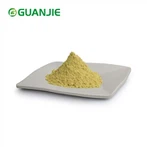
Phosphatidylserine PS is an amphiphilic lipid compound characterized by strong lipophilicity and weak hydrophilicity. In aqueous systems, PS molecules are highly prone to aggregation, precipitation, or floating due to hydrophobic interactions; these behaviors directly impact their application performance and bioavailability in products such as solid beverages, liquid drinks, functional foods, and dietary supplements. To meet the stringent requirements of the food and health supplement industries regarding water solubility and dispersion stability, it is essential to employ systematic physical, chemical, and modification techniques at various stages of the production process to comprehensively enhance the water dispersibility of pure phosphatidylserine. How To Improve The Water Dispersibility Of Phosphatidylserine During The Production Process?

Why Is Improving The Water Dispersibility Of Phosphatidylserine Important?
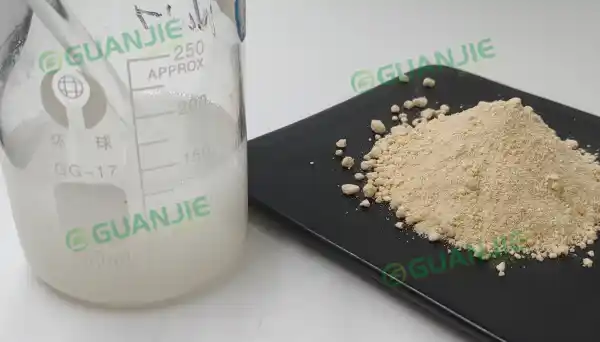
In industrial production, phosphatidylserine powder does not necessarily dissolve completely in water. Depending on its composition, purity, physical form, and processing conditions, it may form a suspension, dispersion, or colloidal system. Therefore, improving the water dispersibility of phosphatidylserine is not the same as increasing its true water solubility.
For manufacturers of bulk phosphatidylserine powder and finished nutritional products, water dispersibility is an important functional property. Poor dispersibility may cause floating particles, agglomeration, uneven distribution, sedimentation, and difficulties during mixing or filling.
Several factors influence the water dispersibility of phosphatidylserine:
Phosphatidylserine content:
Different PS concentrations and phospholipid compositions can produce different dispersion behaviors. Improving water dispersibility requires systematic optimization across multiple stages-including raw material pretreatment, regulation of enzymatic conversion, purification and refining, micro-emulsification modification, and drying/forming-to enhance the hydrophilic-hydrophobic balance without compromising the core active structure.
How To Improve The Water Dispersibility Of Phosphatidylserine During The Production Process?
Raw Material Pretreatment
Raw material pretreatment is essential for improving phosphatidylserine PS powder water dispersibility. Residual oils, free fatty acids, and proteins in crude soybean lecithin can increase hydrophobic interactions, causing aggregation and poor dispersion. Low-temperature deoiling, ethanol fractionation, and controlled impurity removal can reduce unwanted components and improve phospholipid purity. Maintaining appropriate processing temperatures also helps minimize oxidation and degradation. Proper pretreatment allows phosphatidylserine to interact more effectively with water and supports subsequent solubility optimization.
Optimization of Enzymatic Conversion Parameters
Optimizing enzymatic conversion is another important factor in phosphatidylserine manufacturing. Phospholipase D catalyzes the conversion of phospholipids using serine as a substrate. Reaction pH, temperature, substrate concentration, and the serine-to-substrate ratio influence conversion efficiency and product quality. Carefully controlling these parameters helps maintain bulk phosphatidylserine stability and reduce unwanted aggregation. Excessive temperatures or unsuitable reaction conditions may promote degradation and compromise dispersibility. Gradual temperature adjustments and controlled stirring can improve process consistency and support the production of high-quality phosphatidylserine powder for dietary supplements, functional foods, and other nutraceutical applications.
Effect of enzymatic conversion process parameters on water dispersibility
|
Process Parameters |
Optimization Focus |
Effect on dispersibility: |
|
Reaction pH |
Neutral to slightly acidic |
Increases the proportion of polar serine head groups |
|
Serine feed ratio |
Moderately increase |
Enhances molecular hydrophilic interactions |
|
Reaction temperature |
Staged temperature control |
Reduces phospholipid cross-linking and polymerization |
|
Agitation method |
Low-speed homogenization |
Maintains uniform emulsification of the system |
Purification, Refining, and Salt Removal
Improving the water dispersibility of phosphatidylserine PS powder starts with effective purification. Residual inorganic salts, unreacted serine, and glyceride by-products can interfere with hydration and reduce dispersion stability. Multi-stage membrane filtration and low-temperature dialysis can help remove small-molecule impurities while retaining phosphatidylserine. Gradual deionized water exchange minimizes sudden changes in the solution environment that may cause aggregation. Low-temperature vacuum concentration also helps preserve phospholipid structure and supports consistent bulk phosphatidylserine solubility and dispersion performance.
Micro-Emulsification and Formulation Optimization
Micro-emulsification is an important approach to improving water-dispersible phosphatidylserine formulations. Suitable food-grade emulsifiers, such as selected phospholipids or polyglycerol fatty acid esters, may improve particle distribution and hydration stability. Homogenization pressure, temperature, and cycle number should be optimized to reduce particle aggregation and produce a more uniform dispersion. Lower particle sizes can increase the contact area between phospholipids and water. However, the final particle size and stability depend on the formulation and processing conditions. Emulsifier levels must also be controlled to maintain product quality and suitability for the intended application.
Drying and Powder Formation
Drying technology significantly affects the redispersibility of phosphatidylserine powder. Excessive heat may promote aggregation and produce dense particles that disperse poorly in water. Freeze-drying or appropriately optimized low-temperature drying may help preserve the powder's dispersibility. Adding a suitable carrier, such as maltodextrin, can improve powder flow and create a less compact structure. The carrier type, concentration, feed solids, and drying conditions should be evaluated together. A porous powder structure generally allows water to penetrate more readily, supporting faster and more uniform re-dispersion.
pH and Ionic Environment Control
The pH and mineral content of the formulation also influence pure phosphatidylserine dispersion stability. Strongly acidic conditions and high salt concentrations may promote aggregation under certain formulation conditions. A suitable buffer system can help maintain a stable pH, while controlling calcium and magnesium ions may reduce unwanted interactions with phospholipids. The optimal pH should be established through formulation testing rather than applied universally. Manufacturers should evaluate particle size, sedimentation, redispersibility, and storage stability to determine the most appropriate processing parameters for each phosphatidylserine raw material application.
Comparison of Key Water-Dispersibility Improvement Processes
|
Process Route |
Core Mechanisms |
Application Scenarios |
Limitations |
|
Micro-emulsification and Blending |
Nano-micelles and hydration layers |
Liquid beverages, oral solutions |
Temperature control required to prevent oxidation |
|
Optimization of Enzymatic Parameters |
Increased proportion of polar head groups |
High-end water-based formulations |
Relatively high process costs |
|
Low-temperature Purification |
Removal of salts and by-products |
High-purity water-soluble products |
High equipment investment |
|
Low-temperature Drying and Forming |
Loose, porous powder structure |
Solid beverages, instant powders |
Relatively limited production capacity |
|
Blended Emulsification System |
Synergistic interfacial film stabilization |
Complex aqueous systems |
Additive ratios require optimization |
Poor water dispersibility of phosphatidylserine (PS) is often associated with hydrophobic impurities, molecular aggregation, and limited hydration. Optimizing raw material pretreatment, enzymatic processing, low-temperature purification, high-pressure micro-emulsification, and drying conditions can improve phosphatidylserine water dispersibility without chemically modifying its active structure. These processing strategies help preserve its properties and improve compatibility with aqueous beverages and meal-replacement powders. For manufacturers seeking water-dispersible phosphatidylserine powder, process optimization offers a practical approach to improving formulation performance and ingredient compatibility.
FAQs:
Q1: What factors affect the water dispersibility of phosphatidylserine powder?
The water dispersibility of phosphatidylserine (PS) powder is affected by particle size, phospholipid purity, residual oil, moisture content, and molecular aggregation. Production parameters, including temperature, mixing speed, and emulsification conditions, also influence dispersion performance. Optimizing raw material pretreatment, purification, and powder processing can help improve the consistency of phosphatidylserine dispersion in water-based formulations.
Q2: How can raw material pretreatment improve phosphatidylserine water dispersibility?
Raw material pretreatment helps remove impurities, residual oils, and other components that may interfere with hydration and dispersion. Selecting phosphatidylserine-rich raw materials and controlling the quality of the phospholipid feedstock can improve batch consistency. Appropriate filtration and purification steps can further reduce unwanted components before subsequent processing.
Q3: How does emulsification improve the water dispersibility of phosphatidylserine?
Emulsification helps distribute phosphatidylserine more uniformly throughout an aqueous phase. High-shear mixing or high-pressure homogenization can reduce particle agglomeration and improve dispersion uniformity. The appropriate processing method depends on the PS concentration, formulation composition, viscosity, and target particle size. Processing conditions should be validated to avoid excessive heating and unnecessary oxidation.
Q4: What role does temperature control play in phosphatidylserine production?
Temperature affects phospholipid fluidity, hydration, and oxidation stability. Appropriate heating may facilitate mixing and dispersion, while excessive temperatures can accelerate phospholipid degradation or oxidation. Manufacturers should establish a suitable temperature range based on the raw material, processing method, and formulation requirements. Temperature monitoring throughout production helps maintain product quality and batch consistency.
Q5: Can enzymatic modification improve the water dispersibility of phosphatidylserine?
Enzymatic modification may alter phospholipid structure and influence hydration, interfacial properties, and dispersion behavior. However, its effectiveness depends on the enzyme type, reaction temperature, pH, processing time, and degree of modification. Because excessive hydrolysis may change the phosphatidylserine composition and functional properties, manufacturers should evaluate both dispersibility and product specifications before adopting enzymatic treatment.
Q6: How does pH affect phosphatidylserine water dispersibility?
The pH of the aqueous phase can influence phosphatidylserine's surface charge, intermolecular interactions, and aggregation behavior. Depending on the formulation, adjusting pH may improve dispersion stability or reduce particle aggregation. Manufacturers should evaluate pH alongside ionic strength, mineral content, and other ingredients to identify suitable processing conditions for beverages, nutritional powders, and other water-based products.
Q7: What drying methods can help maintain the water dispersibility of phosphatidylserine?
Spray drying and other controlled drying technologies can be used to produce phosphatidylserine powders with specific moisture levels and physical properties. The final dispersibility depends on feed composition, drying temperature, atomization, and powder structure. Manufacturers should optimize drying conditions to minimize thermal damage, limit agglomeration, and maintain consistent moisture content. The selected method should be validated against the required product specifications.
Q8: How can manufacturers test the water dispersibility of phosphatidylserine powder?
Manufacturers can evaluate water dispersibility through standardized testing under controlled conditions. Relevant parameters include dispersion time, visible sedimentation, particle-size distribution, turbidity, and dispersion uniformity. Testing should specify water temperature, pH, PS concentration, mixing speed, and observation time. For comparative testing, the same method should be applied to each production batch to ensure reliable and reproducible results.
Q9. How can manufacturers maintain the water dispersibility of phosphatidylserine during storage?
Phosphatidylserine powder should be protected from excessive moisture, heat, oxygen, and unsuitable storage conditions. Moisture-barrier packaging and appropriate temperature control can help preserve powder quality and reduce clumping. Manufacturers should establish storage conditions based on stability testing and monitor moisture content, appearance, and dispersibility throughout the product's shelf life.
Conclusion
Improving the water dispersibility of phosphatidylserine during production requires coordinated control of raw material composition, particle size, surface properties, formulation, hydration, mixing, and storage conditions.
For dry phosphatidylserine powder, optimizing wettability, powder structure, and the mixing process may be sufficient. For liquid nutritional products or specialized delivery systems, high-shear mixing, homogenization, or liposomal formulation may provide additional benefits.
The most suitable method should be determined through standardized testing and process validation. Manufacturers should also distinguish water dispersibility from true water solubility when establishing specifications and communicating product functionality.
Guanjie Biotech is a bulk supplier of phosphatidylserine. We provide phosphatidylserine with concentrations ranging from 20% to 80%, as well as water-soluble phosphatidylserine. We also offer OEM and ODM services to support customized phosphatidylserine product specifications and manufacturing requirements.
References:
[1] Chen, S., Xu, L., Li, Y., Hao, N., & Yan, M. (2013). Bioconversion of Phosphatidylserine by Phospholipase D from Streptomyces racemochromogenes in a Microaqueous Water-Immiscible Organic Solvent. Bioscience, Biotechnology, and Biochemistry, *77*(9), 1939-1941.
[2] Kidd, P. M. (1996). Phosphatidylserine; Membrane Nutrient for Memory. A Clinical and Mechanistic Assessment. Alternative Medicine Review, *1*(2), 70-84.
[3] Kidd, P. M. (2007). Omega-3 DHA and EPA for cognition, behavior, and mood: clinical findings and structural-functional synergies with cell membrane phospholipids. Alternative Medicine Review, *12*(3), 207-227.
[4] Kidd, P. M. (2005). Neurodegeneration from mitochondrial insufficiency: nutrients, stem cells, growth factors, and prospects for brain rebuilding using integrative management. Alternative Medicine Review, *10*(4), 268-293.
[5] Phosphatidylserine-Containing Solid Lipid Nanoparticle Compositions and Methods for Manufacturing the Same. Korean Patent KR100818033B1.
[6] Nutritional Compositions Containing Phosphatidylserine Powder. European Patent EP3171706B1 / WO2016012861A1.