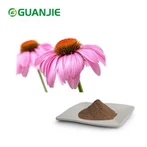
Guanjie Biotech has received three requests from customers for whiteness testing of indole 3 carbinol powder. In order to meet the customer's requirements and to ensure the high quality of the products, Guanjie Biotech has carried out a strict whiteness test. Whiteness is one of the most important indicators for assessing the purity and quality of chemicals. Indole 3 carbinol is an organic compound extracted from plants. It is widely used in the field of pharmaceuticals and nutraceuticals. In order to ensure the quality of our products, Guanjie Biotech conducts strict whiteness testing to meet the needs of our customers.

Indole 3 Carbinol is a natural compound found in cruciferous plants. It has a variety of biological activities. Such as anticancer, antioxidant and regulating hormone levels. The demand for indole 3 carbinol powder in the pharmaceutical and nutraceutical markets is gradually increasing as research on its health benefits intensifies. Whiteness is used as one of the important indicators to assess its purity and quality. It has a significant impact on customer's choice.
Principle of Whiteness Testing
Whiteness is the ability of a substance to reflect light. It is usually measured by colorimetric or photoelectric methods. The higher the whiteness value, the closer the colour of the substance is to white and the higher the purity. Commonly used whiteness testing methods are as follows:
1. Hunter Whiteness Method (Hunter Whiteness Method):
This method is based on the Hunter Lab colour space model, and the whiteness value is calculated by measuring three parameters of the sample: L (brightness), a (red-green value) and b (yellow-blue value).
2. Platinum-Cobalt Colour Method (Platinum-Cobalt Color Method):
Determine the colour of the indole 3 carbinol powder sample by colorimetric method, used for whiteness testing of transparent liquids.
3. Photoelectric colourimetry (Photoelectric Colorimetry):
Determine the reflectivity of the pure indole 3 carbinol to light by photoelectric colourimetry and calculate the whiteness value.
Guanjie Biotech adopts Hunter Whiteness Method to detect the whiteness of bulk indole 3 carbinol.
Experimental Methods
The Platinum-Cobalt Color Method (PCM) is a colorimetric method commonly used to determine the colour of transparent liquids. This method was originally used to measure the colour of water. However, it can also be used to determine the colour of other transparent liquids. The Platinum-Cobalt Color Method is a classical colour measurement method. It allows a quick assessment of the colour of indole 3 carbinol powder by comparing it with standard colours. This will indirectly reflect its purity and quality. The following is a detailed description of how Guanjie Biotech uses the platinum-cobalt colourimetric method for whiteness testing of i indole 3 carbinol bulk powder:
1 Reagents and Materials
Standard platinum-cobalt solution:
We prepare different concentrations of platinum-cobalt solutions according to APHA standards. Usually 0 - 500 Pt-Co units.
Sample solution:
Prepare a sample solution of indole trimethanol to be tested.
Cuvette:
Clean, dry glass vessel.
2. Instrumentation
(1) photoelectric colorimeter or spectrophotometer: used to determine the colour of the indole 3 carbinol powder sample.
(2) standard Israel: a set of standard platinum cobalt solution, used for colourimetry.

3.Detection steps
(1) standard curve establishment:
• Place a series of standard platinum-cobalt solutions of different concentrations in a cuvette.
• Determine the absorbance of each standard solution at a specified wavelength (usually 455 nm) using a photoelectric colourimeter or spectrophotometer.
• Plot the standard curve between absorbance and platinum-cobalt concentration.
(2) Sample determination:
• Place the indole 3 carbinol powder sample solution in a cuvette.
•Determine the absorbance of the sample at the specified wavelength.
•The absorbance of the sample is converted to platinum-cobalt units by means of a standard curve.
(3) Results are recorded and analysed:
- The platinum-cobalt units of the sample are recorded to indicate its colour.
- The whiteness and colour of the sample is evaluated by comparing it with the colour of the standard solution.
4.Results and Discussion
(1)Detection results
The platinum cobalt units of the indole 3 carbinol powder samples were calculated using a standard curve based on the experimentally measured absorbance of the samples. The following are the results of the assay for the three batches of samples:
|
Batch |
Absorbance |
Platinum cobalt units |
|
A |
0.12 |
30 |
|
B |
0.15 |
40 |
|
C |
0.10 |
25 |
(2)Analysis of results
• Colour assessment:
The lower the platinum-cobalt unit, the closer the colour of the sample is to colourless or white, and the higher the purity.
From the test results, all three batches of indole 3 carbinol pure powder samples had low platinum-cobalt units (25-40), indicating that the samples have high whiteness.
(3) Purity and quality:
• Differences in platinum-cobalt units may reflect trace impurities in the samples or differences in production processes from batch to batch.
• Batch C has the lowest platinum-cobalt units, indicating that it is closest in colour to colourless and may have a higher purity.
The detection of whiteness by platinum-cobalt chromatography can effectively assess the colour and purity of indole trimethanol samples. The results show that the indole 3 carbinol powder samples produced by Guanjie Biotech have high whiteness. The indole 3 carbinol meets the customer's quality requirements. In the future, Guanjie Biotech will continue to optimise its production process to ensure that it can provide customers with high quality indole 3 carbinol products.
There are several main reasons for performing whiteness testing on indole 3 Carbinol:
1. To assess product purity
Whiteness is an important indicator for assessing the purity of a chemical. High purity indole 3 Carbinol usually exhibits higher whiteness values. This is because there are fewer impurities and colouring substances in it. Through whiteness testing, the purity level of the product can be indirectly determined.
2. Ensure product quality consistency
In mass production, different batches of indole 3 carbinol powder products may have certain differences due to raw materials, production processes and other factors. Whiteness testing can help to monitor the consistency of quality from batch to batch. This ensures that the product meets the quality standards.
3. Reflects product stability
Changes in the whiteness of indole 3 Carbinol may reflect its stability during storage and transport. A decrease in whiteness may indicate degradation or contamination of the product, which may affect its use. Through regular whiteness testing, the stability of the product can be monitored to ensure that it maintains its high quality during its shelf life.
Guanjie Biotech has carried out rigorous whiteness testing of indole 3 carbinol powder and the results show that all three batches of samples have a high whiteness that meets the customer's needs. As an important means of assessing product quality, whiteness testing is significant in ensuring product stability and consistency. In the future, Guanjie Biotech will continue to improve the quality of its products to meet the needs of the market and customers. If you are interested in indole 3 carbinol price, welcome to enquiry us: info@gybiotech.com.