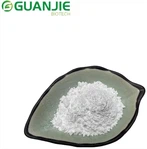
Citicoline powder has gained considerable attention for its cognitive and neuroprotective benefits. Often marketed as a brain health supplement, some people mistakenly classify citicoline as a vitamin due to its association with energy metabolism and neurological function. However, from a strict biochemical and nutritional standpoint, citicoline is not a vitamin. But why is citicoline not a Vitamin?

Why Citicoline Is Not a Vitamin?

It Is Not "Essential" in the Strict Nutritional Sense
Citicoline powder is also known as CDP-choline (cytidine diphosphate-choline), is a naturally occurring compound found in the body. The key point is that the human body can synthesize citicoline internally. Both the liver and brain have the biochemical capability to produce citicoline from its basic building blocks-choline and cytidine.
In contrast, a true vitamin is something the body cannot produce in sufficient amounts. For example, vitamin C must come from the diet because humans lack the enzyme required to synthesize it. Citicoline powder does not have this limitation. Even though dietary intake may enhance levels or offer cognitive support, the body is capable of making it on its own. Therefore, it does not meet the "essential" requirement that distinguishes vitamins from other nutrients.
The Body Can Efficiently Synthesize It from Choline
The body's ability to make citicoline comes from a well-established biosynthetic pathway. This pathway begins with choline, an essential nutrient found abundantly in foods such as eggs, liver, chicken, fish, soybeans, and peanuts. Once ingested, choline is metabolized and combined with cytidine triphosphate (CTP) to form citicoline.
This internal process-often referred to as the Kennedy pathway-is the body's natural mechanism for producing phosphatidylcholine, a major component of cell membranes. Citicoline acts as an intermediate compound in this pathway. Because citicoline is simply a metabolic step between dietary choline and phospholipid formation, it is not something the diet must directly provide.
In short, citicoline powderis a product of normal metabolism, not a required dietary input. The body synthesizes it as needed, using choline from food as the precursor. This characteristic alone disqualifies it from being categorized as a vitamin.


Choline: The True Essential Nutrient
The confusion surrounding citicoline's classification often comes from its close relationship with choline. Choline itself is officially recognized as an essential nutrient, even though it is not formally classified as a vitamin. It is often described as a "vitamin-like compound" because it performs functions similar to the B-vitamin family, particularly in metabolism and brain health.
The Institute of Medicine (IOM) has established Dietary Reference Intakes (DRIs) for choline, underscoring its importance to human health. Choline plays multiple critical roles:
• It supports liver health by preventing fat accumulation and aiding lipid metabolism.
• It contributes to brain development and cognitive function, particularly through the synthesis of acetylcholine, a neurotransmitter essential for memory and learning.
• It is vital for nerve signaling and cell membrane structure, as phosphatidylcholine is a primary component of cellular membranes.
On the other hand, citicoline powder is derived from choline. It is essentially a biochemical form or intermediate that the body produces when it metabolizes choline. Because choline must be consumed from the diet while citicoline can be internally synthesized, it is choline-not citicoline-that fulfills the "essential" role.
Why Citicoline Is Still Important-Even If Not a Vitamin
Although citicoline doesn't meet the strict criteria of a vitamin, it remains a biologically significant compound. Research shows that supplemental citicoline may enhance cognitive performance, memory, and mental focus, especially in older adults or those with neurological conditions. It supports phospholipid synthesis in brain cells, enhances neurotransmitter balance, and helps maintain neuronal membrane integrity.
In clinical studies, citicoline supplementation has been associated with improved recovery from stroke, enhanced brain metabolism, and better concentration and alertness. However, these effects come from pharmacological or nutraceutical actions, not from preventing a deficiency disease. This distinction further separates it from the classical definition of a vitamin, which is primarily based on preventing deficiency-related disorders.
Therefore, while citicoline functions as a valuable nootropic or neuro-support nutrient, it is not "essential" for survival in the way vitamins are. The body can continue to function and survive without direct dietary citicoline, provided sufficient choline is available.

Summary
|
Feature |
Vitamin (e.g., Vitamin C) |
Citicoline |
|
Essential |
Yes, it must come from diet. |
No, the body can synthesize it. |
|
Synthesis |
Not synthesized by humans. |
Synthesized in the body from choline. |
|
Dietary Need |
Required for survival. |
Not strictly required if choline intake is sufficient. |
|
Classification |
Essential Micronutrient |
Naturally occurring compound / Supplement |
How the Confusion Arose?
The confusion around citicoline powder being a "vitamin" stems from its close biochemical association with choline, a compound that was historically classified as a member of the vitamin B complex family.
Choline was once called vitamin B4, though modern nutritional science no longer recognizes it as a vitamin because the body can synthesize some of it endogenously. Citicoline, being a derivative of choline and cytidine, is sometimes mistakenly lumped into this category.
Moreover, citicoline's ability to enhance cognitive performance, neurotransmitter synthesis, and neuronal membrane repair gives it a vitamin-like reputation, even though these actions arise from metabolic and pharmacological effects rather than essentiality.
What Are The Differences Between Citicoline and Vitamins?
|
Feature |
Citicoline |
Vitamin |
|
Definition |
A naturally occurring intermediate in phospholipid biosynthesis |
Essential organic micronutrient required in small amounts |
|
Essentiality |
Not essential; synthesized endogenously |
Essential; cannot be synthesized in sufficient quantity |
|
Source |
Produced from choline and cytidine |
Must be obtained from food or supplements |
|
Function |
Structural and neuroprotective |
Cofactor or coenzyme for enzymatic reactions |
|
Deficiency Disease |
None known |
Each vitamin has specific deficiency diseases |
|
Classification |
Not a vitamin; metabolic intermediate |
Vitamin A, B, C, D, E, and K groups |
|
Pharmacological Use |
Used as a nootropic and neuroprotective agent |
Used for nutritional supplementation |
|
Example Relationship |
Derived from choline (a former B4 vitamin candidate) |
The vitamin B family includes B1–B12 compounds |
This chart further clarifies that citicoline, while beneficial, does not fulfill the strict biochemical requirements of a vitamin.
Conclusion
In conclusion, while citicoline powder is a critically important molecule for brain health, it is not a vitamin. It is an intermediate compound that the body produces from the essential nutrient choline. Citicoline comes from its role in phospholipid synthesis, neurotransmitter regulation, and cellular repair, not from preventing deficiency-related diseases.
For this reason, citicoline is better described as a nootropic nutrient or metabolic enhancer, not a member of the vitamin family. It continues to be researched for its therapeutic effects in cognitive disorders, stroke recovery, and neurodegenerative diseases, demonstrating profound biological activity without being "vitamin-like" in definition.
Guanjie Biotech is a bulk citicoline powder supplier, providing high-purity citicoline suitable for nutritional, pharmaceutical, and nootropic applications. Our products pass HALAL, HACCP, KOSHER, and others. Please feel free to contact us at info@gybiotech.com.
References
[1] Adibhatla, R. M., & Hatcher, J. F. (2002). Citicoline (CDP-choline) in stroke and CNS injury. Neurochemical Research, 27(11), 1781–1791.
[2] Secades, J. J., & Lorenzo, J. L. (2006). Citicoline: pharmacological and clinical review, 2006 update. Methods and Findings in Experimental and Clinical Pharmacology, 28(Suppl B), 1–56.
[3] Grieb, P. (2014). Citicoline: A food component with proven neuroprotective efficacy. Nutrients, 6(1), 59–74.
[4] Institute of Medicine (IOM). (1998). Dietary Reference Intakes for Thiamin, Riboflavin, Niacin, Vitamin B6, Folate, Vitamin B12, Pantothenic Acid, Biotin, and Choline. National Academies Press.
[5] Kennedy, E. P. (1956). The synthesis of cytidine diphosphate choline. Journal of Biological Chemistry, 222(1), 185–191.
[6] Wurtman, R. J. (2015). Citicoline, a brain nutrient that boosts acetylcholine synthesis. Advances in Neurology, 102, 27–35.
[7] Cohen, E. L., & Wurtman, R. J. (1976). Brain acetylcholine: control by dietary choline. Science, 191(4227), 561–562.