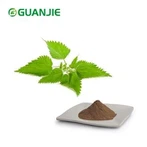
Pure Ferulic acid powder has become a hot ingredient in the world of skincare, lauded for its potent antioxidant, anti-inflammatory, and photoprotective properties. Found naturally in the cell walls of plants like oats, brown rice, and coffee beans, its synthetic and plant-derived versions have become staples in serums, creams, and cosmeceutical formulations. The prevailing narrative around ferulic acid is one of soothing and protecting, famously stabilizing vitamins C and E to combat photoaging. However, a question that often arises among consumers and skincare professionals alike is: can this beneficial antioxidant actually cause skin redness? The answer is not a simple yes or no, but a nuanced "yes, for some individuals, under specific conditions."

Why Ferulic Acid Can Cause Redness?
The induction of redness by a pure ferulic acid powder product can be attributed to several key factors, which can be broadly categorized into the acid's inherent chemical properties, the specifics of its formulation, and the unique biological landscape of the user's skin.
The pH Factor and Disruption of the Skin Barrier
This is one of the most significant, yet often overlooked, reasons for irritation from ferulic acid serums, particularly those combined with Vitamin C (L-ascorbic acid).
• The Low pH Requirement:
To be effective and penetrate the skin, L-ascorbic acid requires a highly acidic environment, typically with a pH between 2.0 and 3.5. Ferulic acid itself is often formulated within a similar low pH range to enhance its own stability and efficacy. The skin's natural surface, known as the acid mantle, has a slightly acidic pH of around 4.5-5.5. This mantle is crucial for maintaining a healthy skin barrier, keeping pathogens out and moisture in.
• Barrier Disruption:
Applying a product with a very low pH (high acidity) can temporarily disrupt this acid mantle. For resilient skin, this is a manageable stress, and the barrier quickly recovers. However, for individuals with a compromised skin barrier (e.g., those with rosacea, eczema, or sensitive skin) or those new to acidic skincare, this sudden shift in pH can be perceived as an assault. The skin responds with an inflammatory signal, leading to immediate stinging, warmth, and redness. This is a form of irritant contact dermatitis, not a true allergy.
• The "Purging" Misconception:
It is important to distinguish this redness from "purging." Purging occurs when an active ingredient, like a retinoid or acid, accelerates skin cell turnover, bringing pre-existing microcomedones to the surface quickly. Pure ferulic acid powder is not a cell-communicating ingredient in that way; it does not significantly accelerate turnover. Therefore, redness from a ferulic acid serum is far more likely to be straightforward irritation rather than a purging reaction.
Solvent and Penetration Enhancer Irritation
Pure ferulic acid powder is not soluble in water and has limited solubility in oil. To create a stable, effective serum, manufacturers must use solvents and penetration enhancers. The most common solvent system for high-efficacy Vitamin C and ferulic acid serums is a combination of propylene glycol and/or ethoxydiglycol.
• The Role of Penetration Enhancers:
These agents are crucial. They work by temporarily disrupting the structured lipids in the stratum corneum (the outermost layer of the skin), creating pathways for the active ingredients to penetrate deeper. This is desirable for efficacy but problematic for tolerance.
• Compromising Barrier Function:
By their very mechanism, these solvents can compromise the skin's barrier integrity. In doing so, they not only allow ferulic acid and vitamin C to enter but also can make nerve endings more accessible, leading to a sensation of stinging. This compromised barrier is more vulnerable to water loss and external irritants, triggering an inflammatory response that manifests as redness. Individuals with sensitive skin are particularly reactive to high concentrations of propylene glycol.

High Concentration and Product Potency
The principle of "more is better" does not always apply to skincare. While studies often use specific concentrations (commonly 0.5% to 1% ferulic acid) to demonstrate efficacy, the market trend is pushing towards higher concentrations. The potency of a formulation is not just about the percentage of pure ferulic acid powder but the synergistic (or antagonistic) effect of all ingredients combined.
A serum containing 15% L-ascorbic acid, 1% vitamin E, and 0.5% ferulic acid is an extremely potent, active cocktail. The combined effect of the low pH, the solvents, and the high concentration of actives can be overwhelming for a skin barrier that is not accustomed to such an intense product. The initial introduction of such a potent formulation can easily lead to transient redness as the skin struggles to adapt.
Individual Skin Sensitivity and Pre-existing Conditions
The same product can elicit completely different responses from two different people. This individual variability is a cornerstone of dermatology.
• Sensitive Skin Phenotype:
Some individuals inherently have a more reactive neuro-immune system in their skin. Their nerve endings are more easily stimulated, and their immune cells (like mast cells) are quicker to release histamine and other inflammatory mediators, leading to redness and stinging in response to triggers that others tolerate.
• Rosacea and Couperose:
For individuals with rosacea, the skin's blood vessels are abnormally dilated and reactive. The transient barrier disruption and mild inflammation caused by a potent pure ferulic acid powder serum can be a significant trigger, causing a dramatic flushing response and worsening baseline redness.
• Compromised Skin Barrier:
Anyone with active eczema, dermatitis, or a barrier damaged by over-exfoliation or harsh products will be highly susceptible to irritation from any active ingredient, including ferulic acid.
Interaction with Other Active Ingredients in a Routine
Pure ferulic acid powder is rarely used in isolation. A user's full skincare routine can be the critical factor in determining whether redness occurs.
• Over-Exfoliation:
Combining a low-pH ferulic acid serum with other exfoliating acids like glycolic acid, salicylic acid, or lactic acid-either in the same routine or alternating days-can exponentially increase the risk of barrier impairment and redness.
• Retinoids:
Using a potent ferulic acid/vitamin C serum in the morning and a prescription retinoid at night is a powerful anti-aging strategy but is also a common recipe for irritation if the skin is not adequately conditioned and hydrated to tolerate it.
• "Layering" Incompatibility:
The immediate stinging and redness can sometimes be caused by the interaction of residues from previous products (e.g., certain polymers or incompatible pH levels) with the ferulic acid serum.
How to Use Ferulic Acid Without Causing Redness?
For those who experience redness, abandoning the benefits of pure ferulic acid powder is not the only option. Strategic application and product selection can make all the difference.
• Patch Test Diligently:
Always apply a small amount of the product to a discreet, sensitive area (like the side of the neck or behind the ear) for 3-5 consecutive days before applying it to the entire face.
• Buffer Application:
For very sensitive skin, applying a light, bland moisturizer or hyaluronic acid serum to damp skin before the ferulic acid serum can create a subtle buffer, reducing the immediate impact of the low pH and solvents.
• Frequency Graduation:
Do not start using it daily. Begin with 2-3 times per week, and gradually increase frequency as your skin builds tolerance.
• Simplify Your Routine:
On the days you use the serum, simplify the rest of your routine. Avoid other potent actives like direct acids (AHA/BHA) and physical scrubs. Focus on a gentle cleanser, the serum, a repairing moisturizer, and sunscreen.
• Support the Barrier:
Incorporate products containing barrier-repairing ingredients like ceramides, cholesterol, niacinamide, and panthenol into your daily routine, especially in the evenings. A strong, resilient barrier is your best defense against irritation.
• Consider Alternative Formulations:
If a classic, solvent-based, low-pH serum consistently causes issues, look for alternative pure ferulic acid powder products. Newer technologies are incorporating ferulic acid into more gentle emulsions or at a higher pH, which may be better tolerated, albeit with potentially different efficacy profiles.
Conclusion
In summary, while pure ferulic acid powder itself possesses anti-inflammatory properties, the products containing it can indeed cause redness in a subset of users. This reaction is rarely an allergy to ferulic acid per se but is far more commonly a form of irritant contact dermatitis. The primary culprits are the low pH necessary for formulation stability and efficacy, the solvents and penetration enhancers required to deliver the actives, the high overall potency of the product, and the inherent sensitivity of the user's skin.
By strategically introducing pure ferulic acid powder into a routine, supporting the skin barrier, and selecting products from manufacturers who prioritize high-quality raw materials ferulic acid-individuals can maximize the profound antioxidant benefits of this ingredient while minimizing the risk of unwanted redness, achieving healthier, more protected skin. Guanjie Biotech is a bulk ferulic acid powder supplier that provides the raw material used by cosmetic manufacturers to produce our end products. The technical specifications of our ferulic acid-such as its purity level (often 98% or higher), the absence of heavy metals and microbial contaminants, and its physical characteristics-directly influence the safety and tolerability of the final serum. High-quality pure ferulic acid powder and competitive price with us at info@gybiotech.com.
References
[1] Lin, F. H., Lin, J. Y., Gupta, R. D., Tournas, J. A., Burch, J. A., Selim, M. A., ... & Pinnell, S. R. (2005). Ferulic acid stabilizes a solution of vitamins C and E and doubles its photoprotection of skin. Journal of Investigative Dermatology, 125(4), 826-832.
[2] Saija, A., Tomaino, A., Trombetta, D., De Pasquale, A., Uccella, N., Barbuzzi, T., ... & Bonina, F. (2000). In vitro and in vivo evaluation of caffeic and ferulic acids as topical photoprotective agents. International Journal of Pharmaceutics, 199(1), 39-47.
[3] Murray, J. C., Burch, J. A., Streilein, R. D., Iannacchione, M. A., Hall, R. P., & Pinnell, S. R. (2008). A topical antioxidant solution containing vitamins C and E stabilized by ferulic acid provides protection for human skin against damage caused by ultraviolet irradiation. Journal of the American Academy of Dermatology, 59(3), 418-425.
[4] Farage, M. A., Katsarou, A., & Maibach, H. I. (2006). Sensory, clinical and physiological factors in sensitive skin: a review. Contact Dermatitis, 55(1), 1-14.
[5] Levin, J., & Momin, S. B. (2010). How much do we really know about our favorite cosmeceutical ingredients? The Journal of Clinical and Aesthetic Dermatology, 3(2), 22–41.
[6] Prakash, C., & Bhargava, P. (2017). Skin Barrier and Irritant Contact Dermatitis. In Clinical Approach to Ultraviolet Light and the Skin. IntechOpen.