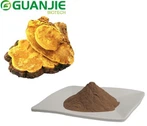
Oat beta-glucan powder is a high-molecular-weight polysaccharide derived from oats (Avena sativa). Its value in skincare has been widely confirmed. Beta-glucan oat powder does more than provide basic moisturizing and thickening functions. Oat beta-glucan binds to specific receptors on skin immune cells and fibroblasts. It can promote skin repair, provide anti-photoaging effects, and enhance immune function. Advances in molecular weight control technology and fermentation extraction processes have expanded its applications. In particular, the development of low-molecular-weight oat beta-glucan has created new opportunities. It shows promising potential in transdermal penetration and gene target regulation.
What is Oat Beta-Glucan?
Oat beta-glucan is a non-starch polysaccharide. It is found in the cell walls of oat endosperm and the aleurone layer. Its chemical structure is made of D-glucose monomers. These monomers are linked by β-(1,3) and β-(1,4) glycosidic bonds. This structure determines its physical properties, such as high water-holding capacity and gelling ability. Beta-glucan oat powder also determines its biological activity.
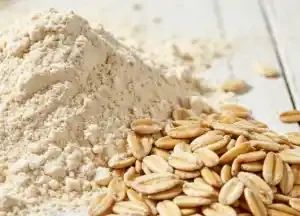
Physicochemical Properties
In cosmetic formulations, beta-glucan oat powder usually appears as a white to off-white powder. It is water-soluble. It contains many hydroxyl groups in its molecular chain. Because of this, it has a strong hydrogen bonding ability. This makes it an effective moisturizing and film-forming agent. It can form a breathable film on the skin surface. This helps reduce moisture loss.
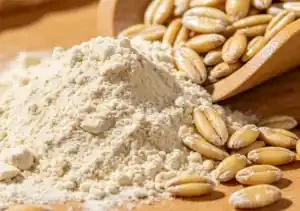
The Influence of Molecular Weight on Function
Molecular weight is an important factor that affects skincare performance. High molecular weight oat beta-glucan can form a good protective film. It also provides immediate moisturizing effects. However, its large molecular size makes it difficult to penetrate the stratum corneum. It mainly acts on the skin surface.
Recent studies show that low molecular weight oat beta-glucan (around 1 kDa) has better solubility. It also shows improved skin permeability. These smaller molecules are produced by enzymatic hydrolysis. They can pass through the intercellular spaces. They may reach deeper layers of the epidermis and even the dermis. They can also interact with fibroblasts.
What Does Oat Beta-Glucan Do for Skin?
Beta-glucan oat powder does more than provide physical moisturization. It can bind to specific receptors on skin cells, such as the Dectin-1 receptor. This activates signal pathways. Oat beta-glucan for skin can help regulate cytokine secretion.
Skin Barrier Repair Mechanisms
The integrity of the skin barrier depends on the balance between keratinocyte proliferation and differentiation. Beta-glucan oat powder can bind to the Dectin-1 receptor in the epidermis. This process activates the ERK and p38 signaling pathways. It also increases the expression of calcium-sensitive receptors.
When the skin barrier is damaged, the calcium concentration gradient in the epidermis disappears. This change can disrupt keratinocyte differentiation. Increased calcium-sensitive receptor expression makes keratinocytes more responsive to extracellular calcium ions. As a result, normal differentiation can continue even under calcium-deficient conditions.
Studies have shown that this mechanism can significantly reduce epidermal hyperplasia and speed up barrier repair. A 2024 study also found that oat β-glucan can increase tight junction protein expression and promote lipid synthesis in the stratum corneum.
|
Function |
Targets/Pathways |
Physiological Results: |
|
Signal Channel |
Dectin-1 receptor-mediated ERK/p38 pathway and PPAR-γ pathway |
Upregulates calcium-sensitive receptor expression, promoting lipid synthesis and cell junctions. |
|
Cell Behavior |
Keratinocyte differentiation and proliferation balance |
Improves epidermal proliferation and restores damaged barrier structure. |
|
Key Substance |
Cell junction proteins and stratum corneum lipids |
Strengthens the physical barrier and reduces transepidermal water loss. |
Therefore, oat beta-glucan can be used as an active ingredient in skincare products for sensitive skin repair, post-procedure care, and skin barrier restoration. Its mechanism of action is well defined. Its repair pathway is also clear. This provides reliable scientific support for product development.
Anti-photoaging and DNA Protection
Ultraviolet (UV) radiation is a major cause of photoaging and acute skin damage. UVB irradiation induces fibroblasts to produce reactive oxygen species (ROS). This process triggers apoptosis and inflammatory responses.
Research has confirmed that oat beta-glucan and its oligosaccharide derivatives can regulate biological processes related to photodamage. Studies have shown that beta-glucan oat powder can regulate the expression of genes such as VEGFA (angiogenesis), LGALS-3 (aging), and CDK1 (apoptosis). In a UVB-induced acute skin damage model, oat beta-glucan reduced oxidative stress. It also lowered intracellular ROS levels and inhibited the release of inflammatory factors. As a result, it promoted the repair of photodamaged skin.
In addition, bioactive compounds in oats, such as avenanthramides, have structures different from β-glucan. However, when combined with β-glucan, they show synergistic antioxidant and anti-inflammatory effects.
Immunomodulation and Anti-inflammation
Sensitive skin is usually characterized by impaired skin barrier function and abnormal neurosensory responses. Beta-glucan oat powder has immunomodulatory properties. It can regulate the secretion of immune mediators such as interleukins, interferons, and chemokines.
Animal studies have shown that β-glucan can reduce skin inflammation and improve symptoms in atopic dermatitis models. In cosmetic products designed for anti-allergy and soothing purposes, oat β-glucan may help reduce inflammation and relieve erythema and stinging sensations. At the same time, it can strengthen the skin barrier by maintaining the integrity of the stratum corneum.
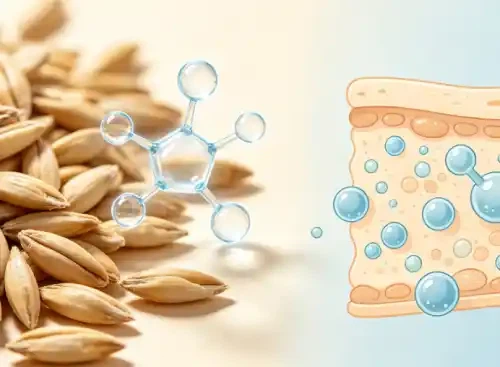
Application Potential in Skin Delivery Systems
In addition to being an active ingredient, beta-glucan oat powder can also function as a delivery carrier. Specific regions of its molecular structure have amphiphilic properties. Modified oat beta-glucan can be combined with lactoferrin and other compounds to create transparent delivery systems for hydrophobic polyphenols such as curcumin.
This approach helps solve the problem of poor solubility and dispersion of hydrophobic active ingredients in water-based cosmetic systems. For formulators, oat beta-glucan is more than an active ingredient. It is also a green and naturally derived transdermal delivery carrier.
What Is Oat Beta Glucan Used for in the Skin Field?
Indications and Product Positioning
Based on the above mechanism, beta-glucan oat powder is suitable for the following end-product categories:
• Anti-aging and wrinkle-reducing products: It promotes collagen synthesis. It helps reduce fine lines and skin laxity.
• Post-sun repair and protection products: Beta-glucan oat powder provides antioxidant effects and supports DNA damage repair. It can be used in daily sunscreen formulas as a supplementary repair ingredient. It is also suitable for post-sun repair serums.
• Sensitive skin and barrier-repair products: It supports immune regulation and wound healing. It is suitable for rosacea, hormone-related dermatitis, and sensitive or fragile skin.
• High-end moisturizing products and serums: Low molecular weight beta-glucan improves skin penetration. Oat beta-glucan powder supports deeper hydration and enhances the absorption of subsequent active ingredients.
Technical Considerations for Raw Material Selection
When selecting oat beta-glucan raw materials, molecular weight distribution is a key quality parameter.
• High molecular weight (>200 kDa): Beta-glucan oat powder mainly stays on the skin surface. It forms a protective film and provides immediate hydration. It has a more viscous texture. It is suitable for film-forming and occlusive products such as sleeping masks and moisturizing creams.
• Low molecular weight (<10 kDa, especially β-GOS around 1 kDa): It has better skin penetration. It can reach the epidermal-dermal junction. It supports biological repair functions. It is suitable for functional products such as serums, freeze-dried powders, and ampoules.
As a bulk beta-glucan oat powder supplier, Guanjie Biotech provides bulk betaglucare powder raw materials with stable molecular weight control technology and strict quality testing. This ensures consistent functional performance in cosmetic applications.
Compatibility and Stability
Beta-glucan oat powder shows good formulation compatibility. It has good heat resistance. It can dissolve in aqueous systems above 70°C. Its stability is generally good in the pH range of 5–8. It performs well in neutral and mildly acidic skincare systems.
It is compatible with common moisturizing and repairing ingredients such as polyols, hyaluronic acid, and Centella asiatica extract. However, in strong acidic systems (such as high-concentration AHA formulations), strong alkaline systems, or high-electrolyte formulations, preliminary stability and viscosity testing are required.
Conclusion:
Oat beta-glucan is a scientifically validated multifunctional cosmetic active ingredient. It not only possesses basic moisturizing and thickening functions, but also achieves deep skin barrier repair and anti-photoaging protection through biological mechanisms such as regulating fibroblast activity, inhibiting oxidative stress, and modulating immune pathways.
As consumers gain a deeper understanding of scientific skincare and as low-molecular-weight betaglucare oat powder transdermal technology matures, the application of this ingredient in functional skincare products will further increase. For cosmetic brands and manufacturers, choosing a large-scale beta-glucan oat powder supplier with strict quality control and stable supply capabilities, such as Guanjie Biotech, is a guarantee for securing a place in a highly competitive market.
References:
[1] Study on the skin care effects of oat β-glucan extracted by two-way fermentation. Daily Chemical Industry, 2021.
[2] Oat β-Glucooligosaccharides: Preparation, characterization, skin permeability, and photodamage repair. Carbohydrate Research, 2025.
[3] Oat Cosmetics Debuts Rejuvaveen, Active Skin Care Ingredient. Cosmetics & Toiletries, 2023.
[4] Application of β-glucan in cosmetics. Fragrance and Cosmetics, 2007.
[5] Multiple Antioxidative and Bioactive Molecules of Oats in Human Health. Nutrients, 2021.