The short and definitive answer is no. Pure ferulic acid powder and retinol are not the same. They are fundamentally distinct molecules with different origins, mechanisms of action, and primary functions within skincare. However, this simple answer belies a more complex and fascinating relationship. While they are not substitutes for one another, they are, in fact, celebrated as one of skincare's most powerful synergistic partnerships.

What is Ferulic Acid?
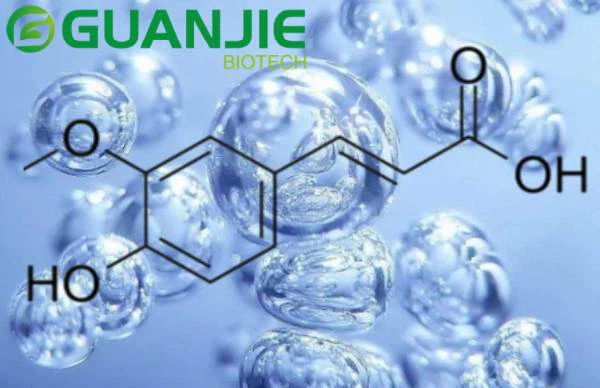
Pure ferulic acid powder is a hydroxycinnamic acid, a type of organic compound classified as a potent antioxidant. It is ubiquitously found in the plant kingdom, serving as a key structural component in the cell walls of plants like rice, oats, wheat, and coffee beans. It is also present in a variety of fruits and vegetables, including apples, artichokes, peanuts, and oranges. In skincare, it is primarily derived from these botanical sources through extraction processes. For instance, companies like Guanjie Biotech specialize in supplying high-purity, bulk Ferulic Acid powder. It is often extracted from rice bran for use in cosmetic and pharmaceutical formulations.
Primary Mechanism of Action
The superstar quality of pure ferulic acid powder is its ability to neutralize free radicals. Free radicals are unstable, highly reactive molecules generated by environmental aggressors like UV radiation and pollution. They cause oxidative stress, damaging skin cells, breaking down collagen, and leading to visible signs of aging like wrinkles, loss of elasticity, and hyperpigmentation.
Ferulic acid donates electrons to stabilize these free radicals, effectively disarming them. Its unique structure allows it to scavenge multiple types of free radicals. Furthermore, its most celebrated role in skincare is its synergistic effect:
Stabilization of Other Antioxidants:
Pure ferulic acid powder is rarely used alone. Its genius lies in its ability to dramatically enhance the stability and efficacy of other vulnerable antioxidants, most notably Vitamin C (L-ascorbic acid) and Vitamin E (alpha-tocopherol). When combined, ferulic acid not only boosts their photoprotection but also doubles the antioxidant power of the formulation and increases its photostability, meaning the serum remains effective for longer after application.
Key Benefits in Skincare:
• Photoprotection:
Pure ferulic acid powder does not replace sunscreen but provides a crucial internal layer of defense against UV-induced photodamage.
• Anti-Aging:
By mitigating oxidative stress, it helps prevent the degradation of collagen and elastin, preserving skin's firmness and reducing the appearance of fine lines.
• Brightening:
It can help inhibit the enzyme tyrosinase, which is involved in melanin production, thereby helping to fade dark spots and promote a more even skin tone.
• Anti-Inflammatory:
Ferulic acid bulk powder exhibits mild anti-inflammatory properties, which can be beneficial for calming irritated skin.
Side Effects and Usage:
Ferulic acid is generally very well-tolerated by all skin types, including sensitive skin. It is non-irritating and does not cause purging. Pure ferulic acid powder is typically found in serums, most famously in combination with Vitamins C and E. The recommended usage is in the morning, under sunscreen, to provide maximum protection against the environmental assaults of the day.
What is Retinol?
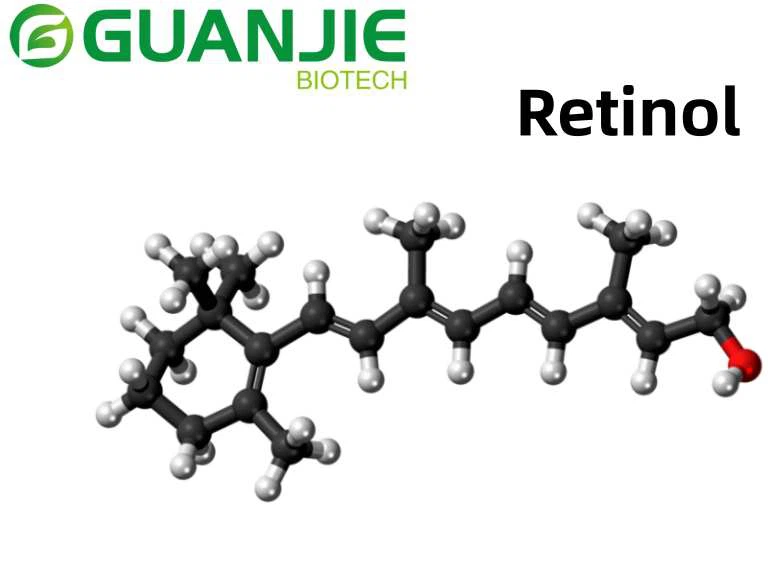
Retinol is a member of the retinoid family, which are compounds derived from Vitamin A. Unlike plant-derived ferulic acid, retinoids are fat-soluble molecules that are essential for human biological functions, including vision, immune response, and, most importantly for our purposes, skin cell growth and differentiation.
Retinol itself is one of several forms of Vitamin A used in skincare. It is a precursor molecule. On its own, it is relatively inactive. Once applied to the skin, enzymes within the skin convert retinol first into retinaldehyde and then into its active form, retinoic acid (tretinoin). It is retinoic acid that directly binds to receptors in the skin's cells to instigate its powerful effects.
Primary Mechanism of Action
Retinol's mechanism is fundamentally different from that of ferulic acid. It is not primarily an antioxidant. Instead, it functions as a cell-communicating ingredient. Once converted to retinoic acid, it binds to specific nuclear receptors (retinoic acid receptors) within skin cells. This binding acts like a key turning a lock, instructing the cell's DNA to behave in a more youthful and efficient manner.
This process regulates gene expression, leading to:
• Accelerated Cellular Turnover:
It encourages the shedding of old, dead, pigmented, and damaged skin cells from the stratum corneum (the surface layer) and stimulates the production of new, healthy cells in the basal layer. This process unclogs pores, refines skin texture, and fades hyperpigmentation.
• Boost in Collagen and Elastin Production:
It directly signals fibroblasts (the cells in the dermis) to produce new collagen and elastin, the structural proteins that give skin its plumpness and elasticity. This is its most powerful anti-aging effect.
• Normalization of Sebaceous Activity:
It helps to regulate oil production, making it beneficial for acne-prone skin.
Key Benefits in Skincare:
• Anti-Aging (The Gold Standard):
It is the most clinically proven ingredient to reduce the appearance of fine lines and wrinkles.
• Acne Treatment:
It prevents the clogging of pores and reduces inflammation.
• Skin Texture and Tone:
By promoting exfoliation, it evens out skin texture, minimizes pore appearance, and fades post-inflammatory hyperpigmentation and sun spots.
• Skin Radiance:
The constant shedding of dull surface cells reveals the fresher, brighter skin underneath.
Side Effects and Usage:
Unlike Pure ferulic acid powder, retinol is notorious for its potential side effects, often referred to as "retinization." This is the period of adjustment where the skin acclimates to the ingredient. Common side effects include:
• Dryness, flaking, and irritation
• Redness
• Purging (initial breakout as trapped congestion is pushed out faster)
• Sun sensitivity
Due to these effects, retinol must be introduced slowly (e.g., 2-3 times a week initially) and is exclusively recommended for nighttime use. Its efficacy can be degraded by sunlight, and the fresh, new skin it generates is more vulnerable to UV damage. Daily, broad-spectrum sunscreen use is non-negotiable when using retinol.
Summary of Differences
|
Feature |
Ferulic Acid |
Retinol |
|
Chemical Class |
Antioxidant (Hydroxycinnamic Acid) |
Retinoid (Vitamin A Derivative) |
|
Primary Origin |
Plant-based (e.g., rice bran, oats) |
Animal-derived or Synthesized |
|
Core Mechanism |
Neutralizes free radicals; stabilizes other antioxidants |
Converts to retinoic acid to regulate gene expression |
|
Primary Benefit |
Prevents future damage (Protection) |
Reverses existing damage (Renewal) |
|
Key Function |
Shield against environmental aggressors |
Stimulator of cellular turnover & collagen |
|
Best Time of Use |
Morning (under sunscreen) |
Night (sunlight degrades it) |
|
Tolerance |
Generally well-tolerated by all skin types |
Often causes initial irritation, dryness, and purging |
|
Sun Sensitivity |
No, it provides protection |
Yes, mandates strict sunscreen use |
|
Purging |
Does not cause purging |
Can cause purging |
|
Synergy |
Boosts efficacy of Vitamins C & E |
Boosts efficacy of other ingredients like Niacinamide |
Can Ferulic Acid And Retinol Used Together?
While they are not the same, their differences are precisely what make them a powerhouse duo. They work on complementary pathways to provide comprehensive skin health management. Think of it as a two-pronged strategy.
The Defender (Ferulic Acid in the AM):
In the morning, you apply a pure ferulic acid powder serum (typically with Vitamins C and E). This creates a powerful antioxidant shield on your skin. Throughout the day, this shield neutralizes free radicals generated by UV exposure and pollution before they can cause damage-such as breaking down collagen, creating pigmentation, and causing inflammation.
The Renovator (Retinol in the PM):
At night, while you sleep, your skin enters its prime repair mode. You apply retinol. It gets to work undoing the damage that may have occurred despite your best efforts. It accelerates the removal of damaged cells, stimulates the production of brand-new collagen, and repairs the structural matrix of the skin.
Furthermore, the antioxidant and anti-inflammatory properties of pure ferulic acid powder can theoretically help mitigate some of the irritation caused by retinol. While they are not typically formulated together in a single product due to pH and stability conflicts (retinol requires a neutral pH, while potent Vitamin C requires a low pH), using them in this complementary day/night routine is a cornerstone of modern dermatological advice.
Using ferulic acid without retinol means you are protecting well, but may not be effectively reversing prior damage. Using retinol without a robust antioxidant like ferulic acid (and sunscreen) means you are repairing at night but leaving your new, vulnerable skin exposed to significant new damage during the day, effectively undoing much of your hard work.
Conclusion
Pure ferulic acid powder and Retinol are not interchangeable. They are fundamentally different ingredients with distinct roles. Ferulic acid is a protective antioxidant, a shield that guards the skin from the outside in. Retinol is a renewing retinoid, a renovator that works from the inside out. Confusing them would be like confusing a bulletproof vest (protection) with a team of surgeons and physical therapists (repair and renewal). Both are crucial for safety and recovery, but they serve entirely different purposes.
The most advanced and effective skincare routines recognize this distinction and leverage the unique strengths of both. By employing pure ferulic acid powder in the morning as a preventative measure and retinol at night as a corrective treatment, one can create a holistic 24-hour cycle of defense and renewal, effectively preventing future photoaging while simultaneously reversing the signs of past damage. This synergistic approach represents the pinnacle of evidence-based skincare.
If you're a skincare product manufacturer in need of high-quality ingredients, trust Guanjie Biotech. We provide high-purity ferulic acid powder to enhance your formulations. For inquiries or orders, contact us at info@gybiotech.com. We guarantee reliable quality and professional service for your product development.
References
[1] Lin, F. H., Lin, J. Y., Gupta, R. D., Tournas, J. A., Burch, J. A., Selim, M. A., ... & Fischl, A. (2005). Ferulic acid stabilizes a solution of vitamins C and E and doubles its photoprotection of skin. Journal of Investigative Dermatology, *125*(4), 826-832.
[2] Murray, J. C., Burch, J. A., Streilein, R. D., Iannacchione, M. A., Hall, R. P., & Pinnell, S. R. (2008). A topical antioxidant solution containing vitamins C and E with ferulic acid protects human skin from sunlight damage and DNA photoproducts. Journal of the American Academy of Dermatology, *59*(3), 418-425.
[3] Kong, R., Cui, Y., Fisher, G. J., Wang, X., Chen, Y., Schneider, L. M., & Majmudar, G. (2016). A comparative study of the effects of retinol and retinoic acid on histological, molecular, and clinical properties of human skin. Journal of Cosmetic Dermatology, *15*(1), 49-57.
[4] Zasada, M., & Budzisz, E. (2019). Retinoids: active molecules influencing skin structure formation in cosmetic and dermatological treatments. Advances in Dermatology and Allergology/Postępy Dermatologii i Alergologii, *36*(4), 392–397.
[5] Mukherjee, S., Date, A., Patravale, V., Korting, H. C., Roeder, A., & Weindl, G. (2006). Retinoids in the treatment of skin aging: an overview of clinical efficacy and safety. Clinical Interventions in Aging, *1*(4), 327–348.