Pure Hyaluronic acid powder is a naturally occurring glycosaminoglycan widely used in medical, cosmetic, and therapeutic applications due to its biocompatibility, biodegradability, and ability to retain moisture. Its safety profile has been extensively studied, with most research indicating that HA is generally safe when used appropriately. However, potential side effects and risks depend on factors such as the source, method of administration, and individual sensitivity. So is hyaluronic acid safe?

Benefits of Hyaluronic Acid
Pure Hyaluronic acid powder is a key component of the extracellular matrix, contributing to tissue hydration, lubrication, and wound healing. Its functions include:
• Skin Health:
HA retains moisture, improving skin elasticity and reducing wrinkles.
• Joint Lubrication:
In synovial fluid, HA acts as a shock absorber, reducing joint friction.
• Wound Healing:
Hyaluronic acid promotes tissue repair by modulating inflammation and cell migration.
Because hyaluronic acid bulk powder is endogenous (naturally produced by the body), it is generally considered safe with minimal risk of allergic reactions.
Is Hyaluronic Acid Safe?
Pure Hyaluronic acid powder is widely used in skincare, oral supplements, and medical injections due to its excellent biocompatibility and moisturizing properties. While generally considered safe, its risk profile varies depending on the method of application. Below is an analysis of HA's safety in topical, oral, and injectable forms, supported by scientific research.

Topical Use (Skincare Products)
HA is a key ingredient in serums, moisturizers, and masks because of its ability to attract and retain moisture. Studies confirm its safety for topical use:
• Low Irritation Potential
A 2014 study by Pavicic et al. found that HA-based skincare products were well-tolerated, even by individuals with sensitive skin. The study reported minimal adverse reactions, such as mild redness in rare cases, which resolved quickly.
• No Systemic Absorption
Due to its high molecular weight, Pure Hyaluronic acid powder remains on the skin's surface and does not penetrate deeply into the bloodstream. Bukhari et al. (2018) confirmed that topical HA does not cause systemic side effects, making it safe for long-term use[2].
Topical HA is extremely safe, with negligible risk of irritation or systemic effects. It is suitable for all skin types, including sensitive and acne-prone skin.
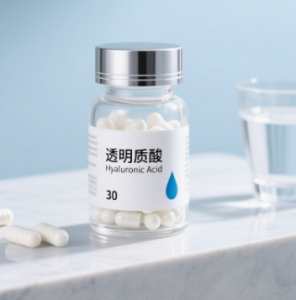
Oral Supplements
HA supplements are popular for improving joint health and skin hydration. Research supports their safety and efficacy:
• Safe for Long-Term Use
A 12-week clinical trial by Kawada et al. (2014) demonstrated that oral pure Hyaluronic acid powder supplementation caused no adverse effects in participants. Blood tests and health markers remained stable, confirming its safety for daily consumption[3].
• Improved Joint Function
A meta-analysis by Rutjes et al. (2012) reviewed multiple studies on HA for osteoarthritis and found that oral and injectable HA significantly reduced joint pain without serious side effects. Mild digestive discomfort was the only reported issue in a small number of cases[4].
Oral Pure Hyaluronic acid powder is safe for long-term use, with rare and mild side effects. It is particularly beneficial for joint health and skin hydration.

Injectable HA (Dermal Fillers & Joint Injections)
Injectable HA is used in cosmetic procedures (dermal fillers) and medical treatments (knee osteoarthritis). While effective, it carries a slightly higher risk due to the injection process.
• Mild Side Effects
Common but temporary reactions include redness, swelling, and bruising at the injection site. A study by Andre et al. (2005) found that these side effects typically resolve within a few days[5].
• Rare Complications
Improper injection techniques can lead to serious but rare complications, such as vascular occlusion (blocked blood flow). DeLorenzi (2013) emphasized the importance of trained professionals to minimize these risks[6].
Injectable Pure Hyaluronic acid powder is safe when administered by qualified practitioners. While minor side effects are common, severe complications are rare and preventable with proper technique.
Final Verdict on HA Safety
● Topical HA: Very safe, minimal risk.
● Oral HA: Safe for long-term use, with mild digestive issues in rare cases.
● Injectable HA: Generally safe but requires professional administration to avoid complications.
Overall, Pure Hyaluronic acid powder is a low-risk ingredient with proven benefits across various applications.
Regulations on Hyaluronic Acid
Pure Hyaluronic acid powder is regulated differently worldwide depending on its application-whether as a cosmetic ingredient, dietary supplement, or medical field. Below is an overview of key regulatory frameworks in the U.S., EU, Japan, and China.
United States Regulations
•Cosmetic Applications
In the U.S., the Food and Drug Administration (FDA) categorizes topical HA products as cosmetics under the Federal Food, Drug, and Cosmetic Act (FD&C Act). As such, they do not require pre-market approval but must be safe for consumer use and properly labeled. The FDA can take action against products that are adulterated or misbranded [9].
•Injectable Dermal Fillers
HA-based dermal fillers (e.g., Juvederm, Restylane) are classified as Class III medical devices, the most stringent FDA category for medical products. Manufacturers must submit a Premarket Approval (PMA) application, including clinical trial data demonstrating safety and efficacy[8]. Post-market surveillance is required to monitor adverse events.
•Oral Supplements
Under the Dietary Supplement Health and Education Act (DSHEA), Pure Hyaluronic acid powder is permitted as a dietary supplement. However, manufacturers cannot make unsubstantiated health claims without FDA review. The FDA does not evaluate supplements before market entry, but can take action against unsafe products[7].
European Union Regulations
• Cosmetic Products
The EU Cosmetics Regulation (EC No 1223/2009) governs pure Hyaluronic acid powder in skincare. While pre-approval is not required, manufacturers must conduct safety assessments and submit product information via the Cosmetic Products Notification Portal (CPNP) [10].
•Medical Devices
Injectable HA fillers and viscosupplementation products for joints are regulated under the Medical Device Regulation (MDR 2017/745). They require CE marking, demonstrating conformity with safety and performance standards. Clinical evaluations and post-market surveillance are mandatory [11].
•Novel Foods
HA used in supplements may require authorization as a Novel Food under Regulation (EU) 2015/2283. The European Food Safety Authority (EFSA) evaluates safety before market approval [12].
Japan Regulations
• Cosmetics
Japan's Pharmaceuticals and Medical Devices Agency (PMDA) oversees cosmetics containing HA. Products must comply with the Japanese Standards of Quasi-Drug Ingredients, but pre-approval is not required for most HA cosmetics[13].
•Health Supplements
Pure Hyaluronic acid powder is approved under the Foods with Functional Claims (FFC) and Foods for Specified Health Uses (FOSHU) systems. Manufacturers must submit scientific evidence supporting health benefits [14].
•Medical Devices
HA injections for osteoarthritis (e.g., Synvisc) are regulated as medical devices requiring PMDA approval based on clinical data[15].
China Regulations
•Cosmetics
The National Medical Products Administration (NMPA) regulates pure Hyaluronic acid powder under the Cosmetic Supervision and Administration Regulation (CSAR). Imported HA products must undergo safety testing and registration[13]
•Medical Devices
Injectable HA fillers are classified as Class III medical devices, requiring clinical trials and NMPA approval. The registration process is stringent, with additional requirements for imported products[14].
•Health Foods
Pure Hyaluronic acid powder in supplements must comply with the Health Food Registration and Filing System. Only approved HA sources can be used, and health claims are strictly controlled[13].
Other Key Markets
•South Korea
The Ministry of Food and Drug Safety (MFDS) regulates HA cosmetics under the Cosmetic Act, requiring safety testing but no pre-approval. Injectable HA is classified as a medical device [15].
•Australia
The Therapeutic Goods Administration (TGA) classifies HA injectables as medical devices (Class III) and oral HA as a listed complementary medicine[16].
Comparative Analysis
While most countries regulate pure Hyaluronic acid powder based on application, key differences exist:
Stringency: The U.S. and EU have the strictest regulations for injectable HA.
Supplements: Japan and China have specific functional food categories for HA.
Import Restrictions: China imposes additional testing for imported HA products.
Hyaluronic acid bulk is generally safe for topical, oral, and injectable use, with minimal side effects. However, injectable forms require skilled administration to avoid complications. Ongoing research continues to support its safety and efficacy in dermatological and orthopedic applications. Pure Hyaluronic acid powder Manufacturers must navigate complex approval processes, particularly for injectable and supplement products. Guanjie Biotech is a bulk hyaluronic acid supplier. If you need Hyaluronic acid raw material, welcome to enquiry with us at info@gybiotech.com.
References
[1]Pavicic, T., et al. (2014). "Efficacy of cream-based novel formulations of hyaluronic acid of different molecular weights in anti-wrinkle treatment." Journal of Drugs in Dermatology, 13(2), 154-160.
[2]Bukhari, S. N. A., et al. (2018). "Hyaluronic acid, a promising skin rejuvenating biomedicine: A review of recent updates and pre-clinical and clinical investigations." International Journal of Biological Macromolecules, 120, 1682-1695.
[3]Kawada, C., et al. (2014). "Ingested hyaluronan moisturizes dry skin." Nutrition Journal, 13(1), 70.
[4]Rutjes, A. W., et al. (2012). "Viscosupplementation for osteoarthritis of the knee: A systematic review and meta-analysis." Annals of Internal Medicine, 157(3), 180-191.
[5]Andre, P., et al. (2005). "Safety of a new monophasic hyaluronic acid filler in corrective and aesthetic facial surgery." Journal of Cosmetic Dermatology, 4(4), 202-209.
[6]DeLorenzi, C. (2013). "Complications of injectable fillers, part I." Aesthetic Surgery Journal, 33(4), 561-575.
[7]FDA. (2020). Dietary Supplement Health and Education Act (DSHEA). U.S. Food and Drug Administration.
[8]FDA. (2021). Regulation of Dermal Fillers. U.S. Food and Drug Administration.
[9]FDA. (2022). Cosmetic Labeling Guide. U.S. Food and Drug Administration.
[10]European Commission. (2023). *EU Cosmetics Regulation (EC No 1223/2009)*.
[11]EU MDR. (2017). *Medical Device Regulation (MDR 2017/745)*.
[12]EFSA. (2019). Novel Food Applications for Hyaluronic Acid. European Food Safety Authority.
[13]PMDA. (2021). Japanese Cosmetic Regulations. Pharmaceuticals and Medical Devices Agency.
[14]PMDA. (2022). Medical Device Approval Process. Pharmaceuticals and Medical Devices Agency.
[15]NMPA. (2021). Cosmetic Supervision in China. National Medical Products Administration.
[16]TGA. (2021). Regulation of Hyaluronic Acid Products. Therapeutic Goods Administration.