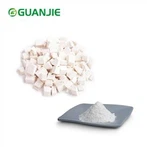
Pure spermidine is a fascinating biochemical compound often mentioned in the context of cellular metabolism, longevity, and health supplements. As the popularity of spermidine grows in the fields of nutrition, medicine, and biotechnology, many individuals and professionals alike often ask: Is spermidine a protein? This question is fundamental to understanding the nature of spermidine, its biological role, and its applications in science and industry.

What Is Spermidine?
Spermidine is a naturally occurring polyamine compound involved in cellular metabolism and growth. It was first discovered in seminal fluid, which inspired its name. Chemically, Pure spermidine is an aliphatic polyamine with three amino groups, making it a triamine. Its molecular formula is C7H19N3, and it is a small organic molecule rather than a macromolecule.
Chemical Structure and Properties
Spermidine's structure consists of a linear chain with nitrogen atoms spaced by carbon atoms, allowing it to carry multiple positive charges at physiological pH due to protonation of its amine groups. This unique feature allows fermented wheat germ extract spermidine to interact with negatively charged molecules like DNA and RNA.

•Chemical name:
N-(3-Aminopropyl)butane-1,4-diamine
•Molecular formula:
C7H19N3
•Molecular weight:
Approximately 145.25 g/mol
•Appearance:
When synthesized industrially, spermidine trihydrochloride appears as an off-white powder.
These features differentiate Pure spermidine from proteins, which are polymers of amino acids.
What Are Proteins?
Proteins are complex macromolecules composed of long chains of amino acids linked by peptide bonds. They typically contain hundreds to thousands of amino acids folded into intricate three-dimensional structures. Proteins serve as enzymes, structural components, signaling molecules, and much more.
Key Characteristics of Proteins
Proteins are essential macromolecules made up of amino acid building blocks. These amino acids are covalently linked together through peptide bonds, forming long polymer chains. This polymeric structure allows proteins to reach substantial molecular weights, typically ranging from several thousand to millions of Daltons, depending on their length and complexity.
A defining feature of proteins is their ability to fold into intricate three-dimensional structures. This folding is not random; it is highly specific and critical for the protein's biological function. Each fold and shape determines how a protein interacts with other molecules, whether it's as an enzyme, structural support, hormone, or transport agent.
The peptide bonds that link amino acids are formed between the carboxyl group of one amino acid and the amino group of the next, creating a stable backbone. Despite this uniformity in linkage, proteins exhibit immense structural and functional diversity due to the 20 standard amino acids available. Each amino acid has a distinct side chain, contributing unique chemical properties that influence the protein's shape and reactivity.
This combination of polymer structure, molecular size, complex folding, specific bonding, and amino acid variety underlies the vast and vital roles proteins play in nearly all biological processes.
Is Spermidine a Protein?
Pure spermidine often draws attention due to its vital roles in cellular processes and health benefits, but a common misconception is to categorize it as a protein. In reality, spermidine is not a protein, and understanding the distinctions between the two helps clarify its function and application in biology and industry. Here are four fundamental reasons why spermidine does not qualify as a protein.
Size and Structural Complexity
One of the key differences lies in molecular size and complexity. Proteins are large macromolecules, often made up of hundreds or thousands of amino acids linked together in a specific sequence and folded into intricate three-dimensional shapes. These structures are crucial to their function and stability.
In contrast, Pure spermidine is a small organic molecule with a molecular weight of approximately 145 Daltons (Da). It does not consist of a chain of amino acids, nor does it have the capacity to fold into the complex secondary, tertiary, or quaternary structures typical of proteins. Instead, spermidine exists as a simple, linear polyamine - far smaller and structurally simpler than any protein.

Chemical Composition and Bonding
Proteins are polymers made by linking amino acids through peptide bonds, forming long chains that define their primary structure. These amino acids are the building blocks of proteins, and the peptide bonds between them are essential for the formation of protein backbones.
Spermidine, on the other hand, belongs to a class of compounds known as polyamines. It contains three amino (–NH₂) groups separated by carbon chains, but it does not contain amino acids and has no peptide bonds. Chemically, Pure spermidine is a single, small molecule, not a polymer. Its structure is N-(3-aminopropyl)butane-1,4-diamine, highlighting its linear, non-peptidic nature.
Function in the Body
While both proteins and spermidine play important roles in the body, their functions are fundamentally different. Proteins are often referred to as the workhorses of the cell, acting as enzymes, structural components, transporters, and signaling molecules.
Spermidine, though biologically important, does not serve as an enzyme or structural molecule. Instead, its role is more regulatory and supportive. Spermidine helps stabilize DNA, promotes autophagy (the body's system for cleaning out damaged cells), and supports cell growth and differentiation. These functions are crucial for cellular health and longevity, but they occur through chemical interactions, not enzymatic activity or protein-mediated pathways.
Biosynthesis and Origin
The process of biosynthesis further highlights the difference. Proteins are produced through a complex mechanism called translation, where ribosomes read mRNA sequences to assemble amino acids into polypeptides. This process is central to gene expression and requires a highly coordinated cellular machinery.
Pure spermidine powder is synthesized differently. In living organisms, it is produced via a polyamine biosynthesis pathway starting from ornithine and methionine, involving enzymes like ornithine decarboxylase and spermidine synthase. Additionally, spermidine can be manufactured synthetically for commercial use.
For example, Guanjie Biotech offers spermidine trihydrochloride powder with 98% and 1% purity as an off-white powder, using butylenediamine as the raw material. The company uses a synthetic process to ensure high purity and consistency, making the Pure spermidine powder product suitable for supplements, research, and pharmaceutical applications.
In summary, spermidine is not a protein. It is a small polyamine molecule with a distinct chemical structure, biosynthetic pathway, and set of functions. Unlike proteins, Pure spermidine does not consist of amino acids, does not fold into complex structures, and does not act as an enzyme or structural element in cells. Instead, spermidine bulk powder plays supportive and regulatory roles in maintaining cellular health. Guanjie Biotech provides wholesale spermidine powder. Feel free to inquire with us at info@gybiotech.com.