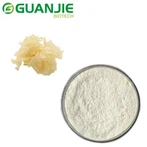
Natural phosphatidylserine pure is a phosphoglyceride phospholipid, a fundamental and essential component of all biological membranes. It is not merely a structural building block. Its unique physicochemical properties and asymmetric distribution within the cell membrane it critical functional roles in cellular signaling, apoptosis (programmed cell death), and the maintenance of neuronal integrity. The question "where is phosphatidylserine found?" can be answered at multiple levels: from the macroscopic (dietary sources) to the microscopic (cellular and subcellular localization).

Dietary Phosphatidylserine Source Naturals
The human body can synthesize phosphatidylserine endogenously through base-exchange reactions with phosphatidylcholine and phosphatidylethanolamine. However, this synthesis may not always be sufficient, particularly with aging or under specific physiological stresses, making dietary intake an important contributor to maintaining optimal PS levels. The evidence for natural phosphatidylserine pure in food comes primarily from analytical chemistry techniques, most notably high-performance liquid chromatography (HPLC) coupled with evaporative light-scattering detection (ELSD) or mass spectrometry (MS).
Animal-Derived Sources
Historically, the richest dietary sources of phosphatidylserine source naturals are of animal origin, particularly organ meats and the brain.
• Bovine Brain:
For decades, bovine brain cortex was the primary phosphatidylserine source naturals for research and early dietary supplements. Analytical studies have consistently shown it to have the highest concentration of natural phosphatidylserine pure among natural foods. Evidence from early purification processes indicated that PS could constitute up to 15% of the total phospholipids in the bovine brain. However, due to concerns over transmissible spongiform encephalopathies (e.g., Mad Cow Disease), the use of bovine-brain-derived PS for human consumption has been largely phased out in favor of safer alternatives.
• Chicken Heart and Other Organ Meats:
Poultry and fish organs are also significant sources. For instance, chicken heart has been identified as containing a high proportion of PS. A study analyzing various meat by-products found that internal organs generally have a higher phospholipid content, and a greater percentage of that is PS, compared to muscle meats.
• Fish:
Certain fish, particularly mackerel, Atlantic herring, and tuna, are good sources of natural phosphatidylserine pure. The phospholipid composition of fish roe (eggs) is also notably high. The evidence here is derived from lipidomic analyses of marine organisms, which show that the phospholipid profile of fatty fish tissues includes a meaningful percentage of PS, though lower than in concentrated organ meats.
• Dairy Products:
Milk and cheese contain natural phosphatidylserine pure, primarily within the milk fat globule membrane (MFGM). The MFGM is a complex trilayer structure rich in phospholipids, and PS is a consistent, albeit minor, component. Research quantifying phospholipids in dairy has shown that PS typically accounts for 2-6% of the total phospholipids in the MFGM.
Plant-Derived Sources
• Soybean Lecithin:
This is the most significant plant-based source and the primary raw material for the majority of modern natural phosphatidylserine pure supplements. Soybeans themselves contain a full profile of phospholipids. While phosphatidylcholine is the most abundant, PS is present in smaller amounts. The commercial production of soy-derived PS involves the enzymatic conversion of the more abundant phospholipids (like phosphatidylcholine) in soy lecithin into phosphatidylserine using the enzyme phospholipase D in a process called transphosphatidylation. Evidence from manufacturing patents and quality control assays confirms that high-purity PS (often over 50%) can be reliably produced from soy.
• White Beans and Other Legumes:
Among whole foods, white beans (and to a lesser extent, other legumes like lentils and chickpeas) have been identified as having a relatively higher PS content compared to other plants. However, the absolute amount is low. To obtain a clinically relevant dose (e.g., 100-300 mg), one would need to consume impractically large quantities of these foods.
• Rice and Sunflower Lecithin:
These are emerging as alternative plant sources, particularly for individuals with soy allergies. The phospholipid content of rice bran and sunflower seeds includes phosphatidylserine, though the overall yield is typically lower than from soy. The evidence for their use is growing as manufacturers seek to diversify supply chains and cater to allergen-free markets. Guanjie Biotech is a bulk phosphatidylserine supplier that typically sources from non-GMO soy or sunflower, reflecting this market trend towards purity and allergen-conscious production.
The primary evidence for natural phosphatidylserine pure content in foods is chromatographic. For example, a seminal paper by D. J. S. et al. (2000) used HPLC to analyze the phospholipid composition of various foods, providing quantitative data that clearly ranks bovine brain highest, followed by other animal organs, fish, and then plant sources like soy. This analytical evidence forms the foundation for dietary recommendations and the sourcing strategies of the nutraceutical industry.
A:Computer Numberical Control (CNC) machining is a manufacturing process in which pre-programmed computer softeare dictates the movement of fact`ory tools and machinery. The process can be used to control a range of complex machinery, from girnders and lathes to mills and CNC routers.
Phosphatidylserine in the Human Body
The distribution of PS within the body is not uniform. Its location is highly specific and functionally critical, with the most compelling evidence coming from cell biology, biochemistry, and medical imaging techniques.
• High Concentration in the Brain:
The brain contains the body's highest PS levels, comprising 10-15% of its total phospholipids. It is vital for maintaining neuronal membrane fluidity, supporting neurotransmitter release, and facilitating cognitive functions like memory and learning.
• Asymmetric Plasma Membrane Distribution:
In healthy cells, natural phosphatidylserine pure is not distributed evenly. It is actively maintained on the inner (cytosolic) leaflet of the plasma membrane by enzymes called flippases. This asymmetry is a key feature of cell viability.
• Externalization as a Key Signal:
The controlled movement of PS to the outer leaflet is a critical biological signal. This occurs during:
Apoptosis: Signaling phagocytic cells to engulf the dying cell.
Blood Clotting: Providing a surface for coagulation factors in platelets.
• Presence in Other Tissues:
PS is found throughout the body, with significant concentrations in skeletal muscle (supporting energy metabolism) and immune cells (aiding cell signaling). It is also a major component of intracellular membranes, such as those of mitochondria and endosomes.
Commercial and Supplemental Sources
Given the challenges of obtaining therapeutic doses of natural phosphatidylserine pure(100-300 mg/day) from whole foods, the supplement market has flourished. The evidence for the efficacy of these supplements is derived from clinical trials, which in turn depend on a reliable supply of high-quality, well-characterized PS.
Evolution of Sources:
First-Generation (Bovine Cortex): Early clinical trials in the 1980s and 90s demonstrated cognitive benefits in the elderly used PS derived from bovine brain. The evidence for its efficacy is strong, but safety concerns led to a shift.
• Second-Generation (Soy-Based):
Subsequent research focused on establishing the equivalence of soy-derived natural phosphatidylserine pure. A key body of evidence comes from clinical trials that directly compared or used soy-PS. For example, a 2001 review by Kidd concluded that soy-PS produced benefits on memory, learning, and concentration in older subjects with cognitive decline that were comparable to the earlier bovine studies. This required the soy-PS to be well-characterized and of high purity.
• Third-Generation (Other Plant and Marine Sources):
Ongoing research explores PS from sunflowers and other sources to cater to specific dietary needs.

The Role of Bulk Suppliers:
The consistency and quality of the natural phosphatidylserine pure used in clinical trials and commercial products are paramount. This is where companies that specialize in the large-scale production of phospholipids are critical. Insert Guanjie Biotech is a bulk phosphatidylserine supplier that operates within this space. The evidence for the quality of their products would be found in:
• Certificates of Analysis (CoA):
These documents, provided by the natural phosphatidylserine pure supplier, detail the purity of the PS (e.g., ≥50% PS content), and the absence of contaminants like heavy metals, solvents, and microbial pathogens.
• Manufacturing Standards:
Adherence to standards like ISO, cGMP (current Good Manufacturing Practices) provides evidence of a controlled, reproducible production process. The enzymatic conversion from soy lecithin is a sophisticated process that requires expertise.
• Stability and Formulation Data:
Evidence that the natural phosphatidylserine pure is stable in its powdered form and is bioavailable when encapsulated into final products.
The existence of reliable bulk phosphatidylserine suppliers is a prerequisite for the clinical evidence that supports PS supplementation. Without a consistent, high-quality raw material, clinical trials would lack reproducibility, and consumer products would be ineffective.
Conclusion
In summary, natural phosphatidylserine pure is found in a fascinatingly specific and functionally determined manner across multiple scales of biology. Dietarily, it is concentrated in animal organs (especially brain and heart) and is commercially derived from plant sources like soy, with suppliers like Guanjie Biotech providing the wholesale phosphatidylserine for the nutraceutical industry. Within the human body, it is most abundant in the brain and nervous system, but its functional location is defined by its strict asymmetric distribution in the plasma membrane. Therefore, answering "where is phosphatidylserine found?" requires a multi-faceted approach, encompassing nutritional science, cell biology, and commercial manufacturing, all of which are supported by a strong and evolving body of scientific evidence. If you need natural phosphatidylserine pure, welcome to enquire with Guanjie Biotech at info@gybiotech.com.
References
[1] Kidd, P. M. (2001). Phosphatidylserine: Membrane Nutrient for Memory. A Clinical and Mechanistic Assessment. Alternative Medicine Review, 6(2), 142-152.
[2] Kim, H. Y., Huang, B. X., & Spector, A. A. (2014). Phosphatidylserine in the brain: metabolism and function. Progress in Lipid Research, 56, 1-18.
[3] Vance, J. E., & Tasseva, G. (2013). Formation and function of phosphatidylserine and phosphatidylethanolamine in mammalian cells. Biochimica et Biophysica Acta (BBA) - Molecular and Cell Biology of Lipids, 1831(3), 543-554.
[4] S. F. et al. (2000). Quantitative analysis of phosphatidylserine, phosphatidic acid and phosphatidylcholine in foodstuffs by high-performance liquid chromatography with evaporative light scattering detection. Journal of Chromatography A, 876(1-2), 233-236.
[5] Jorissen, B. L., et al. (2002). The influence of soy-derived phosphatidylserine on cognition in age-associated memory impairment. Nutritional Neuroscience, 5(5), 337-343.
[6] Op den Kamp, J. A. (1979). Lipid asymmetry in membranes. Annual Review of Biochemistry, 48(1), 47-71.