


Bulk phosphatidylserine (PS) is an important phospholipid molecule that is widely found in the cell membranes of humans and other organisms. It is a crucial component of cell membranes, especially in the nervous system, where it plays an essential role. To determine whether phosphatidylserine is natural, we can explore its sources, synthesis process, and distribution in nature.
Chemical Structure and Properties
Phosphatidylserine is a phospholipid molecule that contains serine, typically composed of a glycerol backbone, two fatty acid chains, and a serine molecule. The unique part of its structure is the attachment of serine to glycerol via a phosphate ester bond. Phosphatidylserine is widely found in organisms, particularly in the membranes of nerve cells, where it participates in cellular signaling, membrane stability, and repair.
Natural Sources of Phosphatidylserine
Phosphatidylserine is primarily extracted from both animal and plant sources. Traditionally, it was obtained from animal brain tissue, particularly from the brains of cows and pigs. However, due to the risks associated with diseases like Bovine Spongiform Encephalopathy (BSE) and ethical concerns, the production of phosphatidylserine has increasingly shifted to plant-based sources, particularly from soybeans and sunflowers.
1. Animal Sources:
Animal tissues, especially brain tissue, are traditional sources of bulk phosphatidylserine. The brain contains a high concentration of phosphatidylserine, and it can be extracted through separation methods. However, with the rise of animal disease risks, this source is becoming more limited.
2. Plant Sources:
Plants, especially soybeans, are the primary plant sources of phosphatidylserine bulk powder. The phosphatidylserine extracted from soybeans is similar in structure to that from animals, but plant-based phosphatidylserine has the advantage of being free from the risks of animal diseases. As a result, plant-based phosphatidylserine has become a widely accepted natural source and is considered safe, healthy, and ethically sound.

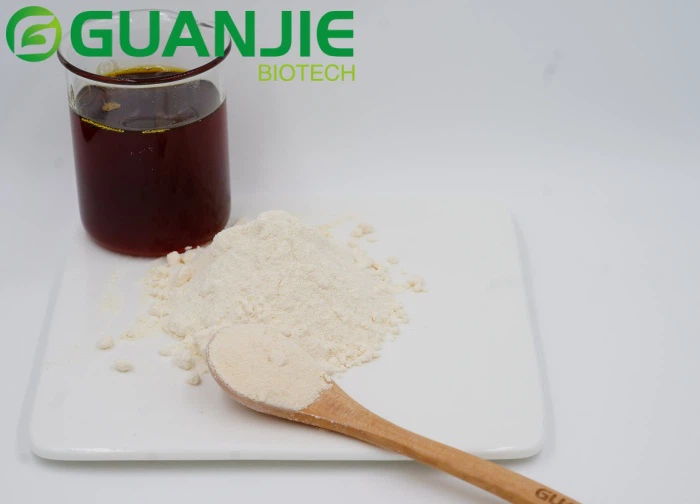
Guanjie Biotech is a bulk phosphatidylserine manufacturer, Our phosphatidylserine products are from soybean, sunflower seed. 100% natural and no additives. Welcome to enquire at info@gybiotech.com.
Synthesis of Phosphatidylserine
Phosphatidylserine can be synthesized in two ways: in vivo synthesis and external extraction.
1. In Vivo Synthesis:
Inside the body, phosphatidylserine can be synthesized from phosphatidylserine by a hydroxylation reaction. This process typically occurs on the inner side of the cell membrane, where phosphatidylserine combines with serine to form phosphatidylserine through enzymatic activity. This is a critical biosynthetic pathway for phosphatidylserine in cell membranes, particularly in nerve cells.
2. External Extraction:
As mentioned earlier, bulk phosphatidylserine can be extracted from animal and plant tissues. Traditional extraction methods often involve solvent extraction, ultrasonic disruption, and other techniques to separate and purify phosphatidylserine. Modern extraction technologies, such as supercritical CO₂ extraction, are increasingly used to efficiently extract phosphatidylserine without using chemical solvents.
Naturalness of Phosphatidylserine
Phosphatidylserine is considered natural because it is found in both plant and animal tissues. Its naturalness can be analyzed from several aspects:
- Biological Source: Phosphatidylserine naturally occurs in animal tissues (especially brain tissues) and plant sources (especially soybeans). It is a fundamental component of cell membranes and is involved in vital biological functions.
- Synthesis Process: Although bulk phosphatidylserine may undergo some chemical treatments or extractions in industrial production, its origin and biosynthesis in living organisms are natural processes.
- Biological Functions: Phosphatidylserine's biological functions in the human body are closely related to its natural source. It contributes to the construction and maintenance of cell membranes and plays a role in cognitive function, memory, and other important biological activities.
Natural Extraction and Processing
While phosphatidylserine occurs naturally in both animal and plant sources, modern technology is used to extract and process it to meet market demand, ensuring its quality and stability.
- Plant Extraction: Currently, soybeans and sunflowers are the most common plant sources. The extraction of plant-based bulk phosphatidylserine typically involves solvent extraction or supercritical CO₂ extraction. Plant-based phosphatidylserine is increasingly popular due to its safety and lack of animal disease risks. Moreover, plant extraction adheres to vegetarian and ethical standards.
- Purification and Standardization: During extraction, phosphatidylserine undergoes several purification steps, such as precipitation, filtration, and chromatography, to remove impurities and improve its purity. The final product is a high-purity phosphatidylserine, commonly used in food, dietary supplements, and cosmetics.
Health Benefits and Applications
The health benefits of bulk phosphatidylserine are closely tied to its naturalness. As a compound naturally present in the human body, phosphatidylserine provides various biological functions:
●Cognitive Function:
Phosphatidylserine plays a vital role in maintaining brain cell health and is closely linked to cognitive functions, such as memory. Studies show that supplementing with bulk phosphatidylserine can help slow age-related memory decline and improve learning abilities.
●Mood and Stress Response:
Phosphatidylserine has a role in the brain that helps improve mood and reduce stress, particularly in individuals with high levels of anxiety or depression.
●Exercise Performance:
Bulk Phosphatidylserine has been shown to benefit athletes by improving performance and reducing muscle fatigue after exercise.
●Neuroprotection:
Phosphatidylserine helps in the repair and regeneration of the nervous system, protecting nerve cells from damage, and potentially preventing or treating neurodegenerative diseases.
Naturalness and Sustainability of Phosphatidylserine
With increasing awareness of natural food ingredients, plant-based phosphatidylserine has become the mainstream choice in the market. Plant extraction not only avoids the ethical and health risks associated with animal sources but also aligns with sustainability goals. Plants like soybeans and sunflowers can be grown on a large scale, ensuring a stable supply of phosphatidylserine.
In conclusion, bulk phosphatidylserine is a naturally occurring phospholipid found in both animal and plant tissues, especially in brain and nerve cell membranes. With the development of extraction technologies, plant-based phosphatidylserine has become the most popular source on the market, offering a safe, ethical, and sustainable alternative to animal-based phosphatidylserine. Therefore, bulk phosphatidylserine can be considered a natural and essential component with various biological functions.
Guanjie Biotech is a trusted bulk phosphatidylserine supplier, specializing in both powder and liquid forms for over 20 years. We source our phosphatidylserine from high-quality soybeans and sunflower seeds, ensuring purity and consistency. Our products are widely applied across the food, dietary supplement, cosmetics, and healthcare industries.
For inquiries or more information, please feel free to contact us at info@gybiotech.com.
Scientific and Academic References
[1]Wurtman, R. J. (1992)."Clinical trials of phosphatidylserine in elderly patients with cognitive impairment."Nutrition Reviews, 50(3), 103-106.
[2]Crook, T. H., Tinklenberg, J., Yesavage, J., Petrie, W., Nunzi, M. G., Massari, D. C., & Dean, R. (1991)."Effects of phosphatidylserine in age-associated memory impairment."Neurology, 41(5), 644-649.
[3]Kidd, P. M. (1999)."A review of nutrients and botanicals in the integrative management of cognitive dysfunction."Alternative Medicine Review, 4(3), 144-161.
[4]Parnetti, L., et al. (2001)."Phosphatidylserine in the treatment of Alzheimer's disease: results of a multicenter study." Clinical Therapeutics, 23(6), 879-895.


