No, nicotinamide riboside (NR) is not the same molecule as "vitamin B3" (which is a family of compounds), but nicotinamide riboside powder bulk is a form of vitamin B3 - a modern NAD⁺precursor member of the vitamin B3 family with unique metabolic behavior and potential advantages for raising cellular NAD⁺. So let's talk about why Vitamin B3 isn't the same as Nicotinamide Riboside.

What Is Vitamin B3 and Nicotinamide Riboside?
What is Vitamin B3?
Vitamin B3, also known as Niacin, is not a single compound but a vitamer family. This means it's a group of related compounds that all provide Vitamin B3 activity in the body. The body ultimately converts all forms into their active forms to function.
The three main, well-established forms of Vitamin B3 are:
• Nicotinic Acid (Niacin):
The original form identified to treat pellagra (a disease caused by B3 deficiency). It's known for causing a "niacin flush" (skin redness and tingling).
• Nicotinamide (Niacinamide):
The amide form of nicotinic acid. It provides the same vitamin activity but does not cause the skin flush.
• Nicotinamide Riboside (NR):
A newer, more recently discovered form of Vitamin B3.
What is Nicotinamide Riboside (NR)?
Nicotinamide Riboside is a unique and potent form of Vitamin B3. It is a precursor to Nicotinamide Adenine Dinucleotide (NAD+), a critical coenzyme found in every cell in your body.
• Key Function:
NR is prized for its efficiency in boosting NAD+ levels.
• Why it's Special:
Research suggests that NR may have a more efficient pathway to becoming NAD+ compared to the other, older forms of B3, especially as we age and our natural NAD+ levels decline.
The Common Goal: NAD+
All forms of Vitamin B3 share the same ultimate goal: to be converted into NAD+.
• NAD+ is essential for converting food into energy (cellular metabolism).
• It also plays a crucial role in activating enzymes that repair DNA and maintain cellular health.
• Declining NAD+ levels are linked to the aging process and various age-related diseases.
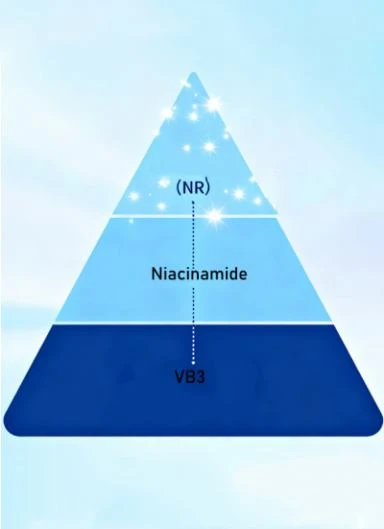
Here is a simplified visual of how the different forms relate and convert into NAD+:

Is Vitamin B3 the Same As Nicotinamide Riboside?
What Is the Relationship Between Vitamin B3 And Nicotinamide Riboside?
Vitamin B3 represents an entire class of compounds known collectively as niacin or niacin equivalents. This umbrella category includes three main forms: nicotinic acid, nicotinamide, and nicotinamide riboside. All these compounds share a common function-serving as precursors for nicotinamide adenine dinucleotide (NAD+), a coenzyme that is essential for cellular energy production and metabolic regulation.
In contrast, nicotinamide riboside bulk powder is a specific molecule within this larger Vitamin B3 family. Its discovery broadened the understanding of how the body can synthesize NAD+ and maintain cellular health. Unlike traditional Vitamin B3 compounds, NR enters the NAD+ biosynthesis pathway through a distinct enzymatic route, often leading to more efficient NAD+ generation. This unique mechanism is why NR is frequently highlighted in recent scientific discussions surrounding anti-aging and metabolic support.

What Is the Composition Between Vitamin B3 And Nicotinamide Riboside?
Under the Vitamin B3 category, we find multiple members-nicotinic acid, nicotinamide, and nicotinamide riboside-each differing slightly in chemical structure and physiological effects. Nicotinic acid is well-known for its cholesterol-lowering ability but can cause flushing at high doses. Nicotinamide, on the other hand, does not cause flushing and has long been used in skincare and metabolic health support.
Nicotinamide Riboside is a newer entrant, discovered to be a natural NAD+ precursor found in trace amounts in certain foods. Structurally, it is a nucleoside, consisting of nicotinamide linked to a ribose sugar. This gives it unique pharmacokinetic advantages-specifically, its ability to be more easily absorbed and converted into NAD+ compared to other forms of Vitamin B3. This specificity is why the chart lists Vitamin B3 as the broad "category" and Nicotinamide Riboside as the "specific compound."

What Is the Role of Vitamin B3 And Nicotinamide Riboside?
Historically, the main function of Vitamin B3 was understood in the context of preventing pellagra, a disease caused by niacin deficiency characterized by dermatitis, diarrhea, and dementia. Vitamin B3 also plays a crucial role in energy metabolism, facilitating hundreds of redox reactions via NAD+ and NADP+, which are derived from niacin. These reactions are fundamental to converting carbohydrates, fats, and proteins into usable energy.
However, nicotinamide riboside bulk powder has shifted the focus from basic deficiency prevention to metabolic optimization and longevity science. Studies have demonstrated that NR supplementation significantly boosts intracellular NAD+ levels, which naturally decline with age. Elevated NAD+ supports mitochondrial function, DNA repair, and sirtuin activity-key processes related to aging, inflammation, and cellular resilience. As a result, NR is being investigated for its potential roles in anti-aging, neuroprotection, and metabolic disorders such as obesity and type 2 diabetes.

What Is the Source of Vitamin B3 And Nicotinamide Riboside?
In general, Vitamin B3 is widely available from dietary sources. Foods rich in niacin include meats (especially liver and poultry), fish (such as tuna and salmon), whole grains, peanuts, and fortified cereals. Because these foods are common in most diets, severe Vitamin B3 deficiency is now rare in developed countries.
By contrast, Nicotinamide Riboside is found only in trace amounts in natural sources like milk and some yeast-containing foods. Its natural abundance is too low to have a meaningful physiological impact through diet alone. Therefore, NR is primarily obtained through dietary supplements, commonly under branded forms such as Niagen®. These supplements are designed to deliver high bioavailable doses that can measurably increase NAD+ levels, offering targeted benefits beyond what is achievable through ordinary nutrition.

What Are the Features of Vitamin B3 And Nicotinamide Riboside?
From a nutritional standpoint, Vitamin B3 is classified as an essential nutrient, meaning that the body cannot synthesize sufficient amounts on its own and must obtain it through the diet. Its fundamental role in metabolism and cellular respiration is well-established. Every cell in the human body depends on NAD+, derived from niacin, to fuel critical biochemical reactions.
In contrast, Nicotinamide Riboside represents a modern innovation in the field of nutritional biochemistry-a potent NAD+ booster developed through advanced research into cellular aging and metabolic health. It not only fulfills the traditional vitamin role but also enhances NAD+ synthesis more efficiently and with fewer side effects than older niacin formulations. This has led to its widespread adoption in wellness and longevity supplements, often marketed for improving energy, cognitive function, and overall vitality.

What Is the Research on Vitamin B3 And Nicotinamide Riboside?
Scientific studies comparing these compounds have highlighted how nicotinamide riboside bulk powder supplement can outperform traditional Vitamin B3 forms in specific contexts. For example, research has shown that NR elevates NAD+ levels in muscle and brain tissues more effectively, suggesting possible benefits for neuroprotection and mitochondrial health. Furthermore, NR has been investigated in models of neurodegeneration, cardiovascular disease, and metabolic syndrome, with promising outcomes indicating improved insulin sensitivity, reduced oxidative stress, and enhanced energy metabolism.
Meanwhile, Vitamin B3 remains indispensable in standard nutrition, clinical supplementation, and disease prevention strategies. Its broader category still underpins human metabolism and serves as the foundation for understanding how NAD+ precursors work. Thus, rather than replacing Vitamin B3, Nicotinamide Riboside expands and deepens our understanding of how this vitamin family supports cellular health.

What are the Uses of Vitamin B3 And Nicotinamide Riboside?
In practical terms, the difference between Vitamin B3 and nicotinamide riboside bulk powder reflects the shift from basic nutrition to precision supplementation. Individuals meeting daily niacin requirements through diet already prevent deficiency and maintain general health. However, those seeking enhanced cellular performance, improved energy metabolism, or age-related NAD+ replenishment may benefit from targeted NR supplementation.
This distinction also influences the supplement industry. While Vitamin B3 remains a key ingredient in multivitamins and fortified foods, Nicotinamide Riboside has become a premium ingredient in formulations aimed at longevity, mitochondrial support, and cellular rejuvenation. This differentiation allows manufacturers and suppliers to cater to diverse consumer needs-from foundational nutrition to high-performance wellness.
Conclusion:
While all Nicotinamide Riboside is a form of Vitamin B3, not all Vitamin B3 is Nicotinamide Riboside. Referring to them as the same thing is inaccurate. Nicotinamide Riboside is a distinct and highly efficient member of the Vitamin B3 family, primarily valued for its role in increasing NAD+ levels. Guanjie Biotech is a bulk Vitamin B3 and Nicotinamide Riboside powder supplier, providing high-quality raw materials to support nutritional, pharmaceutical, and functional food industries. With advanced production and testing standards, Guanjie Biotech ensures purity, safety, and efficacy for research and commercial use. Welcome to enquire with us at info@gybiotech.com.
References
[1] Bieganowski, P., & Brenner, C. (2004). Discoveries of nicotinamide riboside as a nutrient and conserved NRK genes establish a Preiss-Handler independent route to NAD+ in fungi and humans. Cell, 117(4), 495–502.
[2]Canto, C., Houtkooper, R. H., Pirinen, E., Youn, D. Y., Oosterveer, M. H., Cen, Y., Fernandez-Marcos, P. J., Yamamoto, H., Andreux, P. A., Cettour-Rose, P., Gademann, K., Rinsch, C., Schoonjans, K., Sauve, A. A., & Auwerx, J. (2012). The NAD⁺ precursor nicotinamide riboside enhances oxidative metabolism and protects against high-fat diet-induced obesity. Cell Metabolism, 15(6), 838–847.
[3]Institute of Medicine (US) Standing Committee on the Scientific Evaluation of Dietary Reference Intakes. (1998). Dietary reference intakes for thiamin, riboflavin, niacin, vitamin B₆, folate, vitamin B₁₂, pantothenic acid, biotin, and choline. National Academies Press (US).
[4]Trammell, S. A., Schmidt, M. S., Weidemann, B. J., Redpath, P., Jaksch, F., Dellinger, R. W., Li, Z., Abel, E. D., Migaud, M. E., & Brenner, C. (2016). Nicotinamide riboside is uniquely and orally bioavailable in mice and humans. Nature Communications, 7, 12948.
Yoshino, J., Baur, J. A., & Imai, S. I. (2018). NAD⁺ intermediates: The biology and therapeutic potential of NMN and NR. Cell Metabolism, 27(3), 513–528.