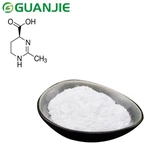
Lignans (Luteolin) are natural flavonoids. They are weakly acidic tetrahydroxyflavonoids. And Guanjie Biotech has focused on this product for more than 20 years. Luteolin powder is extract from wide plants, mainly found in medicines such as honeysuckle, chrysanthemum, bramble, white hairy sumac, and vegetables such as thyme, Brussels sprouts, cabbage, cauliflower, beets, broccoli, and carrots. Among them, the content is higher in whole-leaf Cymbidium orchids, chili peppers, wild chrysanthemums, honeysuckles, and perillas. And our luteolin powder is from sophora and peanut shells.

They have a variety of pharmacological activities, such as anti-inflammatory, anti-allergic, lowering uric acid-lowering, anti-tumor, antibacterial, antiviral, and so on. Clinically, they are mainly used for cough, expectorant, anti-inflammatory, uric acid-lowering, treatment of cardiovascular disease, treatment of "amyotrophic lateral sclerosis," SARS, hepatitis, and so on.
Apigenin, also known as apigenin. It is a type of flavonoid compound. It is widely distributed in nature, mainly found in plants of the families Rafflesiaceae, Verbenaceae, and Curculionaceae. It is widely distributed in vegetables and fruits in the temperate zone, especially high in celery. It is also widely found in many kinds of fruits, vegetables, legumes, tea, water cranberries, polygonaceae, lily leaf quinoa, and pine plants. Some medicinal plants, such as psyllium and loosestrife, also have a high content. And our apigenin powder is mainly from celery.
Apigenin has carcinogenic activity by inhibiting carcinogens. It is used as an antiviral drug for the treatment of HIV and other viral infections, an inhibitor of MAP kinase, treatment of various inflammatory conditions, antioxidant, sedative, tranquilizer, and antihypertensive. Compared with other flavonoids (quercetin and kaempferol flavonoids), apigenin powder is characterized by low toxicity and non-mutagenicity.

Physical and chemical properties
Luteolin's chemical name is 3',4',5,7-tetrahydroxyflavone, and its alias is yellow flavin. Its CasNo is 491-70-3, its chemical formula is C15H10O6, its molecular weight is 286.23. It is a yellow needle crystal with a melting point of 328–330 °C. It decomposes at the same time. It is slightly soluble in water, weakly acidic, and soluble in alkaline solution. It is stable under normal conditions. Luteolin can be separated from ethanol and appears as a golden-yellow, needle-like body containing water of crystallization. It is soluble in ethanol and ether, slightly soluble in hot water, and insoluble in cold water. The aqueous solution is light yellow. Luteolin powder is soluble in a 10% sodium hydroxide solution and turns dark yellow. When dissolved in concentrated sulfuric acid, it generates zinc salt and turns dark reddish yellow. Due to the presence of phenolic hydroxyl groups on the molecule of luteolin, its aqueous solution shows weak acidity. Bulk luteolin is capable of forming colorful complexes with iron, magnesium, calcium, copper, aluminum, zirconium, and other metal ions.
Apigenin is the English name for Apigenin. Its chemical name is 4',5,7-trihydroxyflavone. Its alias is Apigenin. Its CAS number is 520-36-5. It appears as yellow needle-like crystals in an aqueous pyridine solution, with a melting point above 300 °C. It is practically insoluble in water, partially soluble in hot alcohol, and soluble in a dilute KOH solution. Additionally, it has a solubility of 27 mg/mL in DMSO.
Process
Since luteolin powder and apigenin powder share the same basic nucleus, they only differ by one hydroxyl group. Therefore, they can be extracted and separated using the same process. However, due to the small difference between them, it becomes more challenging to separate them when they coexist in similar proportions. Special methods are required for separation. The presence of neighboring hydroxyl groups in luteolin powder makes them more susceptible to oxidation compared to apigenin powder, especially under alkaline conditions.
Process Analysis
• Extraction
Since luteolin powder and apigenin powder are difficult to dissolve in water, low-carbon alcohols with higher solubility are used. Such a high concentration of ethanol in the extract is more appropriate. When combined with microwaves or ultrasounds, enzyme digestion can significantly enhance the extraction rate and efficiency. Some data suggest that the use of ethylene glycol can enhance the resolution of the extraction process, resulting in increased content in the extraction.
Luteolin is typically chosen as the raw material for extraction. Apigenin is primarily distributed in the leaves, constituting over 80% of the total flavonoids in celery. It is 6~21 times the flavonoids in the basal stems and 6~14 times the flavonoids are found in the top stems, making celery leaves a wise choice for extraction raw material.
• Column Chromatography
The use of D101 column chromatography to separate flavonoids is a common method. Especially for primary purification, using a specific DF01 resin can significantly enhance the effectiveness of chromatography.
• Extraction and Purification
Extractive purification of flavonoid glycosides using ethyl acetate, based on the crude product, can significantly enhance the purity. Generally speaking, degreasing with petroleum ether before ethyl acetate extraction is more conducive to the subsequent extraction.
• Crystallization
Flavonoid glycosides that have reached a certain level of purity are crystallized in water, resulting in a generally higher yield of crude crystals. Recrystallization using ethanol can be employed to obtain highly pure crystals.
Common Functions:
Luteolin powder and apigenin powder are known for their anti-inflammatory activity. However, their effects on IL-31 and IL-33 production in microglia are unknown. (status quo). SIM-A9 microglia were pretreated with apigenin or lignans and stimulated with lipopolysaccharide to assess IL-31 and IL-33 (aim). It was shown that apigenin and lignans inhibited IL-31 and IL-33 at the gene, protein expression, and secretion levels. Using potent inhibitors of the MAPK, NF-κB, and STAT3 signaling pathways, it was demonstrated that the inhibition of ERK and JNK by apigenin and lignans contributed to the suppression of IL-31 and IL-33 in the MAPK pathway. The inhibitory effects of lignans on NF-κB and STAT3 also contributed to the inhibition of IL-31 and IL-33. Further analyses demonstrated that both compounds were able to block the nuclear translocation of activated NF-κB and STAT3, thereby preventing their DNA-binding activity (Results). Overall, this study demonstrates that the modulation of signaling pathways by aLuteolin powder and apigenin powder contributes to the inhibition of IL-31 and IL-33, highlighting their significance in alleviating neurodegenerative diseases associated with these two cytokines.
How to Increase Luteolin and Apigenins in Your Daily Diet?
1. Colorful Vegetable Platter: Create a platter that includes a variety of vegetables, such as peppers, celery and any other vegetables you like. This will not only increase your luteolin powder and apigenins intake, but will also make your table more colorful.
2. Creative Herb Use: Try adding some fresh herbs to your cooking, such as basil and mint. They can be used for garnish or as a main ingredient to add a splash of fresh flavor to your dishes.
3. Fruit snacks: Use citrus fruits as an everyday snack. A fresh fruit salad or a glass of homemade citrus juice is not only delicious, but also helps to increase your luteolin and apigenin intake.

Suggestions for proper intake
1. Balance a varied diet: Make sure your diet includes a variety of foods for different nutrients and health benefits. Don't rely too much on one type of food or ingredient, even if they have high health value.
2. Moderation is good: Follow the "moderation rule". Maintain moderation and variety when enjoying foods rich in lignans and apigenin.
Luteolin powder and apigenin powder of Guanjie Biotech are high quality and competitive price. If you are intersted, welcome to enquiry us: info@gybiotech.com.