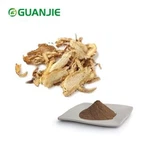
In the booming global wellness market, shilajit has emerged as a potent superstar, revered for its dense concentration of fulvic acid, humic substances, and over 84 trace minerals. Standardized natural shilajit extract is typically more potent per gram for targeted active markers (like fulvic acid and dibenzo-α-pyrone chromoproteins), while raw/resin or powdered shilajit can be preferred for full-spectrum positioning, cost efficiency, and certain manufacturing needs. For brands, formulators, and entrepreneurs looking to capitalize on this ancient resin, the first and most critical decision is. What is more potent, shilajit extract or powder?

What Is More Potent, Shilajit Extract Or Powder?
"Potency" in business isn't one-dimensional. It's a blend of product performance, market appeal, operational smoothness, and financial return. Let's evaluate both forms across these key commercial pillars.
Product Development & Formulation Flexibility
• Shilajit Powder:
Pure Shilajit powder is Ideal for solid dosage forms. It integrates seamlessly into capsule fillings, tablet compression, and dry blend formulations like protein powders, superfood mixes, and pressed tablets. Its solid form makes handling in standard manufacturing setups (like dry blending and encapsulation) straightforward.
Limitations: Incorporating it into liquids, gummies, or tinctures is challenging. It doesn't dissolve. Pure Shilajit powder suspends, which can lead to settling and an unattractive texture or "grittiness" if not expertly processed.
• Shilajit Extract (Liquid/Resin):
Strengths: The king of formulation versatility. Natural shilajit extract can be easily blended into liquid products-tinctures, shots, beverage enhancers, syrups. It can also be infused into gummies, softgels, and topical products like creams and ointments. This opens a wider array of product categories in high-growth segments (e.g., ready-to-drink wellness shots).
Limitations: Requires different handling equipment (liquid filling lines) and considerations for preservation in liquid formats.
If your goal is centered on capsules and dry mixes, powder is a logical fit. If you aim to innovate in fast-growing liquid formats, gummies, or topicals, the extract is exponentially more potent for your R&D pipeline.
Consumer Perception & Marketing Narrative
When promoting shilajit products, how consumers feel about the ingredient is just as important as the technical specifications. Shilajit powder and shilajit extract appeal to different audiences because their stories and visual impressions are not the same.

• Shilajit Powder
Pure Shilajit powder fits perfectly into a "minimal processing" or "closest to nature" message. Many consumers today want ingredients that look natural and untouched. Powdered shilajit gives that impression. It can be described as a whole-food style option that keeps the raw mineral profile of shilajit. The fine, earthy, mineral-rich appearance is easy to show in marketing photos and aligns well with clean-label and organic-focused buyers. Brands selling natural health foods, herbal blends, or traditional remedies often prefer powder because the story is simple: less processed and more natural.

• Shilajit Extract
Natural shilajit extract supports a different kind of marketing story-one based on potency, purity, and scientific strength. Because extracts are standardized, you can highlight numbers such as "60% fulvic acid," which provides a measurable and credible selling point. The thick, resin-like form of extract also looks concentrated, premium, and powerful. This helps brands position their products as advanced supplements designed for performance, energy, or targeted wellness benefits. For companies operating in premium or clinical-style markets, extract delivers a strong, defensible narrative.
Your ideal product depends on your audience. For natural and organic markets, shilajit powder fits better. For high-performance, science-backed, or premium supplement markets, shilajit extract offers a stronger marketing advantage.
Supply Chain & Operational Considerations
When comparing shilajit powder and natural shilajit extract, buyers must consider how each form affects storage, logistics, and overall operating costs. These factors directly influence efficiency and long-term profitability.
• Shilajit Powder:
From a supply-chain perspective, Pure Shilajit powder is very stable and easy to manage. Because it contains no water, it is less likely to support microbial growth and generally has a longer shelf life when stored in cool, dry conditions. Its low weight and compact volume also reduce shipping costs, making it attractive for importers, distributors, and large-scale manufacturers. Handling is simple-standard dry-goods warehousing is usually enough, with no need for temperature control or special equipment. In addition, shilajit powder normally has a lower price per kilogram, which helps businesses control procurement budgets.
• Shilajit Extract (Liquid or Resin):
Liquid extracts may require preservatives to stay stable, while resin extracts are naturally stable but can harden without proper packaging. Both forms usually need stricter storage and handling practices. Because they contain water or have a dense resin structure, natural shilajit extract tends to be heavier, which increases shipping costs. They also cost more per kilogram at purchase, although this is balanced by the fact that extracts are stronger, so companies use smaller dosages in each final product. This means the actual material cost per unit can be lower over time.
Shilajit powder provides simpler logistics and lower operational expenses. Natural shilajit extract, while more demanding in handling, offers higher potency per gram and can improve Cost of Goods Sold (COGS) in long-term production.
Quality Assurance & Compliance
This is non-negotiable. Both forms must be sourced with rigorous purification to remove contaminants like heavy metals, mycotoxins, and foreign matter.
• Shilajit Powder:
Quality is demonstrated through certificates of analysis (CoAs) for heavy metals, microbial counts, and mineral profiles.
• Shilajit Extract:
The extraction process itself helps purify the material. It often results in a final product with lower levels of unwanted impurities and heavy metals. Crucially, the fulvic acid content can be standardized. This means every batch has a consistent, measurable amount of this key active component, which is a major advantage in regulated markets.
A high-quality extract provides a more robust and standardized quality proposition, simplifying your compliance and quality storytelling. However, a reputable natural shilajit extract supplier will provide thoroughly purified powder that meets all safety standards.
Profitability & Competitive Positioning
Due to its concentrated nature, the recommended dosage of a high-quality extract is often much smaller (e.g., 300-500 mg of resin) compared to powder (often 1-2 grams). This means a kilogram of extract can produce far more retail units than a kilogram of powder.
•Premium Pricing:
Natural shilajit extract, particularly those with verified fulvic acid percentages, command a higher price point in the B2B market and allow for premium positioning at retail. Consumers are willing to pay more for "concentrated potency."
•Market Differentiation:
In a crowded market, offering a scientifically-standardized shilajit extract can be a key differentiator, moving you away from competing on price alone.
•Business Takeaway:
While the initial investment in natural shilajit extract is higher, its superior unit economics, potential for premium branding, and strong differentiation often translate to greater long-term profitability and market potency.
Conclusion:
So, what is more potent from a business aspect?
• Shilajit Powder is operationally potent. It is cost-effective, stable, and perfect for brands targeting the dry supplement, capsule, and "raw ingredient" market with a focus on simplicity and whole-food integrity.
• Natural shilajit extract is strategically and commercially potent. It offers superior formulation flexibility, enables a powerful science-backed narrative, provides excellent unit economics, and allows for clear differentiation in a premium market space.
For most businesses looking to lead rather than follow, to innovate rather than replicate, and to capture higher value in the wellness arena, shilajit extract presents the more potent opportunity. It transforms shilajit from a simple ingredient into a scalable, market-defining asset.
Ultimately, the right choice aligns with your specific brand vision, product portfolio, and target customer. Whichever path you choose, the foundation of your success will be a trusted, quality-focused supplier. Begin your shilajit venture with a partner committed to your product's integrity and your business's growth. Guanjie Biotech is one of the natural shilajit extract powder manufacturers and shilajit powder manufacturers that sets a new standard for purity, potency, and value. Welcome to enquire with us at info@gybiotech.com.
References
[1] Carrasco-Gallardo, C., Guzmán, L., & Maccioni, R. B. (2012). Shilajit: A Natural Phytocomplex with Potential Procognitive Activity. International Journal of Alzheimer's Disease, *2012*, 674142.
[2] Pandit, S., Biswas, S., Jana, U., De, R. K., Mukhopadhyay, S. C., & Biswas, T. K. (2016). Clinical evaluation of purified Shilajit on testosterone levels in healthy volunteers. Andrologia, *48*(5), 570–575.
Schepetkin, I. A., Khlebnikov, A. I., Ah, S. Y., Woo, S. B., Jeong, C. S., Klubachuk, O. N., & Kwon, B. S. (2003). Characterization and biological activities of humic substances from mumie. Journal of Agricultural and Food Chemistry, *51*(18), 5245–5254.
[4] Wilson, E., Rajamanickam, G. V., Dubey, G. P., Klose, P., & Musial, F. (2011). Review of shilajit used in traditional Indian medicine. Journal of Ethnopharmacology, *136*(1), 1–9. (Provides a broad overview of traditional use and modern interpretations, informing marketing narratives).