Yes, liposomal coenzyme Q10 is more stable than regular coenzyme Q10. The coenzyme Q10 molecule contains numerous unsaturated double bonds, naturally making it prone to oxidation, degradation, and poor environmental tolerance. Meanwhile, regular coenzyme Q10 products suffer from weak physicochemical stability, poor system compatibility, and insufficient storage stability, severely limiting their application in large-scale production of bulk foods, cosmetics, and health supplements. Through physical modification, liposomal coenzyme Q10 significantly improves the chemical, physicochemical, and system stability of coenzyme Q10 from multiple dimensions, including molecular protection, structural isolation, and process optimization.
Why Is Liposomal Coenzyme Q10 Stable?
The following explains the stability advantages of liposomal Coenzyme Q10 from four aspects: chemical stability, environmental tolerance, storage stability, and formulation system stability.
Chemical Stability:
Natural free Coenzyme Q10 is very sensitive to oxygen and light. Its unsaturated double bonds are easily oxidized. This leads to active ingredient degradation and reduced potency. As a result, final product quality and efficacy decrease. In addition, degradation is faster in acidic or alkaline conditions. Metal ions can also accelerate this process. This makes free CoQ10 unstable in complex industrial formulations.
Liposomal Coenzyme Q10 uses phospholipid bilayer vesicles as a closed encapsulation system. It forms a physical protective barrier. Coenzyme Q10 is fully enclosed in the hydrophobic core of the vesicles. This structure reduces exposure to oxygen, light, and metal ions. It significantly slows down oxidation. It helps preserve molecular activity and active content.
Liposome encapsulation is a physical process. It does not change the chemical structure of Coenzyme Q10. No chemical byproducts are formed. It improves stability while maintaining safety and purity. It meets the requirements for high-quality raw material production.
Environmental Tolerance and Stability:
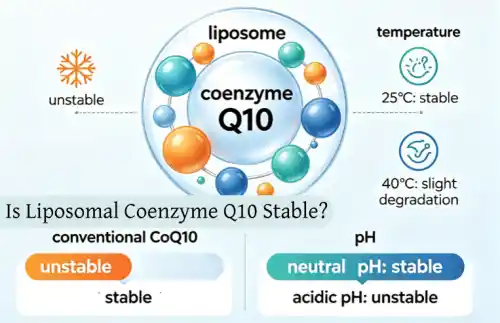
Industrial production involves complex conditions such as temperature changes, acid-base adjustment, mechanical shear, and homogenization. Ordinary Coenzyme Q10 has very poor stability. It decomposes easily at high temperatures. It crystallizes at low temperatures. It also becomes unstable in acidic or alkaline environments. This leads to frequent product quality variation. Liposome Coenzyme Q10 uses nanoscale structural modification. It shows strong overall stability. It has good resistance to temperature, pH changes, and mechanical shear. It is suitable for the full industrial production process.
•Excellent Temperature Stability:
Ordinary Coenzyme Q10 is easily oxidized and degraded at high temperatures. It also crystallizes at low temperatures. This requires very strict temperature control during production. Guanjie Biotech's liposome Coenzyme Q10 has a vesicle structure with good temperature adaptability. It can withstand high-temperature sterilization and heating processes in food and skincare production. The vesicles do not break, and there is no leakage of active ingredients. It also remains stable during low-temperature storage and production. It does not crystallize, separate, or precipitate. This makes it suitable for industrial use across a wide temperature range.
• Strong Stability in Acid-Base Systems:
Downstream products include acidic beverages, neutral skincare products, and alkaline formulations. Ordinary Coenzyme Q10 degrades quickly in strong acidic or alkaline conditions. It loses its activity. Liposomes have a bilayer membrane structure. They help buffer pH changes. They maintain structural integrity in weak acidic, weak alkaline, and neutral systems. They also help protect active ingredients from loss.
This allows them to work in most formulation systems. It greatly expands formulation applications.
• Mechanical Shear Stability:
Industrial homogenization, stirring, and filling create strong mechanical shear forces. These forces can damage ordinary Coenzyme Q10 structures and cause aggregation. Guanjie Biotech has optimized its liposome cross-linking process. This improves vesicle toughness. The structure can withstand normal industrial mechanical stress. The system remains stable during the entire production process. There is no separation or stratification. It is suitable for automated and large-scale continuous production.
Storage Stability
Storage stability is a key factor for B2B companies. It helps control cost and maintain product quality.
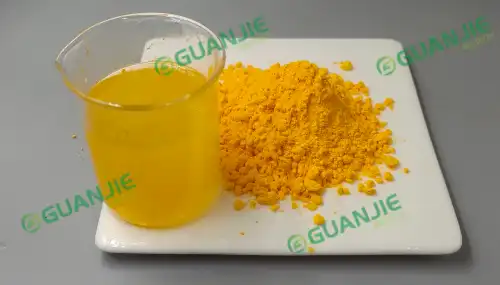
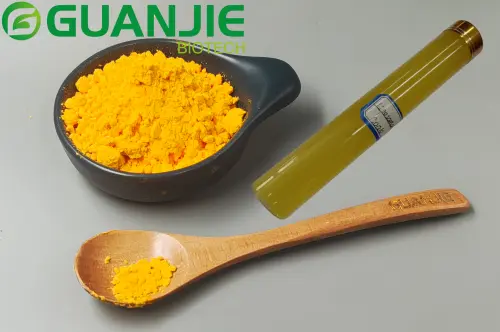
Ordinary Coenzyme Q10 raw materials easily absorb moisture. They are also prone to oxidation and clumping during storage. Finished products often have a short shelf life. Quality also degrades over time. This can lead to inventory loss and after-sales risks. Guanjie Biotech's liposomal Coenzyme Q10 is available in powder and oil forms. Both show excellent long-term storage stability.
• The liposomal Coenzyme Q10 powder is produced using a low-temperature freeze-drying process. This removes excess moisture and results in very low water content and good flowability. It helps prevent moisture absorption, clumping, and oxidation. Under sealed room-temperature storage, the vesicle structure remains stable. The active ingredient retention rate is also stable. There is no significant degradation over long-term storage.
• The liposomal Coenzyme Q10 oil uses a precise blending and stabilization process. It forms a uniform system. It can be stored for a long time without crystallization, stratification, or turbidity. It also solves the common problems of low-temperature crystallization and oxidation discoloration in regular Coenzyme Q10 oil. Good storage stability helps extend the shelf life of raw materials and finished products. It also reduces inventory loss and product return risks for companies.
Formulation System Stability
In downstream formulation applications, regular Coenzyme Q10 has poor solubility and limited compatibility. It can cause incompatibility with formulation systems. This may lead to aggregation, sedimentation, stratification, and precipitation. As a result, batch-to-batch variation increases and product quality becomes unstable.
• Amphiphilic Nanovesicle Structure.
Liposome Coenzyme Q10 powder and liquid have an amphiphilic nanovesicle structure. It shows better formulation compatibility and system stability. It can be used in different systems, including aqueous, oil-based, and complex suspensions. In downstream formulations, pH, ion concentration, and other ingredients strongly influence final stability. These factors are important in formulation development.
• System pH fluctuations affect vesicle integrity.
Strong acidic or alkaline conditions can damage the phospholipid bilayer. This leads to vesicle breakdown and coating failure. Liposomal Coenzyme Q10 is most stable in weakly acidic, neutral, and weakly alkaline systems. Extreme pH conditions reduce stability and system uniformity.
• Metal ions and high-salt environments accelerate instability.
Calcium, magnesium, and iron ions, as well as high salt levels, can change the surface charge of liposomes. This disrupts colloidal stability and causes aggregation, flocculation, and sedimentation. Metal ions may also promote oxidative degradation of Coenzyme Q10.
• Compatibility of combined active ingredients.
Some acidic plant extracts and oxidizing agents may interact with phospholipid membranes and Coenzyme Q10. This can weaken vesicle structure stability. It may also reduce efficacy and cause turbidity in the final formulation.
How to Select Liposomal Coenzyme Q10?
When selecting bulk liposomal Coenzyme Q10, buyers should not focus only on price. Downstream factories, formulation companies, and brand owners should evaluate it from four key aspects: structural stability, batch consistency, process compatibility, and quality control systems. This helps avoid problems such as stratification, precipitation, reduced activity, short shelf life, and batch color variation at the source.
• Prioritize high-purity phospholipids and a proper coating ratio.
Raw material quality determines stability. Use food-grade, high-purity phospholipids to avoid oxidation or unstable membrane structures caused by impure materials. Also confirm a fixed phospholipid-to-CoQ10 ratio. Too high loading may cause leakage or aggregation. Too low loading reduces efficiency.
• Ensure uniform particle size and a stable manufacturing process.
Non-uniform particle size easily leads to sedimentation and separation. Choose liposomal Coenzyme Q10 suppliers with multi-stage homogenization, nano-processing, and low-temperature curing. Prefer low-temperature freeze-dried powders or oil-based systems to protect vesicle integrity.
• Match product form with application needs.
For water-based systems or powders, choose powdered liposomes for fast dispersion and good uniformity. For soft capsules or oil systems, oil-based liposomes are more stable and resist crystallization and separation.
• Check stability under different processing conditions.
Evaluate resistance to temperature, pH, and shear. High-quality materials should tolerate pasteurization and homogenization without structural damage.
• Review batch quality control and activity retention data.
Focus on encapsulation efficiency, moisture content, particle size distribution, and microbial limits. Work with suppliers that provide full test reports and export compliance.
• Avoid low-end pseudo-liposomal products.
True nanoliposomal systems maintain long-term structural stability. They perform far better than simple emulsified or modified pseudo-liposomes.
Guanjie Biotech is deeply involved in the research and mass production of bulk liposome coenzyme Q10 raw materials. Relying on mature liposome molding technology and a strict quality control system, the company ensures that its products have high stability and high consistency. The liposomal Coenzyme Q10 powder and liquid products are compatible with industrial production standards in many regions around the world, and the company serves industry customers in more than 100 countries.
RFQs:
Is Liposomal Coenzyme Q10 stable?
Yes. Liposomal Coenzyme Q10 powder and liquid are significantly more stable than regular Coenzyme Q10. The liposome structure protects CoQ10 from oxidation, light exposure, heat, and other environmental damage. It also improves compatibility in different formulation systems. This makes it more suitable for industrial production and long-term storage.
Why is regular Coenzyme Q10 unstable?
Regular Coenzyme Q10 is highly sensitive. Its structure contains multiple unsaturated double bonds. These bonds are easily affected by oxygen, light, heat, pH changes, and metal ions. As a result, oxidation can occur quickly. Degradation may happen during processing or storage. This leads to reduced active content and lower product performance over time.
How does liposome technology improve CoQ10 stability?
Liposome technology encloses Coenzyme Q10 inside a phospholipid bilayer. This bilayer forms a protective barrier around the active ingredient. It reduces direct contact with oxygen, light, heat, and metal ions. The encapsulation also helps isolate CoQ10 from harsh external conditions. This significantly improves chemical stability. It also improves physical stability in formulations. The result is better preservation of active content during manufacturing, transport, and storage.
Can Liposomal Coenzyme Q10 be used in different formulations?
Yes. Liposomal CoQ10 powder and liquid have strong formulation compatibility. It can be used in beverages, capsules, soft gels, functional foods, and cosmetic products. It disperses more evenly in both aqueous and mixed systems. It also helps reduce common formulation problems such as precipitation, aggregation, and phase separation. This makes processing easier and improves final product quality.
Are all liposomal CoQ10 products equally stable?
No. Not all liposomal CoQ10 products have the same stability. True liposomal systems use well-formed nanovesicles and controlled production processes. These systems provide consistent encapsulation and protection. Lower-quality products may use emulsions or pseudo-liposomal structures. These often have weaker stability and lower protection efficiency. The manufacturing process and particle quality strongly affect final stability performance.
Conclusion:
In summary, compared to regular Coenzyme Q10, bulk liposomal Coenzyme Q10 offers stability advantages throughout the entire supply chain, from raw material storage and industrial production to finished product sales. Chemical stability solves the problem of oxidative degradation of active ingredients, ensuring stable product efficacy; environmental tolerance adapts to complex industrial production conditions, reducing production losses and process barriers; storage stability extends product shelf life, controlling enterprise operating costs; and formulation system stability improves the consistency of finished product quality and yield. Guanjie Biotech relies on mature bulk production processes and a rigorous quality control system, achieving batch stability and quality consistency for its natural liposomal Coenzyme Q10 products, providing global customers with highly stable, highly adaptable, and cost-effective bulk raw material support, assisting downstream food, health product, cosmetic, and biopharmaceutical industries in achieving standardized, high-quality production. Welcome to enquire with us at info@gybiotech.com.

References:
[1]Fang Suqiong, Chen Wenrong, Wang Peijian, Zan Shengjie. Study on Liposomes Enhancing the Stability and Bioavailability of Coenzyme Q10 [J]. Food and Fermentation Industry, 2024, 50(3): 169-173. DOI: 10.13995/j.cnki.11-1802/ts.036702
[2]Wang JY, Baek Y, Jeong EW, Lee HG. Effect of coenzyme Q10 encapsulation with different sterols on stability, antioxidant activity, and cellular properties of nanoliposomes[J]. Food Bioscience, 2023, 56: 103179.
[3]Arain A, Shaikh H, Denizli A, Memon S. Synthesis of Graphene Oxide Shielded Highly Stable Nano Liposomes for Intestinal Delivery of CoQ10[J]. BioNanoScience, 2025, 15: 41.
[4]Dragicevic N, et al. Development of hydrophilic gels containing coenzyme Q10-loaded liposomes: characterization, stability and rheology measurements[J]. Drug Development and Industrial Pharmacy, 2019, 45(1). DOI: 10.1080/03639045.2018.1515220
[5]Recent review on encapsulation strategies. Comparative review of translational approaches in lipid-based and water-based encapsulation strategies for coenzyme Q10[J]. Drug Delivery and Translational Research, 2026, 16: 415-438.
[6]High-Pressure Microfluidic Homogenization Improves the Stability and Antioxidant Properties of Coenzyme Q10 Nanoliposomes[J]. Biology, 2025, 14(5): 568. DOI: 10.3390/biology14050568
[7]Sakchareonkeat P, Huang TC, Suwannaporn P, et al. Encapsulation efficiency of coenzyme Q10-liposomes in alginate[J]. Nutrition & Food Science, 2013, 43(2): 150-160.
[8]Effect of Coenzyme Q10 and Other Additives on the Stability and the Size Distribution of Liposomes Obtained by Ethanol Injection Method[J]. Journal of Oleo Science, 1987, 36(4): 272-275.