


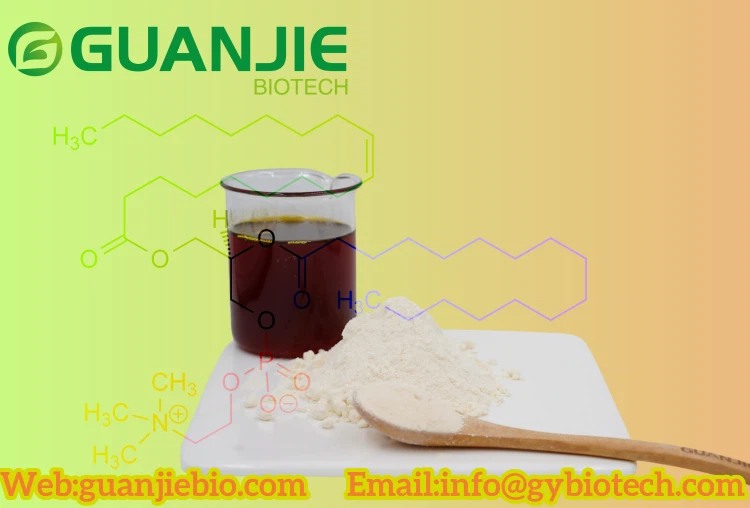
What Is Sunflower Lecithin?
Sunflower lecithin is obtained from sunflower seeds. In the extraction process, organic solvents are usually used to extract the lecithin, and after a series of isolation and purification steps, a high-purity sunflower lecithin product is obtained.
Effect Composition
1. Effects on the fat composition of breast milk
• Emulsifying effect
The amphoteric molecular structure of sunflower lecithin enables it to form an emulsifying film on the surface of fat globules in breast milk. This emulsified film reduces the surface tension between the fat globules and prevents the fat globules from aggregating and floating up. This allows the fat in breast milk to be evenly dispersed in the milk. This evenly dispersed fat is more easily digested and absorbed by the infant. For example, lecithin is also added to some artificially fed infant formulas to mimic the fat emulsification properties of breast milk and to improve the digestibility of the fat in the formula.
• Indirect effects of fatty acid composition
Although sunflower lecithin itself does not directly alter the fatty acid composition of breast milk. However, it can indirectly affect the fatty acid content of breast milk by influencing fat metabolism and transport. Sunflower lecithin is an important component of cell membranes, and it can participate in lipid metabolic processes within cells. In mammary cells, lecithin may affect fatty acid uptake, esterification, and secretion.
2. Effects on the protein composition of breast milk
• Possible protein transport aids
Phospholipids play a key role in intracellular vesicular transport. Vesicular transport is an important part of the secretion of proteins from breast cells. Sunflower lecithin may be involved in vesicle formation and transport. It will indirectly affect the secretion of proteins in breast milk.k
• Potentiastabilizingng effect on protein structure
Some proteins in breast milk may interact with phospholipids. Bulk sunflower lecithin powder may bind to proteins such as whey proteins and change the spatial structure of proteins. This stabilized protein structure facilitates digestion and absorption in infants.
3. Effects on the carbohydrate composition of breast milk
• Synergy of prebiotic effects
Oligosaccharides in breast milk have prebiotic effects. Sunflower lecithin may also have some positive effects on the intestinal flora. Studies have shown that phospholipids may act as nutrients for some beneficial intestinal bacteria, promoting their growth and reproduction. When sunflower lecithin is ingested by the mother, it may be passed to the infant through breast milk. It works synergistically with the oligosaccharides in breast milk in the infant's intestinal tract. It will further enhance the growth advantage of beneficial intestinal bacteria and improve the infant's intestinal microecological environment.
• Potential effects on lactose metabolism
There is no clear evidence that sunflower lecithin directly affects the content and metabolism of lactose in breast milk. From the point of view of cellular metabolism, phospholipids are involved in energy metabolism and material transport processes within cells. In mammary cells, lactose synthesis and secretion are also closely related to the intracellular metabolic environment. Sunflower lecithin may indirectly affect lactose synthesis and secretion by regulating the metabolic state of mammary cells.
Effect On The Nutritional Function
1. Improvement of nutrient digestibility
• Improvement of fat digestibility
As mentioned earlier, the emulsifying effect of sunflower lecithin on breast milk fat can make the fat globules smaller and evenly distributed. This facilitates the breakdown of fat by lipase in the infant's gastrointestinal tract. Lipasecano reaches the surface of the fat globules more fully, which improves the digestibility of the fat. For infants, especially in the first few months of life when the digestive system is not fully developed, increasing the digestibility of fat in breast milk can better meet the energy needs of infants and promote weight gain and physical development.
• Potential increase in protein and carbohydrate digestibility
The stabilizing effect of sunflower lecithin on the protein structure of breast milk and its potential impact on carbohydrate metabolism. A stabilized protein structure can be more efficiently broken down by proteolytic enzymes during digestion, while optimized carbohydrate metabolism may lead to smoother absorption and utilization of carbohydrates, such as lactose, in the infant's intestinal tract.
2 . Optimisation of nutrient absorption utilization
• Promotion of fatty acid absorption
Sunflower lecithin not only helps the fat in breast milk to be better digested but also promotes the absorption of fatty acids. In the intestinal tract, fatty acids and monoglycerides, which are the breakdown products of emulsified fats, will form mixed microcolloids with bile acids and lecithin. This mixture of micro granules promotes the absorption of fatty acids through the intestinal mucosal cells.
• Synergistic effect on the absorption of protein and other nutrients
Sunflower lecithin's role in promoting the growth of beneficial intestinal bacteria also facilitates the absorption of nutrients. Healthy intestinal flora can produce several enzymes and metabolites that help infants digest and absorb nutrients such as proteins, carbohydrates, and minerals from breast milk. For example, beneficial intestinal bacteria can break down proteins to produce substances such as short-chain fatty acids, which can promote intestinal absorption of minerals such as calcium and magnesium. At the same time, by improving the intestinal micro-ecological environment, bulk sunflower lecithin powder can also reduce intestinal inflammation and other undesirable factors that interfere with nutrient absorption.
Effect On The Immunoprotective
1 . Enhancement of immunoglobulin function in breast milk
• Support of transport and secretion links
Sunflower lecithin may be involved in the process of vesicular transport in breast cellImmunoglobulinsins and other immunologically active substances are secreted into breast milk through vesicular transport. If sunflower lecithin can ensure that vesicular transport is carried out properly, it can ensure that immunoglobulins are secreted into breast milk more efficiently. It increases the immunoglobulin content in breast milk.
• Stabilises immunoglobulin structure
The interaction of sunflower lecithin with immunoglobulins stabilizes their structure. A stabilized immunoglobulin structure can perform its immune functions better. Such as recognizing and binding pathogens. In the infant's gut, stabilized immunoglobulins can more effectively defend against invading pathogens such as bacteria and viruses. This provides infants with stronger passive immune protection.
2. Effects on other immunologically active substances in breast milk
• Synergistic effect of lactoferrin and lysozyme
Sunflower lecithin can interact with immunologically active substances such as lactoferrin and lysozyme in breast milk. Lactoferrin has the function of binding iron ions and inhibiting bacterial growth, and lysozyme can destroy bacterial cell walls. Sunflower lecithin may enhance their synergistic antibacterial effects by modulating their spatial distribution or activity. For example, in the case of intestinal infections, this synergistic effect may be more effective in removing harmful bacteria from the intestinal tract, reducing the risk of intestinal infectious diseases in infants.
• Effects on breast milk anti-inflammatory factors
Breast milk also contains some anti-inflammatory factors such as interleukin-10. Sunflower lecithin may affect the secretion of anti-inflammatory factors by regulating inflammatory signaling pathways in breast cells. Appropriate supplementation of sunflower lecithin may help to maintain normal levels of anti-inflammatory factors in breastmilk when the mother's body is experiencing an inflammatory response, reducing the impact of inflammation on the quality of breastmilk. This provides the infant with a relatively stable immunoprotective environment.
Effects On Promoting Intestinal Development
1. Promoting the development of infant intestinal mucosa
• Nutritional support
Bulk sunflower lecithin powder can provide nutritional support for the growth of infant intestinal mucosal cells.
• Enhancement of intestinal mucosal barrier function
The intestinal mucosal barrier function is crucial for preventing pathogens and harmful substances from entering the body. Sunflower lecithin can enhance the intestinal mucosal barrier function by stabilizing the connective structures between intestinal mucosal cells, such as tight junctions. When the intestinal mucosal barrier function is good, it can effectively reduce the leakage of bacteria, toxins, and other harmful substances in the intestines. It can reduce the risk of intestinal diseases and allergic reactions in infants.
2 . Regulating the balance of intestinal flora in infants
• Providing resources for beneficial bacteria
Sunflower lecithin can be used as a nutrient for beneficial bacteria in the intestinal tract, promoting the growth and reproduction of beneficial bacteria such as Bifidobacterium and Lactobacillus. These beneficial bacteria can produce organic acids, vitamins, and other nutrients in the intestinal tract. At the same time, it can competitively inhibit the growth of harmful bacteria. For example, Bifidobacterium bifidum can break down sunflower lecithin bulk powder to produce short-chain fatty acids. These short-chain fatty acids can lower intestinal pH and inhibit the growth of harmful bacteria such as E. coli and Salmonella.
• Synergistic Beneficial Effects with Breast Milk Oligosaccharides
As mentioned above, sunflower lecithin and breast milk oligosaccharides can have a synergistic effect. They can work together to regulate the composition and structure of the intestinal flora. This stable intestinal flora contributes to the normal development and functional perfection of the infant's intestinal tract. For example, it can promote intestinal peristalsis, and improve intestinal digestion and absorption.
Sunflower lecithin has a multifaceted effect on breast milk. It improves the composition of breast milk. This includes emulsification of fats, effects on protein transport and structure, and potential effects on carbohydrate metabolism. Guanjie Biotech is a bulk lecithin supplier. We are committed to providing our customers with high-quality products and professional solutions to meet the needs of different customers in the market. if you are interested in our bulk sunflower lecithin powder, welcome to inquiry us: info@gybiotech.com.


